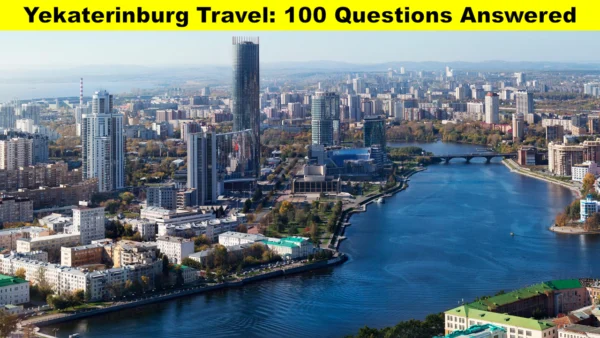
Yekaterinburg Travel: 100 Questions Answered based on NeemTime research
Planning & Logistics
1. Is Yekaterinburg worth visiting? Yes. Travelers frequently point out that it is an excellent stop on the Trans-Siberian Railway, offering a perfect mix of historical significance, Soviet-era architecture, and a modern, vibrant local culture that feels less touristy than Moscow or St. Petersburg.
2. How many days should I spend there? A stay of 2 to 3 days is ideal. This gives you enough time to explore the city center, visit the key historical sites, and take a quick trip out to the Europe-Asia border or local museums.
3. What is the best time of year to visit? Late spring to early autumn (May to September) offers the most pleasant weather for walking around. Travelers note that July and August are the warmest months, making the city pond area highly lively.
4. Is it a good idea to visit in late autumn or winter? November is widely considered by locals to be the worst month because the weather is slushy, dark, and cold. However, mid-winter (December to February) can be beautiful if you enjoy a snowy, authentic Russian winter experience, provided you dress in heavy layers.
5. How do I get to Yekaterinburg from Moscow? You can take a domestic flight to Koltsovo Airport (SVX), which takes about 2.5 hours. Alternatively, the train ride from Moscow takes roughly 24 to 30 hours and is a popular segment for Trans-Siberian travelers.
6. Do I need to learn Russian before going? While you do not need to be fluent, learning the Cyrillic alphabet is highly recommended. English signage is limited outside the absolute center, and many bus drivers, shopkeepers, and older locals do not speak English.
7. Can I use my foreign credit or debit cards? No. Due to international sanctions, foreign Visa, Mastercard, and American Express cards do not work in Russia. You must bring cash to exchange or have a local bank account/card setup ready.
8. What currency should I bring to exchange? Bring clean, undamaged, and crisp US dollar or Euro bills (preferably $50 or $100 notes). Banks are highly selective and will reject crumpled, torn, or marked foreign cash.
9. Are translation apps necessary? Absolutely. Carrying a smartphone with an offline Russian translation pack is essential for navigating restaurants, reading signs, and communicating with locals.
10. Is Yekaterinburg safe for foreign tourists? Generally, yes. Petty crime like pickpocketing exists in crowded transit hubs, but violent crime against tourists is rare. Normal travel awareness applies.
Sights & Activities
11. What is the Red Line tourist trail? It is a literal red line painted on the city sidewalks. It forms a self-guided loop connecting over 30 of the most significant historic and cultural attractions in the city center.
12. What is Plotinka? Plotinka is the city dam located on the Iset River right in the city center. It serves as the primary gathering spot for locals, street performers, and walkers, and it marks the historical birthplace of the city.
13. Why is the Church on Blood famous? Built directly on the site of the Ipatiev House, it marks the exact location where Tsar Nicholas II and the Romanov royal family were executed in 1918. It is a major pilgrimage and historical site.
14. What can I see at the Yeltsin Center? It is a highly modern museum and cultural space dedicated to Russia’s first president, Boris Yeltsin, and the history of the 1990s. Visitors praise its interactive exhibits and contemporary layout.
15. Is it worth going to the top of the Vysotsky Skyscraper? Yes. The open-air observation deck on the 52nd floor offers panoramic views of the entire city skyline. It is best visited on a clear evening just before sunset.
16. What is Ganina Yama? Located outside the city, it is a peaceful Russian Orthodox monastery built entirely of wood. It was established at the mine shaft where the remains of the Romanov family were initially discarded.
17. Where is the official Europe-Asia border monument? There are a couple of markers, but the most popular one is located about 17 kilometers west of the city along the Novo-Moskovsky Highway. It is a popular photo spot where you can stand with one foot in each continent.
18. Is the Europe-Asia border monument a tourist trap? Many travelers note that it feels a bit like a tourist trap because it sits right next to a busy highway, but they still consider it a fun, symbolic stop to check off a bucket list.
19. What is the QWERTY Keyboard Monument? It is a giant stone outdoor sculpture of a computer keyboard located on the embankment of the Iset River. It is a beloved quirky landmark perfect for photos.
20. What is the Shirokorechenskoye Cemetery famous for? It is known for its section dedicated to the “gangsters” of the 1990s. The graves feature massive, life-sized hyper-realistic granite headstones depicting the deceased mafia bosses in leather jackets holding car keys.
21. Where can I see traditional Soviet architecture? The Uralmash neighborhood is famous for its classic constructivist architecture from the 1920s and 1930s. Structures like the White Tower are iconic examples of this style.
22. Are there any good art museums in the city? The Yekaterinburg Museum of Fine Arts is highly regarded, especially for its unique collection of Kasli cast-iron artwork and avant-garde Russian paintings.
23. Can I see the oldest wooden sculpture in the world here? Yes, the Shigir Idol, which is over 11,000 years old, is housed inside the Sverdlovsk Regional Museum of Local Lore.
24. What is Sevastyanov’s House? It is a breathtaking, brightly colored 19th-century palace located by the city pond. While you generally cannot tour the interior because it is a government residence, it is one of the most photographed buildings in the city.
25. Is there a pedestrian-only shopping street? Yes, Vaynera Street. It is lined with shops, cafes, and quirky bronze sculptures, making it perfect for an afternoon stroll.
26. What is the Yellow Line trail? Similar to the Red Line, the Yellow Line is a painted path specifically designed for cyclists, rollerbladers, and runners to safely navigate the scenic parts of the city.
27. Where can I enjoy nature inside the city? Mayakovsky Central Park of Culture and Leisure offers large green spaces, walking paths, a vintage children’s railway, and various seasonal amusement rides.
28. What can I do around Lake Shartash? Located on the edge of the city, it is a great spot for renting bikes, enjoying a summer picnic, or looking at the Stone Tents (ancient rock formations hidden in the forest).
29. Is there a monument to the Beatles? Yes, near the river embankment, there is a prominent brick wall silhouette monument dedicated to the band, which often serves as a meeting point for local music fans.
30. What is the UMMC Museum Complex? Located just outside the city in Verkhnyaya Pyshma, this is a massive museum featuring one of the largest collections of military vehicles, retro cars, and aircraft in the world. It is highly recommended.
Accommodation & Neighborhoods
31. Where is the best area to stay? The Central District (Centr), specifically around Lenin Avenue, Malysheva Street, or near the Plotinka, is highly recommended for easy walking access to sights, restaurants, and transit.
32. Should I stay in the outer residential districts to save money? Travelers generally advise against this. Staying far out on the periphery means long commute times, poorly lit streets at night, and a steep language barrier.
33. Are hotels or short-term rental apartments better? Hotels are preferred for international travelers because they easily handle the mandatory foreigner registration paperwork. If using a rental app like Avito, confirm the host will register you.
34. Is the Uralmash neighborhood safe to stay in? While it was notorious for mafia activity in the 1990s, it is mostly safe today during the day. However, it is an industrial residential area far from central sights, so it is not ideal for lodging.
35. What other neighborhoods should be avoided for accommodation? Sortirovka and Elmash are frequently cited by locals as industrial or outer districts that lack tourist infrastructure and can feel sketchy or dark late at night.
36. Do central hotels have English-speaking staff? Most reputable 3-star to 5-star hotels in the historic center keep English-speaking receptionists on staff, though housekeeping or kitchen staff may not speak English.
37. Is there a hostel culture in Yekaterinburg? There are a handful of highly rated boutique hostels near the center. Because the backpacking community is smaller here than in Moscow, it is best to book well in advance.
38. Can I book accommodation on standard western websites? No, sites like Booking.com and Airbnb do not operate there. You must use local Russian booking platforms or book directly through a hotel’s website using alternative payment methods.
39. Do accommodations provide free Wi-Fi? Yes, high-speed Wi-Fi is standard in almost all hotels, hostels, and modern apartments throughout the city.
40. Is tap water safe to drink in Yekaterinburg hotels? No. It is highly recommended to use bottled or filtered water for drinking and brushing your teeth, as the municipal pipe infrastructure can impart a metallic taste.
Food & Nightlife
41. What type of food is a must-try in Yekaterinburg? Pelmeni (Russian dumplings) are a regional specialty of the Urals. They are traditionally filled with a mix of beef, pork, and sometimes lamb or wild game.
42. Why is Georgian food so popular here? Travelers consistently note that Russian food can be mild, so locals flock to Georgian restaurants for rich, spiced comfort food like Khachapuri (cheese bread) and Khinkali (soup dumplings).
43. Can I find good Uzbek or Central Asian food? Yes, Uzbek cafes and restaurants are widespread, affordable, and offer excellent plov (rice pilaf) and fresh flatbreads.
44. Is tipping expected in restaurants? Yes, a tip of 10% is customary for good service in sit-down restaurants. It is usually paid in cash or through local QR code payment systems.
45. What is the coffee culture like? Surprisingly excellent. Yekaterinburg has a booming specialty coffee scene with numerous hip specialty cafes scattered throughout the city center.
46. Are there vegetarian or vegan options available? Central modern cafes and international restaurants offer vegetarian options, but traditional Ural cuisine relies heavily on meat and dairy, so checking menus ahead of time is wise.
47. How is the nightlife scene? The city has a great reputation for nightlife, featuring underground craft beer bars, cocktail lounges, and live music venues, mostly concentrated around the center.
48. Are local bars safe for foreigners? Central, mainstream bars are safe and welcoming. Travelers warn to avoid dive bars on the outer edges of the city where drunken arguments can break out.
49. What is a popular local beverage to try? In the summer, try fresh Kvass (a fermented rye bread beverage). In the winter, hot Mors (a tart berry drink) is highly popular.
50. Can I buy alcohol at any time? No. Retail alcohol sales in stores are restricted during late-night hours (typically prohibited after 11:00 PM), though you can still order drinks at licensed bars and restaurants.
51. Does Yekaterinburg have a metro system? Yes, it has a single metro line with 9 stations. While it doesn’t cover the whole city, it is clean, efficient, and useful for traveling from the main train station to the southern districts.
52. What is the best way to get around the city? Walking is best for the immediate center. For longer distances, app-based ride-hailing services are incredibly cheap, convenient, and eliminate language barriers.
53. Can I hail a taxi off the street? Travelers strongly advise against this to avoid being heavily overcharged. Always use a local ridesharing smartphone app where fares are fixed before the ride.
54. How do I pay for buses and trams? You can pay using cash or a contactless card system via the conductor onboard who walks through the vehicle to issue tickets.
55. Which navigation app works best? The local app 2GIS is highly recommended over western map apps. It provides highly accurate lane navigation, precise public transport schedules, and even tracks building entrances.
56. How far is the airport from the city center? Koltsovo Airport is about 16 kilometers southeast of the center. A taxi ride takes around 30 to 45 minutes depending on traffic.
57. Is there a train from the airport to the city? An express train connects the airport to the central railway station, but it runs infrequently throughout the day. Most travelers prefer a quick taxi ride.
58. What is the name of the main railway station? The main station is Yekaterinburg-Passazhirsky. It handles all major long-distance Trans-Siberian trains and regional commuter trains.
59. Is the area around the train station safe? It is safe during the day, though it can attract scammers, sketchy unlicensed drivers, and pickpockets. Keep an eye on your belongings and head straight to your transport.
60. Can I rent a bicycle or scooter? Electric scooter sharing is highly popular during the warmer months, with thousands of scooters available via apps across the city center.
Culture & Local Etiquette
61. Why don’t people smile at me on the street? In Russian culture, smiling at strangers on the street is not a sign of politeness; it is often viewed as insincere. Locals smile warmly once a conversation begins.
62. Do I need to take my shoes off when visiting a local home? Yes, always. It is a strict rule to remove your shoes at the entrance. Hosts will usually provide you with a pair of slippers (tapochki).
63. What should I wear when visiting Orthodox churches? Women should cover their heads with a scarf and wear skirts that go past the knees. Men should wear long pants and remove any hats before entering.
64. Is it okay to photograph government or military buildings? No. Avoid taking photos or videos of military installations, police officers, government buildings, or strategic infrastructure like bridges to avoid questioning.
65. How do locals view the history of the Romanov family? It is treated with deep reverence and solemnity. The local sites dedicated to them are places of respect, so loud talking or casual horseplay is frowned upon.
66. Are people in Yekaterinburg open to talking to foreigners? Younger demographics are often very excited to practice their English and are helpful, while older generations may be more reserved but remain polite.
67. Can I discuss politics openly with locals? Travelers strongly advise keeping a low profile and avoiding casual political discussions, debates, or public demonstrations while visiting.
68. Is it custom to give flowers as a gift? If you are buying flowers for a host or friend, always buy an odd number. Even numbers of flowers are strictly reserved for funerals and mourning.
69. What is a “Banya” and should I try it? A Banya is a traditional Russian steam bath. Trying a local banya is highly recommended for a cultural experience, involving heat, birch twigs, and cold plunges.
70. Is the city considered politically conservative or liberal? Historically, Yekaterinburg has a reputation as one of the more culturally independent, expressive, and socially active cities in Russia outside of Moscow.
Weather & Packing
71. What should I pack for a winter trip? Thermal base layers, a high-quality down parka, insulated waterproof boots, heavy gloves, wool socks, and a beanie that covers your ears are mandatory.
72. What should I pack for a summer trip? Light clothing like t-shirts and shorts are fine for the daytime, but bring a light jacket or sweater as temperatures can drop quickly after dark.
73. Does it rain a lot in the summer? Summer can bring sudden, heavy rain showers. Packing a compact umbrella or a light rain poncho in your daypack is always smart.
74. How cold does it actually get in winter? Temperatures regularly drop to -15°C to -25°C in January and February, sometimes accompanied by biting Siberian winds.
75. How warm does it get in summer? July temperatures hover around 20°C to 25°C, but heatwaves can occasionally push temperatures above 30°C.
76. Are mosquitoes an issue in the summer? Inside the concrete city center, they are not a major problem. However, if you visit forest parks, Ganina Yama, or Lake Shartash, bug spray is essential.
77. Is there a lot of snow to navigate? Yes, snow cover is heavy from late November through March. Central sidewalks are plowed, but boots with good traction are required to navigate ice.
78. Do I need formal clothes for the theater? While formal gowns aren’t strictly required, locals dress up nicely for the Opera and Ballet Theater. Smart-casual attire is recommended over sneakers and shorts.
79. Are public buildings well-heated in winter? Yes, indoor heating is incredibly robust across Russia. Buildings are often kept very warm, so dressing in layers allows you to adjust easily when coming inside.
80. Should I bring a reusable water bottle? Yes, but fill it only from water filtration systems in your hotel or buy large jugs of bottled water to refill it.
Safety & Emergencies
81. What documents should I carry with me? Always keep your passport, visa page, and the small white migration card you received at border control on your person. Random police checks are rare but legal.
82. What should I do if I lose my migration card? Report it immediately to your hotel administration or the nearest migration office. It is required to exit the country, so losing it requires immediate bureaucratic resolution.
83. What is the emergency phone number? Dial 112 from any mobile phone to reach the general emergency services line, which can route you to police, fire, or medical aid.
84. Is street lighting adequate at night? The historic center and main thoroughfares are beautifully illuminated. Outer residential areas and older parks can be poorly lit, so stick to populated paths.
85. Can I bring my personal medications into the country? Check the chemical names of over-the-counter flu or pain medications carefully. Certain common ingredients allowed elsewhere are banned or require a certified doctor’s prescription.
86. Are scams common at the local markets? At open-air souvenir or food markets, some vendors might quote inflated prices to obvious foreigners. Check for posted price tags or observe what locals pay.
87. How can I avoid nightlife overcharging scams? Stick to reputable, well-reviewed establishments in the center. Avoid following promoters or strangers from the street who invite you to exclusive hidden clubs.
88. Is it safe to walk around alone at midnight? In the busy parts of the city center near Plotinka or Lenin Avenue, it is generally fine. Avoid doing so on the city outskirts or near transport terminals.
89. What should I do if approached by unofficial airport drivers? Ignore them completely. Walk straight out of the terminal to your app-arranged ride or use the official taxi dispatch desk inside the building.
90. Is medical care accessible for English speakers? Major private clinics in Yekaterinburg have high-quality facilities and can usually arrange a translator or English-speaking doctor, though public hospitals will require Russian.
Shopping & Souvenirs
91. What is the best local souvenir to buy? Products made from malachite or other Ural gemstones. The Ural Mountains are famous for stone-cutting traditions, offering beautiful jewelry and decorative boxes.
92. Where can I buy authentic local souvenirs? Vaynera Street has several specialty souvenir stores. For high-end stone-carving art, look for specialized museum gift shops or craft galleries.
93. Can I bargain or haggle in shops? Haggle only at informal outdoor flea markets or antique stalls. In shopping malls, supermarkets, boutique stores, and restaurants, prices are strictly fixed.
94. What are the major shopping malls in the city? Greenwich (Grinvich) is a massive shopping mall right in the center, featuring entertainment complexes, hypermarkets, and endless stores. Passazh is another central option.
95. Can I buy authentic Russian chocolate here? Yes. Local supermarkets sell classic Russian chocolate brands like Alenka, as well as premium regional sweets that make great gifts.
96. Is there a local market for fresh food? The Central Market (Shartashsky Rynok) is an indoor market where you can find fresh Ural berries, honey, nuts, dried fish, and local cheeses.
97. Can I export antique items bought in Yekaterinburg? Be highly cautious. Exporting items of historical or cultural value (including old books, coins, or icons) requires an official permit from the Ministry of Culture.
98. Are stores open on Sundays? Yes, most retail stores, supermarkets, and shopping malls operate 7 days a week, often remaining open late into the evening.
99. How do I get a local SIM card? You can purchase one at official mobile provider shops (such as MTS, Megafon, or Beeline) using your passport. Alternatively, set up a digital travel eSIM before arriving.
100. What is a unique food souvenir to take home? Jams made from wild Ural forest berries, like pinecone jam or sea buckthorn jam, offer a unique and delicious taste of the region.