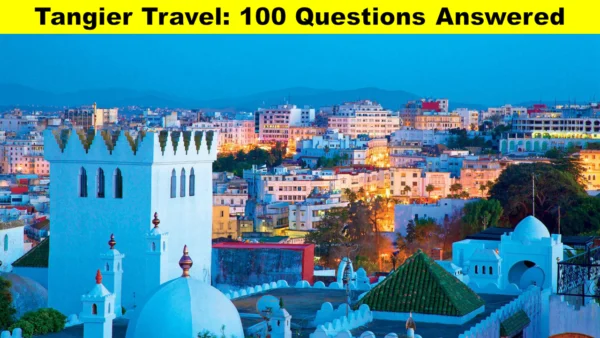
Tangier Travel: 100 Questions Answered based on NeemTime research
Arrival & Transportation
1. Q: Is it better to take the ferry to Tangier Ville or Tanger Med?
A: Tangier Ville. It drops you right in the center of the city. Tanger Med is a cargo and massive passenger port located about 40-50 minutes east of the city.
2. Q: Can I walk from the Tangier Ville port to the Medina?
A: Yes, it is a relatively easy 15-to-20-minute uphill walk, though it can be a bit steep if you are carrying heavy luggage.
3. Q: How do I get from Tanger Med to downtown Tangier if I end up there?
A: You can either take a grand taxi (shared or private) right outside the terminal or catch a local shuttle bus that connects the port to the main city.
4. Q: What is the difference between a Petit Taxi and a Grand Taxi in Tangier?
A: Petit Taxis are small blue cars that operate strictly within city limits and use a meter. Grand Taxis are larger, usually cream-colored, operate on set routes between cities, or can be hired privately.
5. Q: Should I expect the Petit Taxi driver to turn on the meter?
A: Yes, it is the law. If they refuse or say it is broken, ask them politely to turn it on (“baddal el-counter”) or simply get out and find another one.
6. Q: Is there a night surcharge for taxis in Tangier?
A: Yes, after 8:00 PM or 9:00 PM, a legal surcharge (usually around 50%) is added to the metered fare.
7. Q: Can I use ride-sharing apps like InDrive in Tangier?
A: InDrive operates but occupies a legal gray area. Locals use it frequently, but drivers prefer you sit in the front seat to look like a friend and avoid conflict with traditional taxi drivers.
8. Q: How do I get from the Tangier Ibn Battouta Airport (TNG) to the city center?
A: There is no commercial bus from the airport. You must take a Grand Taxi from the official rank. Fares are fixed and posted on a board at the airport exit.
9. Q: Is the high-speed Al Boraq train to Casablanca worth it?
A: Absolutely. It is modern, clean, punctual, and drops the travel time to Casablanca down to just over two hours. Book a few days early for the best rates.
10. Q: Is Tangier walkable for someone with mobility issues?
A: The modern beachfront promenade is flat and easy, but the historical Medina and Kasbah are built on a steep hill with many stairs, uneven cobblestones, and narrow passages.
11. Q: Can I take a direct bus from Tangier to Chefchaouen?
A: Yes, the CTM bus company runs regular daily routes from the main Tangier bus station (Gare Routière) straight to Chefchaouen.
12. Q: Where is the main train station located?
A: Tangier Ville Railway Station is located in the modern city center, right near the beachfront and city mall.
13. Q: Can I rent a car and drive around Tangier?
A: You can, but driving inside the old city centers is impossible, and navigating traffic can be aggressive. Rent a car only if you plan to do coastal road trips outside the city.
14. Q: How early should I arrive at the ferry port when leaving Tangier?
A: Arrive at least 1 to 2 hours early for foot passengers at Tangier Ville, and 3 hours early if you are driving a car or departing via Tanger Med due to customs and security checkpoints.
15. Q: Is there a hop-on-hop-off tourist bus in Tangier?
A: Yes, the red Tangier City Tour double-decker buses run two main routes covering both the city landmarks and historical coastal sites.
Safety, Scams & Solo Travel
16. Q: Is Tangier safe for tourists?
A: Generally, yes. It has evolved significantly over the past decade. Violent crime against tourists is incredibly rare, but petty theft and aggressive scams do happen.
17. Q: Is Tangier safe for solo female travelers?
A: Yes, but you will likely experience persistent catcalling or vendors trying hard to get your attention. Staying confident, ignoring unwanted chatter, and dressing modestly helps minimize this.
18. Q: What should I do if a “fake guide” starts walking with me in the Medina?
A: Firmly say “No, thank you” or “La, Shukran” immediately and keep walking. Do not accept directions or ask them questions, as they will demand payment later.
19. Q: Is it safe to walk around the Tangier Medina at night?
A: Stick to well-lit, busy commercial streets in the evening. Avoid deep, dark residential alleyways late at night when the shops have closed down.
20. Q: What is the most common scam near the ferry port?
A: People claiming the ferry is canceled, delayed, or that the ticket office has moved, attempting to redirect you to an overpriced travel agency or a specific hotel.
21. Q: Are the beach areas safe to walk along at night?
A: The main corniche (beach promenade) is highly populated, well-lit, and heavily policed, making it safe. Avoid walking right on the dark sand close to the water late at night.
22. Q: What should I look out for when buying items in the souks?
A: Always verify the quality before paying, and never accept the first price given. Haggling is expected and is part of the shopping culture.
23. Q: How do I handle aggressive street vendors or beggars?
A: Maintain eye contact, give a firm shake of the head, say “No” once, and keep moving. Avoid stopping out of politeness if you have no intention of buying.
24. Q: Is the water safe to drink straight from the tap in Tangier?
A: Locals drink it, but travelers are strongly advised to stick to sealed bottled water to avoid stomach upsets from differing mineral contents.
25. Q: What happens if a vendor places an item in my hand or on my shoulder?
A: Hand it back immediately or place it down on their counter. If you walk away with it, they will claim you agreed to buy it.
Money, Tipping & Communication
26. Q: Can I use Euros in Tangier, or do I need Moroccan Dirhams (MAD)?
A: Many places near the port, taxis, and large souvenir shops accept Euros, but they will give you a poor exchange rate. It is always cheaper and easier to pay in Dirhams.
27. Q: Are credit cards widely accepted in Tangier?
A: Only in mid-to-high-end hotels, modern restaurants, and large supermarkets. Cash is absolute king in the Medina, taxis, local cafes, and souks.
28. Q: Where is the best place to withdraw cash without massive fees?
A: Use official bank ATMs attached to physical bank branches (like Attijariwafa Bank or BMCE) rather than independent airport standalone machines.
29. Q: Is tipping mandatory in Tangier restaurants?
A: It is not strictly mandatory, but it is highly appreciated. Leaving 5% to 10% in casual dining spots is standard practice for good service.
30. Q: Should I tip taxi drivers?
A: It is not expected, but most people round up to the nearest 5 or 10 Dirhams as a courtesy.
31. Q: What languages are spoken in Tangier?
A: Moroccan Arabic (Darija) is the main language, but due to geography and history, Spanish and French are incredibly widely spoken by locals. English is common in tourist areas.
32. Q: Where can I buy a local SIM card upon arrival?
A: You can find official Maroc Telecom, Orange, or Inwi kiosks at the airport, near the port, or in the modern city center. Bring your passport to register it.
33. Q: Is haggling required for everything in Tangier?
A: No. Standard sit-down restaurants, modern retail stores, supermarkets, and taxis running on meters have fixed prices. Save your haggling for market stalls and souks.
34. Q: What is a fair starting counter-offer when haggling in the souks?
A: A common rule of thumb is to counter with roughly 30% to 50% of their initial asking price, then slowly negotiate to a mutually comfortable middle ground.
35. Q: Are ATMs easy to find in the old Medina?
A: There are a few near the main gates and squares (like Grand Socco), but they can run out of cash on weekends. Stock up on cash before heading deep into the inner streets.
Food, Drinks & Dining
36. Q: What are the must-try local dishes unique to Northern Morocco?
A: Try Bissara (a rich, savory fava bean soup topped with olive oil and cumin) and fresh Mediterranean seafood tagines.
37. Q: Is seafood safe and good to eat in Tangier?
A: Yes, Tangier is famous for its exceptionally fresh seafood caught daily from both the Atlantic and Mediterranean.
38. Q: What is the deal with Café Hafa? Why is it so famous?
A: It is an iconic cliffside outdoor cafe operating since 1921. Famous writers like William S. Burroughs visited it. Go for the simple mint tea and the stunning open views across the Strait of Gibraltar.
39. Q: Can I buy alcohol easily in Tangier?
A: Yes, unlike some more conservative cities, Tangier has dedicated liquor stores, hotel bars, and select restaurants that serve alcohol, especially around the modern beach promenade.
40. Q: What are the best traditional cafes for people-watching?
A: Café Paris in the modern city and the various cafes surrounding the Grand Socco plaza are perfect for sitting outside with a coffee.
41. Q: What is a “Café Cassé”?
A: It is the Moroccan version of a macchiato or a strong espresso cut with a small splash of hot milk. It is a staple order in local coffee shops.
42. Q: Are there good vegetarian options in Tangier?
A: Yes. While meat is popular, you can easily find vegetable couscous, vegetable tagines, lentil stews (Loubia), white bean stews (Loubia), and fresh salads.
43. Q: What time do locals usually eat dinner?
A: Dinner is typically eaten quite late, usually starting around 9:00 PM or even 10:00 PM.
44. Q: Is street food safe to eat in the Medina?
A: Yes, provided you eat at busy stalls with high customer turnover where the food is cooked fresh right in front of you. Look for vendors selling Kalinte (a chickpea flan).
45. Q: Where can I get an authentic, non-touristy seafood meal?
A: Head to local spots near the fishing port or check out popular community favorites like Restaurant Bachir for authentic, reasonably priced local meals.
Sightseeing & Activities
46. Q: What are the top things to do on a single-day trip to Tangier?
A: Explore the Kasbah Museum, wander the old Medina alleyways, have tea at Café Hafa, check out the Grand Socco, and visit the American Legation.
47. Q: What is the American Legation and why is it special?
A: It is the first American public property located outside the United States, commemorating the 1786 Moroccan-American Treaty of Friendship. It is now a beautiful museum and cultural center.
48. Q: How far are the Caves of Hercules from the city center?
A: They are located about 15 kilometers (9 miles) west of the city. You can get there easily by hiring a grand taxi or taking the tourist bus.
49. Q: Is it worth visiting Cap Spartel?
A: Yes, it is the scenic point where the Atlantic Ocean meets the Mediterranean Sea. The lighthouse and dramatic surrounding pine forests offer great views.
50. Q: What are the Phoenician Tombs (Tombeaux Phéniciens)?
A: These are ancient graves carved directly into stone cliffs overlooking the sea, located just outside the Kasbah walls. It is a popular spot for locals to gather and watch the sunset.
51. Q: Is there an entrance fee for the Kasbah Museum?
A: Yes, there is a small entry fee (usually around 20 to 30 MAD), but it is well worth it to see the beautiful Sultan’s palace architecture and historical artifacts.
52. Q: Can I swim at the main city beach in Tangier?
A: The city beach is fine for walking, but the water can be less clean due to its proximity to the busy port. For swimming, locals prefer the cleaner Atlantic beaches just west of the city.
53. Q: Is the Grand Socco a market?
A: It used to be the main market square, but today it is a lively plaza with a central fountain that bridges the gap between the historic old Medina and the modern city.
54. Q: Where can I find the best panoramic view of the Tangier port?
A: The rooftop terraces of the Kasbah or the viewpoint plaza at the historical Bab El Bahr (Gate of the Sea) offer great vantage points.
55. Q: Are there any good art galleries in Tangier?
A: Yes, Tangier has a rich artistic heritage. Check out the clean contemporary art spaces in the modern town or the independent cultural spots hidden throughout the Medina.
Culture, Etiquette & Clothing
56. Q: How should I dress as a tourist in Tangier?
A: While Tangier is quite cosmopolitan, it is still respectful to dress modestly. Keep shoulders and knees covered when exploring the historic Medina and residential zones.
57. Q: Do women need to wear a headscarf (hijab) to visit Tangier?
A: No, non-Muslim tourist women do not need to cover their heads anywhere in the city except if they are entering an active religious site that permits visitors.
58. Q: Can non-Muslims enter the mosques in Tangier?
A: No. Unlike the massive Hassan II Mosque in Casablanca, the active mosques in Tangier are strictly closed to non-Muslims. You can only admire the architecture from the outside.
59. Q: Is public display of affection (PDA) acceptable?
A: Holding hands is completely fine, but intense kissing or hugging in public spaces is considered inappropriate and offensive to local customs.
60. Q: Can I take photos of people or market stalls in the souks?
A: Always ask for permission first (“S’il vous plaît?” or gesturing to the camera). Some vendors dislike being photographed, while others may ask for a small tip in exchange.
61. Q: What is the main weekend in Morocco?
A: Friday is the holy day, so some shops in the Medina may close down in the afternoon for prayers. Saturday and Sunday function normally as the standard weekend for businesses.
62. Q: What should I know about visiting Tangier during Ramadan?
A: Many local cafes and restaurants close during the daytime, and smoking or eating in public view is discouraged. However, the city comes alive with festive night energy after sunset.
63. Q: Why do local men sit facing the street at cafes?
A: It is a deeply engrained cultural tradition of relaxation, socializing, and people-watching. It is a normal daily ritual.
64. Q: Is English widely understood by local shopkeepers?
A: Yes, most merchants in the main tourist areas speak basic conversational English alongside Spanish and French.
65. Q: What is the polite way to say “No” in Arabic to vendors?
A: Say “La, Shukran” (No, thank you) firmly but with a polite smile. It is highly effective.
Lodging & Accommodations
66. Q: Should I stay in a Riad or a modern hotel?
A: If you want a traditional, historical experience with unique architecture, choose a Riad or Dar in the Medina. Choose a beachfront hotel if you prefer modern amenities, elevators, and pool access.
67. Q: Are Riads easy to find within the Medina?
A: No, they are located down winding alleyways that look identical. Always ask your Riad host to meet you at a major gate or landmark when you first arrive.
68. Q: Do accommodations in Tangier have air conditioning?
A: Modern hotels always do. Historical Riads usually have thick stone walls that stay naturally cool, but it is always wise to double-check if they have installed AC units before booking.
69. Q: Is it noisy to stay inside the old Medina?
A: It can be lively during the day and early evening due to street life, calls to prayer, and children playing, but it typically gets very quiet late at night.
70. Q: Can unmarried couples stay in the same room?
A: For foreign tourists, hotels and Riads do not check marriage certificates. However, if one partner holds a Moroccan passport, law strictly requires a valid marriage certificate to share a room.
71. Q: Do I need to pay a tourist tax at my hotel?
A: Yes, a small local tourist overnight tax is legally charged per person, per night, and is often collected in cash at checkout if not included in your booking.
72. Q: Is it safe to leave my passport at the Riad reception desk?
A: They only need it for a few minutes to copy your details for the local tourism police registry. You can wait and take it back immediately.
73. Q: Do Riads serve breakfast?
A: Almost all traditional Riads include a fresh Moroccan breakfast (mint tea, coffee, fresh orange juice, breads, honey, and olives) served right on their rooftop terraces.
74. Q: Where should I stay if I want easy access to the train station?
A: Look for hotels in the modern city center near the Malabata district or around the City Mall plaza.
75. Q: Do hotels in Tangier have reliable Wi-Fi?
A: Modern hotels offer strong connections. In traditional Riads, the thick stone walls can sometimes block signals from reaching every room, though common areas work well.
Shopping & Souvenirs
76. Q: What are the best items to buy in Tangier?
A: Look for genuine leather goods, handmade woven blankets, spices, hand-carved woodwork, and authentic argan oil products.
77. Q: Where is the main shopping area?
A: The Souk Dakhli (inside the Medina) and the winding artisan streets branching off from the Grand Socco and Petit Socco plazas.
78. Q: How do I know if the Argan Oil is real or fake?
A: Real cosmetic argan oil has a very faint, nutty scent and absorbs quickly into the skin without leaving a sticky residue. Avoid buying cheap oil in plastic bottles from random street carts.
79. Q: Are shops closed on Sundays?
A: In the modern town, some corporate stores close. In the historic Medina, most vendor stalls stay open 7 days a week to cater to visitors.
80. Q: Can I ship large items (like rugs) back home easily?
A: Yes, reputable rug and handicraft shops routinely arrange international DHL or FedEx shipping for customers, though you must negotiate the shipping cost separately.
81. Q: Is the leather smell in the markets normal?
A: Yes, traditional Moroccan leather is tanned using organic ancient methods, which can give new items a strong, distinct smell that fades completely after a few days in the fresh air.
82. Q: Are prices for food in the local markets fixed?
A: Regular produce, fruit, and meat stalls have standard market rates that are regular for everyone. There is no need to aggressively haggle over everyday groceries.
83. Q: Can I buy authentic Moroccan rugs in Tangier, or should I wait for Marrakech?
A: Tangier has great selections, especially rugs from the northern Rif mountain tribes. You can buy here safely if you find a style you love and negotiate well.
84. Q: What is the Petit Socco?
A: A small, historic square deep within the Medina lined with cafes. It was once a famous gathering place for writers, artists, and money changers.
85. Q: Where can I buy fixed-price souvenirs if I hate haggling?
A: Look for government-regulated artisan cooperatives (Complexe Artisanal) where items have official price tags.
Day Trips & Surrounding Areas
86. Q: Can I do a day trip from Tangier to Chefchaouen?
A: Yes, it takes about 2 to 2.5 hours each way by taxi or bus. Leaving early in the morning gives you plenty of time to explore the famous blue streets before returning.
87. Q: Is it worth visiting Asilah from Tangier?
A: Yes, it is a gorgeous, relaxed coastal town just 40 minutes south of Tangier, famous for its clean white-and-blue buildings, sea views, and beautiful annual art murals.
88. Q: How do I get to Asilah easily?
A: You can take a short, cheap train ride from the Tangier Ville station or hop into a shared Grand Taxi heading south.
89. Q: Can I visit Tetouan as a day trip?
A: Yes, Tetouan is an overlooked gem with an exceptional UNESCO-listed Medina showing heavy Spanish-Moorish architectural influences, located about an hour away.
90. Q: Is it easy to cross over to Gibraltar for a day from Tangier?
A: It is possible via select ferry schedules, but it requires careful planning around customs, visa rules, and ferry timetables. It is usually easier to do the reverse trip.
Weather, Timing & Logistics
91. Q: When is the best time of year to visit Tangier?
A: Spring (March to May) and Autumn (September to November) offer beautiful, pleasant weather perfect for walking around without the intense summer heat or winter rains.
92. Q: Does it get cold in Tangier?
A: Yes, winter (December to February) can be quite chilly, windy, and rainy due to its location right on the coast. Pack a windbreaker and layers if visiting then.
93. Q: How many days do I need to fully see Tangier?
A: Two full days is ideal to see the main city highlights. Add extra days if you plan to use Tangier as a base for day trips to Asilah or Chefchaouen.
94. Q: Are there public restrooms available around the city?
A: Public restrooms are rare. The easiest option is to step into a local cafe, order a coffee or water, and use their customer restroom facilities.
95. Q: Is Tangier humid?
A: Yes, because it sits directly at the convergence of the sea and ocean, it experiences high humidity levels year-round.
96. Q: What type of power plug is used in Tangier?
A: They use the standard European Type C and Type E round two-pin plugs operating on a 220V system.
97. Q: Is it easy to find pharmacy shops in the city?
A: Yes, pharmacies are easily spotted by their bright green glowing crosses. They are well-stocked, and pharmacists can often prescribe basic medications directly.
98. Q: Are museums in Tangier open every day?
A: Most public museums close on Tuesdays. Always verify operating hours beforehand if planning a specific visit.
99. Q: Can I wear shorts in Tangier?
A: Knee-length shorts are completely fine for tourists along the beach promenade and modern city areas, but pant options are preferred when exploring traditional residential neighborhoods.
100. Q: What is the most important thing to keep in mind when visiting Tangier?
A: Keep an open mind and embrace the vibrant energy. Tangier is a unique crossroads of Africa and Europe, and simply walking through the neighborhoods is the best way to experience it.