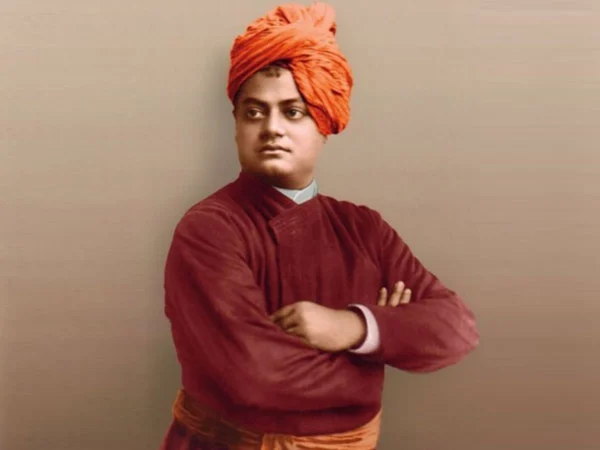
Swami Vivekananda based on NeemTime research
Who is Swami Vivekananda (Biography / Personal Details)
Swami Vivekananda, born Narendranath Datta on 12 January 1863 in Kolkata (then Calcutta), was a prominent Indian Hindu monk, philosopher, and spiritual leader.
He was the chief disciple of the 19th-century mystic Ramakrishna Paramahamsa, whose teachings deeply shaped his spiritual outlook.
Vivekananda is best known for introducing Indian philosophies of Vedanta and Yoga to the Western world, especially through his speeches in the United States and Europe.
He gained global recognition after his historic speech at the Parliament of the World’s Religions in Chicago in 1893, where he began with the famous words “Sisters and brothers of America.”
He founded the Ramakrishna Mission in 1897 at Belur Math near Kolkata, focusing on education, spirituality, and social service.
His teachings emphasized universal brotherhood, religious tolerance, self-realization, and the unity of all religions.
Vivekananda traveled extensively across India, inspiring youth to rise above poverty and social inequality through strength and education.
He strongly believed that spiritual growth and national development were interconnected for India’s progress.
He passed away at a young age of 39 on 4 July 1902 at Belur Math, reportedly during meditation.
Today, Swami Vivekananda is regarded as one of India’s greatest spiritual thinkers and an iconic figure in global philosophy.
Swami Vivekananda Height / How to Get Body Like Swami Vivekananda
Swami Vivekananda’s height is estimated to be around 5 feet 10 inches, based on historical accounts and photographs.
He was known for his strong, athletic build, sharp intellect, and powerful presence rather than physical training alone.
In his youth, he practiced wrestling and physical exercise, which was common among students in 19th-century Bengal.
Vivekananda believed that “a sound mind resides in a sound body,” emphasizing physical strength alongside spiritual growth.
To develop a body similar in discipline to his ideals, consistent physical activity such as yoga, calisthenics, and strength training is recommended.
He advocated simple vegetarian or sattvic dietary habits that support mental clarity and physical endurance.
Regular meditation and pranayama (breathing exercises) were central to his personal discipline and mental focus.
He discouraged laziness and promoted active living, travel, and service as part of a healthy lifestyle.
His lifestyle was not focused on aesthetics but on strength, stamina, and mental clarity for spiritual work.
Modern interpretations suggest combining fitness, mindfulness, and disciplined routine to reflect his holistic philosophy.
Swami Vivekananda: List of Partners & Dating History
Swami Vivekananda took lifelong monastic vows and remained a celibate monk throughout his life.
He had no romantic partners or dating history due to his spiritual commitment to Brahmacharya (celibacy).
His philosophy emphasized self-control, discipline, and renunciation of worldly attachments.
Vivekananda viewed emotional attachment as a potential distraction from spiritual enlightenment.
He encouraged his followers to channel emotional energy into service and spiritual development.
His relationship with women was respectful and rooted in seeing them as embodiments of divine energy (Shakti).
He maintained strong spiritual bonds with his guru Ramakrishna and fellow disciples at the monastic order.
Vivekananda often spoke about the importance of purity of thought and intention in human life.
His teachings influenced many youth movements promoting discipline and moral strength in India.
As a monk, his life was entirely dedicated to spiritual practice, teaching, and service to humanity.
Personal Life Highlights of Swami Vivekananda (List of Family Members)
Swami Vivekananda was born into an educated Bengali Kayastha family in Kolkata.
His father, Vishwanath Datta, was an attorney-at-law known for his rational and progressive thinking.
His mother, Bhuvaneshwari Devi, was deeply religious and played a major role in shaping his spiritual curiosity.
He had several siblings, including brothers and sisters, growing up in a large household environment.
His grandfather and extended family were also known for their intellectual and cultural background.
Despite his spiritual path, Vivekananda maintained emotional respect and affection for his family members.
After becoming a monk, he minimized physical contact with family but continued to acknowledge their influence.
His mother was initially concerned about his monastic life but later accepted his spiritual mission.
He maintained correspondence and occasional visits with family before his extensive travels abroad.
His family background provided a strong foundation of education, discipline, and cultural awareness.
Early Life Highlights of Swami Vivekananda (Background / Childhood)
Swami Vivekananda was born as Narendranath Datta into a prosperous and intellectually active household in Kolkata.
From childhood, he showed exceptional intelligence, curiosity, and interest in philosophy and religion.
He was educated at Presidency College and later Scottish Church College in Kolkata.
During his student years, he studied Western philosophy, logic, history, and Indian scriptures.
He was influenced by both rationalist thinkers and spiritual traditions, creating a unique worldview.
As a child, he was energetic and often engaged in sports, music, and reading.
He questioned religious rituals early in life, seeking direct experience of truth rather than blind faith.
His encounter with Ramakrishna Paramahamsa in his youth became a turning point in his spiritual journey.
He initially struggled with financial difficulties after his father’s death, shaping his awareness of social realities.
These early experiences laid the foundation for his later role as a global spiritual leader and reformer.
Swami Vivekananda Family
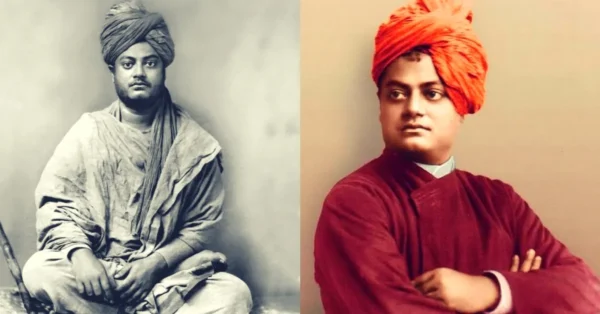
Swami Vivekananda Family 5
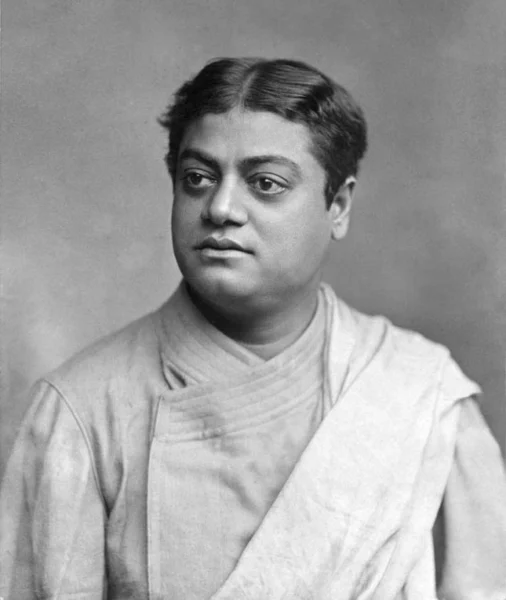
Swami Vivekananda Family 4
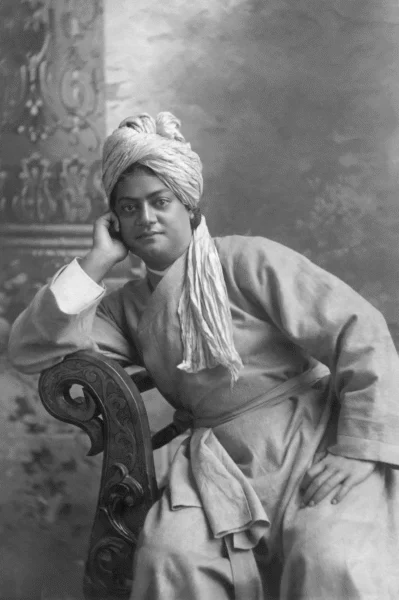
Swami Vivekananda Family 3
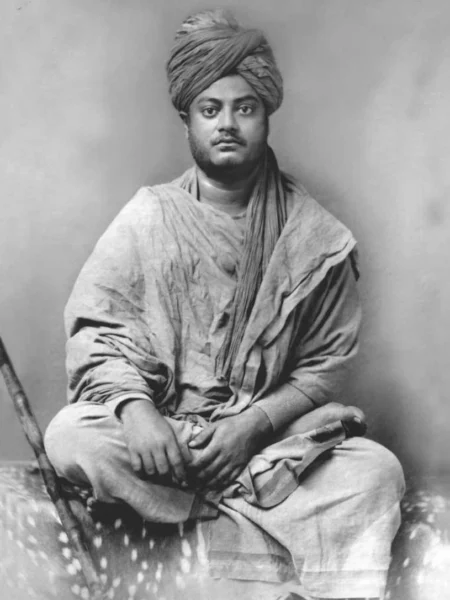
Swami Vivekananda Family 2
Swami Vivekananda Family
Current Life Highlights of Swami Vivekananda (Career / Other Work)
After returning to India in 1897 from his Western travels, Swami Vivekananda established the Ramakrishna Mission at Belur Math near Kolkata to promote education, healthcare, and spiritual upliftment.
In 1897, he organized relief work during famine conditions in Bengal, mobilizing monastic disciples and volunteers for humanitarian aid.
Between 1897 and 1899, he traveled extensively across India, visiting cities like Varanasi, Kanyakumari, Chennai, and Mumbai to inspire youth and deliver lectures on national revival.
At Kanyakumari in 1892 (later revisited in memory and inspiration), he experienced deep meditation on India’s condition, which influenced his vision for social reform and spiritual nationalism.
In 1898, he formally consecrated Belur Math as the headquarters of the Ramakrishna Order, creating a structured monastic institution combining service and spirituality.
He worked closely with disciples such as Swami Brahmananda, Swami Saradananda, and Swami Premananda to expand monastic and educational activities.
During this period, he emphasized education for women and rural upliftment, encouraging practical knowledge alongside spiritual growth.
He continued writing letters to followers in India and abroad, guiding them on Vedanta philosophy and disciplined living.
In 1899–1900, he made a second visit to the West, including the United States and France, to further spread Vedantic teachings and oversee mission-related activities.
His final years were spent at Belur Math, where he focused on meditation, teaching disciples, and refining the organizational structure of the Ramakrishna Mission before his death in 1902.
Swami Vivekananda Most Popular Media Appearances, Movies, TV Shows
The most widely known cinematic portrayal is the 1998 Indian film Swami Vivekananda, directed by G.V. Iyer, which depicts his life and spiritual journey.
The film The Light: Swami Vivekananda (2013) also presents dramatized events from his life and teachings.
Numerous Indian television serials, including episodes in Bharat Ek Khoj, have featured his Chicago speech and early life.
Documentary productions by Doordarshan and National Geographic India have covered his 1893 Chicago Parliament speech extensively.
His life is frequently depicted in educational television programming in India, especially during Independence Day and Republic Day broadcasts.
The Chicago World’s Parliament of Religions footage is regularly reenacted in documentaries focusing on global religious history.
Animated educational series for children in India often include simplified stories of his early life and teachings.
Stage plays and theatrical adaptations of his Chicago speech are performed in Indian cultural festivals and schools.
His quotes and philosophy are widely featured in motivational television programs and spiritual talk shows.
Modern digital platforms such as YouTube documentaries and podcasts continue to reinterpret his life for global audiences.
Swami Vivekananda Most Popular News Headlines, Controversies, Scandals
Swami Vivekananda’s Chicago speech in 1893 initially faced skepticism before becoming one of the most celebrated interfaith addresses in history.
Some 19th-century Western press reactions debated his bold criticism of religious superiority and colonial attitudes.
In India, early debates emerged around his emphasis on strength and nationalism, which some reformers interpreted differently.
His interpretation of Hindu philosophy was occasionally challenged by conservative religious scholars during his lifetime.
Posthumously, debates have arisen over interpretations of his political versus spiritual nationalism.
Certain modern political groups have attempted to associate his teachings with contemporary ideological narratives, leading to public debate.
Academic discussions sometimes question the exact historical accuracy of anecdotes recorded by disciples like Sister Nivedita.
His emphasis on monastic discipline led to internal organizational disagreements during the early formation of the Ramakrishna Mission.
Despite controversies, he has remained widely respected across religious and philosophical communities globally.
Most modern “controversies” surrounding him are interpretative rather than personal, as he lived a strictly monastic life.
Known Unknown Facts Trivia of Swami Vivekananda
Swami Vivekananda originally wanted to study law but shifted toward philosophy and spirituality after meeting Ramakrishna.
He traveled barefoot across many parts of India during his early monastic wandering phase.
His Chicago speech reportedly earned him a standing ovation lasting several minutes.
He was deeply influenced by Western thinkers like Herbert Spencer and John Stuart Mill.
He once experienced a vision of India’s spiritual unity while meditating at Kanyakumari.
He founded the Ramakrishna Mission based on principles of service, education, and spiritual realization.
He believed physical strength was essential for national regeneration and youth empowerment.
He was one of the earliest Indian spiritual leaders to gain global recognition in the West.
He maintained strong admiration for both Western science and Eastern spirituality, advocating their harmony.
His birthday, 12 January, is celebrated as National Youth Day in India.
Swami Vivekananda: Questions People Also Ask / Search & Answers
What is Swami Vivekananda famous for?
He is famous for introducing Vedanta and Yoga philosophy to the Western world and for his 1893 Chicago speech.
Where did Swami Vivekananda give his famous speech?
He delivered it at the Parliament of the World’s Religions in Chicago, USA, in 1893.
What did Vivekananda teach?
He taught universal brotherhood, self-confidence, service to humanity, and spiritual development through Vedanta.
Who was Swami Vivekananda’s गुरु (guru)?
His guru was Sri Ramakrishna Paramahamsa of Dakshineswar, Kolkata.
What organization did he found?
He founded the Ramakrishna Mission and Ramakrishna Math at Belur Math in 1897.
Why is Vivekananda important in India?
He inspired Indian nationalism, youth empowerment, and spiritual revival during British colonial rule.
Did Vivekananda travel outside India?
Yes, he traveled to the United States and Europe between 1893 and 1899.
What is his most famous quote?
“Arise, awake, and stop not till the goal is reached.”
What religion did Vivekananda follow?
He followed Hindu philosophy, especially Advaita Vedanta.
When is Swami Vivekananda Jayanti celebrated?
It is celebrated on 12 January every year as National Youth Day in India.