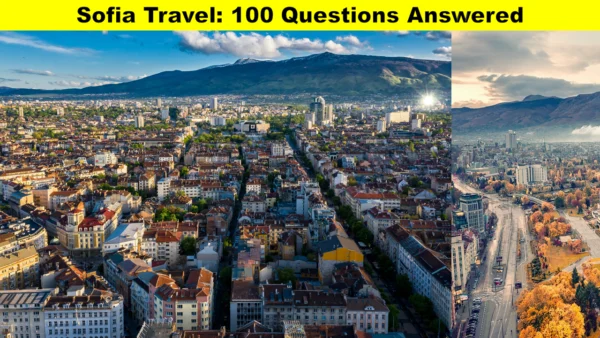
Sofia Travel: 100 Questions Answered based on NeemTime research
Logistics & Transport
Is there a metro from the airport? Yes, Line 4 (Yellow) connects Terminal 2 to the city center in about 30 minutes.
How do I get from Terminal 1 to Terminal 2? There is a free shuttle bus every 15–30 minutes; they are not connected by foot.
Can I pay for public transport with a credit card? Yes, you can tap any contactless card or phone on the readers.
Is there a daily cap on transport costs? Yes, after the third tap in a day, the system caps your charge at 4 BGN (about €2).
Which taxi app should I use? “Yellow Taxi” and “TaxiMe” are the most reliable and prevent “tourist pricing.”
Are taxis expensive? Generally no, a cross-town trip usually costs between 10–20 BGN.
Is Sofia walkable? The historic center is very compact and best explored on foot.
Should I take the train to Plovdiv? Many travelers suggest the bus instead, as it is faster and more reliable than the aging rail system.
Is the Central Railway Station safe? It’s a bit sketchy at night with many scammers; keep your wits about you.
Do I need to validate paper tickets? Yes, if you aren’t using contactless, you must punch paper tickets in the metal machines on board.
Sightseeing & Culture
What is the “must-see” landmark? Alexander Nevsky Cathedral; it is one of the largest Orthodox cathedrals in the world.
Are there Roman ruins? Yes, the Serdica ruins are located right inside the Serdika metro station.
Is the “Free Sofia Tour” worth it? It is highly recommended for a great 2-hour overview of the city.
Where can I see Communist history? The Museum of Socialist Art and the “Bells” monument are top picks.
What is the “Yellow Brick Road”? It’s the paved area in the center (Tsar Osvoboditel Blvd) made of actual yellow ceramic bricks.
Can I go inside the churches for free? Most are free, but they charge a fee for photography (usually 10 BGN).
What is the Largo? A complex of three Socialist Classicism buildings in the center housing the President’s office.
Where is the best view of the city? The rooftop bar at “Sense Hotel” or “Sense Rooftop Bar.”
What is the “Snail House”? A colorful, snail-shaped apartment building in the Simeonovo district.
Is the National Museum of History far? It’s in the Boyana district, about 15–20 minutes by taxi from the center.
Food & Drink
What is the most famous Bulgarian dish? Shopska Salad (tomatoes, cucumbers, onions, peppers, and sirene cheese).
What should I drink for breakfast? Ayran (salty yogurt drink) or Boza (fermented malt drink).
Is the tap water safe? Yes, Sofia’s tap water is high quality and safe to drink.
Where can I find public mineral springs? Next to the Central Market Hall (Tsentralni Hali); people fill bottles for free.
What is “Happy Bar & Grill”? A local chain that travelers swear by for consistent quality and massive menus.
What is Rakia? A potent fruit brandy; drink it slowly alongside a salad.
Do I need to tip? 10% is standard in restaurants if the service was good.
What is Banitsa? A flaky filo pastry filled with cheese, usually eaten for breakfast.
Are there many vegetarian options? Surprisingly yes, as many traditional salads and bean dishes are meat-free.
What is “Sirene”? A white brined cheese similar to Feta but creamier and often saltier.
Vitosha Mountain
Can I hike Vitosha from the city? Yes, it is the “backyard” mountain of Sofia.
How do I get there? Take the 122 bus to the Simeonovo cabin lift.
Is the lift always open? Check the “Vitosha Ski” website; it often closes for wind or maintenance.
What is the “Stone River”? Large boulders at Golden Bridges (Zlatnite Mostove) that look like a frozen river.
Is the Boyana Church worth the trip? Yes, it’s a UNESCO site with 13th-century frescoes, located at the foot of Vitosha.
Can I ski there? Yes, in winter, though facilities are somewhat dated compared to Bansko.
How long is the hike to Cherni Vrah? From the top of the lift, it’s a moderate 1.5–2 hour hike.
Is it safe to hike alone? Yes, the main trails are well-marked and busy on weekends.
Are there mountain huts? Yes, many “hizhas” serve hot soup and tea to hikers.
What should I wear? Even in summer, the peak is much colder than the city; bring a windbreaker.
Shopping & Prices
Is Sofia expensive? It is one of the most affordable capitals in the EU.
What is the main shopping street? Vitosha Boulevard (mostly pedestrianized).
Where can I buy souvenirs? The underground passage at the Sofia University metro or the Central Market Hall.
What should I buy? Rose oil products, Bulgarian wine, and colorful pottery (Troyan style).
Are credit cards widely accepted? In the city, yes. In small mountain villages or kiosks, carry cash (Leva).
What is the currency? Bulgarian Lev (BGN). It is pegged to the Euro (1 EUR ≈ 1.95 BGN).
Should I exchange money at the airport? No, the rates are poor. Use an ATM or a “Change” booth in the center.
Is bargaining common? Not in shops, but sometimes at flea markets (like the one near Nevsky Cathedral).
Are there big malls? Yes, Paradise Center and Serdika Center are huge and modern.
How much is a beer? A local pint is usually between 3–6 BGN.
Safety & Etiquette
Is Sofia safe for solo female travelers? Yes, it is generally very safe, even at night in the center.
What does a head shake mean? Be careful! Bulgarians often nod for “no” and shake for “yes.”
Do people speak English? Younger people do; older generations may speak more Russian or German.
Is there a dress code for churches? Shoulders and knees should be covered; women don’t usually need headscarves.
Are there “bad” neighborhoods? Avoid the area around the Fakulteta district and be cautious near the North Bus Station.
What is the emergency number? 112.
Is pickpocketing a problem? Only in very crowded areas like the tram or the flea markets; stay alert.
Can I use my drone? Regulations are strict near government buildings in the center; check local laws.
Is smoking allowed indoors? Officially no, but many “private clubs” or patios with plastic covers ignore this.
What is the “Cyrillic” connection? The Cyrillic alphabet was actually created in the First Bulgarian Empire, not Russia.
Day Trips
Can I visit Rila Monastery in a day? Yes, it’s about 2 hours away. Most people use a shuttle or rental car.
How do I get to Plovdiv? Buses leave every hour from the Central Bus Station.
Are the Seven Rila Lakes worth it? Absolutely, but it requires a full day and a chairlift ride.
Can I visit Koprivshtitsa? Yes, it’s a beautiful historic village about 2 hours east by train/bus.
Is Belogradchik Rocks reachable? It’s a long day (3+ hours one way); better as an overnight trip.
Can I go to North Macedonia? Yes, buses go to Skopje daily, but it’s a 4-hour trip.
Is there a beach nearby? No, the Black Sea is 5–6 hours away by car/train.
What is Sapareva Banya? A town near Rila with the hottest geyser in Europe and great thermal baths.
Can I visit the Buzludzha monument? It’s 3 hours away and technically closed to entry, but people go for the exterior view.
Are there organized day tours? “Traventuria” and “City Tour” are the most cited.
Nightlife & Entertainment
What is “Chalga”? Bulgarian pop-folk music; it’s polarizing but a unique cultural experience in clubs.
Where are the best bars? Shishman Street and the area around “The Small Five Corners.”
Is there a craft beer scene? Yes! Check out “Kanaal” or “Halbite.”
What is the National Palace of Culture (NDK)? A massive hexagonal building used for concerts and events; the park around it is a social hub.
Are clubs open late? Yes, many stay open until 6:00 AM.
Where can I see opera? The Sofia Opera and Ballet is excellent and very affordable.
Is there a jazz club? “Sofia Live Club” is highly rated.
What is “Dining in the Dark”? A popular experience at “Tenebris” restaurant.
Are there casinos? Yes, Sofia has many, though they vary wildly in quality.
Where do locals hang out? Crystal Park (near the National Theater) is popular for outdoor drinking in summer.
Practicalities
What plug do I need? Type F (standard European 2-pin).
Is the internet fast? Bulgaria has some of the fastest and cheapest internet in Europe.
When is the best time to visit? May–June or September–October for mild weather.
Does it snow in winter? Yes, often heavily in January and February.
What is “Baba Marta”? A March 1st tradition where people wear red and white “Martenitsa” bracelets.
Is there a “Sofia Pass”? Yes, but many travelers find just using contactless payment cheaper unless visiting many museums.
Where can I do laundry? “Green Laundry” is a popular self-service chain.
Are pharmacies common? Yes, marked with a green cross and usually easy to find.
Can I use e-scooters? Yes, “Lime” and other brands are available throughout the center.
Is there much graffiti? Yes, Sofia has a lot of “street art,” ranging from messy tags to professional murals.
Miscellaneous
What is the “Elephant” bookstore? A famous English-language bookstore with a cult following.
Are Bulgarians friendly? They may seem “cold” or “grumpy” at first (the Slavic exterior), but are generally very helpful once engaged.
What is the “Triangle of Religious Tolerance”? An area where a Mosque, Synagogue, and Catholic/Orthodox churches all stand within meters of each other.
Where can I see the Changing of the Guard? In front of the President’s Building every hour on the hour.
Are there public toilets? Rare. Use cafes or malls (sometimes they charge 0.50–1 BGN).
What is the “Sofia History Museum” housed in? The old Central Mineral Baths—the building is stunning.
Can I buy rose water? Yes, it’s everywhere and very high quality.
Is the “Red Flat” worth it? Yes, it’s an immersive museum showing life in a 1980s communist home.
Is Sofia dog-friendly? Many cafes allow dogs, and there are lots of parks.
Is one day enough for Sofia? Two days is better to see the main sites and Vitosha, but you can see the core center in one.