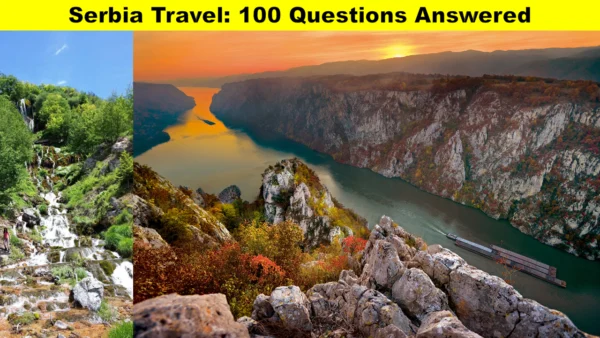
Serbia Travel: 100 Questions Answered based on NeemTime research
Logistics, Visas, and Money
1. Do I need a visa to visit Serbia? Citizens of the EU, USA, UK, Canada, Australia, and many other nations can enter visa-free for up to 90 days. Always double-check your specific passport requirements before booking.
2. Is it true I have to register with the police upon arrival? Yes, by law, foreigners must be registered within 24 hours. If you stay in a hotel or official Airbnb, they do this for you automatically. If staying with friends, you must go to a local police station together to get your “white card” (beli karton).
3. Do they check the “white card” at the border when leaving? Rarely nowadays, as the system is mostly digital, but immigration officers still occasionally ask for it. It is highly recommended to keep the physical slip or a photo of it on your phone just in case.
4. Can I pay with Euros in Serbia? Officially, no. The local currency is the Serbian Dinar (RSD). While some private drivers or accommodations accept Euros, daily transactions at shops, restaurants, and museums must be done in Dinars.
5. Are credit cards widely accepted? Yes, in major cities like Belgrade, Novi Sad, and Niš, credit cards are accepted almost everywhere, including supermarkets and smaller cafes. However, always carry cash for green markets, bakeries (pekara), smaller towns, and taxis.
6. Which ATMs should I use to avoid high fees? Stick to local bank ATMs like Alta, OTP, or Erste Bank. Avoid “Euronet” yellow-and-blue ATMs, as they charge notorious conversion fees and high transaction rates.
7. Should I exchange money at the airport? No, airport exchange rates are terrible. Wait until you get to the city center; official exchange offices (Menjačnica) are everywhere and offer incredibly fair, highly competitive rates.
8. What is a standard tip in Serbian restaurants? Tipping is not legally mandatory, but it is customary. For standard service, rounding up the bill is normal. For good service in a restaurant, a 10% tip is standard and highly appreciated.
9. Is Serbia expensive for tourists? It is much cheaper than Western Europe, but prices have risen recently. Belgrade is the most expensive area, while southern and eastern regions offer incredible value for food and accommodation.
10. Can I use eSIMs in Serbia? Yes, global providers like Airalo work perfectly. Alternatively, you can easily buy a local prepaid tourist SIM card from providers like Yettel, A1, or MTS at any kiosk.
Safety and Cultural Norms
11. Is Belgrade safe for solo female travelers? Travelers overwhelmingly agree that Belgrade is one of the safest capitals in Europe. Violent crime rates are remarkably low. Standard street smarts regarding pickpockets in crowded buses apply.
12. Is it safe to walk around at night? Yes, walking around late at night in major cities is safe. Streets are vibrant and well-lit, and locals of all ages are frequently out walking past midnight.
13. What is the tap water situation? Tap water is perfectly safe to drink in Belgrade and most of Serbia. However, in parts of the northern Vojvodina region (like Zrenjanin), it is highly advised to stick to bottled water due to heavy mineral contents.
14. How common is English in Serbia? Very common, especially among younger populations and anyone working in tourism or hospitality. You will have absolutely no problem getting around with English in Belgrade and Novi Sad.
15. Is smoking allowed indoors? Yes, Serbia is one of the last European nations where indoor smoking remains highly prevalent. Many traditional restaurants (kafanas) and bars allow smoking, though newer specialty coffee shops often ban it or have separate zones.
16. What should I avoid talking about with locals? Avoid bringing up the 1990s Yugoslav wars, NATO bombings, and the political status of Kosovo unless you know the person well. If the topic comes up naturally, it is best to listen rather than debate.
17. What are the dress codes for visiting monasteries? Both men and women should dress modestly. Shorts, short skirts, and sleeveless shirts are forbidden. Women are often expected to cover their shoulders, and some traditional monasteries request women to wear long skirts and headscarves, which are usually provided at the entrance.
18. How do Serbians feel about tourists? Serbs are famously hospitable and proud of their culture. If you ask for help on the street, locals will often go out of their way to guide you, sometimes even walking you to your destination.
19. Is the Cyrillic alphabet used everywhere? Both Latin and Cyrillic alphabets are official. Street signs and public transport notices in major hubs generally feature both scripts, so navigating is quite straightforward.
20. What is the standard greeting style? A firm handshake is standard. Among close friends, three kisses on alternating cheeks is the traditional Serbian greeting.
Transportation and Getting Around
21. How do I get from Belgrade Airport to the city center safely? Never take a random taxi waiting outside the terminal; they are notorious for scamming tourists. Instead, go to the official Taxi Info desk inside the baggage claim area to get a voucher with a fixed price, or take the efficient A1 shuttle bus.
22. Are ride-sharing apps available? Uber does not operate in Serbia. The local equivalent is Car:Go, which works exactly like Uber. Alternatively, you can use the Yandex Taxi or Pink Taxi apps.
23. Is public transportation free in Belgrade? No, it is not free, though a popular misconception exists because locals are rarely seen scanning tickets. Tickets can easily be bought via SMS text message or using the official “Beograd Plus” smartphone app.
24. Is the train system good? The “Soko” high-speed train between Belgrade and Novi Sad is world-class, clean, and takes only 30 minutes. However, trains to other parts of the country can be quite slow and outdated.
25. How do I travel to other cities if there are no high-speed trains? Buses are the backbone of domestic travel in Serbia. Companies like Lasta and Nis-Ekspres connect almost every town and village. You can check schedules online via the BAS (Belgrade Bus Station) platform.
26. Can I easily rent a car in Serbia? Yes, major international rental agencies operate at Belgrade Airport. A standard foreign driver’s license is generally accepted, though an International Driving Permit (IDP) is technically required by law and recommended.
27. What are the road conditions like? Major highways (like the A1 connecting Belgrade and Niš) are excellent and require a toll. Rural and mountainous roads in western or eastern Serbia can be narrow, winding, and prone to potholes, requiring careful driving.
28. How do I pay highway tolls? You can pay via cash (Dinars or Euros) or credit card at the toll booths. Alternatively, you can buy a prepaid electronic toll collection (ENP) tag if you plan on driving extensively.
29. Can I walk across the borders to neighboring countries? Walking across international borders is generally not allowed or practical. It is much safer and easier to use international bus lines or trains.
30. Is it easy to use a bicycle in Belgrade? New Belgrade (Novi Beograd) is flat and has excellent, designated bike lanes. Old Belgrade, however, is very hilly, has dense traffic, and lacks cycling infrastructure, making it challenging for casual riders.
Food, Drink, and Dining Culture
31. What is the national dish I must try? Ćevapi (grilled minced meat skinless sausages) and Pljeskavica (a spiced meat patty often compared to a gourmet burger).
32. What is a “Kafana”? A traditional Serbian tavern that serves local food, drinks, and often features live acoustic folk music. It is the absolute heart of Serbian social life.
33. What is Rakija? The traditional fruit brandy of the Balkans. The most popular flavors are Šljiva (plum), Viljamovka (pear), and Kajsija (apricot). It has a high alcohol content and is meant to be sipped slowly, not taken as a quick shot.
34. Are there options for vegetarians and vegans? Traditional Serbian cuisine is heavily meat-based, making it tricky for vegans in rural areas. However, Belgrade has a booming plant-based scene. In traditional spots, look for “posno” (fasting) foods, which are dairy- and meat-free.
35. What should I order for breakfast? Go to a local bakery (pekara) and order Burek (flaky pastry filled with cheese or minced meat) accompanied by a bottle of drinking yogurt. It is the ultimate local breakfast tradition.
36. Is the specialty coffee scene good? Belgrade has an exceptional third-wave coffee culture. Neighborhoods like Dorćol are packed with artisan roasters serving top-tier flat whites and pour-overs.
37. Can I find good local wine? Yes, Serbia has fantastic wine regions. The Fruška Gora region near Novi Sad is famous for its Bermet (a sweet, aromatic dessert wine), while the Aleksandrovac region is known for indigenous grapes like Prokupac and Tamjanika.
38. What is “Kajmak”? A rich, unripened dairy product similar to clotted cream but slightly savory. It is typically served melting over hot grilled meats or spread on fresh flatbread (lepinja).
39. Do I need to make reservations for restaurants? For popular restaurants and kafanas on Friday and Saturday nights, reservations are highly recommended. For casual dining during the day, walking in is perfectly fine.
40. What is “Karađorđeva Šnicla”? A rolled veal or pork steak stuffed with kajmak, breaded, and deep-fried. It is humorously referred to by locals as “the maidens’ dream” due to its shape.
Destinations: Belgrade
41. How many days should I spend in Belgrade? Three full days is the sweet spot to see the major historical sights, experience the food scene, and enjoy the famous nightlife without rushing.
42. What is Kalemegdan? It is the Belgrade Fortress, located at the confluence of the Sava and Danube rivers. It is a massive, free-access public park filled with historical ruins, museums, and the best sunset views in the city.
43. Is the Church of Saint Sava worth visiting? Absolutely. It is one of the largest Orthodox church buildings in the world. The interior crypt is covered in breathtaking, brilliant gold mosaics. Admission is free.
44. What is Skadarlija? The vintage, bohemian quarter of Belgrade. It is a cobblestone street lined with traditional kafanas, street performers, and flower decorations. While slightly touristy, it is an essential experience.
45. What are “Splavovi”? Floating river clubs and bars permanently anchored along the Sava and Danube rivers. They are the epicenter of Belgrade’s world-famous summer nightlife.
46. Which neighborhood is best to stay in? Stari Grad (Old Town) and Dorćol are highly walkable, historic, and packed with cafes. Vračar is a beautiful, upscale residential neighborhood near Saint Sava.
47. What is Zemun and should I visit? Zemun used to be a separate Austro-Hungarian town across the river. It has a completely different architectural style, charming narrow streets, the Millennium (Gardoš) Tower, and a gorgeous river promenade.
48. Where can I find the best views of the city? From the Gardoš Tower in Zemun, the ramparts of Kalemegdan Fortress, or from the observation deck of the Avala TV Tower just outside the city.
49. What is Ada Ciganlija? A river peninsula turned into an artificial lake. Known as “Belgrade’s Sea,” it features miles of beaches, cafes, bike paths, and water sports, making it the perfect spot for hot summer days.
50. Is the Nikola Tesla Museum worth it? Yes, but it is small and gets crowded. Book a timed English guided tour in advance to watch live demonstrations of Tesla coils and interactive electrical experiments.
Destinations: Novi Sad and Vojvodina
51. Can I do Novi Sad as a day trip from Belgrade? Yes, easily. Thanks to the 30-minute high-speed train, you can travel back and forth smoothly, making it a perfect day trip or weekend getaway.
52. What is the Petrovaradin Fortress? A massive fortress overlooking Novi Sad and the Danube. It features a unique clock tower where the small and large hands are reversed (so fishermen could see the hour from afar), and it hosts the annual EXIT music festival.
53. What makes Subotica unique? Located near the Hungarian border, Subotica is famous for its stunning, colorful Hungarian Art Nouveau architecture, particularly the City Hall and the Synagogue.
54. What is Fruška Gora? A beautiful national park mountain in Vojvodina. It is famous for its dense forests, hiking trails, and 16 beautifully preserved Serbian Orthodox monasteries dating back to the 15th century.
55. What is a “Salaš”? Traditional farmsteads typical of the flat Vojvodina plains. Many have been converted into rustic restaurants and guesthouses serving slow-cooked traditional meals in a peaceful countryside setting.
56. Is Sremski Karlovci worth visiting? Yes, it is a charming baroque town right next to Novi Sad, famous for its historic role in Serbian culture, beautiful architecture, and excellent local wine cellars.
57. When is the best time to visit Novi Sad? Spring and summer are wonderful, especially in July if you want to attend the massive EXIT Festival. Autumn is also beautiful for exploring the nearby wine routes.
58. What is the “Index Sandwich”? A famous, must-try local street food specialty originating in Novi Sad. It is a grilled bun filled with ham, melted cheese, mushrooms, and various condiments.
59. Is English common in Subotica and Sombor? Yes, though you will also hear a lot of Hungarian spoken due to the multi-ethnic demographic of the northern region. Hospitality workers speak English well.
60. Can I rent a boat on the Danube in Novi Sad? Yes, there are various local operators offering scenic afternoon boat tours around the Petrovaradin Fortress and nearby river islands.
Nature, National Parks, and Western Serbia
61. What is Tara National Park famous for? Breathtaking viewpoints overlooking the Drina River canyon (like Banjska Stena), pristine pine forests, emerald lakes (Zaovine and Perućac), and being home to wild brown bears.
62. Do I need a car to visit Tara National Park? A car is highly recommended. Public buses can get you to the gateway towns like Bajina Bašta, but accessing the best hiking trails and remote viewpoints without your own wheels is incredibly difficult.
63. What is the “House on the Drina”? A world-famous, tiny wooden cabin built on a rock right in the middle of the Drina River near Bajina Bašta. It is a highly popular, iconic photo spot.
64. What is Uvac Canyon? A spectacular river canyon famous for its dramatic, tight serpentine meanders and for being a protected habitat for the rare Griffon Vulture.
65. Can I take a boat tour through Uvac Canyon? Yes, guided boat tours operate through the canyon, often combining a boat ride with a hike up to the spectacular Molitva viewpoint.
66. What is Zlatibor? A highly popular mountain resort area. While the nature surrounding it is beautiful, the central town center has undergone heavy concrete and apartment development, which some travelers find overly commercialized.
67. What is “Drvengrad” (Küstendorf)? An ethno-village built entirely of wood by the famous Serbian film director Emir Kusturica for his movie “Life is a Miracle.” It operates as a unique tourist attraction and hotel.
68. What is the Šargan Eight railway? A historic, narrow-gauge steam train railway that runs in a unique figure-eight shape through dramatic mountain passes near Mokra Gora. It is a favorite among travelers.
69. Are trails well-marked for hiking in Serbia? In major national parks like Tara and Fruška Gora, the trails are reasonably well-marked. However, downloading offline maps like Maps.me or AllTrails is highly recommended before venturing out.
70. Are there bears in Serbian national parks? Yes, particularly in Tara National Park. While they generally avoid humans, it is wise to make noise while hiking and follow standard wildlife safety guidelines.
Southern, Eastern, and Historical Sites
71. What should I see in Niš? Niš is the largest city in the south. Do not miss the Skull Tower (Ćele Kula), the historic Niš Fortress, and the moving Crveni Krst concentration camp memorial site.
72. What is the Skull Tower? A unique monument built by the Ottoman Empire in 1809 using the skulls of fallen Serbian rebels as a warning to the local population. It is a somber but highly significant historical site.
73. What is Devil’s Town (Đavolja Varoš)? A unique natural phenomenon in southern Serbia consisting of over 200 striking, tall rock pillars topped with stone “hats,” created by natural erosion. It is surrounded by mysterious local legends.
74. What is Felix Romuliana? A UNESCO World Heritage site near Gamzigrad. It features the impressive ruins of an ancient Roman palace complex built by Emperor Galerius in the late 3rd century.
75. What is Golubac Fortress? A spectacularly restored medieval fortress built right into the cliffs where the Danube River narrows significantly. It looks like something straight out of a fantasy film.
76. What is the Iron Gates (Đerdap Gorge)? The longest and deepest gorge in Europe, where the Danube forms the natural border between Serbia and Romania. Boat tours here offer incredible views of the cliffs and the ancient rock carving of Decebalus on the Romanian side.
77. What is Lepenski Vir? An incredible archaeological site located within the Đerdap National Park, showcasing a prehistoric settlement dating back to 9500 BC, famous for its unique fish-like stone sculptures.
78. Is southern Serbian food different from Belgrade? Yes, the south is famous for having the absolute best barbecue (Roštilj) in the country, richer stews, and traditional clay-pot dishes. It is generally more traditional and budget-friendly.
79. What is Studenica Monastery? A 12th-century UNESCO World Heritage site located in central Serbia. It is considered the cradle of the medieval Serbian kingdom and houses priceless Byzantine frescoes.
80. Can I visit the Manasija Monastery? Yes, it is located near Despotovac and is highly famous for its massive, imposing medieval defensive walls and 11 military towers that completely surround the church.
Shopping, Nightlife, and Entertainment
81. What are the best souvenirs to buy? A bottle of homemade Rakija, a traditional hand-woven Pirot carpet design item, local honey, or a jar of Ajvar (a savory red pepper relish often called “Balkan caviar”).
82. Where is the best nightlife in Belgrade during winter? During winter, the outdoor river splavovi close down, and the nightlife shifts indoors to the cozy clubs and subterranean bars of the Savamala and Dorćol districts.
83. What is “Turbo-Folk”? A unique, highly energetic music genre that blends traditional Balkan folk melodies with modern electronic and pop beats. Experiencing a turbo-folk club is a fascinating cultural dive, though it might not suit everyone’s musical taste.
84. Where can I go shopping in Belgrade? Knez Mihailova is the main pedestrian shopping street lined with international brands. For massive shopping malls, check out Galerija (the largest in the region) in the Belgrade Waterfront area, or Ušće Mall.
85. Are shops open on Sundays? Yes, unlike many Central European countries, supermarkets, shopping malls, and many urban shops in Serbia operate normally on Sundays.
86. What is the legal drinking age? The legal age to purchase and consume alcohol in Serbia is 18 years old.
87. How late do bars stay open? Bars in major cities usually stay open until 1:00 AM or 2:00 AM on weekends, while nightclubs routinely stay open until 4:00 AM or 5:00 AM.
88. Can I buy authentic Serbian football jerseys easily? Yes, official national team gear can be purchased at the Football Association of Serbia shop near Hotel Moscow in downtown Belgrade, or at major sportswear chains in the shopping malls.
89. What is the Belgrade Waterfront? A massive, modern luxury real estate development along the Sava River. It features futuristic glass skyscrapers, high-end dining, a sprawling promenade, and contrasts sharply with the gritty, historic parts of old Belgrade.
90. Is Belgrade good for jazz and techno? Yes, Belgrade has a legendary underground electronic music scene, anchored by world-famous clubs like Drugstore (located in a brutalist former slaughterhouse). There are also fantastic cozy jazz bars scattered around Dorćol.
Seasonal Travel and Itineraries
91. When is the absolute best time to visit Serbia? May, June, September, and October offer the most pleasant weather for exploring cities and national parks without dealing with intense summer heat waves or freezing winter snow.
92. What is the weather like in August? It can get very hot, with temperatures frequently climbing past 35°C (95°F). Belgrade can feel empty during this time as many locals leave for seaside holidays, but the river bars and Ada Ciganlija are incredibly lively.
93. Is Serbia a good destination for winter holidays? Yes, if you enjoy winter sports. Mountain resorts like Kopaonik offer excellent, highly affordable ski slopes, modern ski lifts, and a fantastic après-ski atmosphere.
94. What is a recommended 7-day itinerary? Spend 3 days exploring Belgrade and Zemun, take a day trip to Novi Sad and Sremski Karlovci, then spend 3 days renting a car to explore Tara National Park and the Drina River house in Western Serbia.
95. Can I combine a trip to Serbia with neighboring countries? Yes, it is very common to combine Serbia with Bosnia and Herzegovina or Montenegro. Regular buses run between Belgrade and Sarajevo or Podgorica.
96. Is it safe to cross between Serbia and Kosovo? If you want to visit both, enter Kosovo from Serbia first, and then return to Serbia. If you enter Kosovo from another country (like Albania or North Macedonia), Serbian border guards may deny you direct entry into Serbia because they do not recognize Kosovo’s external border stamps.
97. What happens during Orthodox Christmas? Serbia follows the Julian calendar, celebrating Christmas on January 7th. January 6th (Badnji Dan) and 7th are quiet family holidays; many shops and restaurants close, so plan your dining and supplies accordingly.
98. What is the “Slava”? The Slava is an exclusively Serbian Orthodox tradition where families celebrate their patron saint. It is a massive feast filled with food, drink, and hospitality. If a local invites you to their Slava, consider it a massive honor and absolutely accept.
99. Are there any major summer music festivals besides EXIT? Yes, the Guča Trumpet Festival is a world-famous, wildly energetic brass band festival held every August in a small village in central Serbia. It is an intense, loud, and unforgettable cultural experience.
100. Is Western Union easy to find if I run out of cash? Yes, Western Union services are available at almost all major post offices (Pošta) and local banks across the country.