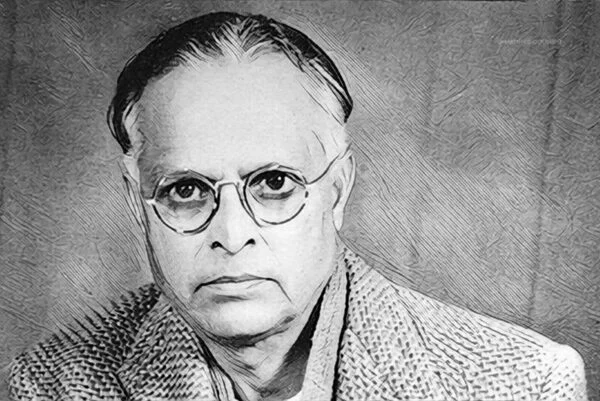
R. K. Narayan based on NeemTime research
Who is R. K. Narayan (Biography / Personal Details)
R. K. Narayan, whose full name was Rasipuram Krishnaswami Iyer Narayanaswami, was one of India’s greatest English-language novelists, born on October 10, 1906, in Madras (now Chennai), Tamil Nadu, India.
He became internationally famous for creating the fictional South Indian town of Malgudi, the setting for many of his novels and short stories that realistically portrayed everyday Indian life.
Narayan belonged to a distinguished South Indian family, and his younger brother R. K. Laxman became one of India’s most celebrated cartoonists, while another brother, R. K. Raman, pursued a career in publishing.
He received much of his education in Mysore, where he later attended Maharaja’s College and graduated from the University of Mysore after overcoming early academic setbacks.
His first novel, Swami and Friends, was published in 1935 with the encouragement of British novelist Graham Greene, who helped introduce Narayan’s work to international publishers.
Throughout his literary career, he authored more than thirty books, including celebrated novels such as The Bachelor of Arts, The English Teacher, The Guide, The Man-Eater of Malgudi, The Vendor of Sweets, and Malgudi Days.
R. K. Narayan received numerous prestigious honors, including the Sahitya Akademi Award, Padma Bhushan, Padma Vibhushan, and the A. C. Benson Medal from the Royal Society of Literature.
His novel The Guide won the Sahitya Akademi Award in 1960 and was later adapted into the famous Hindi film starring Dev Anand and Waheeda Rehman.
Narayan also served as a nominated member of the Rajya Sabha, where he advocated improvements in India’s education system and policies benefiting schoolchildren.
R. K. Narayan passed away on May 13, 2001, in Chennai, Tamil Nadu, at the age of 94, leaving behind one of the most influential bodies of work in modern Indian literature.
R. K. Narayan Height / How to Get Body Like R. K. Narayan
There is no officially verified historical record documenting R. K. Narayan’s exact height in feet or centimeters.
Based on available photographs throughout his adult life, he appeared to have an average build and a modest, slender physique.
Narayan was known more for his intellectual pursuits than for athletic activities, spending much of his life writing, reading, and observing everyday life.
His appearance reflected a simple and disciplined lifestyle that emphasized comfort, humility, and practicality rather than fashion or physical display.
To develop a physique similar to Narayan’s, focus on maintaining a healthy body weight through balanced eating rather than pursuing excessive muscle mass.
Include regular walking, light aerobic exercise, stretching, and basic strength training to promote overall health and mobility.
Consume a nutritious diet consisting of vegetables, fruits, whole grains, legumes, lean proteins, healthy fats, and adequate hydration.
Prioritize sufficient sleep, stress management, and consistent daily routines, habits that contribute significantly to long-term health.
Reading, writing, and engaging in intellectually stimulating activities can complement physical wellness by supporting mental health and cognitive function.
Since R. K. Narayan’s exact height has never been reliably documented, any specific numerical claim should be regarded as unverified.
R. K. Narayan: List of Partners & Dating History
R. K. Narayan married Rajam Narayan in 1934, and theirs became one of the most significant relationships of his life.
The marriage was widely regarded as affectionate and deeply supportive, with Rajam encouraging Narayan during the early years of his literary career.
The couple welcomed one daughter, Hema Narayan, who remained an important part of Narayan’s personal life.
Tragically, Rajam died of typhoid in 1939, only five years after their marriage, leaving Narayan emotionally devastated.
Her death profoundly influenced his writing and inspired many emotional passages in his autobiographical novel The English Teacher.
Following Rajam’s death, Narayan never remarried and chose to devote himself to raising his daughter and pursuing his literary work.
He occasionally wrote about his belief in spiritual communication with his late wife, a deeply personal aspect of his life that influenced some of his reflections.
There are no verified records of Narayan having any publicly confirmed romantic relationships after Rajam’s passing.
Friends and literary scholars often described him as intensely devoted to the memory of his wife throughout the remainder of his life.
Consequently, Rajam Narayan remains the only confirmed life partner in R. K. Narayan’s documented personal history.
Personal Life Highlights of R. K. Narayan (List of Family Members)
R. K. Narayan was born to Krishnaswami Iyer, a respected school headmaster, and Gnanambal, who encouraged education and learning within the family.
During much of his childhood, he lived with his grandmother Parvati, whose affection and storytelling greatly influenced his imagination.
His younger brother R. K. Laxman became one of India’s greatest cartoonists, famous for creating The Common Man character.
Another brother, R. K. Raman, worked in the publishing field and supported literary activities.
Narayan married Rajam Narayan in 1934, beginning a happy marriage that ended with her untimely death in 1939.
Their daughter Hema Narayan remained his only child and was raised largely by Narayan following his wife’s death.
Despite becoming internationally famous, Narayan maintained a quiet and private family life centered primarily in Mysore and later Chennai.
He shared a lifelong close relationship with his brother R. K. Laxman, and the two remained among India’s most respected literary and artistic figures.
Family members often described Narayan as humble, disciplined, soft-spoken, and deeply devoted to literature rather than public attention.
His close-knit family relationships significantly influenced the warmth, humor, and emotional realism that characterize many of his novels.
Early Life Highlights of R. K. Narayan (Background / Childhood)
R. K. Narayan was born on October 10, 1906, in Madras (Chennai), Tamil Nadu, during British colonial rule in India.
Because his father worked as a school headmaster in different towns, young Narayan spent much of his childhood living with his grandmother Parvati in Madras.
His grandmother played a major role in his upbringing, teaching him traditional values, storytelling, and an appreciation for Indian culture.
As a child, Narayan enjoyed reading widely and developed an early fascination with English literature and imaginative storytelling.
He later moved to Mysore, where he completed most of his formal education and developed a lifelong attachment to the city.
Narayan initially struggled academically and failed the university entrance examination before eventually qualifying for higher education.
He graduated from Maharaja’s College, affiliated with the University of Mysore, where he refined his interest in literature and writing.
Before becoming a successful novelist, he briefly worked as a teacher but soon realized that writing was his true calling.
During his early career, he faced repeated manuscript rejections until British novelist Graham Greene recognized his talent and helped secure publication of Swami and Friends in 1935.
These formative experiences of family life, education, perseverance, and observation of ordinary people laid the foundation for the timeless fictional world of Malgudi, which became one of the most beloved settings in Indian literature.
R. K. Narayan Family
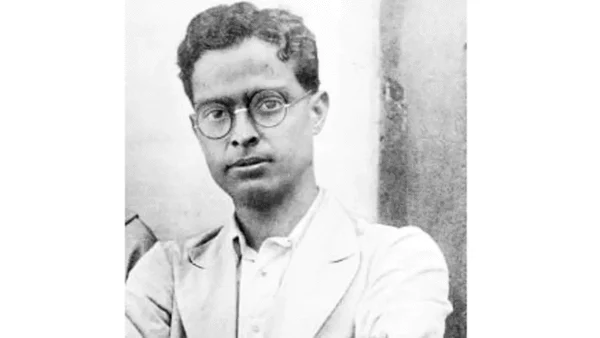
R K Narayan Family 5
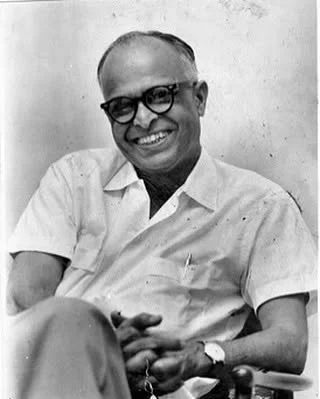
R K Narayan Family 4
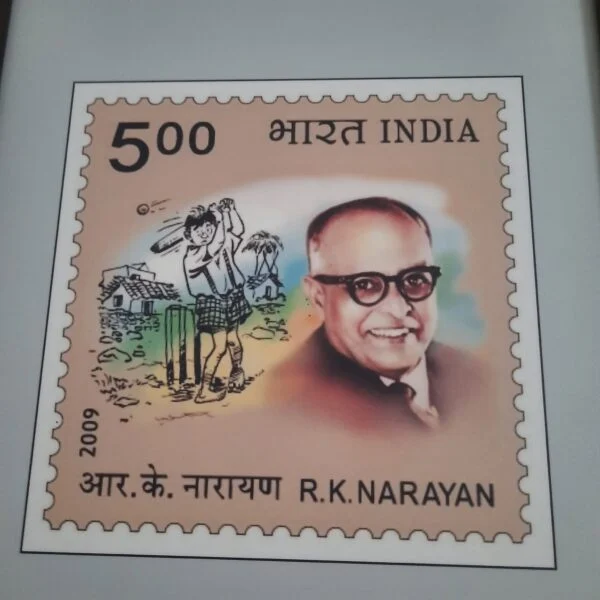
R K Narayan Family 3
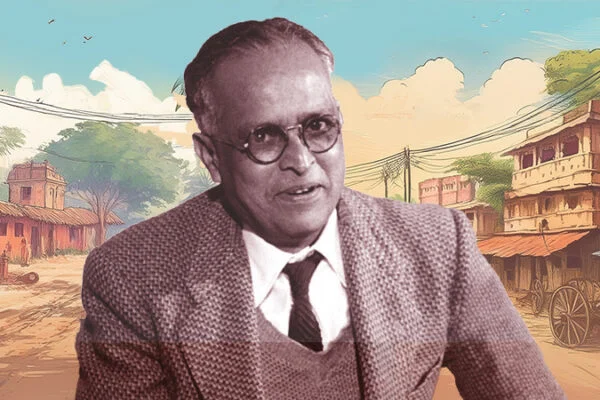
R K Narayan Family
R K Narayan Family 2
Current Life Highlights of R. K. Narayan (Career / Other Work)
Although R. K. Narayan passed away on May 13, 2001, his literary legacy remains highly influential, with his novels continuing to be published, translated, and studied worldwide as of today.
His fictional town of Malgudi remains one of the most recognizable literary settings in Indian English literature, inspiring readers, writers, educators, and researchers across multiple generations.
Universities throughout India, the United Kingdom, the United States, and other countries continue to include Swami and Friends, The Guide, Malgudi Days, and The English Teacher in literature curricula.
His books remain consistently available through major publishers, with new editions, annotated versions, and digital formats ensuring continued accessibility for modern readers.
Literary conferences and academic seminars regularly analyze Narayan’s writing style, character development, humor, and realistic portrayal of everyday Indian society during the twentieth century.
His contribution to Indian English literature continues to be compared alongside celebrated authors such as Mulk Raj Anand, Raja Rao, Salman Rushdie, and Amitav Ghosh.
Television adaptations of Malgudi Days continue to introduce younger audiences to Narayan’s timeless storytelling, keeping his characters culturally relevant decades after his death.
Scholars continue publishing books and research papers exploring Narayan’s themes of tradition, modernization, spirituality, education, and ordinary middle-class life.
His major literary honors—including the Padma Bhushan, Padma Vibhushan, Sahitya Akademi Award, and A. C. Benson Medal—continue to symbolize his lasting contribution to world literature.
As of today, R. K. Narayan remains one of the most widely read, respected, and internationally recognized Indian novelists, with his works continuing to influence literature, education, television, and cultural studies.
R. K. Narayan Most Popular Media Appearances, Movies, TV Shows
1965 – Mumbai, India: The Hindi film Guide, starring Dev Anand and Waheeda Rehman, was adapted from Narayan’s award-winning novel The Guide, becoming one of Indian cinema’s greatest classics.
1965 – India: Although Narayan appreciated parts of Guide, he publicly expressed disappointment that the film differed significantly from the storyline and ending of his original novel.
1986 – India: Director Shankar Nag created the television series Malgudi Days for Doordarshan, adapting numerous stories written by R. K. Narayan.
1986 – Agumbe, Karnataka: Much of Malgudi Days was filmed in the picturesque village of Agumbe, whose scenery became permanently associated with Narayan’s fictional town.
1987–1988 – India: Additional episodes of Malgudi Days expanded the television adaptation by bringing beloved characters such as Swami, Muni, and Naga to audiences nationwide.
2006 – India: A restored and digitally enhanced version of Malgudi Days was rebroadcast, introducing Narayan’s stories to a new generation of television viewers.
Multiple Years – International: BBC Radio and other broadcasters have produced dramatized adaptations of Narayan’s novels and short stories for English-speaking audiences.
Numerous Years – Worldwide: Documentary programs on Indian literature regularly feature Narayan’s life, his creation of Malgudi, and his influence on modern English-language fiction.
Academic Productions – India and Abroad: Universities frequently stage dramatic performances inspired by Swami and Friends, The Guide, and other works as part of literature festivals and educational programs.
Continuing Legacy – Today: Streaming platforms, educational television, and literary documentaries continue showcasing adaptations and discussions of Narayan’s works, ensuring his stories remain culturally significant.
R. K. Narayan Most Popular News Headlines, Controversies, Scandals
Since R. K. Narayan passed away in 2001, modern headlines have primarily celebrated his literary achievements rather than reporting controversies.
One of the most discussed historical issues involved Narayan’s public criticism of the 1965 film Guide, as he believed the screenplay departed substantially from his original novel.
Literary scholars continue debating whether the film adaptation improved or weakened the philosophical ending created by Narayan.
Narayan occasionally criticized aspects of India’s education system during his tenure as a nominated member of the Rajya Sabha, advocating reforms that benefited schoolchildren.
His speeches in Parliament attracted attention because he argued that excessively heavy schoolbags placed unnecessary burdens on students.
Unlike many prominent public figures, Narayan avoided political scandals, legal disputes, financial controversies, and sensational personal headlines throughout his career.
Some literary critics debated whether his depiction of Indian society was overly gentle and insufficiently political, while others praised precisely that understated realism.
Academic discussions have occasionally questioned whether Malgudi represents an idealized version of South Indian life, generating scholarly debate rather than public controversy.
Renewed interest in television adaptations and anniversary editions of his books periodically returns Narayan to literary headlines across India.
Overall, R. K. Narayan remains remembered as one of India’s least controversial literary legends, with his reputation built overwhelmingly on artistic excellence, humility, and timeless storytelling.
Known Unknown Facts Trivia of R. K. Narayan
R. K. Narayan’s full birth name was Rasipuram Krishnaswami Iyer Narayanaswami, one of the longest full names among famous Indian authors.
His famous fictional town Malgudi does not exist on any map but has become one of the world’s most recognizable imaginary literary locations.
British novelist Graham Greene helped Narayan secure publication of Swami and Friends and even suggested shortening his pen name to the simpler R. K. Narayan.
Before achieving literary success, Narayan experienced numerous manuscript rejections from publishers.
His younger brother R. K. Laxman became India’s legendary political cartoonist and creator of The Common Man.
Narayan’s deeply personal novel The English Teacher was inspired by the death of his wife Rajam, making it one of his most emotional works.
He believed strongly in observing ordinary people and everyday conversations, often transforming simple incidents into memorable stories.
Narayan was nominated to the Rajya Sabha, where he advocated educational reforms despite generally avoiding active politics.
His works have been translated into dozens of international languages, allowing readers around the world to experience Indian life through the fictional town of Malgudi.
Despite worldwide recognition, Narayan maintained a remarkably modest lifestyle and preferred quiet writing routines over celebrity status or public attention.
R. K. Narayan: Questions People Also Ask / Search & Answers
Who was R. K. Narayan?
R. K. Narayan was one of India’s greatest English-language novelists, internationally renowned for creating the fictional town of Malgudi and writing classics such as Swami and Friends, The Guide, and Malgudi Days.
What is R. K. Narayan most famous for?
He is best known for creating Malgudi, a fictional South Indian town that serves as the setting for many of his novels and short stories.
What was R. K. Narayan’s full name?
His full name was Rasipuram Krishnaswami Iyer Narayanaswami.
Who helped R. K. Narayan become internationally famous?
British novelist Graham Greene helped introduce Narayan’s work to international publishers by supporting the publication of Swami and Friends.
Which novel won R. K. Narayan the Sahitya Akademi Award?
The Guide received the Sahitya Akademi Award in 1960 and remains one of his greatest literary achievements.
Was Malgudi a real place?
No. Malgudi is an entirely fictional town created by Narayan, although it was inspired by several South Indian locations.
Was Malgudi Days based on R. K. Narayan’s stories?
Yes. The famous television series Malgudi Days, directed by Shankar Nag, adapted many of Narayan’s short stories and novels.
Did R. K. Narayan receive national awards?
Yes. He received the Padma Bhushan, Padma Vibhushan, Sahitya Akademi Award, and numerous international literary honors.
Why is R. K. Narayan important in Indian literature?
He helped establish Indian writing in English on the global stage through simple yet profound storytelling, memorable characters, and authentic depictions of everyday Indian life.
When did R. K. Narayan die?
R. K. Narayan passed away on May 13, 2001, in Chennai, Tamil Nadu, India, at the age of 94, leaving behind one of the richest literary legacies in modern Indian literature.