Frida Kahlo based on NeemTime research
Who is Frida Kahlo (Biography / Personal Details)
Frida Kahlo was a Mexican painter born on July 6, 1907, in Coyoacán, Mexico City, and became one of the most influential artists of the 20th century.
She is best known for her deeply personal self-portraits that explore identity, pain, gender, and postcolonial Mexican culture.
Kahlo contracted polio at age six, which left her right leg thinner and shorter than the left, shaping her physical and emotional experiences throughout life.
At age 18, she suffered a severe bus accident in 1925 that caused multiple fractures to her spine, pelvis, and legs, leading to lifelong medical complications.
During her recovery, she began painting seriously while bedridden, using a special easel and mirror installed above her bed.
She married famous muralist Diego Rivera in 1929, a relationship marked by both artistic collaboration and emotional turbulence.
Kahlo was politically active and joined the Mexican Communist Party, engaging with intellectuals like Leon Trotsky during his exile in Mexico.
Her artwork blends surrealism and realism, although she personally rejected the surrealist label, insisting her paintings reflected her reality.
She gained international recognition in the 1930s and 1940s through exhibitions in the United States and Europe, including New York and Paris.
Kahlo died on July 13, 1954, in Coyoacán, but her legacy continues globally as a symbol of resilience, feminism, and cultural identity.
Frida Kahlo Height / How to Get Body Like Frida Kahlo
Frida Kahlo was approximately 5 feet 3 inches tall, though her posture was affected by lifelong spinal injuries.
Her body was shaped not by fitness training but by medical conditions including polio and severe trauma from a bus accident.
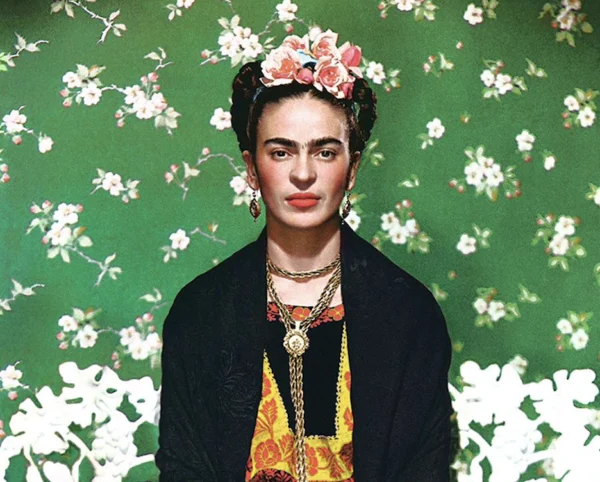
She often wore traditional Tehuana dresses to express cultural pride and to conceal physical discomfort and asymmetry in her legs.
There is no “fitness model” approach associated with her physique, as her appearance was largely defined by health challenges rather than athletic conditioning.
Modern interpretations of her body image focus more on self-acceptance and identity than on physical transformation goals.
She underwent numerous surgeries and wore medical corsets, which influenced her posture and the way she posed in self-portraits.
Kahlo’s diet and physical routine were heavily constrained by chronic pain, making conventional exercise-based body goals inapplicable.
Her strength is often interpreted symbolically, reflecting emotional resilience rather than physical fitness.
Museums like the Frida Kahlo Museum in Mexico City display her personal medical corsets and clothing as part of her bodily history.
Any modern “how to look like her” interpretation is better understood as adopting her artistic expression, cultural style, and confidence rather than physical replication.
Frida Kahlo: List of Partners & Dating History
Frida Kahlo had a complex romantic life most famously centered around her marriage to Diego Rivera.
She married Diego Rivera in 1929, divorced him in 1939, and remarried him again in 1940, reflecting a deeply turbulent relationship.
She had an affair with Russian revolutionary Leon Trotsky while he was living in exile in Mexico in 1937.
Kahlo was also romantically linked to Hungarian-American photographer Nickolas Muray, who took many iconic portraits of her.
She reportedly had relationships with both men and women, including singer Chavela Vargas, though some accounts remain historically debated.
Her relationship with Diego Rivera influenced much of her emotional and artistic output, especially her self-portraits.
Kahlo’s letters and diaries reveal emotional struggles tied to infidelity, independence, and identity within her relationships.
She often expressed her pain and passion through symbolic imagery in her paintings rather than traditional romantic narratives.
Her relationships were intertwined with political circles, as both she and Rivera were involved in leftist intellectual movements.
Her romantic life continues to be studied as part of her broader exploration of identity, gender, and emotional expression.
Personal Life Highlights of Frida Kahlo (List of Family Members)
Frida Kahlo was born to Guillermo Kahlo, a German-Mexican photographer who influenced her artistic eye.
Her mother, Matilde Calderón y González, was of Indigenous and Spanish descent and raised Frida in a strict Catholic household.
She had three sisters: Matilde, Adriana, and Cristina Kahlo, with Cristina later becoming closely involved in Frida’s personal life.
Her sister Cristina also had an affair with Diego Rivera, which deeply affected Frida emotionally.
Frida married Diego Rivera, and although they had no surviving children together, she experienced multiple miscarriages due to health complications.
She had a close emotional bond with her father, Guillermo, especially during her recovery periods after illness and injury.
Her family home, known as the Blue House (Casa Azul) in Coyoacán, became her lifelong residence and later a museum.
Kahlo’s extended family played roles in preserving her legacy after her death in 1954.
Her ancestry combined German and Mexican roots, which influenced her exploration of identity in her art.
Her family relationships were often emotionally intense and directly reflected in her artistic symbolism and self-portraits.
Early Life Highlights of Frida Kahlo (Background / Childhood)
Frida Kahlo was born and raised in Coyoacán, a cultural district of Mexico City known for its artistic community.
She contracted polio at age six, which caused long-term physical differences in her right leg.
Because of her illness, she spent much of her childhood isolated and developed strong imagination and observational skills.
Her father, Guillermo Kahlo, encouraged her intellectual development and taught her photography techniques.
She attended the National Preparatory School in Mexico City in 1922, one of the few women in her class.
At school, she became involved with a group of politically and intellectually active students known as “Los Cachuchas.”
She initially planned to study medicine before her bus accident redirected her life toward art.
The 1925 accident occurred when a streetcar collided with the bus she was riding, causing severe injuries.
During her long recovery, she began painting self-portraits that reflected her physical and emotional pain.
Her early experiences with illness, education, and political awareness shaped the symbolic intensity of her later artwork.
Frida Kahlo Family
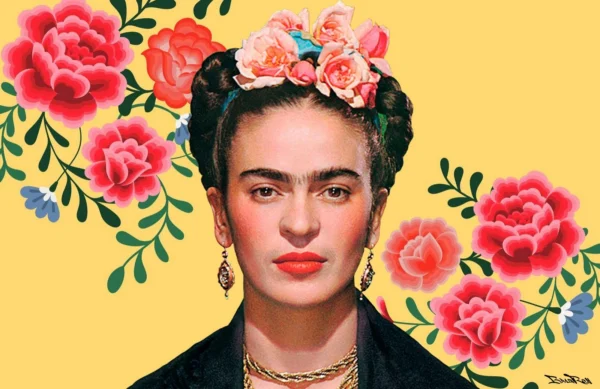
Frida Kahlo Family 5
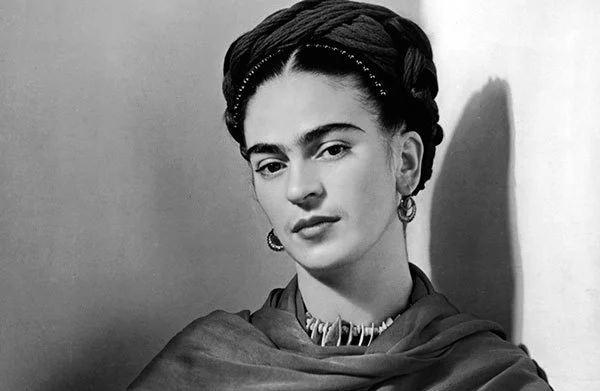
Frida Kahlo Family 4
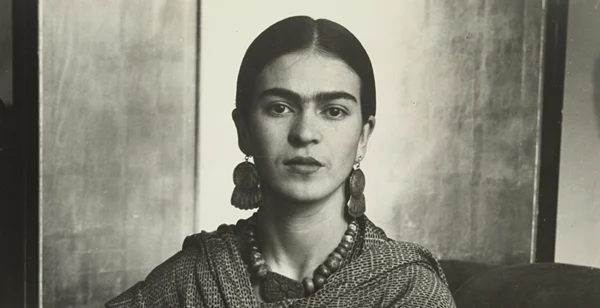
Frida Kahlo Family 3
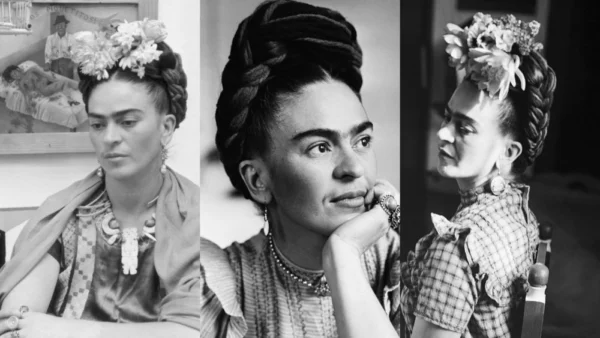
Frida Kahlo Family 2
Frida Kahlo Family
Current Life Highlights of Frida Kahlo (Career / Other Work)
Frida Kahlo continued producing major works throughout the 1930s–1950s while living primarily at Casa Azul in Coyoacán, Mexico City, where she transformed personal suffering into symbolic art.
In 1938, she held her first solo exhibition at the Julien Levy Gallery in New York City, gaining attention from American surrealist circles and collectors.
In 1939, she exhibited in Paris at the Galerie Renou et Colle, where André Breton promoted her as a surrealist artist, though she rejected the label.
During the 1940s, she taught at the Escuela Nacional de Pintura, Escultura y Grabado “La Esmeralda” in Mexico City, mentoring students known as “Los Fridos.”
She created some of her most famous works during this period, including “The Two Fridas” (1939) and “Self-Portrait with Thorn Necklace and Hummingbird” (1940) while living through emotional turmoil.
In 1943, she became a founding member of the Seminar of Mexican Culture, participating in intellectual and artistic policy discussions in Mexico.
Her health deteriorated significantly in the late 1940s and early 1950s, requiring multiple spinal surgeries and prolonged bed rest in Mexico City hospitals.
In 1953, she had her first solo exhibition in Mexico at the Galería de Arte Contemporáneo, attended while she was carried in a bed due to poor health.
Despite severe pain, she remained politically active, supporting socialist causes and maintaining membership in the Mexican Communist Party during key political shifts.
Her late-career work increasingly reflected themes of mortality, identity, and physical suffering, cementing her legacy as a central figure in modern Mexican art.
Frida Kahlo Most Popular Media Appearances, Movies, TV Shows
Frida Kahlo has been the subject of numerous films, documentaries, and television portrayals that explore her life and art.
The 2002 film “Frida,” directed by Julie Taymor and starring Salma Hayek, is one of the most widely recognized cinematic portrayals of her life.
The same film received multiple Academy Award nominations and brought global renewed attention to Kahlo’s artwork and biography.
The documentary “The Life and Times of Frida Kahlo” (2005) by Amy Stechler and Karen Falk examines her paintings alongside historical context.
She has appeared in animated or artistic representations in cultural programs and educational TV documentaries produced in Mexico and the United States.
The BBC and PBS have both aired biographical documentaries focusing on her artistic symbolism and political engagement.
Kahlo’s life has been referenced in television series about art history and feminist movements, especially in academic programming.
Her image and self-portraits frequently appear in museum documentaries, including features by the Museo Frida Kahlo in Mexico City.
She is often portrayed in theatrical productions and stage adaptations that interpret her diaries and letters for performance art.
Modern streaming platforms continue to feature documentaries and biopics about her, reflecting her enduring global cultural influence.
Frida Kahlo Most Popular News Headlines, Controversies, Scandals
Frida Kahlo was often discussed in relation to her controversial political associations, particularly her affiliation with communism in Mexico.
Her relationship with Leon Trotsky in 1937 became a widely reported scandal due to both political and personal implications during his exile in Mexico City.
The turbulent marriage and repeated divorce/reconciliation with Diego Rivera frequently made headlines in Mexican cultural circles.
Some critics in her lifetime dismissed her work as “too personal” or “non-traditional,” sparking debates in the art community.
Her 1939 Paris exhibition caused controversy because André Breton labeled her surrealist, which she publicly rejected as a misunderstanding of her identity.
Posthumously, disputes arose over ownership and commercialization of her image, especially regarding fashion brands and commercial licensing.
In the late 20th century, feminist scholars debated whether her life story was sometimes oversimplified into symbolic victimhood narratives.
The handling of her personal belongings, discovered in the Blue House decades after her death, sparked ethical discussions among historians.
Some exhibitions faced criticism for over-romanticizing her suffering rather than focusing on her political and artistic depth.
Despite controversies, her legacy remains widely respected, with ongoing debates about cultural appropriation and artistic interpretation.
Known Unknown Facts Trivia of Frida Kahlo
Frida Kahlo originally studied medicine before shifting to art after her 1925 bus accident.
She created nearly 55 self-portraits, many of which were painted while bedridden using a specially designed easel.
Kahlo’s signature unibrow and facial hair became intentional symbols of identity and resistance to conventional beauty standards.
She owned exotic pets including monkeys, parrots, and a hairless dog breed known as a Xoloitzcuintli.
Her diary, discovered after her death, contains sketches, poems, and emotional reflections on pain and love.
She was briefly a member of the Mexican Communist Party alongside Diego Rivera and other leftist intellectuals.
Kahlo’s “Blue House” in Coyoacán is now one of the most visited museums in Mexico City.
She met André Breton, one of surrealism’s founders, who tried to promote her work internationally.
Despite her fame today, she achieved only modest recognition as an artist during her lifetime.
Her influence extends into modern fashion, feminism, and pop culture, making her one of the most iconic artists globally.
Frida Kahlo: Questions People Also Ask / Search & Answers
“Why is Frida Kahlo so famous?” — She is famous for deeply personal self-portraits exploring identity, pain, and culture.
“What inspired Frida Kahlo’s paintings?” — Her inspirations were her physical suffering, relationships, and Mexican heritage.
“Did Frida Kahlo consider herself a surrealist?” — She rejected the label, saying she painted her reality, not dreams.
“What is Frida Kahlo’s most famous painting?” — “The Two Fridas” is widely considered one of her most iconic works.
“Where did Frida Kahlo live?” — She lived most of her life in Casa Azul in Coyoacán, Mexico City.
“Was Frida Kahlo politically active?” — Yes, she supported communism and engaged in political movements in Mexico.
“Why did Frida Kahlo wear traditional dresses?” — She wore Tehuana dresses to express cultural identity and sometimes to conceal medical issues.
“Did Frida Kahlo have children?” — She had no surviving children due to medical complications from injuries.
“What happened to Frida Kahlo’s health?” — She suffered lifelong pain from polio and a severe bus accident.
“What is Frida Kahlo’s legacy today?” — She is regarded as a global feminist icon and one of Mexico’s most influential artists.