Fidel Castro based on NeemTime research
Who is Fidel Castro (Biography / Personal Details)
Fidel Alejandro Castro Ruz was born on August 13, 1926, in Birán, Oriente Province, Cuba, to a wealthy sugar plantation owner named Ángel Castro and his partner Lina Ruz González.
He studied law at the University of Havana, where he became involved in student activism and anti-corruption politics during the late 1940s.
Castro rose to international prominence after leading the Cuban Revolution alongside figures such as Che Guevara and Raúl Castro against the regime of Fulgencio Batista.
In 1959, after Batista was overthrown, Castro became Prime Minister of Cuba and later consolidated power as President of the Council of State and Council of Ministers.
His government established a one-party socialist state aligned closely with the Soviet Union during the Cold War, especially after the 1961 Bay of Pigs invasion.
Castro played a central role in the Cuban Missile Crisis of 1962, when Soviet nuclear missiles were installed in Cuba, bringing the world close to nuclear conflict with the United States.
He ruled Cuba for nearly five decades, becoming one of the longest-serving heads of state in modern history.
Castro implemented sweeping reforms in healthcare and education, which significantly increased literacy and life expectancy in Cuba.
He survived numerous assassination attempts reportedly planned by foreign intelligence agencies during the Cold War period.
Fidel Castro died on November 25, 2016, in Havana, Cuba, at the age of 90, after stepping down from power in 2008.
Fidel Castro Height / How to Get Body Like Fidel Castro
Fidel Castro’s height is commonly reported to be around 6 feet 3 inches, making him noticeably tall among world leaders.
There are no formal fitness records, but he was known for his physically active lifestyle, especially in his earlier revolutionary years.
Castro participated in guerrilla warfare training in the Sierra Maestra mountains during the Cuban Revolution, which required endurance and stamina.
His daily routine during leadership years included long working hours, often extending late into the night.
He was known for swimming regularly and engaging in outdoor physical activities in Cuba’s tropical climate.
“Getting a body like Fidel Castro” in modern terms would emphasize endurance, cardiovascular fitness, and resilience rather than bodybuilding aesthetics.
Castro reportedly maintained a high-protein diet in later years but also consumed traditional Cuban cuisine such as rice, beans, and seafood.
He avoided structured gym culture, instead relying on functional physical activity tied to his leadership and military background.
His lifestyle included intense mental stress and political responsibility, which shaped his disciplined daily habits.
Modern interpretations of his physical condition focus more on stamina, leadership endurance, and survival-oriented fitness.
Fidel Castro: List of Partners & Dating History
Fidel Castro was married briefly to Mirta Díaz-Balart in 1948, a union that connected him to a politically influential Cuban family.
With Mirta Díaz-Balart, he had one son, Fidel Ángel “Fidelito” Castro Díaz-Balart, who later became a nuclear physicist.
The marriage ended in divorce in the early 1950s due to political differences and Castro’s revolutionary activities.
Castro later had a long-term relationship with Dalia Soto del Valle, who became his most prominent partner in later life.
With Dalia Soto del Valle, he had five sons: Antonio, Alejandro, Alexis, Alexander, and Ángel Castro Soto del Valle.
He also had several other children from different relationships, though some details remain historically debated.
One of his known daughters is Alina Fernández, born from his relationship with Natalia Revuelta, a Cuban socialite.
Alina Fernández later became a vocal critic of Castro’s government and left Cuba in the 1990s.
Castro maintained a highly private personal life, rarely discussing relationships publicly despite widespread speculation.
His family life reflected both public revolutionary leadership and a complex private network of relationships.
Personal Life Highlights of Fidel Castro (List of Family Members)
Fidel Castro’s father, Ángel Castro y Argiz, was a Spanish immigrant who became a wealthy sugar plantation owner in Cuba.
His mother, Lina Ruz González, worked as a household servant before forming a long-term partnership with Ángel Castro.
He had several siblings, including his younger brother Raúl Castro, who later succeeded him as Cuba’s leader.
His sister Juanita Castro became a critic of the Cuban government and defected to the United States in the 1960s.
His son Fidelito Castro Díaz-Balart worked in nuclear science and held positions in Cuba’s scientific institutions.
His son Antonio Castro became a medical doctor and was associated with Cuban sports organizations.
His son Alejandro Castro Soto del Valle worked in Cuban security and government-related roles.
His daughter Alina Fernández became internationally known for her memoirs criticizing his regime.
Castro’s extended family remained politically and socially influential in Cuba for decades.
His family relationships were deeply intertwined with Cuban political history and ideological divisions.
Early Life Highlights of Fidel Castro (Background / Childhood)
Fidel Castro was born in Birán, a rural area in eastern Cuba, where his father operated a large sugar plantation.
He grew up in a mixed-class household, as his father was wealthy but his mother came from a modest background.
As a child, Castro attended Catholic boarding schools in Santiago de Cuba and later in Havana.
He showed early academic talent and competitive behavior, especially in sports such as baseball.
Castro was influenced by political instability in Cuba during his youth, including corruption under various governments.
He later enrolled at the University of Havana in 1945 to study law, where he became active in student politics.
During his university years, he participated in protests and political debates against authoritarian regimes in Latin America.
He was briefly involved in militant student movements in Colombia during the Bogotá riots of 1948.
His early exposure to inequality on sugar plantations shaped his socialist and anti-imperialist ideology.
These formative experiences laid the foundation for his later leadership of the Cuban Revolution.
Fidel Castro Family
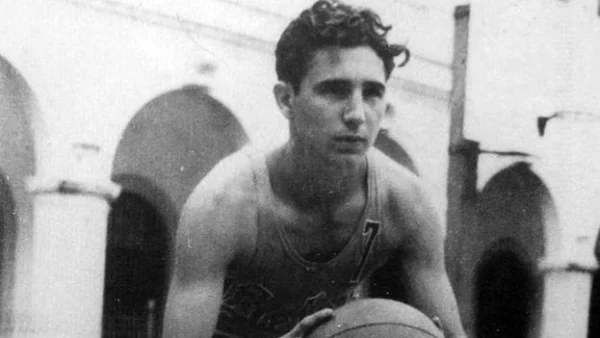
Fidel Castro Shirtless 5
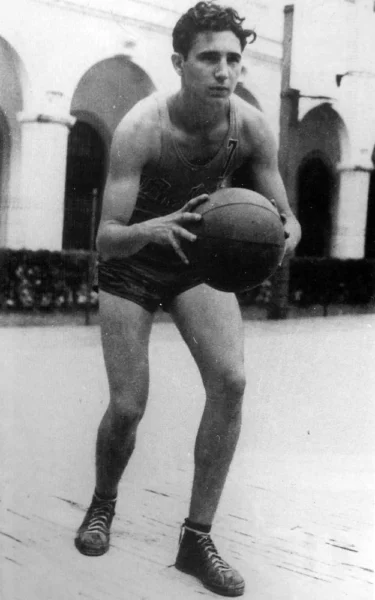
Fidel Castro Shirtless 4
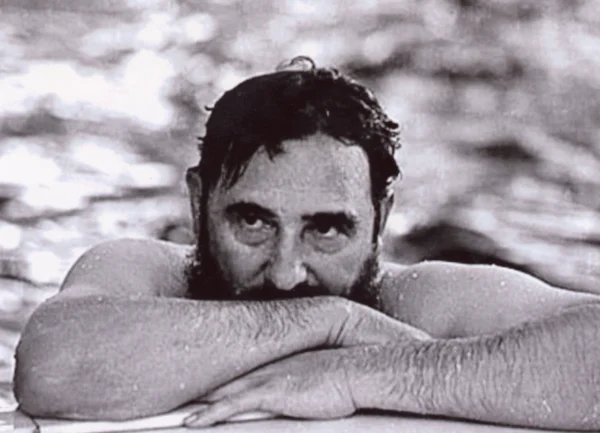
Fidel Castro Shirtless 3
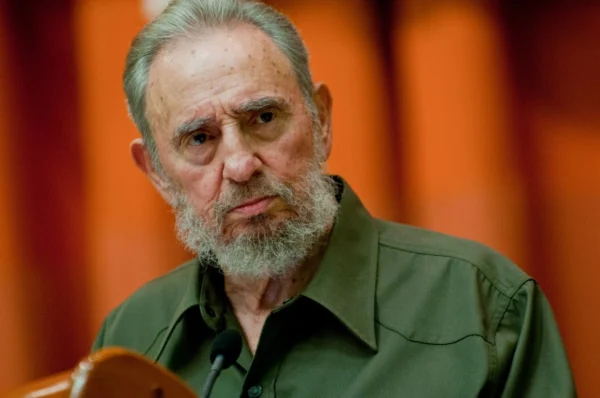
Fidel Castro Shirtless 2
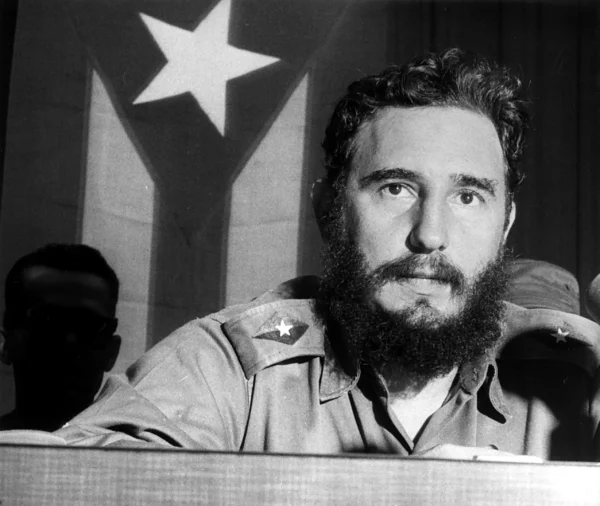
Fidel Castro Shirtless
Current Life Highlights of Fidel Castro (Career / Other Work)
After officially stepping down from Cuba’s presidency in 2008 in Havana, Fidel Castro transitioned into a symbolic political role rather than holding executive power.
From 2008 to 2016, he lived in semi-retirement in Havana, Cuba, while continuing to influence ideological discussions within the Communist Party of Cuba.
He regularly wrote political commentary essays titled “Reflections of Fidel,” which were published through Cuban state newspapers such as Granma in Havana.
In these writings, he commented on global issues like United States foreign policy, European economic crises, and climate change concerns.
He occasionally met foreign leaders visiting Cuba, including Venezuelan officials associated with Hugo Chávez’s government in Caracas-aligned diplomacy.
Castro focused on agricultural sustainability projects in Cuba, encouraging increased local food production to reduce dependence on imports.
He also supported Cuba’s biotechnology and medical research sector, especially vaccine development programs based in Havana scientific institutes.
During his later years, he avoided large public appearances but occasionally attended cultural and educational events in Havana for symbolic presence.
He remained deeply interested in international politics and reportedly followed global news daily, especially developments involving the United States and Latin America.
He lived in Havana until his death on November 25, 2016, while still being regarded as an influential ideological figure in Cuban politics.
Fidel Castro Most Popular Media Appearances, Movies, TV Shows
Fidel Castro appears in the documentary Comandante (2003), directed by Oliver Stone, filmed in Havana during extended interviews.
He is featured again in Oliver Stone’s follow-up documentary Looking for Fidel (2004), focusing on Cuban society and political structure.
The documentary Cuba and the Cameraman (2017) by Jon Alpert includes decades of footage of Castro and Cuban daily life.
Castro is portrayed in dramatized form in various historical TV documentaries about the Cuban Missile Crisis of 1962.
The film Che (2008), directed by Steven Soderbergh, depicts his early revolutionary relationship with Che Guevara in the Sierra Maestra mountains.
He appears in archival news footage used in global television programs covering Cold War politics and United States–Cuba relations.
Multiple BBC and History Channel documentaries include interviews, reconstructions, and archival clips of Castro’s speeches in Havana.
Cuban state-produced newsreels from ICAIC (Cuban Institute of Cinematographic Art and Industry) frequently show his public addresses.
Castro is referenced in numerous political biopics and documentary series about 20th-century revolutions and socialism.
He also appears in international interview-based political documentaries where journalists analyze his leadership style and ideology.
Fidel Castro Most Popular News Headlines, Controversies, Scandals
The 1959 Cuban Revolution brought global attention as Castro’s forces overthrew Fulgencio Batista’s government in Havana.
The 1961 Bay of Pigs invasion became a major international controversy involving United States-backed Cuban exiles.
The 1962 Cuban Missile Crisis placed Castro at the center of a global nuclear confrontation between the United States and Soviet Union.
His government’s one-party political system was widely criticized in international media for restricting opposition parties.
The United States embargo on Cuba became one of the longest-running geopolitical conflicts in modern history.
The 1980 Mariel boatlift caused international headlines as over 100,000 Cubans migrated from Cuba to Florida in the United States.
Human rights organizations frequently reported on political imprisonment and restrictions on press freedom in Cuba during his rule.
The 1990s “Special Period” economic crisis after the Soviet Union collapsed was widely covered in global news outlets.
The Elián González custody case in 1999 created major political tension between Cuba and Cuban-American communities in Miami.
His close alliances with leaders like Hugo Chávez of Venezuela often drew criticism from Western governments and media.
Known Unknown Facts Trivia of Fidel Castro
Fidel Castro reportedly survived hundreds of assassination attempts during his leadership, according to Cuban intelligence claims.
He was an enthusiastic baseball player in his youth in Birán, Cuba, before entering politics.
Castro once considered pursuing a professional sports career before choosing law at the University of Havana.
He was known for delivering extremely long speeches, some lasting several hours at public events.
He maintained a consistent military-style olive-green outfit that became a global symbol of his leadership.
Castro worked long overnight hours and was known for a highly disciplined personal routine in Havana.
He had a close but complex relationship with revolutionary leader Che Guevara, who later left Cuba for Africa and Bolivia.
Castro showed strong interest in agriculture and personally reviewed farming experiments in Cuban state farms.
He rarely used modern luxuries and was known for a relatively simple lifestyle compared to other world leaders.
Despite global controversy, he remained one of the most influential political figures in Latin American history for over half a century.
Fidel Castro: Questions People Also Ask / Search & Answers
Who was Fidel Castro?
He was the revolutionary leader of Cuba who ruled from 1959 to 2008 and established a socialist government.
Why is Fidel Castro important in history?
He played a major role in the Cuban Revolution and Cold War politics between the United States and Soviet Union.
How long did Fidel Castro rule Cuba?
He led Cuba for about 49 years before stepping down in 2008.
Who replaced Fidel Castro?
His brother Raúl Castro became the leader of Cuba after him.
What was the Cuban Missile Crisis?
It was a 1962 nuclear standoff involving missiles placed in Cuba by the Soviet Union and opposed by the United States.
Was Fidel Castro communist?
Yes, he led Cuba under a Marxist-Leninist socialist system.
Where was Fidel Castro born?
He was born in Birán, Cuba, in 1926.
Did Fidel Castro survive assassination attempts?
Yes, many attempts were reportedly made against him during his rule.
What is Fidel Castro’s legacy?
His legacy is debated globally, seen both as revolutionary leader and authoritarian ruler.
When did Fidel Castro die?
He died in Havana, Cuba, in 2016 at the age of 90.