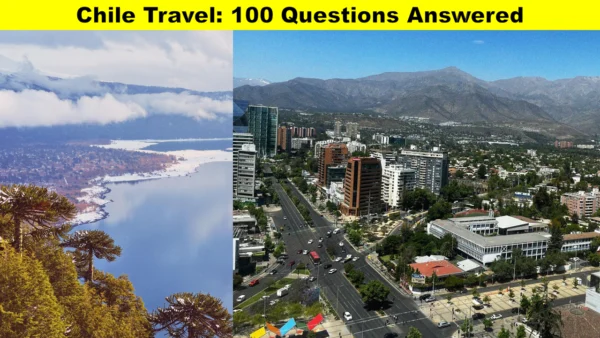
Chile Travel: 100 Questions Answered based on NeemTime research
🗺️ Trip Planning & Logistics
1. When is the best time to visit Chile? It depends on where you go. For Patagonia, go between November and March (summer). For the Atacama Desert, it is accessible year-round, but shoulder seasons (spring/autumn) offer milder temperatures. For skiing near Santiago, June to August is best.
2. Do I need a visa to visit Chile? Citizens of the US, Canada, the UK, the EU, and Australia typically do not need a pre-arranged visa for stays under 90 days for tourism. However, always check the latest reciprocity fee updates before booking.
3. What is the standard tourist entry document? Upon arrival, you will receive a PDI (Policía de Investigaciones) receipt called a “Tarjeta de Turismo.” Keep this safe inside your passport; you must surrender it when leaving the country.
4. How safe is Chile compared to other South American countries? Chile is generally considered one of the safest countries in Latin America. However, petty theft, pickpocketing, and phone-snatching are highly prevalent in major cities like Santiago and Valparaíso.
5. Can I drink the tap water in Chile? Tap water in Santiago and most major cities is safe to drink, though it has a high mineral content that might upset sensitive stomachs. In the Atacama Desert and rural parts of the north, stick to bottled water.
6. What currency is used, and can I use my credit card? The currency is the Chilean Peso (CLP). Credit and debit cards are widely accepted in cities, supermarket chains, and hotels. However, you will absolutely need cash for street food, small markets, and rural areas (especially Patagonia).
7. Should I tip in Chile? In restaurants, a 10% tip (“la propina”) is standard and often automatically calculated on the bill as a suggestion. You can add more for exceptional service. Tipping tour guides and drivers is appreciated but optional.
8. What plug adapter do I need for Chile? Chile uses Type C and Type L plugs. The standard voltage is 220V with a frequency of 50Hz.
9. Is English widely spoken? English is spoken in major hotels, high-end restaurants, and by tour guides in major tourist hubs like San Pedro de Atacama and Torres del Paine. However, the general population speaks Spanish, so knowing basic phrases is highly recommended.
10. How fast is the internet/cellular network? Chile has some of the fastest internet speeds in South America. 4G and 5G networks are excellent in cities. However, expect complete dead zones in deep Patagonian fjords and remote desert areas.
✈️ Flights & Getting Around
11. What is the main international gateway? Arturo Merino Benítez International Airport (SCL) in Santiago is the main entry point for almost all international flights.
12. Which domestic airlines operate within Chile? LATAM is the primary legacy carrier. Sky Airline and JetSmart operate as budget, low-cost carriers.
13. Are domestic flights reliable? Yes, but Patagonian flights (to Punta Arenas or Puerto Natales) can occasionally face severe delays or cancellations due to high winds. Always leave a buffer day before your international flight home.
14. How is the long-distance bus system? Excellent. Companies like Turbus and Pullman offer highly comfortable, double-decker buses with reclining seats (Semi-Cama and Salón Cama) for long journeys at affordable prices.
15. Is it easy to rent a car and drive in Chile? Yes, the infrastructure, especially the highway called Route 5 (Pan-American Highway), is excellent. You will need an International Driving Permit alongside your regular driver’s license.
16. Do I need a 4×4 vehicle? For standard tourist routes like the Lake District or central Chile, a standard car is fine. For the Atacama Desert highlands or remote parts of the Carretera Austral, a high-clearance 4×4 is strongly recommended.
17. How does the toll system work for driving? Highways feature toll booths that accept cash. Around Santiago, tolls are tracked electronically via a device called a “TAG,” which is typically built into the rental car fee.
18. What is the public transit system like in Santiago? The Santiago Metro is clean, modern, efficient, and extensive. To use it, you must buy a rechargeable “Bip! Card” at any station, which also works on city buses.
19. Are taxis safe in Santiago? Stick to official airport taxis (booked at indoor counters) or use ride-sharing apps like Uber and Cabify, which are widely available and much safer than hailing a random taxi on the street.
20. Can I cross the border into Argentina with a rental car? Yes, but you must inform the rental agency days in advance so they can prepare specific cross-border insurance and documentation. You cannot simply drive across spontaneously.
🏙️ Santiago & Central Chile
21. How many days should I spend in Santiago? Two to three days is usually enough to see the historic center, visit a few museums, explore the neighborhoods, and take in the city views.
22. What are the safest neighborhoods to stay in Santiago? Providencia, Las Condes, and Vitacura are the safest, most modern, and most tourist-friendly neighborhoods.
23. Which areas should I avoid in Santiago? Be highly cautious around Estación Central, parts of Centro Histórico after dark, and the crowded markets of La Vega/Mercado Central where pickpockets thrive.
24. What is the best view of the city? Sky Costanera (the tallest building in South America) offers a 360-degree view. Alternatively, Cerro San Cristóbal provides a beautiful view reachable by funicular or cable car.
25. Is Valparaíso worth a day trip? Yes, it is famous for its vibrant street art, historical funiculars, and bohemian vibe. It is about a 90-minute bus ride from Santiago.
26. Is Valparaíso safe for tourists? Valparaíso has a reputation for high levels of street crime. Stick to tourist areas like Cerro Alegre and Cerro Concepción, don’t flash valuables, and avoid walking alone at night.
27. What is Viña del Mar like? Right next to Valparaíso, Viña del Mar is a modern, clean resort city with beaches, manicured gardens, and a much more upscale, orderly feel.
28. Can you swim in the ocean near Valparaíso/Viña del Mar? The Humboldt Current keeps the Pacific Ocean extremely cold year-round. It is great for dipping your toes or surfing with a thick wetsuit, but not for casual, leisurely swimming.
29. What is Cajón del Maipo? A stunning canyon located just southeast of Santiago, popular for day trips involving hiking, hot springs (Baños Morales or Colina), and beautiful mountain reservoirs like Embalse El Yeso.
30. When does the ski season peak near Santiago? The ski resorts of Valle Nevado, El Colorado, and La Parva typically operate from mid-June to October, peaking in July and August.
🌵 San Pedro de Atacama & The North
31. How do I get to San Pedro de Atacama? Fly from Santiago to the city of Calama (CJC). From Calama, take a pre-booked shared shuttle or rent a car for the 75-minute drive to San Pedro.
32. How do I deal with altitude sickness in the Atacama? San Pedro sits at around 2,400 meters, but nearby tours go above 4,000 meters. Spend your first two days doing low-altitude tours, drink immense amounts of water, avoid alcohol, and eat light meals.
33. What are the absolute must-see spots in Atacama? Valle de la Luna (Moon Valley), the El Tatio Geysers, Piedras Rojas, Baltinache Hidden Lagoons, and a dedicated stargazing tour.
34. Why is Atacama famous for stargazing? It is the driest non-polar desert on Earth, with virtually no light pollution, high altitude, and cloudless skies nearly 300 nights a year.
35. Can I see the stars during a full moon? Astronomical tours generally do not operate during the peak days of a full moon because the sky is too bright to see deep-sky objects clearly. Plan your dates according to the lunar calendar if stargazing is your priority.
36. Why do you float in the desert lagoons? Lagoons like Cejar and Baltinache have salt concentrations higher than the Dead Sea, allowing human bodies to float effortlessly on the surface.
37. What time do the El Tatio Geysers tours start? Tours depart very early, usually between 4:30 AM and 5:30 AM, to arrive at sunrise when the geothermal activity is most spectacular.
38. How cold does it get at El Tatio Geysers? Because of the high altitude (4,300 meters) and early hour, temperatures routinely drop well below freezing, sometimes reaching -10°C. Dress in heavy layers.
39. Can I cross into the Bolivian Salt Flats (Uyuni) from San Pedro? Yes, multiple agencies offer 3-day or 4-day jeep tours that depart from San Pedro de Atacama and drop you off in Uyuni, Bolivia (or bring you back).
40. What should I pack for the Atacama Desert? High-SPF sunscreen, lip balm, moisturizer, sunglasses, a swimsuit (for hot springs/salt lagoons), and clothing layers that handle scorching daytime heat and freezing desert nights.
🌲 The Lake District & Chiloé
41. What is the gateway city to the Lake District? Puerto Montt (PMC) is the main airport hub, but most travelers instantly transfer to the more scenic nearby town of Puerto Varas.
42. What is Puerto Varas known for? Known as the “City of Roses,” it sits on the shores of Lake Llanquihue and offers stunning, unobstructed views of the snow-capped Osorno Volcano.
43. What is Pucón famous for? Pucón is Chile’s adventure capital, famous for the active Villarrica Volcano climbs, white-water rafting, canyoning, and natural hot springs (Termas Geométricas).
44. Can you climb Villarrica Volcano without a guide? No, due to safety risks and volcanic activity, you must hire a certified local agency that provides crampons, ice axes, helmets, and professional guides.
45. What makes the Termas Geométricas unique? These hot springs feature a striking wooden, red geometric walkway winding through a lush, misty rainforest canyon, connecting over a dozen slate pools.
46. How do I get to Chiloé Island? You can drive or take a bus from Puerto Montt/Puerto Varas to Pargua, where cars and passengers board a continuous ferry service across the Chacao Channel to the island.
47. What is unique about Chiloé? Chiloé is famous for its distinct mythology, colorful wooden stilt houses called “palafitos,” and UNESCO-listed shingled wooden churches.
48. What is “Curanto” and where should I try it? Curanto is a traditional Chiloé feast consisting of seafood, meat, potatoes, and dumplings traditionally cooked in a pit dug in the ground over hot stones, covered with large nalca leaves.
49. When is the rainy season in the Lake District? It rains year-round (which keeps it beautifully green), but the heaviest rainfall occurs from May to August. January and February are the driest and warmest months.
50. Can I rent a car in Puerto Montt and drop it off in Patagonia? Yes, but expect a very high “one-way drop-off fee” due to the massive distances involved.
🏔️ Patagonia & Torres del Paine
51. How do I get to Torres del Paine National Park? Fly into Puerto Natales (PNT) during the high season, or fly into Punta Arenas (PUQ) and take a 3-hour bus ride up to Puerto Natales. From Puerto Natales, the park is a 2-hour drive or bus ride away.
52. What is the difference between the “W Trek” and the “O Circuit”? The W Trek takes 4 to 5 days, covering the highlights of the park’s main valleys. The O Circuit is a full 7 to 9-day loop that encompasses the W trek plus the remote, less-crowded backside of the mountain range.
53. Do I need to book campsites/refugios in advance? Yes. You must book months in advance (often 4–6 months ahead) through the authorized operators (Vertice and Las Torres). You cannot enter the overnight trails without confirmed reservations.
54. Can I visit Torres del Paine without doing a multi-day trek? Yes. You can stay in a hotel or eco-camp inside or near the park and take day trips, including the classic day-hike to the Base of the Towers, or take vehicle-based scenic tours.
55. What is the weather like in Patagonia? Highly unpredictable. You can experience all four seasons in a single hour—heavy rain, intense sun, freezing temperatures, and notorious winds up to 100 km/h.
56. Is the day-hike to the Base of the Towers difficult? Yes, it is a strenuous 22-kilometer round-trip hike with roughly 800 meters of elevation gain, taking anywhere from 7 to 9 hours. The final hour is a steep scramble over loose boulders.
57. When is the park least crowded? The shoulder months of October and April are less crowded, but services are more limited, days are shorter, and the weather is significantly chillier.
58. What is the Carretera Austral? Route 7, a mostly unpaved, spectacularly scenic 1,240-kilometer highway cutting through northern Chilean Patagonia, popular for road trips, cycling, and remote camping.
59. What are the Marble Caves (Capillas de Mármol)? Stunning solid-marble rock formations carved out by the glacial waters of Lake General Carrera along the Carretera Austral, accessible via small boat or kayak tours from Puerto Río Tranquilo.
60. Where can I see penguins in Chilean Patagonia? Take a boat tour from Punta Arenas to Isla Magdalena in the Magellan Strait, home to a massive colony of Magellanic penguins between October and March.
🗿 Easter Island (Rapa Nui)
61. How do I get to Easter Island? The only commercial flights depart from Santiago (SCL) via LATAM Airlines.
62. How long is the flight to Easter Island? It is a long-haul domestic flight taking roughly 5.5 hours over the Pacific Ocean.
63. What are the special entry requirements for Rapa Nui? You must fill out a special entry form (FUI), hold a return flight ticket, have a booking at an officially registered tourist accommodation, and stay a maximum of 30 days.
64. Can I explore the Moai sites on my own? No. To protect the heritage site, tourists must be accompanied by a certified local Rapa Nui guide or an authorized tour operator to enter all archaeological sites within the National Park.
65. What is the Rapa Nui National Park ticket? It is a mandatory entry ticket you must buy before or upon arrival to access the Moai sites. It is valid for 10 days.
66. Where were the Moai statues carved? At Rano Raraku, a volcanic crater that served as the primary quarry. You can see hundreds of statues in various stages of completion scattered across the hillside.
67. Where is the best place to watch the sunrise on Easter Island? Ahu Tongariki, where 15 massive Moai stand in a row with the ocean and the rising sun directly behind them.
68. Are there beaches on Easter Island? Yes, Anakena is a stunning white-sand beach lined with coconut palms and features its own platform of Moai (Ahu Nau Nau) overlooking the cove.
69. Is Easter Island expensive? Yes, it is one of the most expensive destinations in Chile because almost all food, fuel, and goods must be shipped or flown in from the mainland.
70. How many days should I spend on Easter Island? 3 to 5 days is the ideal amount of time to see the main archaeological sites, enjoy the beach, and experience local Polynesian culture without rushing.
🍷 Food, Drink & Culture
71. What is the national dish of Chile? While there isn’t just one, the “Empanada de Pino” (filled with minced beef, onions, raisins, a black olive, and hard-boiled egg) and “Pastel de Choclo” (a sweet corn and meat casserole) are national staples.
72. What is a “Chorrillana”? A massive, calorie-dense dish designed for sharing, consisting of a mountain of french fries topped with strips of beef, fried onions, and fried eggs.
73. What is the deal with Chilean hot dogs? Known as a “Completo,” the classic Chilean hot dog is loaded with ingredients. The most famous variation is the “Italiano,” topped with mashed avocado, chopped tomatoes, and mayonnaise (mimicking the colors of the Italian flag).
74. Is Chile famous for its wine? Yes, particularly its red wines. Chile is world-renowned for saving the Carmenere grape variety from extinction, alongside producing exceptional Cabernet Sauvignon and Syahr.
75. What are the closest wine valleys to Santiago? The Maipo Valley is accessible via the Santiago metro/taxi system. The Casablanca Valley (famous for whites and Pinot Noir) sits right on the way to Valparaíso.
76. What is a Pisco Sour? A popular cocktail made from Pisco (a grape brandy), lime juice, syrup, and egg whites. Both Chile and Peru claim Pisco as their national invention, featuring slightly different recipes.
77. What is “Terremoto”? Translating to “Earthquake,” this sweet, potent traditional drink is made with Pipeño (a sweet white wine), pineapple ice cream, and a splash of grenadine or fernet.
78. Do Chileans eat dinner late? Yes, typically between 8:30 PM and 10:30 PM. Many Chileans substitute a heavy dinner with “Once” (pronounced ohn-say), an early evening tea time featuring bread, avocado, cheeses, and cold cuts.
79. What is “Mote con Huesillo”? A traditional, refreshing non-alcoholic summer drink sold at street stalls, consisting of sweet nectar, cooked dried peaches, and husked wheat grains served cold with a spoon.
80. What is unique about Chilean Spanish? It is fast, drops the “s” at the end of words, and uses a massive vocabulary of local slang (“chilenismos”). The word “Weón” can mean friend, idiot, or person depending on the context, and “Cachai?” means “Do you understand?”.
🧳 Health, Safety & Packing
81. Are stray dogs a problem in Chile? Street dogs are everywhere in Chile. However, communities generally look after them (“perros comunitarios”); they are usually tagged, vaccinated, friendly, and accustomed to humans.
82. Are earthquakes frequent? Chile is one of the most seismically active countries on earth. Most buildings are engineered to withstand massive tremors. Minor tremors (“temblores”) are common and locals usually ignore them.
83. Do I need any special vaccinations? No special vaccinations are legally required for entry into Chile unless traveling from a country with yellow fever transmission risks. Routine travel vaccines are recommended.
84. Should I worry about scams in Santiago? Watch out for the “mustard scam” (where someone spills liquid on your jacket and a helper pretends to clean it while stealing your bag) and fake airport taxi drivers who overcharge vulnerable arrivals.
85. Is it safe to use ATMs? Yes, but use ATMs inside physical bank lobbies during business hours to avoid card-skimming devices installed on external street machines.
86. What should I pack for a multi-region trip to Chile? Because Chile spans vastly different climates, pack a versatile layering system: lightweight desert clothes, wind-resistant outer shells, thermal base layers, sturdy hiking shoes, and urban smart-casual clothing.
87. Can I buy camping gear in Chile? Yes, Santiago has excellent outdoor malls (like Mall Sport) and neighborhoods like Calle Domeyko filled with outdoor retail shops. Puerto Natales also has many rental shops for Patagonia trekkers.
88. Can I bring fresh food or snacks into Chile? No. SAG (the Agricultural and Livestock Service) is incredibly strict. You must declare all organic materials, seeds, wood, dried fruits, and packaged food upon entry, or face hefty fines.
89. Are public restrooms easy to find? In cities, use malls, large cafes, or gas stations. You may need to pay a small fee (300–500 CLP) to an attendant or for toilet paper in bus terminals.
90. How do I call emergency services? Remember the ABC acronym:
-
131 for Ambulance (Ambulancia)
-
132 for Fire Department (Bomberos)
-
133 for Police (Carabineros)
💰 Budgeting & Shopping
91. Is Chile an expensive country to travel? It is one of the most expensive countries in South America, with prices comparable to parts of southern Europe for accommodation, dining out, and fuel.
92. How much does a mid-range daily budget look like? A mid-range traveler spending on private rooms, sit-down meals, and standard excursions should budget around 80 to 120 USD per day, excluding domestic flights.
93. Can I get a tax refund on purchases? Foreigners are exempt from Chile’s 19% IVA (Value Added Tax) on hotel accommodations if paying in US Dollars or with an international credit card and showing their PDI tourist card. General retail shopping does not have a tourist tax refund scheme.
94. What is a “Feria”? A street market. Farmers’ markets set up on specific days in city neighborhoods to sell cheap, ultra-fresh fruits, vegetables, and cheeses.
95. What are the best souvenirs to buy? Lapis Lazuli jewelry (a blue semi-precious stone found almost exclusively in Chile and Afghanistan), fine copper goods, high-quality wool ponchos from Chiloé, and bottles of Carmenere wine.
96. Can I bargain over prices in markets? Bargaining is not a major part of Chilean culture. You can ask for a small discount (“¿Me lo deja en menos?”) at informal artisan markets if buying multiple items, but do not aggressively lowball.
97. Are supermarket prices affordable? Yes, chains like Lider (owned by Walmart), Jumbo, and Unimarc offer affordable groceries, making self-catering a great way to save money.
98. How much does park entry cost for Torres del Paine? The park entry fee varies depending on whether you stay under 3 days or more than 3 days. It must be bought online in advance before reaching the park gates.
99. Is it cheaper to book tours online or in person? For highly competitive spots like San Pedro de Atacama or Pucón, walking into agencies along the main street a day before can get you lower, negotiable prices compared to pre-booking online, though high-season slots fill up fast.
100. What is the local tipping custom for hotel porters? Tipping 1,000 to 2,000 CLP per bag is customary and appreciated for porters in mid-to-high-end hotels.