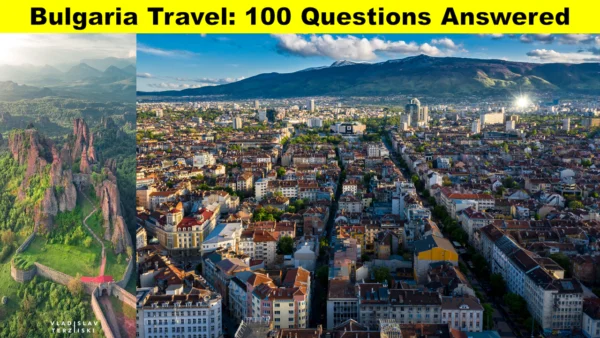
Bulgaria Travel: 100 Questions Answered based on NeemTime research
Logistics, Money, and Customs
1. Is Bulgaria safe for solo travelers? Yes. Travelers consistently rate Bulgaria as very safe, even for solo female travelers. Standard common sense applies, especially around major train stations at night or in crowded beach resorts.
2. What currency is used in Bulgaria? Bulgaria uses the Bulgarian Lev (BGN). The lev is pegged to the Euro at a fixed rate of approximately 1.95 BGN to 1 EUR.
3. Can I pay with Euros directly in Bulgaria? While Bulgaria is moving toward full Euro integration, the official currency remains the Lev. Most standard shops and supermarkets only accept Lev or card. Tourist-heavy spots might accept Euros, but usually at an unfavorable exchange rate.
4. How widely accepted are credit cards? In Sofia, Plovdiv, and major cities, contactless card payments and mobile wallets are accepted almost everywhere, including public transit. However, you must carry cash for smaller towns, mountain huts, street vendors, and public buses outside Sofia.
5. Do I need to tip in restaurants? Yes, tipping is customary. A tip of 10% is standard for good service in sit-down restaurants. It is preferred to leave this in cash rather than adding it to a credit card payment.
6. Is the tap water safe to drink? Yes, tap water is perfectly safe to drink in Sofia and all major cities. In remote rural villages or deep mountain areas, locals recommend checking first or sticking to bottled or natural spring water.
7. Is it true that Bulgarians shake their head for “yes” and nod for “no”? Yes. This is a classic cultural point that confuses many travelers. A nod means “no” and a side-to-side shake means “yes.” Younger people in tourist areas may consciously use Western gestures for foreigners, but in rural areas, the traditional way holds strong.
8. Do people speak English well? In Sofia, Plovdiv, and beach/ski resorts, English is widely spoken by younger generations and hospitality staff. In rural villages or among older generations, Russian or basic German is more common. Learning a few words of Bulgarian goes a long way.
9. Can I easily read signs if I don’t know the Cyrillic alphabet? Major highways, train stations, and central city streets usually have bilingual signs in both Cyrillic and Latin alphabets. However, in smaller towns, off-the-beaten-path destinations, and local bus stations, signs are exclusively in Cyrillic.
10. What is the standard plug type used in Bulgaria? Bulgaria uses Type C and Type F European plugs with a standard voltage of 230V.
Transportation and Driving
11. Is it better to rent a car or take public transit? If you are sticking to major cities like Sofia, Plovdiv, and Veliko Tarnovo, public transit is perfectly fine. If you want to explore caves, mountain monasteries, and nature reserves, renting a car is highly recommended.
12. What are the road conditions like? Highways are generally decent but can have sudden dips and waves. Secondary and rural roads are notorious for massive potholes. Local advice is to drive defensively and avoid driving at night on unlit rural roads.
13. Do I need an International Driving Permit (IDP)? If your driver’s license is from an EU country, you do not need an IDP. If you are from the US, Canada, or Australia, car rental companies and police usually require an IDP alongside your national license.
14. What is a vignette and do I need one? A vignette is a digital road tax required for driving on highways and main roads outside city limits. If you rent a car, check that it is included. If driving your own car across the border, you must buy an electronic vignette online or at the border immediately.
15. How are the trains in Bulgaria? Trains operated by BDZ are cheap but generally very slow, old, and prone to delays. The route between Sofia and Burgas or Varna has slightly faster, updated express trains, but buses are usually preferred for speed.
16. Are intercity buses reliable? Yes, intercity buses are the preferred way to travel via public transit. They are affordable, run frequently between major hubs, and are generally on time. Note that cities often have multiple bus stations, so always double-check your departure point.
17. How do I pay for public transit in Sofia? Sofia has an excellent integrated system. You can simply tap your contactless credit card, debit card, or smartphone on the readers inside any metro station, tram, or bus. The system automatically calculates the best daily rate.
18. Are taxis reliable, or will I get scammed? Taxi scams exist, particularly at airports and train stations. Legitimate taxis must display their rates on the window. Always look for reputable companies like Yellow Taxi or OK Supertrans in Sofia. Never accept rides from drivers soliciting inside the terminal.
19. Is Uber or Bolt available in Bulgaria? No, Uber and Bolt do not operate ride-sharing services in Bulgaria due to local legal restrictions. Instead, use local taxi-hailing apps like Yellow, Maxim, or TaxiMe.
20. What is the narrow-gauge railway? The Septemvri-Dobrinishte narrow-gauge train is a legendary slow travel experience. It winds through the Balkan and Rhodope mountains, offering stunning scenery. It takes about five hours and is highly recommended by slow-travel enthusiasts.
Sofia and Around
21. How many days should I spend in Sofia? One to two full days is usually enough to see the city center, Roman ruins, and major churches. You can easily add a third day for a trip to the nearby Vitosha Mountain.
22. What is the best neighborhood to stay in Sofia? The city center near Vitosha Boulevard, Serdika, or Oborishte is best for tourists. These areas are walkable, safe, and packed with restaurants and cafes.
23. Is the Alexander Nevsky Cathedral free to enter? Yes, entering the main hall of the Alexander Nevsky Cathedral is free. However, you must pay a fee if you want to take photos inside or visit the icon crypt in the basement.
24. What are the ancient ruins inside the metro station? The Serdica ruins are located right inside and around the Serdika Metro Station. When building the subway, excavators uncovered a massive complex of ancient Roman streets, houses, and churches, which are now beautifully integrated into the public space for free viewing.
25. How do I get from Sofia Airport to the city center? The cheapest and easiest way is the Sofia Metro (Line 4), which connects Terminal 2 directly to the central Serdika station in about 30 minutes. If you arrive at Terminal 1, there is a free shuttle bus to Terminal 2.
26. How do I get to Vitosha Mountain from the center? You can take the metro to the Vitosha station and then catch Bus 66 up to the Aleko hut area, or take Bus 122 to the Simeonovo cabin lift. It is a quick and cheap getaway for hiking or skiing.
27. What are the Boyana Church frescoes, and why are they famous? Located on the outskirts of Sofia, the Boyana Church is a UNESCO World Heritage site. It houses stunning, highly realistic frescoes dating back to 1259, which predate the official Italian Renaissance style. Space inside is strictly limited to protect the art, so you may have to wait in line.
28. Are there good day trips from Sofia besides Rila? Yes, you can take a day trip to the historic town of Koprivshtitsa to see traditional Revival architecture, or head to the stunning Belogradchik Rocks and fortress, though Belogradchik is best done with a car.
29. What is Studentski Grad? Studentski Grad (Students’ Town) is a lively neighborhood in Sofia where the university dorms are concentrated. It is famous for cheap eateries, massive clubs, and a vibrant, chaotic nightlife scene tailored strictly to young crowds.
30. Where can I try authentic Bulgarian food in Sofia? Travelers frequently recommend “Pod Lipite” (Under the Linden Trees) for an authentic, traditional tavern experience with locally sourced ingredients, or “Moma Bulgarian Food and Wine” for a modern twist on classic dishes.
Plovdiv and Central Bulgaria
31. Why is Plovdiv so highly recommended? Plovdiv is one of the oldest continuously inhabited cities in the world. It features a stunningly preserved Roman amphitheater, an eclectic Old Town filled with colorful 19th-century houses, and a trendy creative district called Kapana.
32. Can I do Plovdiv as a day trip from Sofia? Yes, it takes about two hours by bus or car each way. However, travelers recommend staying at least one night to fully enjoy the evening vibe in Kapana and watch the sunset from one of the city’s signature hills (tepes).
33. What is Kapana? Kapana (which translates to “The Trap”) is Plovdiv’s pedestrian art and cafe district. Once a crumbling craftsman area, it is now packed with craft beer bars, specialty coffee shops, art galleries, and excellent restaurants.
34. Is the Roman Amphitheater in Plovdiv still used? Yes. The 2nd-century Roman Theater of Philippopolis is remarkably well-preserved and still hosts live opera performances, rock concerts, and plays throughout the summer months.
35. What is the best view in Plovdiv? Climb up Nebet Tepe (one of Plovdiv’s hills) in the Old Town area. It features ancient ruins and offers a panoramic view of the entire city and the surrounding mountains, making it a favorite spot for sunset watchers.
36. What is Veliko Tarnovo famous for? Veliko Tarnovo was the medieval capital of the Second Bulgarian Empire. It is famous for its dramatic setting, with houses stacked precariously on cliffs over the winding Yantra River, and the massive Tsarevets Fortress.
37. What is the Sound and Light show in Veliko Tarnovo? It is a dramatic night show at the Tsarevets Fortress featuring laser lights, flashing strobes, and dramatic music that tells the tumultuous history of the Bulgarian empires. It runs on select dates, but you can sometimes pay to trigger it or catch it during national holidays.
38. What should I see near Veliko Tarnovo? Visit the nearby village of Arbanasi, known for its fortress-like stone houses and heavily frescoed medieval churches, especially the Church of the Nativity.
39. What is Koprivshtitsa? It is a historic museum-town nestled in the mountains. It remains exactly as it did during the 19th-century Bulgarian National Revival, with brightly colored stone houses, cobblestone streets, and a deep history tied to the April Uprising against Ottoman rule.
40. What is the Rose Valley? Located around the town of Kazanlak, this valley produces a massive portion of the world’s rose oil. The best time to visit is late May to early June during the rose harvest and festival, when the fields are in full bloom.
Mountains, Monasteries, and Caves
41. How do I get to Rila Monastery from Sofia? The most convenient option is a rental car or an organized day-tour shuttle bus. Public buses are sparse and often require multiple complicated transfers at the town of Rila, making them stressful for a single day trip.
42. Can you stay overnight at Rila Monastery? Yes, the monastery offers basic monk cells for travelers looking for a unique, quiet experience. Accommodations are simple and segregated by gender if you are not married. You cannot book online; you must arrange it upon arrival or call ahead.
43. What is the dress code for Bulgarian monasteries? Both men and women must dress modestly. Shoulders and knees must be covered. Avoid wearing shorts, tank tops, or short skirts, or you will be turned away or asked to wrap up in a provided shawl.
44. How long does the Seven Rila Lakes hike take? The classic loop hike takes about four to five hours. First, you take a chairlift from the Panichishte area up to the mountain hut, and from there the trail climbs past seven glacial lakes stacked on top of each other.
45. Can I do the Seven Rila Lakes and Rila Monastery in one day? While some tour companies offer this combo, travelers strongly advise against it unless you are in peak physical shape and rush through both. It requires an incredibly early start, hours of driving, and a fast pace that ruins the relaxation of both sites.
46. What are the Pirin and Rila mountain ranges? Rila is the highest mountain range in the Balkans (home to Mount Musala, 2,925m) and features green, lake-filled landscapes. Pirin is located just south of Rila and is sharper, rockier, and more alpine in feel (home to Mount Vihren, 2,914m).
47. What is Bansko like in the summer? Bansko is famous as a winter ski resort, but in summer it turns into an affordable hub for hikers, mountain bikers, and digital nomads. It hosts jazz festivals, and accommodation prices drop drastically during these warmer months.
48. Where are the best mineral hot springs in Bulgaria? Sapareva Banya (near the Rila Lakes) features the hottest geyser in Europe and great public thermal pools. Velingrad is considered the “spa capital” of the Balkans, filled with high-end luxury spa hotels. Devon and Hisarya are also highly rated.
49. What is Buzludzha? Buzludzha is a massive, abandoned Soviet-era monument shaped like a UFO, sitting atop a mountain peak. While you can no longer legally enter the decaying interior due to structural hazards, the exterior is a magnet for urban explorers and photographers.
50. What is Prohodna Cave famous for? Known as the “Eyes of God” cave, Prohodna features two massive, symmetrical holes in its ceiling that look exactly like giant eyes staring down. It is free to enter, easily accessible on foot, and located near the town of Lukovit.
51. Is Devetashka Cave worth visiting? Yes, it is a spectacular, massive cave chamber with a partially collapsed roof that allows sunlight to stream in, creating an underground forest environment. It was famously used as a filming location for an action movie and houses thousands of protected bats.
52. What are the Krushuna Waterfalls? Located near Devetashka Cave, these are a series of bright turquoise travertine terraces and waterfalls. A gentle eco-trail with wooden bridges winds through the lush forest, making it a peaceful, easy walk.
53. What are the Belogradchik Rocks? They are a bizarre, beautiful formation of red-colored sandstone rocks scattered across a valley. The ancient Belogradchik Fortress is built directly into these cliffs, using the natural rock formations as defensive walls.
54. What is Melnik? Melnik is the smallest town in Bulgaria, hidden among sand pyramids in the southwest. It is famous for its unique architecture and its rich, heavy red wine, which was famously ordered in bulk by Winston Churchill.
55. Can I hike between mountain huts in Bulgaria? Yes, Bulgaria has an extensive network of “hizhas” (mountain huts). They offer very basic, cheap dormitory beds and simple hot meals (like bean soup and meatballs) for hikers. It is wise to call ahead to reserve beds during peak summer weekends.
The Black Sea Coast
56. Varna or Burgas: which is better to visit? Varna is larger, has more historical sights, a massive Sea Garden park, and a lively nightlife scene. Burgas is more laid-back, boasts a cleaner and better-maintained Sea Garden, and acts as a better transport hub for visiting historic coastal towns like Sozopol and Nessebar.
57. Should I go to Sunny Beach? If you want wild, cheap nightlife, massive club parties, and dense crowds of British and European youth, yes. If you want culture, relaxation, or authentic Bulgarian charm, travelers consensus is to avoid Sunny Beach entirely, as it is a commercialized tourist trap.
58. What makes Nessebar special? Nessebar’s Old Town sits on a narrow rocky peninsula connected to the mainland by a long causeway. It is a UNESCO World Heritage site packed with ancient wooden houses and an incredible concentration of Byzantine-era brick churches.
59. Is Sozopol similar to Nessebar? Yes, but it feels slightly more artistic and bohemian. It features beautiful old wooden architecture, stone alleys, and cliffs over the sea. Travelers often suggest Sozopol over Nessebar if you want a slightly more relaxed vibe.
60. What is Cape Kaliakra? A long, dramatic red cliff peninsula that juts out deep into the Black Sea in northern Bulgaria. It features ancient ruins, incredible views, and is one of the best spots on the coast to spot wild dolphins.
61. What is the Balchik Palace and Botanical Garden? Located on the northern coast, this was the summer residence of Queen Marie of Romania in the early 20th century. The palace is a blend of Balkan and Oriental architecture, surrounded by an expansive terraced botanical garden overlooking the sea.
62. Are there any quiet, undeveloped beaches left? Yes, but they are getting rarer. Look into Bolata Beach (near Kaliakra), Irakli Beach, or Silistar Beach near the Turkish border. These offer natural surroundings away from massive concrete resorts.
63. When is the best time to visit the Black Sea coast? July and August are peak season, meaning hot weather, warm water, high prices, and heavy crowds. June and September are the shoulder months, offering great weather with fewer tourists and cheaper accommodations.
Food, Drink, and Dining Etiquette
64. What is Shopska Salad? The quintessential Bulgarian salad made of diced tomatoes, cucumbers, onions, peppers, and topped with a mountain of finely grated sirene (white brine cheese). Its colors reflect the white, green, and red of the Bulgarian flag.
65. What is Rakia? Rakia is the national alcoholic drink of Bulgaria. It is a potent fruit brandy, usually made from grapes or plums. Commercially bought rakia is around 40% alcohol, but homemade variants (domashna) offered by locals can easily exceed 50-60%.
66. How do locals drink Rakia? Never take it as a quick shot. It is meant to be sipped slowly throughout the evening, almost always paired with a fresh Shopska salad as an appetizer before the main meal arrives.
67. What is Banitsa? A staple Bulgarian breakfast pastry made by layering sheets of filo dough with a mixture of eggs and white sirene cheese, then baking it in a spiral. It is greasy, delicious, and found at every local bakery.
68. What should I drink with Banitsa? Pair it with Ayran (a savory drink made of yogurt, water, and salt) or Boza (a thick, sweet, fermented wheat drink with a low alcohol content).
69. What is Tarator? A cold, incredibly refreshing summer soup made of yogurt, water, cucumbers, garlic, dill, walnuts, and a splash of oil. It is a savior on hot July afternoons.
70. What is Bulgarian yogurt (Kiselo Mlyako) and why is it special? It is world-famous for its distinct, tart flavor and thick texture. This is due to a specific native bacteria strain called Lactobacillus bulgaricus, which only thrives naturally in the region’s climate.
71. What are standard Bulgarian meat dishes? Look for Meshana Skara (mixed grill), Kebapche (grilled minced meat rolls with spices), and Kyufte (minced meat patties). For slow-cooked clay pot stews, try Sach or Kavarma.
72. Is Bulgaria vegetarian-friendly? Yes, surprisingly so. While main courses are heavily meat-focused, Bulgarian cuisine features fantastic salads, grilled vegetables, bean soups (Bob Chorba), and appetizers like Chushki Burek (peppers stuffed with cheese and fried).
73. Is Bulgarian wine good? Excellent and very underrated. Bulgaria has a rich winemaking history dating back to the ancient Thracians. Try local varieties like Mavrud (heavy, dark red), Melnik 55, or Dimyat (crisp white).
Festivals, Culture, and History
74. What is Baba Marta and the Martenitsa tradition? On March 1st, Bulgarians celebrate the coming of spring by gifting loved ones “Martenitsa”—bracelets or small figures made of red and white yarn. You wear it until you see the first stork or budding tree, then tie it to a branch for good luck.
75. What is the Kukeri festival? Kukeri is an ancient pagan ritual where men and women dress in massive, frightening costumes made of animal fur and wood, wearing heavy copper bells around their waists. They dance through villages to scare away evil spirits and bring a good harvest. The biggest festival happens in Pernik in January.
76. What are the Thracian Tombs? The Thracians were an ancient civilization that inhabited Bulgaria before the Romans. The Thracian Tomb of Kazanlak and the Thracian Tomb of Sveshtari are UNESCO sites famous for their pristine, ancient murals and architectural masonry.
77. Why are communist monuments still standing? Bulgaria has a complex relationship with its Soviet-era history. Monuments like the Alyosha Monument in Plovdiv or the Monument to the Soviet Army remain standing but are frequent sites for political debate, protests, and artistic graffiti installations.
Troubleshooting and Scams
78. What are common scams at the Black Sea resorts? Watch out for rigged carnival games, unofficial currency exchange booths showing deceptive rates on the inside vs. outside boards, and bars that overcharge for drinks by printing separate tourist menus.
79. Are strip clubs safe in Sofia? Travelers warn to avoid them. Many strip clubs in the central areas are notorious for overcharging schemes where massive bills are forced onto tourists by aggressive bouncers. Stick to standard bars and clubs.
80. What should I do if a pothole damages my rental car? Standard rental insurance in Bulgaria rarely covers damage to tires, rims, or undercarriages caused by potholes. Always inspect tires closely at pickup, and drive carefully. If significant damage occurs, call the rental company immediately before moving the vehicle.
81. How do I avoid pickpockets? Pickpockets operate in crowded spaces like the Sofia tram lines, busy pedestrian stretches, and public beaches. Keep your valuables in zipped front pockets or inner bags, and never leave your phone lying openly on outdoor restaurant tables.
82. Are there stray dogs in Bulgaria? While the stray dog population in major cities has dropped significantly due to modern neutering programs, you will still see them. They are generally passive, lazy, and accustomed to humans, but it is best to avoid petting them or approaching packs in rural areas at night.
Short-Answer Quick Facts
83. Do I need a visa for Bulgaria? Bulgaria is a member of the Schengen Area. Standard Schengen visa rules apply for US, UK, Canadian, and Australian citizens (90 days visa-free entry).
84. What is the national emergency number? The universal European emergency number is 112.
85. Is public Wi-Fi widely available? Yes. Free, fast Wi-Fi is standard in almost every cafe, restaurant, hotel, and even inside public parks and central transit hubs.
86. How cheap is Bulgaria compared to Western Europe? It is one of the most affordable destinations in the EU. A budget traveler can easily get by on 40 to 50 Euros a day including hostel lodging, street food, and public transit.
87. Can I hike safely alone in the mountains? Trails are generally well-marked with color-coded paint blazes, but weather shifts quickly. Download offline maps like Maps.me or the BG Mountains app before heading out.
88. Are there bears in Bulgaria? Yes, brown bears live in the deep forests of the Rila, Pirin, and Rhodope mountains. They avoid humans, but making noise while hiking is good practice.
89. What is Lukanka? A traditional, dry-cured Bulgarian salami spiced with cumin and black pepper, often pressed into a distinct flat shape.
90. Can I buy SIM cards at the airport? Yes, local providers like A1, Yettel, and Vivacom offer cheap prepaid tourist data SIM cards at airports and central stores.
91. Is tap water served automatically at restaurants? No, you must explicitly order bottled water, which is charged.
92. What is Sirene? The ubiquitous, salty white brined cheese similar to Greek feta but often firmer and creamier.
93. What is Kashkaval? A popular yellow, semi-hard sheep or cow’s milk cheese used for melting, baking, and grilling.
94. What is the Rila Cross? A famous, intricate wooden cross carved by a monk named Rafail at Rila Monastery, featuring over 600 miniature religious figures.
95. Are museums open on Mondays? Many state-run museums and historical sites across Bulgaria close on Mondays or Tuesdays, so check specific schedules.
96. Is smoking allowed indoors? Legally, smoking is banned inside restaurants and bars, though outdoor heated patios are ubiquitous and heavily used by smokers.
97. What is Shkembe Chorba? A traditional garlic-and-chili tripe soup widely eaten by locals as a legendary hangover cure.
98. Can I use ride-hailing for intercity travel? No, but Facebook groups for carpooling (Spoddeleno Patuvane) are incredibly popular among locals for cheap intercity rides.
99. Is negotiation common in markets? At local souvenir markets or flea markets (like the one near Alexander Nevsky), light bargaining is acceptable, but it is not customary in standard retail shops.
100. What is the most unique souvenir to bring home? Traditional rose oil products, a bottle of local Mavrud wine, or a colorful handmade ceramic bowl featuring traditional Troyan drop-pattern designs.