Atal Bihari Vajpayee based on NeemTime research
Who Is Atal Bihari Vajpayee (Biography / Personal Details)
Atal Bihari Vajpayee was the poet-orator who helped transform the Bharatiya Janata Party into a national governing force.
Born on 25 December 1924 in Gwalior, he became India’s tenth prime minister and one of its most influential post-independence leaders.
He served briefly in 1996 before returning to office in 1998 and leading a coalition government until 2004.
His political career combined strong nationalist convictions with a reputation for parliamentary eloquence, negotiation and democratic debate.
Vajpayee was a founding leader of the BJP in 1980, after decades in the earlier Bharatiya Jana Sangh.
He also served as India’s external affairs minister from 1977 to 1979, gaining experience in diplomacy before becoming prime minister.
His government conducted India’s 1998 Pokhran-II nuclear tests, marking a major turning point in the country’s security policy.
He pursued dialogue with Pakistan, including the 1999 Lahore bus initiative, even as tensions later escalated into the Kargil War.
Beyond politics, he was a Hindi poet and journalist whose speeches often blended patriotism, reflection and literary imagery.
He received the Bharat Ratna in 2015 and died in New Delhi on 16 August 2018, aged 93.
Atal Bihari Vajpayee Height, Appearance, Fitness & How to Get a Body Like Atal Bihari Vajpayee
Atal Bihari Vajpayee’s public image was defined more by his expressive face and commanding voice than by physical fitness.
A reliably verified official height measurement is not readily available, and online estimates should not be treated as confirmed fact.
Photographs show a solid build, neatly combed hair, a distinctive forehead and a calm expression that could shift during speeches.
His familiar public appearance often included traditional Indian clothing, particularly kurta-pajama and jackets suited to political and ceremonial occasions.
In Parliament, his measured gestures and deliberate pauses became part of a recognizable speaking style.
There is no dependable public record establishing a personal bodybuilding routine, structured workout programme or celebrity-style diet.
It would therefore be misleading to claim that he followed a particular exercise plan or maintained a specific physique through fitness training.
Readers inspired by his dignified appearance can focus on posture, comfortable clothing, regular movement and general health rather than copying an unverified routine.
A balanced diet, adequate sleep and exercise appropriate to one’s age and health are sensible foundations for everyday wellbeing.
Vajpayee’s most distinctive physical presence ultimately came from his voice, expressions and composure, not from a documented fitness regimen.
Atal Bihari Vajpayee Family
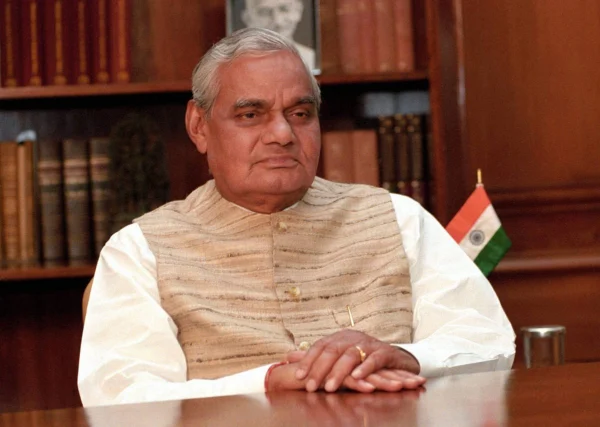
Atal Bihari Vajpayee Family 5
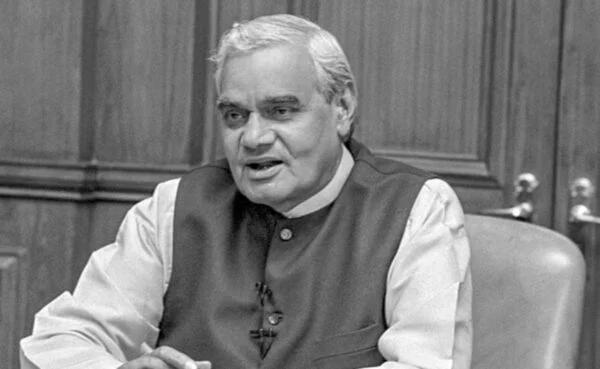
Atal Bihari Vajpayee Family 4
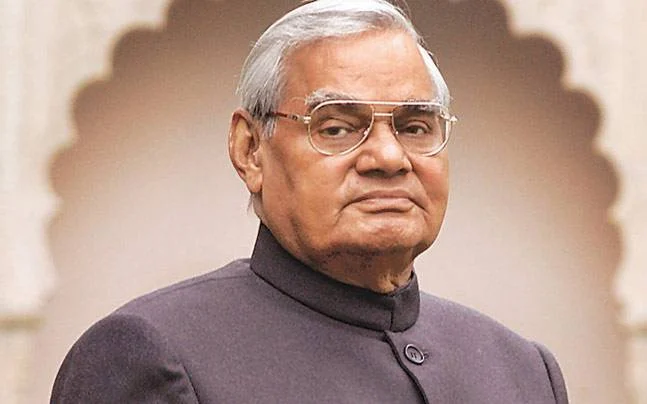
Atal Bihari Vajpayee Family 3
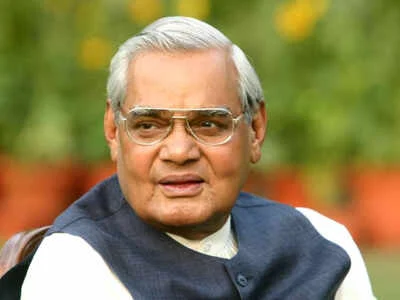
Atal Bihari Vajpayee Family 2
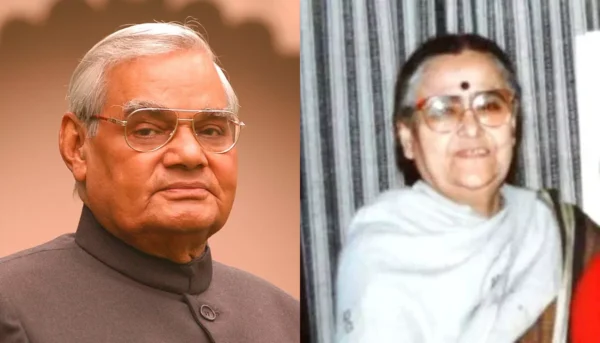
Atal Bihari Vajpayee Family
Early Life, Childhood, Education & Family Background of Atal Bihari Vajpayee
Atal Bihari Vajpayee grew up in Gwalior in a household where education, language and public affairs shaped his early interests.
He was born on 25 December 1924, when Gwalior was a princely state in central India.
His father, Krishna Bihari Vajpayee, worked as a schoolteacher and was also interested in poetry and literature.
That literary environment helped nurture Atal’s own interest in Hindi writing, public speaking and political ideas.
He studied at Victoria College in Gwalior, now known as Maharani Laxmi Bai Government College of Excellence.
He later attended DAV College in Kanpur, where he pursued postgraduate studies in political science.
His university years also deepened his interest in international affairs, constitutional questions and India’s emerging political future.
In 1942, while still young, he became involved in the Quit India Movement against British colonial rule.
His early political activities helped set him on a path away from a conventional academic or professional career.
By the early 1950s, he had entered full-time politics and journalism, turning his education and rhetorical talent into public work.
Personal Life Highlights of Atal Bihari Vajpayee (Family Members)
Atal Bihari Vajpayee never married, but family life remained an important part of his private world.
He adopted and raised Namita Bhattacharya, the daughter of his longtime friend Rajkumari Kaul and her husband, B. N. Kaul.
Namita became publicly associated with Vajpayee’s household and was widely described as his adopted daughter.
Rajkumari Kaul was a longstanding companion and close family presence, although accounts of their private relationship have sometimes been interpreted differently.
Vajpayee generally kept his domestic life away from the public attention that surrounded his political career.
His father, Krishna Bihari Vajpayee, was a teacher whose interest in poetry is often noted in accounts of the family’s literary background.
Vajpayee’s brothers included Prem Bihari Vajpayee and other relatives who largely lived outside the national political spotlight.
Namita later married Ranjan Bhattacharya, who was also known for his professional and public-sector connections.
Vajpayee’s family circle helped maintain a private home life despite the demands of national office and public ceremonies.
His decision to remain unmarried and raise an adopted daughter is one of the most frequently discussed aspects of his personal biography.
Atal Bihari Vajpayee Partners, Relationships & Dating History
Atal Bihari Vajpayee remained unmarried throughout his life, so he had no publicly documented wife or legal marriage.
Unlike many prominent political figures, he rarely made romantic relationships a subject of public discussion.
His close bond with Rajkumari Kaul has attracted attention because she was a longstanding presence in his household and the mother of his adopted daughter.
Kaul was married to B. N. Kaul, and responsible accounts should distinguish this documented family context from speculation about Vajpayee’s private feelings.
Vajpayee and Kaul’s relationship has been described in public reporting as unusually close, but private interpretations are not all independently verifiable.
He did not publicly establish a conventional dating history, and no confirmed list of romantic partners is available.
Stories about why he never married have circulated over the years, but anecdotes should not be presented as proven explanations without reliable evidence.
His public identity was largely built around politics, poetry, parliamentary debate and diplomacy rather than celebrity-style relationship coverage.
Namita Bhattacharya, whom he raised as his daughter, became an important member of his family life.
The most accurate summary is that Vajpayee was a lifelong bachelor whose personal relationships should be described carefully, without turning unverified rumours into facts.
Atal Bihari Vajpayee Career Journey, Breakthroughs, Achievements & Awards
Vajpayee’s rise from a young political activist to prime minister took place over more than five decades of public service.
His first major political chapter began with the Bharatiya Jana Sangh, which he joined in 1951.
He entered the Lok Sabha in 1957, gaining attention for speeches that challenged the government while displaying command of parliamentary argument.
During the 1977 Janata Party government, he became external affairs minister and represented India on the international stage.
In 1980, he helped establish the BJP and later became one of its most recognizable national leaders.
His first prime-ministerial term in May 1996 lasted only 13 days after he could not secure a parliamentary majority.
He returned in 1998, and his government conducted the Pokhran-II nuclear tests that year despite international criticism and sanctions.
The 1999 Kargil conflict tested his leadership, while the Lahore initiative showed his parallel effort to pursue dialogue with Pakistan.
His administration advanced major road-building projects, including the Golden Quadrilateral, and expanded rural connectivity through the Pradhan Mantri Gram Sadak Yojana.
His honours included the Padma Vibhushan in 1992, Best Parliamentarian in 1994 and the Bharat Ratna in 2015.
Current Life Highlights of Atal Bihari Vajpayee (Career / Other Work)
Atal Bihari Vajpayee died in 2018, so his current public role is one of historical influence rather than active political work.
His speeches, poems and decisions continue to feature in discussions about Indian democracy, coalition government and foreign policy.
The annual observance of Good Governance Day on 25 December is associated with his birth anniversary.
India marked his birth centenary in 2024 through programmes highlighting his public service, literary work and governing philosophy.
Commemorative events continued into 2025 and 2026, including a four-day programme in Hardoi organised with the Ministry of Culture.
In February 2026, Vice-President C. P. Radhakrishnan released a coffee-table book titled Atal Bihari Vajpayee: The Eternal Statesman, authored by Vijay Goel.
His memorial, Sadaiv Atal, in New Delhi remains a site for tributes on significant anniversaries.
Political leaders across parties continue to invoke his reputation for parliamentary debate, consensus-building and engagement with opponents.
His legacy remains debated, particularly over the balance between national security, economic development, religious pluralism and the responsibilities of political leadership.
More than eight years after his death, Vajpayee remains a prominent figure in India’s political memory and public commemorations.
Atal Bihari Vajpayee Most Popular Movies, TV Shows, Media Appearances & Other Work
Atal Bihari Vajpayee was not an actor, so his best-known screen appearances came from political broadcasts, interviews and documentary coverage.
His speeches in Parliament became widely circulated because of their rhetorical force and ability to draw attention from political rivals.
Televised addresses during the 1998 nuclear tests helped explain the government’s position during a period of international scrutiny.
His public appearances during the 1999 Kargil War conveyed the government’s stance while Indian forces fought to reclaim occupied positions.
The 1999 Lahore bus journey and summit with Pakistani prime minister Nawaz Sharif received extensive television and newspaper coverage.
His election speeches and campaign appearances helped present the BJP as a national alternative capable of leading a coalition government.
Vajpayee’s poetry readings and recitations also attracted attention, revealing a literary side beyond his formal political role.
Documentaries and television retrospectives have revisited his career, especially his prime-ministerial years, parliamentary speeches and diplomatic initiatives.
His addresses on national occasions remain part of the public record and are frequently revisited during anniversaries and political discussions.
For readers seeking his most representative media work, parliamentary speeches, the Lahore initiative coverage and the Pokhran-II announcements provide a useful starting point.
Atal Bihari Vajpayee Most Popular News, Controversies, Career Debates / Why Atal Bihari Vajpayee Is Popular
Vajpayee’s legacy is powerful partly because his career combined landmark achievements with difficult questions about political responsibility.
The 1998 nuclear tests strengthened India’s declared nuclear status but also prompted international sanctions and diplomatic criticism.
His Lahore peace initiative in February 1999 raised hopes for improved relations with Pakistan, which were soon tested by the Kargil conflict.
The BJP-led government faced intense debate over the demolition of the Babri Masjid in 1992, an event that occurred before Vajpayee became prime minister.
During the 2002 Gujarat riots, critics questioned the central government’s response, while Vajpayee publicly urged the state leadership to follow raj dharma, or the duties of ethical governance.
His remarks and the government’s handling of the violence remain subjects of political and historical debate.
In April 1999, his government lost a confidence vote by one vote, forcing a general election and demonstrating the fragility of coalition politics.
The 2004 general election defeat surprised many supporters after the BJP campaigned under the “India Shining” slogan.
Supporters credit him with infrastructure expansion, nuclear deterrence, diplomatic outreach and a parliamentary style that could acknowledge political opponents.
Critics continue to debate his administration’s record on communal violence, social cohesion and the limits of coalition leadership.
Atal Bihari Vajpayee Known Unknown Facts, Trivia + People Also Ask / Search & Answers
Vajpayee was both a poet and a politician, and his literary interests remained part of his public identity throughout his career.
He began working as a journalist before choosing full-time politics, a background that sharpened his interest in public communication.
He was elected to the Lok Sabha nine times and to the Rajya Sabha twice during his long parliamentary career.
His first government lasted only 13 days in 1996, yet he later led a coalition that completed a full five-year term.
He received the Best Parliamentarian Award in 1994, recognition linked to his parliamentary contributions and debating style.
When was Atal Bihari Vajpayee born? He was born on 25 December 1924 in Gwalior, in present-day Madhya Pradesh.
When did Atal Bihari Vajpayee die? He died on 16 August 2018 in New Delhi, aged 93.
Was Atal Bihari Vajpayee married? No, he remained unmarried throughout his life.
Who was Atal Bihari Vajpayee’s daughter? He raised Namita Bhattacharya as his adopted daughter.
What is Atal Bihari Vajpayee most famous for? He is remembered for leading India as prime minister, the 1998 nuclear tests, infrastructure development, diplomacy and Hindi poetry.