Robert Charlebois based on NeemTime research
Who Is Robert Charlebois (Biography / Personal Details)
Robert Charlebois helped transform Quebec music by blending rock, blues, country, and everyday French into a sound that challenged the conventions of traditional French-language chanson.
Born on June 25, 1944, in Montreal, Quebec, he became one of the province’s most influential singer-songwriters, musicians, and performers.
Known affectionately as Garou, he built a reputation for an expressive voice, playful wordplay, theatrical performances, and fearless musical experimentation.
His breakthrough came during the late 1960s, when songs such as “Lindberg” and “Demain l’hiver” helped redefine popular music in Quebec.
The landmark 1968 stage production L’Osstidcho, created with performers including Louise Forestier and Yvon Deschamps, captured the energy of a generation demanding cultural change.
Charlebois later became known internationally through performances in France and other French-speaking countries.
His best-known songs include “Ordinaire,” “Je reviendrai à Montréal,” “Les ailes d’un ange,” and “Lindberg.”
Beyond music, he has worked as an actor, written a novel, explored business ventures, and collaborated on theatrical projects.
His honours include the Governor General’s Performing Arts Award, the Félix Hommage, and induction into the Canadian Songwriters Hall of Fame.
More than six decades after his stage debut, Charlebois remains a defining figure in Quebec’s musical history.
Robert Charlebois Height, Appearance, Fitness & How to Get a Body Like Robert Charlebois
Robert Charlebois is recognised for his unmistakable stage presence and individualistic style rather than for a celebrity image centred on physique.
A reliable, officially confirmed height measurement is not readily available in established public biographies.
For that reason, online height estimates should not be repeated as though they were verified measurements.
His appearance has evolved throughout his long career, from the unconventional, counterculture-inspired looks of the late 1960s to a more understated mature style.
His distinctive hair and expressive performance manner became part of the visual identity associated with his music.
During live shows, his posture, gestures, and interaction with musicians help create a theatrical experience that extends beyond simply singing songs.
There is no reliably documented personal workout schedule, diet plan, or bodybuilding routine that can be attributed to him.
Anyone inspired by his mature appearance should avoid assuming that a particular fitness method explains how he looks.
For general health, regular movement, suitable strength exercises, balanced meals, adequate sleep, and professional medical advice are more dependable foundations.
Charlebois’s lasting appeal ultimately comes from artistic individuality, showing that a memorable public image can be built through creativity rather than physical perfection.
Robert Charlebois Family
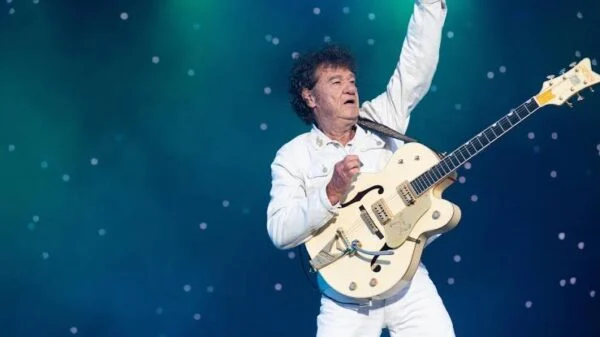
Robert Charlebois Family 5
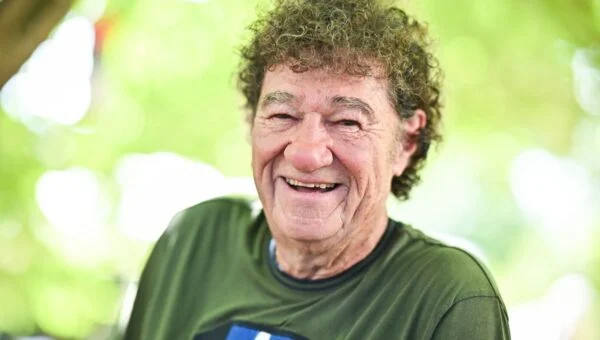
Robert Charlebois Family 4
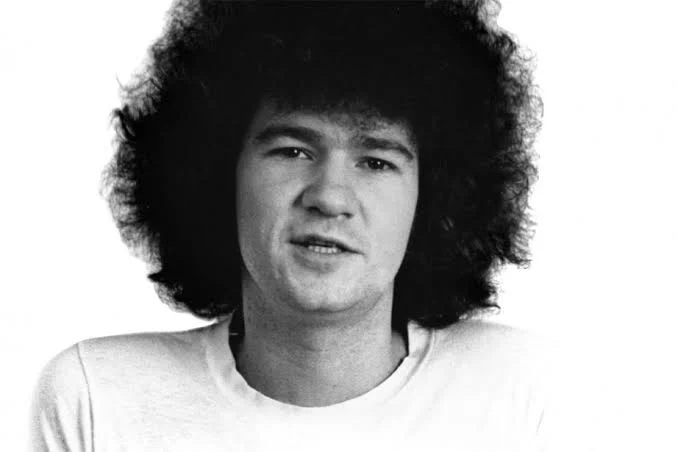
Robert Charlebois Family 3
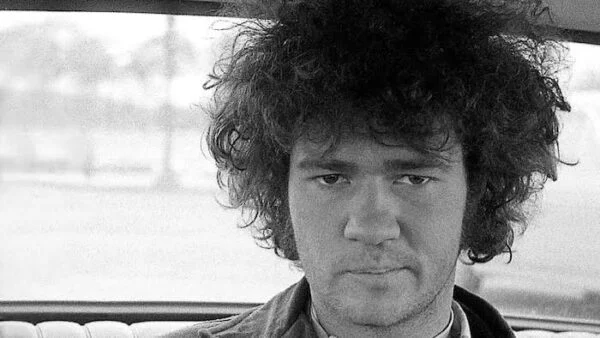
Robert Charlebois Family 2
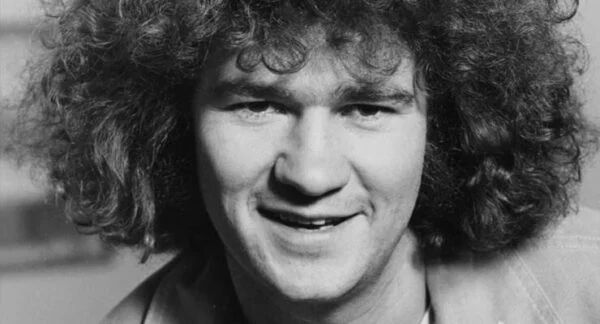
Robert Charlebois Family
Early Life, Childhood, Education & Family Background of Robert Charlebois
Robert Charlebois was born in Montreal on June 25, 1944, and grew up in a Quebec society approaching major cultural and political changes.
He learned piano at a young age, developing musical skills that would later support his work as a composer, singer, and performer.
His early education included attendance at a religious school, where he received classical musical instruction.
Although he initially followed a conventional academic path, his growing interest in music and theatre gradually took priority.
In 1962 and 1963, he attended the National Theatre School of Canada in Montreal.
There he met Claudine Monfette, later known professionally as Mouffe, who became both his romantic partner and an important creative collaborator.
The pair began developing songs and stage material together, bringing theatrical thinking into his emerging musical identity.
His formative years coincided with a period when Quebec artists were increasingly asserting a distinct French-language cultural voice.
A three-month trip to California in 1967 exposed him to counterculture and influential American rock musicians, accelerating his musical experimentation.
The combination of classical piano, theatre training, and exposure to international rock helped shape the unconventional performer who emerged in the late 1960s.
Personal Life Highlights of Robert Charlebois (Family Members)
Robert Charlebois has balanced a highly visible musical career with a personal life that he has generally kept away from constant publicity.
His most significant long-term family relationship is with Laurence, whom he married in 1976.
The couple have two sons, Victor, born in 1977, and Jérôme, born in 1979.
Charlebois has spoken about the importance of being present for his children when they were young, describing those years as especially meaningful.
Victor has been described in interviews as having an interest in business, while Jérôme has pursued music and other creative work.
His family life developed during a period when his professional career was changing, and he later acknowledged that becoming a father affected his priorities.
Before his marriage to Laurence, Charlebois had a major personal and professional relationship with Claudine Monfette, known as Mouffe.
Mouffe helped write songs and develop stage productions during his early rise, making their partnership an important part of Quebec music history.
The end of their relationship in the mid-1970s also marked a change in their working relationship.
His family story is therefore closely connected to both the private choices and creative partnerships that shaped his life.
Robert Charlebois Partners, Relationships & Dating History
Robert Charlebois’s best-documented relationships include his early partnership with artist Claudine Monfette and his enduring marriage to Laurence.
He met Monfette, known as Mouffe, while attending the National Theatre School of Canada in Montreal in the early 1960s.
Their romantic relationship lasted around twelve years and developed alongside a productive artistic collaboration.
Mouffe helped create songs and stage material that became central to Charlebois’s early career, including “Chanson pour Mouffe” and “Autre chanson pour la même Mouffe.”
Their partnership was both personal and professional, with Monfette contributing lyrics, ideas, and theatrical direction during an important period of cultural change.
The relationship ended in the mid-1970s after Charlebois became involved with Laurence, the sister of French songwriter Jean-Loup Dabadie.
Charlebois married Laurence in 1976, and their family grew with the births of Victor in 1977 and Jérôme in 1979.
In later interviews, he has described finding a lasting partner in Laurence and emphasised the importance of family.
There is no need to infer additional romantic relationships beyond those documented in established biographical accounts.
His relationship history is notable for how closely his early love life intersected with the creative work that helped change Quebec popular music.
Robert Charlebois Career Journey, Breakthroughs, Achievements & Awards
Robert Charlebois began performing publicly in September 1962, opening for Quebec folk legend Félix Leclerc at La Butte-à-Mathieu.
His early song “La Boulée,” written when he was a teenager, won the Grand Prix at the Festival du disque in 1965.
A trip to California in 1967 encouraged him to combine French-language songwriting with rock, blues, and counterculture influences.
The 1968 production L’Osstidcho became a defining moment, bringing Charlebois, Louise Forestier, Yvon Deschamps, and their collaborators to the forefront of Quebec’s cultural transformation.
His song “Lindberg,” performed with Forestier, helped establish his reputation for mixing popular speech, surreal humour, and electric rock arrangements.
In 1969, he performed at the Olympia in Paris, extending his influence beyond Quebec and Canada.
His catalogue later included acclaimed songs such as “Ordinaire,” “Je reviendrai à Montréal,” and “J’t’aime comme un fou.”
In 1993, he received the Félix Hommage from ADISQ, recognising his contribution to Quebec music.
He received the Governor General’s Performing Arts Award in 1994 and became an Officer of the Order of Canada in 1999.
His subsequent honours include induction into the Canadian Songwriters Hall of Fame in 2010 and appointment as a Companion of the Arts and Letters of Quebec in 2021.
Current Life Highlights of Robert Charlebois (Career / Other Work)
As of October 2026, Robert Charlebois continues to celebrate his musical catalogue through new releases, orchestral performances, and scheduled concerts.
His latest major project is Charlebois symphonique, a concert film and album scheduled for release on October 23, 2026.
The project draws on performances recorded in August 2024 at Montreal’s Maison symphonique with the Orchestre symphonique de Montréal.
The production features 17 songs, including “Lindberg,” “Ordinaire,” “Je reviendrai à Montréal,” and “La fin du monde.”
Approximately 70 musicians participated in the orchestral celebration, conducted by Jacques Lacombe and joined by the OSM Chorus.
The concert film is scheduled to screen in more than 50 cinemas across Quebec from October 23.
Charlebois also has performances listed for December 27 and 28, 2026, at the Grand Théâtre de Québec.
Further concerts are scheduled for January 2 and 3, 2027, at Place des Arts in Montreal.
In March 2027, he is due to perform at Le Grand Rex in Paris, continuing his longstanding connection with French audiences.
These projects show how he is revisiting and reinterpreting his catalogue rather than relying solely on nostalgia or past achievements.
Robert Charlebois Most Popular Movies, TV Shows, Media Appearances & Other Work
Robert Charlebois has pursued acting and film-music work alongside his celebrated career as a singer-songwriter.
One of his earliest screen appearances was in Michel Brault’s Quebec film Entre la mer et l’eau douce (1967).
He later appeared in Jusqu’au cœur (1968), expanding his experience beyond music and stage performance.
In Claude Fournier’s Deux femmes en or (1970), his musical contribution connected him with one of Quebec cinema’s best-known productions of the period.
He played Steamengine Bill in the 1975 Italian western Un genio, due compari, un pollo, released in English as A Genius, Two Partners and a Dupe.
His later film appearances included Sauve-toi, Lola (1986) and Denis Villeneuve’s Un 32 août sur terre, internationally known as August 32nd on Earth (1998).
He appeared in Jean-Marc Vallée’s acclaimed Quebec film C.R.A.Z.Y. (2005), contributing to a story strongly rooted in family and identity.
In 2011, he played Senator O. O. Tremblay in the comedy French Immersion.
He also appeared in the 2012 French romantic comedy Un bonheur n’arrive jamais seul, released in English as Happiness Never Comes Alone.
His screen career demonstrates that his creative interests extend beyond recording albums to acting, film soundtracks, and collaborations across different artistic formats.
Robert Charlebois Most Popular News, Controversies, Career Debates / Why Robert Charlebois Is Popular
Robert Charlebois became a cultural lightning rod because he challenged what French-language popular music in Quebec was expected to sound like.
The 1968 stage production L’Osstidcho shocked conservative audiences with its provocative language, irreverent humour, and unconventional mixture of music and theatre.
Its title itself used a deliberately provocative Quebec French expression, reflecting the production’s rejection of polite cultural conventions.
His move from acoustic songwriting toward electric rock also divided listeners who preferred traditional chanson.
The song “Lindberg,” with its surreal lyrics and experimental sound, became a defining example of his willingness to take risks.
His use of colloquial Quebec French helped demonstrate that local speech could carry poetic, humorous, and musically ambitious songwriting.
He also experienced quieter professional periods, particularly when musical trends and audience expectations changed during the late 1970s and 1980s.
Rather than ending his career, these shifts were followed by renewed recognition and later celebrations of his catalogue.
His business interests, including a stake in the Quebec brewery Unibroue before its sale, showed an entrepreneurial side beyond entertainment.
Charlebois remains popular because his music became associated with a wider transformation in Quebec identity, language, and cultural confidence.
Robert Charlebois Known Unknown Facts, Trivia + People Also Ask / Search & Answers
Robert Charlebois wrote “La Boulée” as a teenager, and the song won a major French-language music award in 1965.
His nickname Garou predates the international fame of the Canadian singer who later used the same stage name.
He spent three months in California in 1967, an experience that helped shift his sound toward rock and counterculture influences.
His long collaboration with Claudine Monfette, known as Mouffe, combined songwriting, theatre, and a romantic relationship.
He appeared on a Canadian postage stamp in 2009 as part of a series honouring recording artists.
In 2010, Concordia University awarded him an honorary doctorate, despite his having left formal studies early to pursue the arts.
He was part-owner of the Quebec craft brewery Unibroue before it was acquired by Sleeman Breweries in 2004.
His 2026 Charlebois symphonique project reimagines familiar songs with a full symphony orchestra and chorus.
When was Robert Charlebois born? He was born on June 25, 1944, in Montreal, Quebec, Canada.
What are Robert Charlebois’s most famous songs? His best-known songs include “Lindberg,” “Ordinaire,” “Je reviendrai à Montréal,” and “J’t’aime comme un fou.”