Anna Hazare based on NeemTime research
Who is Anna Hazare (Biography / Personal Details)
Anna Hazare became one of India’s best-known social activists by turning village-level reform into a national movement against corruption.
Born Kisan Baburao Hazare on June 15, 1937, in Bhingar, Maharashtra, he is known for rural development, transparency campaigns and non-violent protest.
He served in the Indian Army before returning to Maharashtra and dedicating his life to community reform.
His transformation of drought-prone Ralegan Siddhi into a model village helped establish his reputation long before national television made him famous.
He gained nationwide prominence in 2011 when hunger strikes demanding a stronger anti-corruption law drew enormous public support.
The campaign, associated with the India Against Corruption movement, demanded a powerful independent ombudsman known as the Lokpal.
Hazare’s methods drew comparisons with Mahatma Gandhi because he used fasting, simplicity and non-violent civil pressure.
His work also supported the Right to Information movement, which strengthened citizens’ ability to seek information from public authorities.
He received the Padma Shri in 1990 and the Padma Bhushan in 1992 for public service.
Now in his late eighties, he remains a public voice on transparency, governance and rural development, although recent health concerns have affected his activities.
Anna Hazare Height, Appearance, Fitness & How to Get a Body Like Anna Hazare
Anna Hazare is recognised more for his austere lifestyle and endurance during public fasts than for conventional fitness or bodybuilding.
His exact height has not been reliably confirmed in an official public record, despite estimates appearing on some biography websites.
His weight and body measurements are not consistently documented by dependable sources.
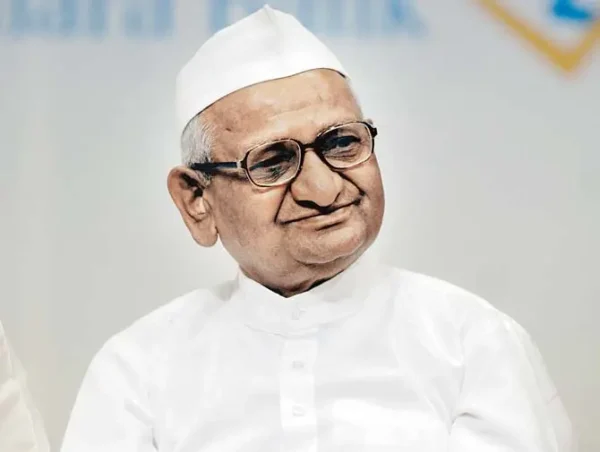
His familiar appearance includes a white Gandhi cap, simple white clothing and a plain, unadorned style.
The cap has become an instantly recognisable part of his public image during protests, village meetings and press appearances.
Hazare’s long fasts were political acts of protest, not fitness routines or safe methods for losing weight.
Prolonged fasting can cause dehydration, electrolyte imbalance and serious medical complications, particularly in older adults.
There is no verified public account of a structured bodybuilding programme, daily workout schedule or celebrity-style diet associated with him.
Anyone seeking better health should focus on regular movement, balanced meals, adequate sleep and exercise suited to their age and medical condition.
His disciplined lifestyle may inspire simplicity, but copying prolonged fasts without medical supervision would be dangerous and inappropriate.
Anna Hazare Family
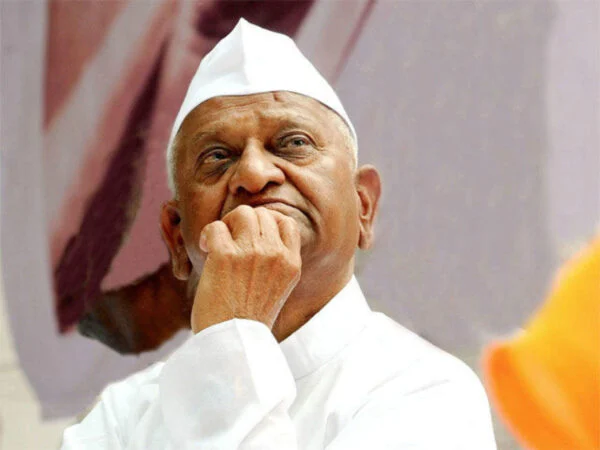
Anna Hazare Family 5
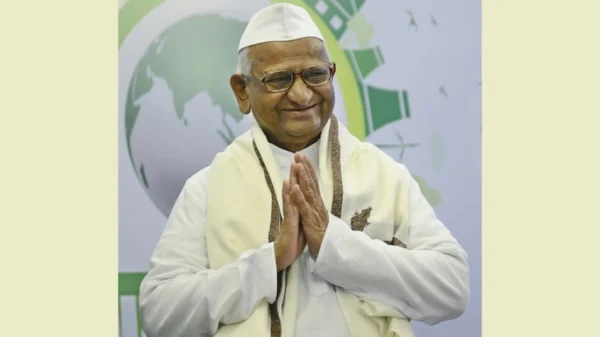
Anna Hazare Family 4
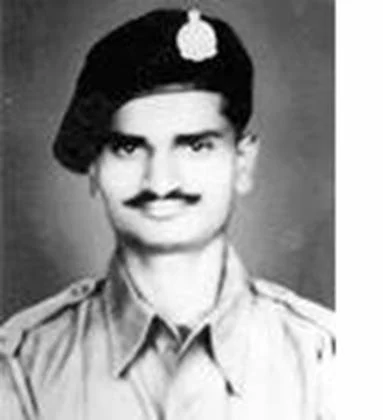
Anna Hazare Family 3
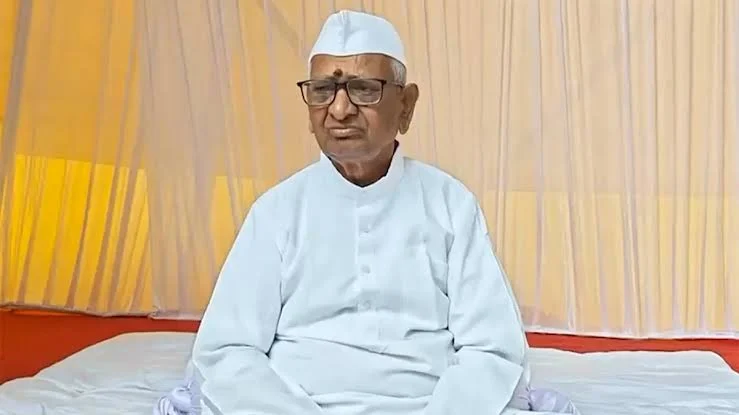
Anna Hazare Family 2
Anna Hazare Family
Early Life, Childhood, Education & Family Background of Anna Hazare
Anna Hazare’s early life was shaped by financial hardship, limited schooling and a formative experience in the Indian Army.
He was born Kisan Baburao Hazare in Bhingar, near Ahmednagar, in the then Bombay Presidency.
His father, Baburao Hazare, worked as a labourer, and the family’s limited income made education difficult to sustain.
His mother, Laxmibai, raised a large family during years when rural opportunities were scarce.
A relative helped bring him to Mumbai for schooling, where he studied before leaving formal education at a young age.
Biographical accounts commonly state that he completed education through the seventh standard, although some summaries report fewer years of schooling.
He later earned a living selling flowers in Mumbai before joining the Indian Army in 1960.
During the 1965 India-Pakistan War, he survived a Pakistani air attack while serving as an army driver, an experience he later described as life-changing.
He returned to Ralegan Siddhi in 1975 after roughly 15 years of military service and began working on local development.
His modest educational background did not prevent him from becoming an influential campaigner for village reform and government accountability.
Personal Life Highlights of Anna Hazare (Family Members)
Anna Hazare has chosen an unusually private personal life, dedicating much of his time to public service in rural Maharashtra.
He was born into the Hazare family and grew up with several siblings during a period of financial difficulty.
His parents, Baburao and Laxmibai Hazare, lived a modest life, and their circumstances shaped his understanding of rural poverty.
Hazare never married and has no publicly documented spouse or children.
He has often described his decision to remain unmarried as part of his commitment to a life devoted to social work.
His home and base of activity have long been in Ralegan Siddhi, the village he helped transform through water conservation and community initiatives.
The village became associated with collective labour, watershed management, restrictions on alcohol and efforts to improve local self-reliance.
His family members have largely stayed outside the national spotlight compared with the activists and political figures who joined his campaigns.
Hazare’s public identity is therefore defined less by family celebrity and more by his austere personal choices and community work.
In recent years, aides and supporters have played a visible role in communicating health updates and organising his public activities.
Anna Hazare Partners, Relationships & Dating History
Anna Hazare has no publicly documented romantic partner or dating history because he has remained unmarried throughout his life.
His decision to stay single is widely associated with his vow to dedicate himself to social service.
After completing his military service, he settled in Ralegan Siddhi and focused on the village’s development rather than establishing a conventional family life.
He has spoken publicly about living simply and limiting personal possessions as part of his commitment to public work.
Unlike actors and entertainers, Hazare has not maintained a public profile built around relationships, marriage or family announcements.
There is no reliable evidence of a spouse, engagement or long-term romantic partnership.
His public commitments have centred on anti-corruption campaigns, access to information, village development and environmental conservation.
During the 2011 movement, media attention focused on his fasts, public speeches and negotiations with government representatives rather than his personal relationships.
Because he has remained unmarried, claims about secret partners or alleged romantic relationships should not be presented as established fact.
His personal life is best understood through his chosen celibacy, austere lifestyle and long-standing dedication to social activism.
Anna Hazare Career Journey, Breakthroughs, Achievements & Awards
Anna Hazare’s career began in the Army but became nationally influential through rural development and anti-corruption activism.
After joining the Indian Army in 1960, he served for approximately 15 years before returning to his home region.
In Ralegan Siddhi, he promoted watershed development, tree planting, community participation and measures to conserve scarce water.
The village’s improvements in agriculture and local infrastructure helped make it a frequently cited example of community-led rural development.
His campaign for greater government transparency contributed to the wider movement that helped secure India’s Right to Information Act in 2005.
In 2011, his hunger strike in Delhi transformed a campaign for a stronger Lokpal into a major national protest.
The movement brought together activists, students, professionals and citizens frustrated by corruption scandals and the perceived weakness of existing accountability systems.
Hazare received the Indira Priyadarshini Vrikshamitra Award in 1986 for environmental work and the Padma Shri in 1990.
The Government of India awarded him the Padma Bhushan in 1992 for his contribution to social service.
His legacy combines practical village reform with mass protest, although the political impact and long-term effectiveness of his methods remain subjects of debate.
Current Life Highlights of Anna Hazare (Career / Other Work)
As of October 2026, Anna Hazare remains associated with public campaigns for transparency and accountability, though recent health problems have limited his activities.
In June 2026, he opposed Maharashtra’s newly notified Right to Information Rules, arguing that the changes threatened citizens’ access to public information.
He warned that he would begin an indefinite hunger strike on July 5 unless the state withdrew the rules.
On July 2, the Maharashtra government put implementation of the 2026 rules on hold following objections and the threatened protest.
That decision marked a recent example of Hazare using the possibility of a fast to press authorities over governance issues.
In late August 2026, he was admitted to a hospital in Mumbai after a prolonged illness involving viral infection, dehydration and a renal infection.
Doctors described his condition as stable and improving in updates published in early September.
His aide reported that he was eating as advised and would remain under observation for additional days before returning to Ralegan Siddhi.
The latest widely reported health updates available by October 18 did not establish a new public campaign or a confirmed return to his previous schedule.
His ongoing public work is therefore best described through his advocacy and organisational network, while avoiding unsupported claims about his present daily activities.
Anna Hazare Most Popular Movies, TV Shows, Media Appearances & Other Work
Anna Hazare is a social activist rather than a film or television performer, and his public appearances centre on civic issues.
His most famous televised moments came during the 2011 anti-corruption movement, when crowds gathered in Delhi and other cities to support the Lokpal demand.
Live news coverage of his hunger strike at Ramlila Maidan turned a civil-society campaign into a major national event.
His speeches and press conferences frequently address corruption, transparency, public accountability and the responsibilities of elected officials.
He has also appeared in documentaries and news features examining the transformation of Ralegan Siddhi.
Those reports often focus on water conservation, village participation, agriculture and the community rules adopted during its development.
His campaigns for the Right to Information have been covered in journalism about citizen access to government records and the role of grassroots activists.
Interviews about his army service and personal austerity have also shaped public understanding of the experiences that influenced his activism.
His public appearances have included meetings with officials and representatives of different political parties, although he has repeatedly described his movement as independent of party politics.
No established acting filmography or regular television-hosting career is associated with Hazare; news footage and documentaries are the main media formats through which audiences know him.
Anna Hazare Most Popular News, Controversies, Career Debates / Why Anna Hazare Is Popular
Anna Hazare became nationally famous in 2011, but his methods and political influence have also generated substantial debate.
His hunger strike in April 2011 demanded a strong Jan Lokpal Bill to investigate corruption among public officials.
The campaign gathered momentum again in August, when his arrest before a planned protest triggered widespread demonstrations and candlelight marches.
Supporters praised the movement for mobilising citizens who felt disillusioned with corruption scandals and traditional party politics.
Critics argued that a powerful unelected ombudsman could concentrate authority and that hunger strikes risked pressuring elected lawmakers outside ordinary democratic processes.
Debate also emerged over whether the movement represented a broad cross-section of society or was disproportionately driven by urban and middle-class supporters.
Hazare’s relationship with activists who later entered electoral politics became another point of public discussion, especially after Arvind Kejriwal and colleagues formed the Aam Aadmi Party.
Hazare opposed turning his own campaign into a political party, and later criticised political leaders when he believed their conduct conflicted with anti-corruption principles.
In 2026, his objection to Maharashtra’s RTI Rules led to a planned hunger strike threat, after which the state put implementation of the rules on hold.
His popularity endures because he represents both the potential of mass civic action and the difficult questions surrounding protest, representation and political accountability.
Anna Hazare Known Unknown Facts, Trivia + People Also Ask / Search & Answers
Anna Hazare’s transformation of Ralegan Siddhi began years before the 2011 protests made him a household name across India.
His birth name is Kisan Baburao Hazare, while “Anna” is a Marathi term commonly used to mean elder brother or respected elder.
He served in the Indian Army before returning to Maharashtra and beginning his community-development work.
Ralegan Siddhi became known for watershed management, rainwater conservation, tree planting and community-led agricultural improvements.
His campaigns helped popularise the Right to Information movement, which contributed to stronger legal rights for citizens seeking government records.
Hazare received the Padma Shri in 1990 and the Padma Bhushan in 1992 for social service.
How old is Anna Hazare? Born on June 15, 1937, he turned 89 in June 2026.
What is Anna Hazare’s real name? His birth name is Kisan Baburao Hazare.
Is Anna Hazare married? No, he has never married and has no publicly documented spouse or children.
What is Anna Hazare famous for? He is known for transforming Ralegan Siddhi, campaigning for government transparency and leading India’s 2011 anti-corruption protests.
What happened to Anna Hazare’s 2026 hunger strike threat? He threatened an indefinite fast over Maharashtra’s Right to Information Rules, and the state put implementation of the rules on hold in July 2026.
What is Anna Hazare’s latest reported health condition? He was hospitalised in Mumbai in late August 2026 with a serious infection, and early-September updates described his condition as stable and improving.
Did Anna Hazare serve in the Indian Army? Yes, he served from 1960 until 1975 and was affected by his experiences during the 1965 India-Pakistan War.
Which awards has Anna Hazare received? His major honours include the Indira Priyadarshini Vrikshamitra Award, Padma Shri and Padma Bhushan.
Where does Anna Hazare live? His long-standing home and centre of social work is Ralegan Siddhi in Maharashtra.