Bhagat Singh based on NeemTime research
Who is Bhagat Singh (Biography / Personal Details)
Bhagat Singh was one of India’s most celebrated revolutionary freedom fighters, remembered for his fearless resistance against British colonial rule and his enduring influence on the Indian independence movement.
He was born on 28 September 1907 in Banga village, Lyallpur District, Punjab Province, British India (now in Faisalabad District, Punjab, Pakistan), into a patriotic Sikh family deeply involved in the freedom struggle.
His parents were Kishan Singh Sandhu and Vidyavati Kaur, while his uncles Ajit Singh and Swaran Singh were well-known political activists who inspired his nationalist ideals.
Bhagat Singh became actively involved in revolutionary politics during his teenage years, joining organizations such as the Naujawan Bharat Sabha and later the Hindustan Socialist Republican Association (HSRA).
He strongly believed that India’s independence required not only freedom from British rule but also social equality, secularism, and justice for workers and farmers.
In 1928, Bhagat Singh, along with Shivaram Rajguru, mistakenly assassinated British police officer John Saunders in Lahore in retaliation for the death of Lala Lajpat Rai, who had been injured during a police lathi charge led by James A. Scott.
In April 1929, Bhagat Singh and Batukeshwar Dutt threw non-lethal bombs and distributed revolutionary leaflets inside the Central Legislative Assembly in Delhi to protest oppressive colonial laws, deliberately surrendering afterward to spread their political message through the courts.
During his imprisonment, Bhagat Singh gained nationwide admiration by undertaking a prolonged hunger strike demanding equal treatment and better conditions for Indian political prisoners.
He was sentenced to death along with Shivaram Rajguru and Sukhdev Thapar, and the three revolutionaries were executed by hanging in Lahore Central Jail on 23 March 1931, when Bhagat Singh was only 23 years old.
Today, Bhagat Singh is regarded as one of the greatest heroes of India’s freedom movement, with numerous universities, museums, memorials, films, books, and public institutions honoring his extraordinary sacrifice and revolutionary ideals.
Bhagat Singh Height / How to Get Body Like Bhagat Singh
Bhagat Singh’s exact height was never officially documented, but historical references and biographies generally estimate that he stood approximately 5 feet 10 inches (178 cm) tall.
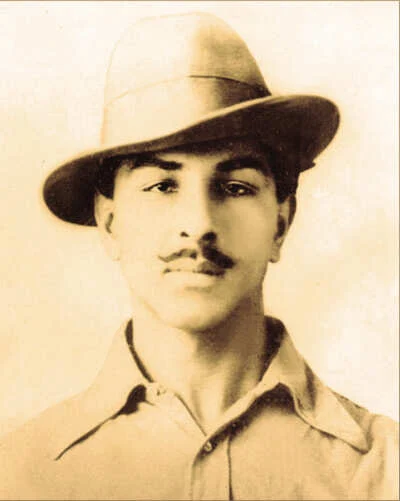
Contemporary photographs show him with a lean, athletic, and well-proportioned physique suited to the physically demanding life of a revolutionary activist.
His daily routine involved extensive walking, cycling, manual work, traveling, and maintaining physical endurance while living underground during revolutionary activities.
Bhagat Singh emphasized discipline, courage, and mental strength, believing that physical fitness complemented intellectual and moral development.
He maintained a simple lifestyle with modest eating habits and avoided luxury, contributing to his naturally fit appearance.
To develop a physique similar to Bhagat Singh’s, focus on maintaining a lean body through regular bodyweight exercises, strength training, and cardiovascular activities.
Exercises such as push-ups, pull-ups, squats, running, sprinting, and core strengthening can help build functional fitness similar to his likely physical condition.
A balanced diet consisting of whole grains, vegetables, fruits, lentils, dairy products, healthy fats, and adequate protein supports overall fitness and stamina.
Adequate sleep, hydration, consistency, and avoiding harmful habits are essential components of maintaining long-term physical health.
Bhagat Singh’s greatest strength came from his courage, determination, education, discipline, and commitment to his ideals, qualities that defined him far more than his physical appearance.
Bhagat Singh: List of Partners & Dating History
Historical records consistently indicate that Bhagat Singh never married and had no known romantic relationships during his lifetime.
As a young revolutionary, he consciously chose to dedicate his entire life to India’s struggle for independence instead of pursuing marriage or family life.
His family made several attempts to arrange his marriage according to social customs of the time.
Bhagat Singh firmly declined those proposals, believing that personal commitments would distract him from his revolutionary mission.
In one of his well-known statements, he expressed that he had already dedicated himself completely to the service of the nation.
After leaving home, Bhagat Singh focused exclusively on organizing revolutionary activities, political education, and anti-colonial resistance.
No credible historical evidence supports claims that he was engaged, married, or involved in any romantic relationship.
His close personal relationships were primarily with fellow revolutionaries such as Sukhdev Thapar, Shivaram Rajguru, Batukeshwar Dutt, Chandrashekhar Azad, and Bhagwati Charan Vohra.
Historians generally agree that Bhagat Singh intentionally remained unmarried throughout his life to devote himself fully to the cause of Indian independence.
Consequently, his documented dating history consists of no confirmed romantic partners, making his lifelong commitment to the freedom movement a defining aspect of his personal life.
Personal Life Highlights of Bhagat Singh (List of Family Members)
Bhagat Singh was born into the Sandhu Jat Sikh family, which was widely respected for its strong commitment to India’s freedom movement.
His father, Kishan Singh Sandhu, was an active political worker who supported nationalist causes and encouraged patriotic values within the family.
His mother, Vidyavati Kaur, became widely respected for her courage and unwavering support of her son’s dedication to India’s independence.
Bhagat Singh’s grandfather, Arjan Singh, strongly influenced the family’s patriotic outlook and educational values.
His uncle Ajit Singh was one of Punjab’s leading nationalist leaders who opposed British colonial policies and later lived in exile because of his political activism.
Another uncle, Swaran Singh, also participated in the freedom movement and died at a young age following imprisonment and illness.
Bhagat Singh had several brothers and sisters, including Kultar Singh, Kulbir Singh, Rajinder Singh, Amar Kaur, Sumitra Kaur, Shakuntala Kaur, Prakash Kaur, and Ranbir Singh.
Despite frequent police surveillance and repeated hardships, the entire family continued supporting India’s struggle for independence.
Bhagat Singh never married and left no direct descendants, as he sacrificed his personal life entirely for the national cause.
His family remains highly respected in Indian history for producing one of the country’s most admired revolutionary freedom fighters.
Early Life Highlights of Bhagat Singh (Background / Childhood)
Bhagat Singh was born on 28 September 1907 in Banga village of Lyallpur District, British India, into a family already deeply involved in anti-colonial political activities.
Remarkably, his father Kishan Singh and uncles Ajit Singh and Swaran Singh were released from British custody around the time of his birth, making his arrival a symbolic moment for the family.
Growing up in Punjab, Bhagat Singh was surrounded by discussions about nationalism, political resistance, and the struggle against British colonial rule.
As a child, he attended the Dayanand Anglo-Vedic School in Lahore before later enrolling at the National College, Lahore, founded by Lala Lajpat Rai to promote patriotic education.
The 1919 Jallianwala Bagh massacre profoundly affected the young Bhagat Singh, and according to popular historical accounts, he visited the site soon afterward and collected soil stained with the blood of the victims as a symbol of remembrance.
From an early age, he developed a deep interest in reading history, politics, philosophy, socialism, and revolutionary literature from India and around the world.
Influenced by leaders such as Kartar Singh Sarabha, Lala Lajpat Rai, Bal Gangadhar Tilak, Giuseppe Mazzini, Vladimir Lenin, and Karl Marx, he broadened his political understanding beyond Indian nationalism.
During his student years, he participated in debates, dramatic performances, and youth organizations that promoted patriotism and resistance to British rule.
Rejecting traditional expectations of marriage, Bhagat Singh left home as a young man to devote himself completely to revolutionary activities.
His childhood experiences, family background, education, and exposure to political injustice collectively shaped him into one of the most influential revolutionary figures in the history of India’s independence movement.
Bhagat Singh Family
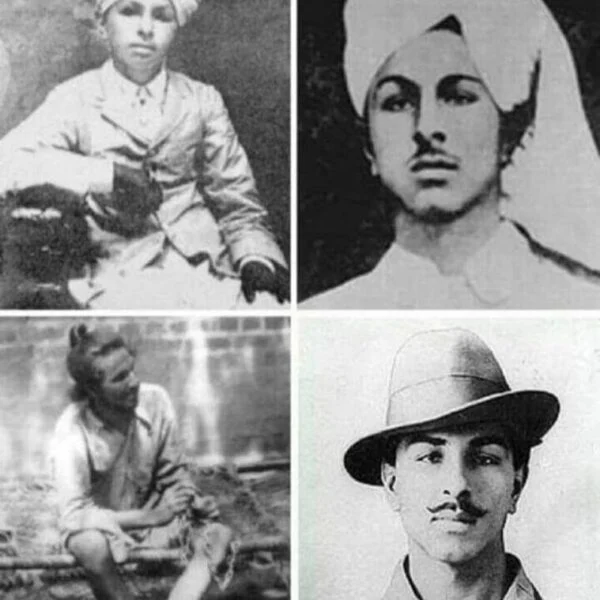
Bhagat Singh Family 5
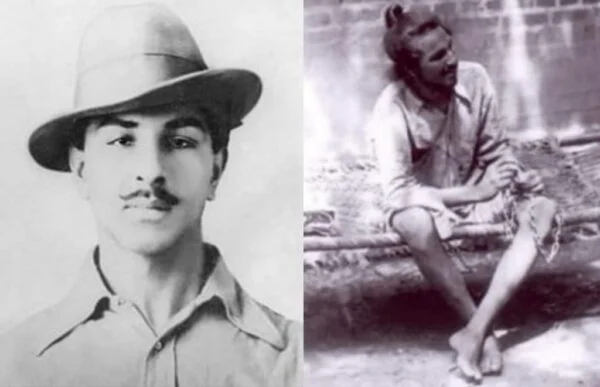
Bhagat Singh Family 4
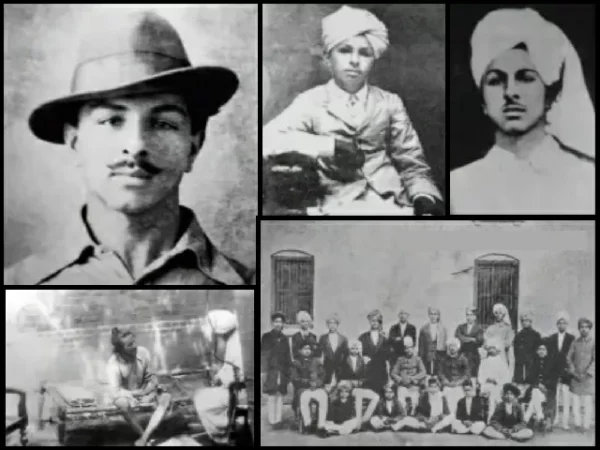
Bhagat Singh Family 3
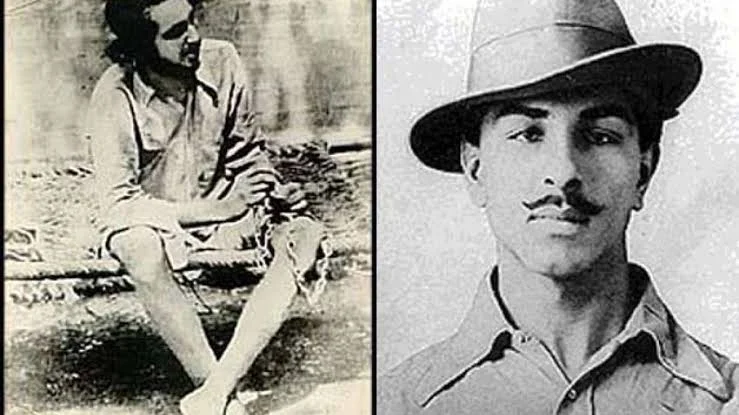
Bhagat Singh Family 2
Bhagat Singh Family
Current Life Highlights of Bhagat Singh (Career / Other Work)
Although Bhagat Singh was executed on 23 March 1931, his revolutionary career continues to inspire generations, and he is remembered as one of the greatest martyrs of India’s independence movement.
Bhagat Singh became an active member of the Hindustan Socialist Republican Association (HSRA), where he worked alongside Chandrashekhar Azad, Sukhdev Thapar, Shivaram Rajguru, Batukeshwar Dutt, and Bhagwati Charan Vohra to challenge British colonial rule.
In 1926, he founded the Naujawan Bharat Sabha in Lahore to encourage patriotism, secularism, social equality, and youth participation in India’s freedom struggle.
Bhagat Singh was an accomplished political writer who contributed articles under various pseudonyms to newspapers and journals discussing socialism, revolution, anti-imperialism, communal harmony, and workers’ rights.
In 1928, he participated in the plan to avenge the death of Lala Lajpat Rai by targeting British police official James A. Scott, although Assistant Superintendent John Saunders was mistakenly killed instead.
On 8 April 1929, Bhagat Singh and Batukeshwar Dutt threw non-lethal bombs and distributed revolutionary leaflets inside the Central Legislative Assembly in Delhi to protest oppressive colonial legislation before voluntarily surrendering.
During his imprisonment, he undertook a historic hunger strike lasting more than two months to demand equal treatment for Indian political prisoners, attracting widespread national attention.
His prison writings, including essays such as “Why I Am an Atheist” and letters discussing revolution, liberty, and social justice, remain widely studied by historians, political scientists, and students.
Bhagat Singh believed that true independence required not only political freedom from British rule but also economic equality, education, secular democracy, and social justice for all citizens.
Today, Bhagat Singh’s career and ideals continue to be honored through museums, memorials, universities, research publications, films, annual commemorations, and educational institutions across India and beyond.
Bhagat Singh Most Popular Media Appearances, Movies, TV Shows
1954 – “Shaheed-e-Azad Bhagat Singh” was one of the earliest Indian feature films portraying Bhagat Singh’s revolutionary life and sacrifice, helping introduce his story to post-independence audiences.
1965 – “Shaheed”, starring Manoj Kumar as Bhagat Singh, became one of India’s most celebrated patriotic films, earning widespread acclaim for its emotional portrayal of the freedom fighter.
2002 – “The Legend of Bhagat Singh”, directed by Rajkumar Santoshi and starring Ajay Devgn, received the National Film Award and is regarded as one of the most historically respected portrayals of Bhagat Singh.
2002 – “23rd March 1931: Shaheed”, starring Bobby Deol as Bhagat Singh and Sunny Deol as Chandrashekhar Azad, depicted the revolutionary movement leading to the execution of Bhagat Singh, Rajguru, and Sukhdev.
2002 – “Shaheed-E-Azam”, featuring Sonu Sood as Bhagat Singh, offered another cinematic interpretation of his life and revolutionary activities.
2006 – “Rang De Basanti”, starring Aamir Khan, Siddharth, Kunal Kapoor, Sharman Joshi, and Atul Kulkarni, drew strong parallels between modern youth and the lives of Bhagat Singh and his fellow revolutionaries.
Bhagat Singh has appeared in numerous television documentaries produced by Doordarshan, History TV18, Discovery, National Geographic, and other educational broadcasters focusing on India’s independence movement.
His life has been portrayed in educational television programs, museum presentations, and historical documentaries used by schools and universities throughout India.
His prison writings and revolutionary philosophy continue to be adapted into stage plays, documentaries, radio programs, and digital educational productions.
Bhagat Singh remains one of the most frequently portrayed Indian freedom fighters in films, documentaries, television specials, and historical programming because of his lasting influence on India’s national identity.
Bhagat Singh Most Popular News Headlines, Controversies, Scandals
Bhagat Singh himself is widely respected and is not associated with personal scandals, but many historical debates continue regarding the events surrounding his revolutionary activities.
Historians continue discussing whether the execution of John Saunders instead of James A. Scott was an unintended consequence of mistaken identity during the revenge plan for Lala Lajpat Rai’s death.
Scholars have debated the revolutionary use of violence by Bhagat Singh, with many emphasizing that he viewed armed resistance as a political strategy against colonial oppression rather than indiscriminate violence.
His decision to throw non-lethal bombs in the Central Legislative Assembly remains one of the most analyzed acts in India’s revolutionary history, as the intention was to protest rather than cause fatalities.
Bhagat Singh’s famous hunger strike generated major public support and highlighted unequal treatment between Indian and European prisoners under British rule.
Considerable historical discussion surrounds his political ideology, with researchers examining his commitment to socialism, secularism, workers’ rights, and anti-imperialism.
Some historians continue debating whether greater political intervention could have prevented the executions of Bhagat Singh, Rajguru, and Sukhdev in 1931.
Public discussions occasionally arise over preserving the historical accuracy of films, textbooks, and biographies depicting Bhagat Singh’s life and ideology.
Governments, educational institutions, and historians continue commemorating his birth anniversary on 28 September and Martyrs’ Day on 23 March through official ceremonies and educational events.
Bhagat Singh remains one of the most universally admired figures of India’s freedom struggle, with historical debates focusing primarily on his revolutionary methods and political philosophy rather than personal misconduct.
Known Unknown Facts Trivia of Bhagat Singh
Bhagat Singh learned several languages, including Punjabi, Hindi, Urdu, English, and had knowledge of Gurmukhi and other literary works.
He was an avid reader who studied hundreds of books on politics, philosophy, economics, socialism, revolution, and world history during his short lifetime.
His famous essay “Why I Am an Atheist” remains one of the most widely read political and philosophical writings by an Indian revolutionary.
Bhagat Singh often used disguises, including cutting his hair and shaving his beard, to avoid British police after the Saunders incident.
He admired international revolutionaries and intellectuals such as Karl Marx, Vladimir Lenin, Giuseppe Mazzini, and the Irish freedom fighters.
During his imprisonment, he reportedly continued reading extensively and requested books until shortly before his execution.
He deliberately surrendered after the Assembly bombing because he wanted to use the courtroom as a platform to explain revolutionary ideals.
Bhagat Singh was only 23 years old when he was executed, yet he became one of the youngest and most influential martyrs in Indian history.
His slogan “Inquilab Zindabad” became one of the defining revolutionary slogans of India’s freedom movement and continues to be remembered today.
Bhagat Singh’s writings demonstrate that he envisioned an independent India founded on democracy, secularism, education, equality, and social justice rather than merely political independence.
Bhagat Singh: Questions People Also Ask / Search & Answers
Who was Bhagat Singh?
Bhagat Singh was an Indian revolutionary freedom fighter who became one of the leading figures of the struggle against British colonial rule and was executed in 1931 for his role in revolutionary activities.
When was Bhagat Singh born?
He was born on 28 September 1907 in Banga village, Lyallpur District, Punjab Province, British India (now in Pakistan).
How tall was Bhagat Singh?
His exact height was never officially recorded, but historians generally estimate that he stood about 5 feet 10 inches (178 cm) tall.
Why is Bhagat Singh famous?
He is famous for his revolutionary activities, his role in the Saunders case and Central Legislative Assembly protest, his prison hunger strike, and his sacrifice for India’s independence.
Did Bhagat Singh get married?
No. He remained unmarried because he dedicated his life entirely to India’s freedom movement.
What was Bhagat Singh’s famous slogan?
His most famous slogan was “Inquilab Zindabad” (Long Live the Revolution), which became a symbol of India’s revolutionary movement.
What books did Bhagat Singh write?
He did not publish books during his lifetime, but his essays, letters, and prison writings—including “Why I Am an Atheist”—remain widely studied.
When did Bhagat Singh die?
He was executed by hanging on 23 March 1931 at Lahore Central Jail along with Shivaram Rajguru and Sukhdev Thapar.
Who were Bhagat Singh’s closest revolutionary companions?
His closest associates included Chandrashekhar Azad, Sukhdev Thapar, Shivaram Rajguru, Batukeshwar Dutt, Bhagwati Charan Vohra, and Yashpal.
Why is Bhagat Singh still remembered today?
He is remembered for his extraordinary courage, political vision, sacrifice for India’s independence, commitment to secularism and social justice, and lasting influence on generations of Indians.