Bruce Lee based on NeemTime research
Who is Bruce Lee (Biography / Personal Details)
Bruce Lee was a Hong Kong–American martial artist, actor, director, and philosopher widely regarded as one of the most influential martial arts figures of the 20th century.
He was born Lee Jun-fan on November 27, 1940, in San Francisco, California, while his parents were touring the United States with a Cantonese opera company.
He was raised primarily in Hong Kong, where he appeared as a child actor in several films and developed an early interest in martial arts and street fighting.
Bruce Lee later moved back to the United States in 1959 and studied at the University of Washington in Seattle, where he began teaching martial arts.
He founded his own martial arts philosophy called Jeet Kune Do, which emphasized adaptability, efficiency, and directness in combat.
Lee gained fame through the television series The Green Hornet (1966–1967), where he played Kato and showcased his martial arts skills to Western audiences.
His breakthrough in international cinema came with films like The Big Boss (1971), Fist of Fury (1972), and Way of the Dragon (1972).
His final completed film, Enter the Dragon (1973), made him a global icon and cemented his legacy in martial arts cinema.
Bruce Lee was known for his philosophy combining physical training, mental discipline, and personal expression.
He died on July 20, 1973, in Hong Kong, at the age of 32, leaving behind a lasting legacy in martial arts and global pop culture.
Bruce Lee Height / How to Get Body Like Bruce Lee
Bruce Lee’s height is widely reported as approximately 5 feet 7 inches, though some sources suggest slight variation depending on posture and measurement.
Despite his average height, he was known for an extremely lean, muscular, and highly defined physique with very low body fat.
His training emphasized speed, explosive power, flexibility, and endurance rather than bulk muscle mass.
Bruce Lee followed a disciplined strength and conditioning routine including weight training, calisthenics, and martial arts practice.
He was an early advocate of functional training, focusing on movements that directly improved combat performance.
His famous workout included exercises such as one-arm push-ups, dragon flag core exercises, and dynamic kicking drills.
Lee also practiced running, skipping rope, and striking drills to improve cardiovascular endurance and agility.
His diet was high in protein, including lean meats, rice, vegetables, and protein shakes made with milk, eggs, and bananas.
He avoided excess body fat through strict nutrition control and consistent daily training habits.
To build a “Bruce Lee-like” body, modern training would focus on low-body-fat conditioning, explosive strength, martial arts, and disciplined nutrition.
Bruce Lee: List of Partners & Dating History
Bruce Lee’s most significant relationship was with Linda Emery, whom he met while teaching martial arts in Seattle.
Linda Emery was one of his students at the University of Washington before their romantic relationship developed.
The couple married on August 17, 1964, in Seattle, Washington.
Their marriage lasted until Bruce Lee’s death in 1973 and is considered a strong and supportive partnership.
Linda Lee Cadwell later became instrumental in preserving Bruce Lee’s legacy and philosophy.
There are no widely verified records of serious long-term romantic relationships outside his marriage.
Bruce Lee and Linda had a close emotional and intellectual bond, sharing interest in philosophy and personal development.
He reportedly dedicated much of his time to martial arts training, filmmaking, and teaching, limiting public romantic associations.
The couple maintained a family life while living in Hong Kong during Lee’s film career peak.
Bruce Lee’s romantic history is primarily centered around his lifelong relationship with Linda Emery.
Personal Life Highlights of Bruce Lee (List of Family Members)
Bruce Lee was born to Lee Hoi-chuen, a famous Cantonese opera star and actor in Hong Kong.
His mother, Grace Ho, came from a wealthy Eurasian family in Hong Kong with strong social connections.
Bruce Lee had several siblings, including Phoebe Lee, Peter Lee, and Agnes Lee.
His brother Peter Lee became a well-known fencer and sports figure in Hong Kong.
Bruce Lee married Linda Emery in 1964, and she became a central figure in his personal and professional life.
The couple had two children together: Brandon Lee and Shannon Lee.
Brandon Lee later became an actor and tragically died in an accident during the filming of The Crow in 1993.
Shannon Lee has worked extensively to preserve and promote Bruce Lee’s legacy and teachings.
Bruce Lee’s extended family remained connected to both Hong Kong and the United States.
His family continues to manage his estate, intellectual property, and philosophical teachings globally.
Early Life Highlights of Bruce Lee (Background / Childhood)
Bruce Lee spent his early childhood in Japanese-occupied Hong Kong during a period of social and political instability.
He was introduced to the entertainment industry at a young age and appeared in over 20 Hong Kong films as a child actor.
His first film appearance was in Golden Gate Girl (1941), when he was just a few months old.
He was known as a rebellious and energetic child, often involved in street fights and conflicts.
His father encouraged him to study performance arts, which helped shape his early acting career.
Bruce Lee was introduced to Wing Chun kung fu under the legendary master Ip Man during his teenage years.
His training under Ip Man laid the foundation for his lifelong martial arts philosophy.
He attended La Salle College and later St. Francis Xavier’s College in Hong Kong.
Due to involvement in street fights, his parents decided to send him to the United States for safety and education.
This move to America in 1959 became the turning point that led to his global martial arts and film career.
Bruce Lee Shirtless
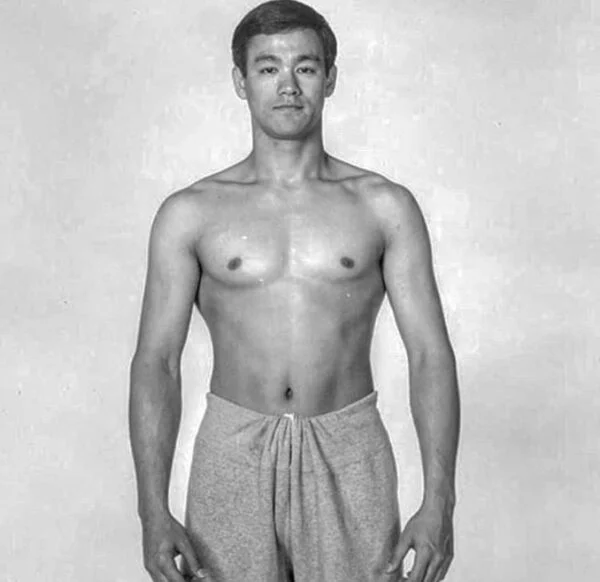
Bruce Lee Shirtless 5
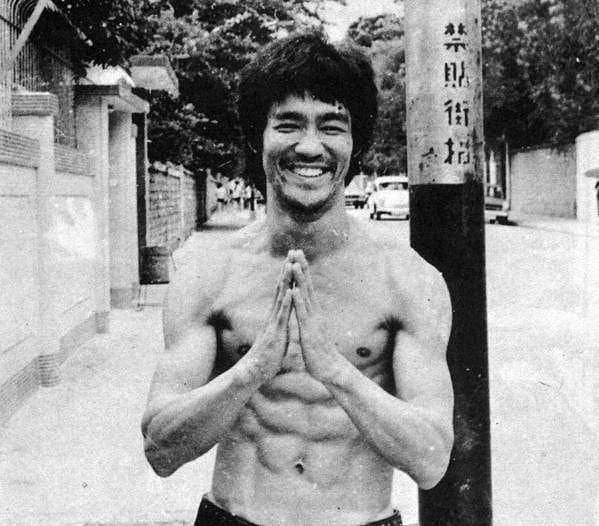
Bruce Lee Shirtless 4
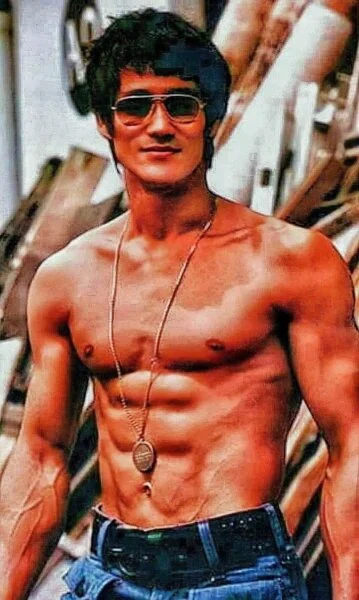
Bruce Lee Shirtless 3
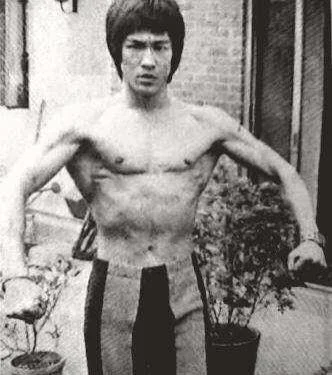
Bruce Lee Shirtless 2
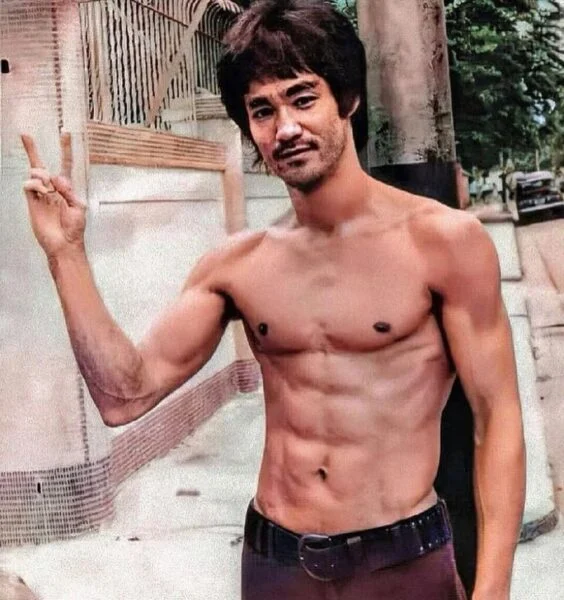
Bruce Lee Shirtless
Current Life Highlights of Bruce Lee (Career / Other Work)
During the late 1960s, Bruce Lee transitioned from television fame into developing his own martial arts philosophy, Jeet Kune Do, in Los Angeles and Hong Kong training environments.
In 1967, while based in California, he opened the Jun Fan Gung Fu Institute in Seattle earlier influence period and later refined his teaching methods in Los Angeles Chinatown to train private students.
He trained several notable students in Hollywood, including actor James Coburn and screenwriter Stirling Silliphant, influencing action choreography in American cinema.
Bruce Lee worked closely with Hong Kong film studio Golden Harvest, founded by Raymond Chow, which became the platform for his major film breakthroughs.
In 1971, he relocated to Hong Kong permanently to pursue leading roles after limited opportunities in Hollywood due to industry bias at the time.
His collaboration with director Lo Wei produced The Big Boss in 1971, filmed in Thailand, which became a massive box office success across Asia.
In 1972, he directed and starred in Way of the Dragon, filmed in Rome, where he choreographed the iconic fight scene with Chuck Norris.
Bruce Lee was actively developing Game of Death in 1972–1973, filming scenes in Hong Kong and coordinating fight philosophy concepts before his death.
He also advised martial arts choreography for other productions, influencing fight direction standards in Hong Kong cinema during the early 1970s.
At the time of his death in 1973 in Hong Kong, Bruce Lee had transformed martial arts filmmaking into a global cinematic genre.
Bruce Lee Most Popular Media Appearances, Movies, TV Shows
Bruce Lee’s first major American TV appearance was in The Green Hornet (1966–1967), where he played Kato alongside Van Williams.
His role in The Green Hornet became popular because of his innovative fight choreography, which was unlike traditional Western stunt work.
He appeared in the TV series Ironside (1967) in a guest role that showcased his martial arts skill to broader audiences.
His breakthrough Hong Kong film The Big Boss (1971), released by Golden Harvest, made him a superstar in Asia.
Fist of Fury (1972) further elevated his fame, featuring his role as Chen Zhen, a character fighting against oppression in Shanghai.
Way of the Dragon (1972) was significant because Bruce Lee wrote, directed, and starred in it, giving him full creative control.
His most famous film, Enter the Dragon (1973), was co-produced with Warner Bros and filmed in Hong Kong, marking a global breakthrough.
The unfinished film Game of Death was released posthumously in 1978 using body doubles and archival footage of Bruce Lee.
Bruce Lee’s fight scene with Chuck Norris in Way of the Dragon remains one of the most analyzed martial arts sequences in film history.
His appearances across TV and film permanently reshaped global action cinema and martial arts choreography standards.
Bruce Lee Most Popular News Headlines, Controversies, Scandals
Early in his career, Bruce Lee faced criticism in Hong Kong newspapers for leaving the film industry to study in the United States.
In the 1960s, American casting directors controversially refused him leading roles due to racial stereotyping in Hollywood.
The casting decision for Kung Fu TV series in the early 1970s famously bypassed Lee in favor of David Carradine, sparking industry debate.
Some Hollywood executives claimed Bruce Lee’s martial arts style was “too unconventional” for mainstream Western audiences at the time.
His rapid rise in Hong Kong cinema created media tension between traditional Cantonese stars and his new international image.
After his sudden death in 1973, newspapers worldwide published conflicting reports about the cause, fueling speculation and rumors.
Some tabloids suggested supernatural or mysterious causes, though official reports cited cerebral edema linked to a reaction to medication.
The release of Enter the Dragon shortly after his death intensified global media attention and mythologized his legacy.
Over the decades, debates have continued regarding his training intensity, diet, and extreme physical conditioning methods.
Despite controversies, Bruce Lee is now widely respected, and most past criticisms are seen as reflective of cultural bias of the era.
Known Unknown Facts Trivia of Bruce Lee
Bruce Lee was trained in Wing Chun under Ip Man, one of the most respected martial arts masters in Hong Kong history.
He coined the philosophy of Jeet Kune Do, meaning “the way of the intercepting fist,” emphasizing adaptability in combat.
He was also a skilled dancer and won the 1958 Hong Kong Cha-Cha championship before moving to the United States.
Bruce Lee could perform extremely fast strikes, with recorded punching speeds that fascinated sports scientists and trainers.
He wrote detailed philosophical notes on martial arts training, combining Eastern philosophy with Western sports science.
He maintained a strict fitness routine that included weight training, running, and martial arts sparring daily.
Bruce Lee’s iconic “one-inch punch” demonstrated explosive power generation from minimal distance.
He kept extensive training journals documenting diet, workouts, and combat theory.
His influence extended beyond martial arts into hip-hop culture, action cinema, and modern fitness training systems.
Many modern MMA fighters, including UFC athletes, cite Bruce Lee as an inspiration for mixed-style combat training.
Bruce Lee: Questions People Also Ask / Search & Answers
What made Bruce Lee famous?
He became famous for his martial arts skill, films like Enter the Dragon, and his philosophy Jeet Kune Do.
What martial art did Bruce Lee create?
He created Jeet Kune Do, a flexible fighting philosophy rather than a fixed martial art style.
Was Bruce Lee in Hollywood movies?
Yes, he appeared in The Green Hornet and influenced Hollywood action cinema significantly.
What was Bruce Lee’s most famous movie?
Enter the Dragon is widely considered his most famous and influential film.
Did Bruce Lee train other actors?
Yes, he trained actors like James Coburn, Steve McQueen, and others in martial arts.
Where did Bruce Lee live?
He lived in Hong Kong, Seattle, and Los Angeles during different stages of his life.
What caused Bruce Lee’s death?
Official reports state cerebral edema likely caused by a reaction to medication.
Did Bruce Lee fight professionally?
He did not compete professionally but was highly skilled in martial arts demonstration and training.
What is Bruce Lee’s legacy?
He revolutionized martial arts cinema and influenced global fitness and combat training systems.
Why is Bruce Lee still popular today?
Because of his philosophy, films, and lasting impact on martial arts and global pop culture.