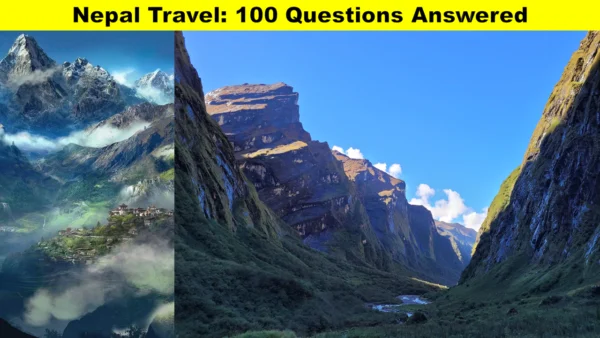
Nepal Travel: 100 Questions Answered based on NeemTime research
Visa, Logistics, and Money
1. Do I need a visa to enter Nepal? Yes, most nationalities require a visa. You can get a Visa on Arrival (VoA) at Tribhuvan International Airport (TIA) in Kathmandu or at land border crossings.
2. How much does a tourist visa cost? As of recent updates, it costs $30 USD for 15 days, $50 USD for 30 days, and $125 USD for 90 days.
3. Can I pay for my Visa on Arrival with a credit card? While machines exist, they frequently break down. It is highly recommended to bring crisp, undamaged USD cash for your visa payment.
4. What is the currency in Nepal? The Nepalese Rupee (NPR).
5. Can I use Indian Rupees (INR) in Nepal? Yes, but generally only 100 and lower denomination notes are widely accepted. 1000 and 500 INR notes are often banned or scrutinized.
6. Are ATMs widely available? Yes, in major cities like Kathmandu and Pokhara. However, they frequently run out of cash or reject international cards, so always have a backup.
7. What is the maximum ATM withdrawal limit? Usually between 10,000 to 35,000 NPR per transaction, depending on the bank. Nabil Bank and Standard Chartered are popular for foreigners.
8. Do ATMs charge a fee? Yes, most local banks charge a mandatory fee of 400 to 500 NPR per withdrawal for international cards.
9. Can I use my credit card on treks? No. Once you leave major cities, cash is king. Bring enough cash to cover all meals, snacks, and hot showers on the trail.
10. Is tipping mandatory in Nepal? It is not mandatory but highly expected in tourism. For guides and porters, it is a significant part of their income. 10% to 15% of the total bill is standard in restaurants.
Flights, Transport, and Getting Around
11. Is flying domestically in Nepal safe? Domestic aviation in Nepal carries inherent risks due to extreme terrain and unpredictable weather. It is statistically safer than the long, grueling bus rides on treacherous mountain roads, but you should choose reputable airlines like Buddha Air or Yeti Airlines.
12. Why do flights to Lukla get delayed so often? Lukla airport (Tenzing-Hillary) is notorious for sudden weather changes, fog, and high winds. Flights are strictly visual (VFR), meaning if visibility drops even slightly, flights are grounded.
13. What happens if my Lukla flight is canceled? You will be rebooked for the next day, or you can opt to charter a helicopter if you are on a tight schedule, which costs around $400 to $600 USD per person sharing.
14. Are tourist buses safe for long distances? They are safer and more comfortable than local public buses, but Nepalese highways are bumpy, winding, and prone to landslides during the monsoon.
15. Should I hire a private driver? If budget allows, absolutely. A private jeep or car offers flexibility, comfort, and a significantly safer driving experience compared to public options.
16. Is there ride-sharing in Kathmandu? Yes! Apps like Pathao and InDrive are widely used for both motorcycles and cars. They are highly recommended to avoid getting overcharged by regular taxis.
17. How do I get from the airport to my hotel in Kathmandu? Most hotels offer airport pickups. If not, use the pre-paid taxi counter inside the arrival terminal to avoid aggressive touts outside.
18. Can I rent a self-drive car in Nepal? It is highly discouraged and rarely offered. Traffic rules are chaotic, and road conditions require local expertise. Renting a scooter/motorcycle in Pokhara is common, though.
19. How long does the bus take from Kathmandu to Pokhara? Due to ongoing highway expansions and traffic, it currently takes anywhere from 7 to 12 hours to cover just 200 kilometers.
20. Is the road to Chitwan National Park better? Slightly, but it still takes about 5 to 7 hours from Kathmandu depending on traffic bottlenecks exiting the valley.
Trekking and Mountains
21. Do I need a guide to trek in Nepal? The Nepal Tourism Board implemented a rule making guides mandatory for solo international trekkers in most national parks. While enforcement varies by region (like the Everest region, which uses its own local permit system), hiring a guide is highly recommended for safety and supporting the local economy.
22. What is the difference between EBC and Annapurna Circuit? Everest Base Camp (EBC) is a high-altitude, iconic trek focusing strictly on massive peaks and Sherpa culture. The Annapurna Circuit offers more diverse landscapes (subtropical to alpine), lower average starting altitudes, and a wider variety of cultural experiences.
23. When is the best time to trek? Spring (March to May) offers warm weather and blooming rhododendrons. Autumn (September to November) offers the clearest skies and post-monsoon crisp air.
24. Can I trek during the monsoon (June to August)? It is not ideal due to heavy rain, mud, landslides, and leeches. However, rain-shadow areas like Mustang and Dolpo are perfect during these months.
25. What is a “Teahouse”? A teahouse is a local mountain lodge offering basic accommodation (usually twin beds, shared bathrooms) and home-cooked meals for trekkers.
26. Do teahouses have heating? Only in the communal dining room, which is heated by a central wood or yak-dung stove in the evening. Bedrooms are completely unheated and freezing.
27. What permits do I need for EBC? You need the Khumbu Pasang Lhamu Rural Municipality Permit and the Sagarmatha National Park Entry Permit. You do not need a TIMS card for Everest anymore.
28. What permits do I need for the Annapurna region? You need the ACAP (Annapurna Conservation Area Project) permit and a TIMS (Trekkers’ Information Management Systems) card.
29. How do I prevent Altitude Sickness (AMS)? Ascend slowly (no more than 300-500 meters of sleeping elevation per day), drink 4 to 5 liters of water daily, avoid alcohol, and take acclimatization days.
30. Should I take Diamox? Many trekkers carry Diamox (Acetazolamide) as a preventative measure or treatment. Consult your doctor before your trip. It is readily available over-the-counter in Kathmandu.
31. What happens if I get severe altitude sickness? You must descend immediately. If symptoms are life-threatening (HAPE/HACE), your guide will coordinate an emergency helicopter evacuation.
32. Does standard travel insurance cover helicopter evacuation? No, most standard policies do not. You must purchase specialized travel insurance that specifically covers trekking up to the maximum altitude of your route (e.g., up to 6,000 meters).
33. Can I buy trekking gear in Kathmandu? Yes, Thamel is packed with gear shops. You can find cheap counterfeit gear (good for one-time use) as well as authentic flagship stores like North Face and Mountain Hardwear.
34. Is it better to rent or buy a sleeping bag/down jacket? If you don’t plan to use them again, rent them in Thamel or Pokhara for a few dollars a day. It saves luggage space and money.
35. Can I charge my phone/camera on treks? Yes, but teahouses charge a fee for electricity, ranging from $1 to $5 USD per hour or per full charge. Bring a high-capacity power bank.
36. Is there Wi-Fi on the EBC trek? Yes, you can buy data cards from “Airala” or “Everest Link” on the trail. It is expensive and can be slow, but it works in most villages.
37. How much weight can a porter carry? Legally and ethically, a porter should not carry more than 20 to 25 kg total (often shared between two trekkers). Keep your trek duffel under 10-12 kg.
38. What is the “Teahouse Menu” like? Surprisingly varied but standardized. Expect Dal Bhat, fried rice, noodles, pasta, pancakes, porridge, and eggs.
39. Why should I avoid meat at high altitudes? All meat in high-altitude zones (like above Namche Bazaar) is carried up by porters or yaks without refrigeration. It is highly prone to spoiling. Stick to vegetarian food.
40. Is Dal Bhat really unlimited? Yes! The golden rule of Nepal trekking is “Dal Bhat Power, 24 Hour.” You get free refills of rice, lentil soup, and vegetable curry until you are full.
Health, Food, and Water
41. Can I drink tap water in Nepal? Absolutely not. It is contaminated with bacteria and heavy metals.
42. How should I purify my water while trekking? Use water purification tablets (chlorine/iodine) or a reliable UV filter/Water filter bottle (like Sawyer Squeeze or Grayl). Avoid buying plastic mineral bottles on the trail to reduce plastic waste.
43. What is “Kathmandu Belly”? Traveler’s diarrhea caused by contaminated food or water. It affects a vast majority of first-time visitors.
44. What medical supplies should I pack? Rehydration salts (Oral Rehydration Salts), Ciprofloxacin or Azithromycin (antibiotics prescribed by a doctor), Imodium, Pepto-Bismol, band-aids, and blister tape.
45. Is street food safe in Kathmandu? Eat it at your own risk. Stick to crowded stalls where food is freshly cooked hot in front of you. Avoid raw vegetables, chutneys, and ice.
46. Can vegetarians and vegans survive easily in Nepal? Nepal is a paradise for vegetarians. Hindu and Buddhist cultures mean vegetarian options (like Dal Bhat and vegetable momos) are available everywhere.
47. What are Momos? The unofficial national dish of Nepal. They are delicious dumplings filled with minced meat (buff, chicken, pork) or vegetables, served with a spicy tomato chutney.
48. Is it safe to eat salad in restaurants? Only in high-end tourist restaurants that explicitly state they wash their raw vegetables in purified water. Otherwise, stick to cooked food.
49. What vaccinations do I need for Nepal? Routine vaccines plus Hepatitis A, Typhoid, and Tetanus updates. If visiting Chitwan, consider Japanese Encephalitis. Malaria medication is generally not needed unless spending extended time in rural lowlands bordering India.
50. Are there pharmacies in Nepal? Yes, pharmacies (chemists) are ubiquitous in cities and towns. Most medications can be bought over-the-counter without a prescription, but check expiry dates.
Culture, Etiquette, and Safety
51. How should I dress when visiting temples? Dress modestly. Shoulders and knees must be covered for both men and women. Remove your shoes before entering any temple or religious space.
52. What is the traditional greeting in Nepal? “Namaste” (or “Namaskar” for elders/formal settings), spoken with hands pressed together in a prayer position near the chest.
53. Can I take photos of people? Always ask permission first. Most people, especially children, are happy to pose, but holy men (Sadhus) at temples like Pashupatinath will demand money if you photograph them.
54. Which hand should I use to give or receive items? Always use your right hand, or both hands together as a sign of respect. The left hand is traditionally considered unclean.
55. Is it safe for solo female travelers? Yes, Nepal is generally considered one of the safest destinations in South Asia for solo women. Violence against tourists is rare, though verbal harassment or unwanted attention can happen. Avoid walking alone at night.
56. Is bargaining expected? Yes, in tourist markets like Thamel and when dealing with street vendors or taxis without meters. However, do not bargain aggressively; keep it polite and lighthearted. Do not bargain for food or fixed-price lodge menus.
57. What is the significance of walking clockwise around stupas? In Buddhist tradition, you should always walk around stupas, mani walls, and shrines in a clockwise direction as a sign of respect.
58. Can I touch someone’s head? Avoid touching anyone’s head, as it is considered the most sacred part of the body. Conversely, feet are considered the lowest and dirtiest, so avoid pointing your feet at people or religious shrines.
59. Is public display of affection (PDA) acceptable? No. Holding hands is fine, but kissing or hugging in public is heavily frowned upon.
60. What is the main religion in Nepal? Hinduism is the majority religion, closely followed by Buddhism. The two religions are deeply intertwined in Nepal, with many sharing shrines and deities.
Sightseeing and Activities
61. What are the must-see sites in Kathmandu? Boudhanath Stupa, Swayambhunath (Monkey Temple), Pashupatinath Temple, and the Durbar Squares of Kathmandu, Patan, and Bhaktapur.
62. Is there an entry fee for Kathmandu Durbar Square? Yes, most historical sites and Durbar Squares charge an entry fee to foreigners (ranging from 500 to 1,500 NPR), which goes toward heritage conservation.
63. What can I do in Pokhara? Paragliding, boating on Phewa Lake, visiting the World Peace Pagoda, exploring caves, and enjoying the relaxed lakeside nightlife.
64. Is Chitwan National Park worth visiting? Yes, if you want to see One-horned Rhinos, Bengal Tigers, and wild elephants. It offers a completely different, tropical jungle experience compared to the mountains.
65. What is the difference between Chitwan and Bardia National Park? Chitwan is easier to access, more developed, and touristy. Bardia is remote, wilder, harder to get to, but offers a much higher chance of spotting a wild Bengal tiger in a pristine environment.
66. Can I see Mount Everest from Kathmandu? On incredibly clear days following a heavy rain (usually in winter), you can see the tip of Everest from the hills around the valley like Nagarkot or Chandragiri. For a guaranteed view, take an Everest Mountain Flight.
67. What is an Everest Mountain Flight? A 1-hour early morning scenic flight from Kathmandu airport that flies along the Himalayan range, giving every passenger a window seat view of Everest.
68. What is Nagarkot famous for? It is a hill station on the rim of the Kathmandu Valley famous for its panoramic sunrise views of the Himalayas.
69. What is Lumbini? Located in the plains of Nepal, Lumbini is the birthplace of Siddhartha Gautama (Lord Buddha) and a major international pilgrimage site.
70. Can I do white-water rafting in Nepal? Yes, Nepal has some of the best rafting rivers in the world. The Trishuli River is great for beginners/day trips, while the Bhote Koshi or Sun Koshi offer multi-day adrenaline rushes.
Sim Cards, Internet, and Tech
71. Where can I buy a local SIM card? Directly at the airport arrival terminal. There are counters for Ncell and Nepal Telecom (NTC).
72. What documents do I need for a SIM card? A photocopy of your passport, a passport-sized photo, and your physical thumbprints (taken at the counter).
73. Which network is better: Ncell or NTC? Ncell is great for fast data in cities and lowlands. NTC (the state-owned provider) generally has better coverage in remote mountain areas and trekking trails.
74. Is internet fast in Nepal? In Kathmandu and Pokhara, fiber-to-the-home Wi-Fi is standard and quite fast. In rural areas, connection speeds drop significantly.
75. Do I need a power adapter for Nepal? Nepal uses plug types C, D, and M. The voltage is 230V at 50Hz. A universal adapter is highly recommended.
76. Are power outages common? Load-shedding (scheduled power outages) used to be severe but has largely been eliminated. However, unscheduled blackouts due to infrastructure damage or weather still happen frequently.
77. Can I fly a drone in Nepal? It is illegal to fly a drone without a strict, bureaucratic permit from the Civil Aviation Authority of Nepal (CAAN) and the Ministry of Home Affairs. Illegal drones are routinely confiscated at the airport or by police on trails.
78. Is there cell reception on the Annapurna Circuit? Yes, 4G works in many villages along the trail, though it drops out entirely in deep gorges and near the Thorong La Pass.
79. Can I use Google Maps for navigation in Nepal? It works fine in cities, but for trekking routes, download Maps.me or specialized offline topo-mapping apps, as Google Maps does not show accurate trail data.
80. Is electronic payment widely used? Locals use Fonepay via QR codes everywhere, but this requires a local Nepali bank account. Foreigners must rely on cash or international credit cards where accepted.
Weather, Clothing, and Packing
81. What should I pack for a trek? Layers are key. Thermal base layers, fleece jackets, a windproof/waterproof shell, a heavy down jacket, trekking pants, worn-in hiking boots, wool socks, a beanie, gloves, and polarized sunglasses.
82. Do I need to bring my own water bottle? Yes, bring a durable, wide-mouth Nalgene-style bottle that can handle boiling water (which teahouses often provide at night to use as a bed warmer).
83. How cold does it get in the mountains? At high altitudes (above 4,000m) during autumn and winter, night temperatures routinely drop well below freezing, sometimes down to -15°C or -20°C.
84. What is the weather like in Kathmandu? Subtropical. Summers are hot and humid (up to 32°C) with heavy monsoon rains. Winters are dry, with pleasant sunny days (15-20°C) but chilly nights (around 2-5°C).
85. Should I bring a suitcase or a backpack? A backpack or a sturdy duffel bag is far better. Pavements in cities are broken, dusty, and muddy; rolling suitcases are highly impractical.
86. Can I leave extra luggage at my hotel? Yes, almost all hotels in Kathmandu and Pokhara will store your excess luggage (like city clothes and suitcases) for free while you go out on a trek.
87. What shoes should I wear for sightseeing? Comfortable walking shoes or sandals that are easy to slip on and off, as you will be removing them constantly to enter temples.
88. Is dust a problem in Kathmandu? Yes, air pollution and dust are significant issues due to construction and traffic. Bring a high-quality reusable mask (like a buff or N95 mask) to protect your lungs while walking around the city.
89. What kind of sleeping bag do I need for trekking? A four-season sleeping bag with a comfort rating of at least -10°C to -15°C is essential for high-altitude treks between October and April.
90. Can I wash my clothes on a trek? You can hand-wash small items like socks and underwear, but drying them can be difficult due to freezing temperatures. Most trekkers just embrace the smell or pay a premium for laundry services in major hub villages like Namche Bazaar.
Miscellaneous and Festive Travel
91. What is the legal drinking age in Nepal? It is 18, though enforcement is extremely relaxed.
92. What are the major festivals in Nepal? Dashain (the biggest festival, usually in October), Tihar (Festival of Lights, matching Diwali), and Holi (Festival of Colors, in spring).
93. Should I travel to Nepal during Dashain? It is a beautiful cultural experience, but be aware that businesses close down, public transport is entirely booked out months in advance, and domestic flights are packed as locals return home to their villages.
94. What is local alcohol like? Try Roksi (a potent millet or rice distilled alcohol) or Chang (a milky, fermented rice beer popular in the mountains). Drink responsibly.
95. Can I buy legal marijuana or hashish in Nepal? No, it is strictly illegal. While wild cannabis grows freely along roadsides and its historical usage is famous, possession and consumption carry heavy prison sentences for foreigners today.
96. How is the time zone in Nepal unique? Nepal standard time is uniquely set to GMT+5:45. It is one of the few time zones in the world with a 45-minute offset.
97. What should I do if a strike (Banda) occurs? General strikes used to be common but are now rare. If one happens, vehicular traffic stops completely. Stay at your hotel, check with your embassy, or utilize designated tourist buses that are usually allowed to operate under police escort.
98. Can I volunteer in Nepal? Yes, but do thorough research. Avoid “orphanage tourism,” which is often a profit-driven scam that exploits children. Stick to reputable international NGOs or verified local community initiatives.
99. Is the tap water in luxury hotels safe? Even in 5-star hotels, do not drink the tap water. They will provide complimentary bottled or treated water for drinking and brushing teeth.
100. What is the best way to describe the vibe of traveling in Nepal? As the popular travelers saying goes: “You come to Nepal for the mountains, but you return for the people.” Expect chaos, incredible warmth, breathtaking vistas, and an unforgettable adventure.