Lanzhou Travel: 100 Questions Answered based on NeemTime research
Part 1: Food, Dining, and Lanzhou Beef Noodles
1. Q: What is the absolutely must-try food in Lanzhou? A: Lanzhou Beef Noodles (兰州牛肉面 – Lanzhou Niuroumian). It is the culinary soul of the city and completely different from the version you find in other parts of China or overseas.
2. Q: Is there a difference between “Lanzhou Lamian” and “Lanzhou Niuroumian”? A: Yes. Locals call it “Niuroumian” (Beef Noodles). The term “Lanzhou Lamian” is usually used by restaurants outside of Gansu province (often run by people from Qinghai).
3. Q: What makes Lanzhou Beef Noodles authentic according to locals? A: It must follow the “Five Colors” rule: Clear broth (一清), white radish (二白), red chili oil (三红), green cilantro/leeks (四绿), and yellow hand-pulled noodles (五黄).
4. Q: Can I choose the thickness of my noodles? A: Yes! You choose when ordering. Options range from ultra-thin (Mao细), standard (Erxi), to wide (Kuan) and even triangular shapes (Jiuye).
5. Q: What is the most popular noodle thickness for beginners? A: “Erxi” (二细) is highly recommended. It offers the perfect balance of chewiness and holds the broth well.
6. Q: At what time of day do locals eat beef noodles? A: Breakfast and lunch. Authentic, top-tier noodle shops often close by 2:00 PM or 3:00 PM because their fresh morning broth runs out.
7. Q: How do I order the “set meal” at a local noodle shop? A: Ask for “Yi Wan Mian, Yi Liang Rou, Yi Ge Dan” (一碗面, 一两肉, 一个蛋). This gets you a bowl of noodles, a side portion of sliced beef, and a tea egg.
8. Q: Are Lanzhou beef noodles spicy by default? A: They add a generous scoop of chili oil by default, which looks incredibly hot but is actually more fragrant than spicy. If you can’t handle spice, say “Bu Yao La” (No chili).
9. Q: What are some famous beef noodle chains or shops highly rated? A: Mazilu (马子禄), Congshu (丛树), and Muzi (木子) are incredibly famous, though many travelers swear that almost any crowded neighborhood shop will taste amazing.
10. Q: Is Mazilu Beef Noodles touristy? A: It is historically famous and featured on food documentaries, so it does get crowded with tourists, but locals still eat there too. It is worth visiting once for the experience.
11. Q: What other local foods should I try besides noodles? A: Milk Egg Fermented Glutinous Rice Soup (牛奶鸡蛋醪糟 – Niunai Jidan Laozao), Lamb Kebabs (Chuan’r), Sweet Lily bulbs, and Sanpaotai tea.
12. Q: What is Milk Egg Fermented Glutinous Rice Soup (Niunai Jidan Laozao)? A: A warm, comforting street food dessert made of milk, rice wine, raisins, peanuts, sesame seeds, and dropped egg. It’s sweet, nutty, and highly recommended.
13. Q: Where is the best place to try street food at night? A: Zhengning Road Night Market (正宁路夜市) and Dazhong Lane (大众巷) are the top recommendations.
14. Q: Is Zhengning Road Night Market safe for sensitive stomachs? A: Generally yes, as foods are cooked over high heat right in front of you. However, stick to stalls with high turnover and long lines of locals.
15. Q: Is Lanzhou food Muslim-friendly (Halal)? A: Extremely. Because Lanzhou has a massive Hui Muslim population, a huge percentage of the restaurants (especially beef and lamb shops) are strictly Halal (Qingzhen).
16. Q: Can I find alcohol easily in Lanzhou restaurants? A: In Halal (Qingzhen) restaurants, alcohol is strictly forbidden. Do not bring outside alcohol into these shops. Non-halal restaurants, bars, and convenience stores sell alcohol normally.
17. Q: What is Lanzhou’s local beer? A: Huanghe Beer (Yellow River Beer). It is a light, crisp lager that locals pair heavily with mutton skewers.
18. Q: What is Sanpaotai tea? A: A traditional Gaiwan tea blend containing green tea leaves, dried longan, jujubes (red dates), goji berries, walnuts, and rock sugar. It is incredibly refreshing.
19. Q: What is “Hand-Grasped Mutton” (Shouzhua Yangrou)? A: Tender, boiled mutton served cold or warm, seasoned simply with salt and cumin, or dipped in raw garlic. It has no gamey smell and melts in your mouth.
20. Q: Are there vegetarian options easily available in Lanzhou? A: It can be challenging because the food culture is heavily focused on beef and lamb. However, you can ask for noodles without meat, or look for local potato dishes (Gansu is famous for potatoes) and tofu dishes.
Part 2: Top Attractions and Sightseeing
21. Q: What are the main sights to see inside Lanzhou city? A: The Yellow River Mother Sculpture, Zhongshan Bridge, Baita Mountain Park, and the Gansu Provincial Museum.
22. Q: Is the Gansu Provincial Museum worth visiting? A: Absolutely, it is a travelers Top Choice. It houses the “Galloping Horse of Gansu” (Bronze Running Horse), an iconic national treasure of China.
23. Q: Do I need to book tickets for the Gansu Provincial Museum in advance? A: Yes. Like most major museums in China, you need to book a time slot in advance via their WeChat mini-program using your passport number.
24. Q: What is unique about Zhongshan Bridge? A: Built in 1907, it was the first permanent iron bridge over the Yellow River, built with German engineering and Chinese labor. It looks stunning when illuminated at night.
25. Q: Where can I get the best panoramic view of Lanzhou? A: Walk across Zhongshan Bridge and hike up (or take the cable car) to Baita Mountain (White Pagoda Mountain) Park.
26. Q: What is the Yellow River Mother Sculpture? A: A famous stone sculpture depicting a mother looking lovingly at her baby, symbolizing the Yellow River nourishing Chinese civilization. It’s a mandatory photo stop for travelers.
27. Q: Can you take a boat ride on the Yellow River in Lanzhou? A: Yes, you can take motorboats, speedboats, or traditional sheepskin rafts along the river near Zhongshan Bridge.
28. Q: What is a sheepskin raft (Yangpi Fazi)? A: An ancient form of ferry made by inflating whole sheepskins and binding them to a wooden frame. It’s a highly rated, unique cultural experience.
29. Q: Is the sheepskin raft ride safe? A: Yes, operators provide life jackets and the pilots are highly experienced, though it is a rustic and adventurous ride.
30. Q: What is Waterwheel Garden (Shuiche Yuan)? A: A park showcasing gigantic, historic wooden waterwheels used anciently to lift water from the Yellow River for irrigation.
31. Q: How much time is needed to see Lanzhou’s main city highlights? A: One to two full days is plenty of time to cover all the main inner-city sights.
32. Q: What are some great day trips from Lanzhou? A: The Bingling Temple Grottoes (炳灵寺) and the Labrang Monastery (Xiahe) are the top-rated day/overnight excursions.
33. Q: How do I get to the Bingling Temple Grottoes from Lanzhou? A: You can take a bullet train or bus to Linxia/Liujiaxia Dam, and then take a scenic speedboat ride across the reservoir to the grottoes.
34. Q: Is Bingling Temple worth the effort to visit? A: Travelers highly recommend it. The combination of ancient Buddhist cave art and the dramatic, otherworldly canyon landscape is spectacular.
35. Q: Can I visit Labrang Monastery as a day trip from Lanzhou? A: It is possible if you start very early by car/bus, but an overnight stay in Xiahe is highly recommended to fully appreciate the Tibetan Buddhist culture.
36. Q: What is Tulip Park (Xinglong Mountain) known for? A: Located outside the city, it’s a beautiful mountain escape with dense pine forests, historic temples, and great hiking opportunities away from the urban heat.
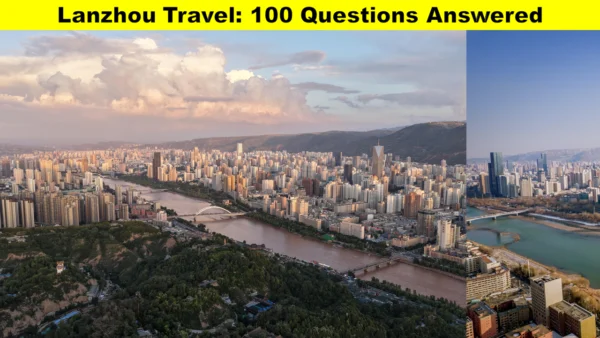
37. Q: Is the Yellow River actually yellow in Lanzhou? A: Yes, it is heavily silted and distinctly muddy brown/yellow, which is exactly what makes its appearance so unique and striking against the city skyline.
38. Q: What is Lanzhou Old Town (Lanzhou Laojie)? A: A newly constructed commercial area built in ancient architectural styles, full of lights, shops, performances, and dining options. It is highly active at night.
39. Q: Is there a scenic walkway along the river? A: Yes, the Yellow River Custom Tourist Line (Binhe Road) features miles of beautifully landscaped parks, pathways, and plazas perfect for walking or renting a bicycle.
40. Q: Are there any good viewpoints for the city sunset? A: Pagoda hill or Lanshan Park (via the Lanshan Cable Car) offers incredible views of the sun setting over the valley city.
Part 3: Logistics, Weather, and Best Time to Visit
41. Q: When is the best time of year to visit Lanzhou? A: May to October. The summer months (July and August) are excellent because Lanzhou stays relatively mild compared to the scorching heat of southern or eastern China.
42. Q: Is Lanzhou cold in the winter? A: Yes, it is dry, windy, and freezing cold during winter (November to February), with temperatures often dropping below freezing. Tourism slows down significantly.
43. Q: How is the air quality in Lanzhou? A: Historically, Lanzhou had severe pollution due to its topography (being in a narrow valley). However, travelers note that environmental cleanup efforts have vastly improved the air quality in recent years, though dust storms can still happen in spring.
44. Q: Is Lanzhou high altitude? Will I get altitude sickness? A: Lanzhou sits at around 1,600 meters (5,200 feet) above sea level. Most travelers will not experience any altitude sickness here. However, if you head south to Xiahe/Gannan from here, altitudes cross 3,000 meters.
45. Q: What should I pack for a summer trip to Lanzhou? A: Light clothes for the day, but definitely bring a jacket or windbreaker because temperatures can drop sharply after sunset due to the semi-arid climate.
46. Q: How many days should Lanzhou be allocated on a Silk Road itinerary? A: Most travelers recommend using it as a 1 or 2-day transit hub. Spend a day eating noodles and seeing the river, then head further west into Gansu (Zhangye, Dunhuang).
47. Q: Is English widely spoken in Lanzhou? A: No. Lanzhou sees fewer Western tourists compared to Beijing or Xi’an. Having translation apps (like WeChat or Google Translate offline) is essential.
48. Q: Are people in Lanzhou friendly to foreign tourists? A: Travelers consistently praise the hospitality in Lanzhou. Because foreign tourists are less common, locals are often very curious, welcoming, and eager to help.
49. Q: What is the main religion/culture visible in Lanzhou? A: Lanzhou is a melting pot of Han Chinese culture, Hui Muslim culture, and Tibetan Buddhist influences, giving it a unique frontier-town vibe.
50. Q: Is Lanzhou safe for solo female travelers? A: Extremely safe. Like most major Chinese cities, violent crime is incredibly rare, and CCTV infrastructure is extensive. Normal urban precautions against pickpocketing in night markets apply.
Part 4: Transportation and Arrival
51. Q: How far away is Lanzhou Zhongchuan International Airport (LHW) from the city center? A: It is notoriously far—about 70 kilometers (43 miles) north of the city center.
52. Q: What is the best way to travel from the airport to downtown Lanzhou? A: Take the Airport Intercity High-Speed Train. It takes only about 30 to 45 minutes to reach Lanzhou Railway Station or Lanzhou West Station and costs very little.
53. Q: Can I take a taxi or Didi from the airport? A: Yes, but due to the distance, it takes over an hour and is significantly more expensive than the intercity train.
54. Q: How many major train stations does Lanzhou have? A: Two main ones: Lanzhou Station (兰州站) mostly for older/conventional trains, and Lanzhou West Station (兰州西站) which handles the majority of the high-speed bullet trains.
55. Q: Does Lanzhou have a subway (Metro) system? A: Yes, Lanzhou has an efficient metro system. Line 1 connects Lanzhou West Railway Station directly to major city center areas and runs right underneath the main shopping districts.
56. Q: Can I use Alipay or WeChat Pay to take the Lanzhou Metro? A: Yes, you can activate the transport code directly inside Alipay or WeChat to scan through the turnstiles.
57. Q: How easy is it to catch a taxi or Didi in Lanzhou? A: Very easy. Didi works perfectly on international phones linked to foreign credit cards. Traffic in Lanzhou can be congested during rush hours due to the narrow valley layout.
58. Q: Can I rent a bicycle to ride along the Yellow River? A: Yes, public shared bikes (like Meituan or Hello Bike) are scattered throughout the city, though you need an app verified with your passport to unlock them.
59. Q: Is Lanzhou connected by high-speed rail to other major cities? A: Yes, it is a massive rail hub. You can catch fast bullet trains directly to Xi’an (3 hours), Chengdu (5 hours), Xining (1 hour), and Urumqi.
60. Q: Can I walk to most tourist attractions in Lanzhou? A: The attractions along the riverfront (Zhongshan Bridge, White Pagoda Mountain, Waterwheel Garden) are clustered reasonably close together and are highly walkable. For the museum or night markets, you will want to hop on the metro or a taxi.
Part 5: Accommodation, Hotels, and Districts
61. Q: Where is the best area to stay in Lanzhou for tourists? A: Staying near Chengguan District (near Zhongshan Bridge or Dongfanghong Square) is highly recommended for easy access to food and central sights. Alternatively, staying near Lanzhou West Station is great if you have early morning trains.
62. Q: Do hotels in Lanzhou accept foreign guests? A: Not all of them. Due to local regulations, budget accommodations or small guesthouses might not be registered to accept foreigners. Always check the hotel policy filter on booking platforms before reserving.
63. Q: Are international hotel chains available in Lanzhou? A: Yes, international brands like Hilton, Hyatt, Marriott, and Holiday Inn have excellent, modern properties in Lanzhou that seamlessly accommodate international travelers.
64. Q: Is accommodation expensive in Lanzhou? A: Compared to tier-1 cities like Shanghai or Beijing, accommodation in Lanzhou is highly affordable, offering excellent value for luxury or mid-range hotels.
65. Q: Is it noisy to stay near the Yellow River? A: Hotels directly on the riverfront are generally well-insulated, but the river roads can get busy. The trade-off is getting stunning night views of illuminated bridges.
66. Q: Are hostels available for backpackers? A: There are a few hostels available, though options change frequently. Many backpackers opt for affordable local business hotels that are licensed for foreigners.
67. Q: Is tap water safe to drink in Lanzhou hotels? A: No, like the rest of China, tap water is not potable. Hotels provide complimentary bottled water or electric kettles to boil water.
68. Q: Do hotels provide western-style breakfasts? A: International luxury chains do. Mid-range or local hotels will predominantly offer Chinese breakfast options (congee, steamed buns, and sometimes a noodle station).
69. Q: What is the internet situation like in Lanzhou hotels? A: Wi-Fi is standard everywhere, but the Great Firewall of China applies. You will need a reliable VPN or an international roaming eSIM to access Western apps and websites.
70. Q: Can hotel staff speak English? A: In 4-star and 5-star international hotels, front desk staff usually speak functional English. In budget or local hotels, expect to use a translation app.
Part 6: Shopping, Souvenirs, and Local Culture
71. Q: What are the best unique souvenirs to buy in Lanzhou? A: Lanzhou Carved Gourds (刻葫芦), local Lanzhou lilies (dried or fresh), and traditional Sanpaotai tea sets.
72. Q: What is a Carved Gourd? A: A traditional folk art unique to Lanzhou where artists use needles and knives to carve intricate calligraphy, landscapes, or Buddhist imagery onto the surface of small gourds.
73. Q: Why are Lanzhou Lilies famous? A: Lanzhou produces the only sweet edible lily bulb in China. They are crisp, sweet, and used extensively in both local cooking and traditional Chinese medicine.
74. Q: Where is a good place for modern shopping in Lanzhou? A: Guofang Department Store near Dongfanghong Square, and the modern commercial complexes around Lanzhou West Station.
75. Q: Are there flea markets or antique markets in Lanzhou? A: Yes, Lanzhou Chenghuangmiao (City God Temple) is an excellent place to browse for local antiques, cultural items, coins, and vintage goods.
76. Q: Is bargaining expected in Lanzhou markets? A: In night markets and antique stalls, yes, moderate bargaining is normal. In supermarkets, convenience stores, and modern retail malls, prices are strictly fixed.
77. Q: What kind of clothing styles are appropriate in Lanzhou? A: Lanzhou is a modern city, so standard casual wear is completely acceptable. However, out of respect for the large Muslim population, dress somewhat modestly (avoid highly revealing clothing) when visiting Halal restaurants or mosques.
78. Q: Can I visit the local mosques in Lanzhou? A: Many mosques, such as the Xiguan Mosque, can be viewed from the outside. Dress respectfully, and always ask permission before entering any active prayer halls.
79. Q: What is the “Silk Road” significance of Lanzhou? A: Lanzhou was a vital major hub on the ancient Silk Road, acting as the crossing point where travelers crossed the Yellow River to enter the Hexi Corridor.
80. Q: Are there any local theatrical performances worth seeing? A: Look out for performances of the Dunhuang-inspired dance drama “Tales of the Silk Road” (丝路花雨) if it is playing while you are in town.
Part 7: Connectivity, Budget, and Practical Tips
81. Q: Do I need cash in Lanzhou? A: Almost never. Digital payment via Alipay or WeChat Pay is ubiquitous, even at the smallest street-side noodle stalls. Keep a small amount of cash emergency backup.
82. Q: Can I use my foreign credit card directly in stores? A: Directly swiping a Visa or Mastercard is rarely supported except at upscale international hotels. You must link your international card to Alipay or WeChat Pay to make payments.
83. Q: Is there free Wi-Fi in public spaces in Lanzhou? A: Yes, in airports, train stations, and large cafes, but logging in almost always requires a Chinese phone number to receive an SMS verification code. An eSIM or local SIM card is highly recommended.
84. Q: Where can a foreigner get a local SIM card in Lanzhou? A: Visit a major downtown branch of China Unicom or China Telecom. Bring your passport; the setup process takes about 20-30 minutes.
85. Q: Is Lanzhou an expensive city to travel in? A: No, it is considered very budget-friendly. Food, local public transport, and entry tickets are extremely cheap compared to coastal China.
86. Q: How much does a standard bowl of authentic Lanzhou beef noodles cost? A: In a regular local shop, a basic bowl of noodles costs roughly 8 to 12 RMB ($1.20 to $1.70 USD). It is an incredibly cheap and filling meal.
87. Q: Do people tip in Lanzhou restaurants or taxis? A: No, tipping is not practiced anywhere in Lanzhou (or China). It can actually cause confusion or offense.
88. Q: What mapping application should I use in Lanzhou? A: Google Maps is severely outdated or misaligned in China. Use Gaode Maps (Amap) or Baidu Maps. Even if you cannot read Chinese, the visual UI and GPS tracking are highly accurate.
89. Q: Are public restrooms easy to find? A: Yes, there are numerous free public toilets along the Yellow River walkway and near major sights. Carry your own tissue paper and hand sanitizer, as it is rarely provided.
90. Q: Are western-style sit-down toilets common? A: In high-end hotels and shopping malls, yes. In public parks, night markets, and train stations, expect traditional squat toilets.
Part 8: Exploring Beyond the City (Gansu Context)
91. Q: How do I get from Lanzhou to the Rainbow Mountains in Zhangye? A: Take a high-speed train from Lanzhou West Station to Zhangye West Station. The journey takes about 3 to 3.5 hours.
92. Q: Can I take a train from Lanzhou to Dunhuang (Mogao Caves)? A: Yes, there are overnight sleeper trains available, as well as high-speed trains that connect through Xi’an/Lanzhou out towards Dunhuang.
93. Q: Is Lanzhou a good starting point for a self-drive Silk Road trip? A: Yes, many travelers rent cars in Lanzhou to drive through the Hexi Corridor. Ensure you have a valid Chinese driving license, as international driving permits (IDP) are not recognized.
94. Q: How do I get to Xining (Qinghai) from Lanzhou? A: Bullet trains run constantly between Lanzhou and Xining; it takes only about 1 hour, making it easy to combine the two cities.
95. Q: What is the landscape like immediately outside Lanzhou? A: The city is surrounded by dry, barren loess hills, giving it a dramatic desert-mountain gateway appearance.
96. Q: Is there any specialty fruit I should buy in Lanzhou during autumn? A: Lanzhou Bailan Melons (白兰瓜). They are round, sweet, juicy, and highly celebrated throughout the province.
97. Q: Are there hospitals with English-speaking staff if I get sick? A: Major tier-A hospitals like the First Hospital of Lanzhou University have high-quality medical care, though you will likely need a translator or translation app to navigate the check-in process.
98. Q: Is the city crowded during Chinese National Holidays? A: Yes. Avoid traveling during the Golden Week (first week of October) and May Day holiday if possible, as transport tickets sell out instantly and attractions become intensely packed.
99. Q: What time do shops and restaurants usually close? A: Normal shops close around 9:30 PM or 10:00 PM, but street food stalls and night markets stay buzzing well past midnight in the summer.
100. Q: Is Lanzhou worth visiting if I am not doing the full Silk Road trip? A: If you love unique food culture, vibrant ethnic diversity, and dramatic river landscapes, Lanzhou makes a fantastic off-the-beaten-path weekend trip or 2-day stopover.