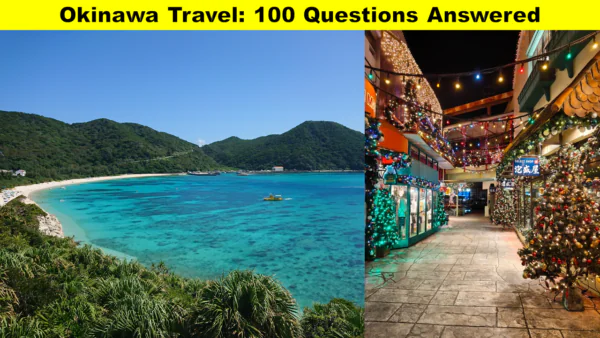
Okinawa Travel: 100 Questions Answered based on NeemTime research
Logistics & Planning
1. Is Okinawa worth it on a first trip to Japan? Most travelers say skip it for a first 2-week trip unless you specifically want a beach vacation. It’s better as a 2nd or 3rd visit.
2. How many days should I spend there? 3 days is the minimum for Naha and the Aquarium; 5–7 days is ideal to explore the north or outer islands.
3. When is the best time to visit? Late March to April (pre-rainy season) or October to November (cooling down, post-typhoon) are the most recommended.
4. When is typhoon season? Mainly July through September. Travel during this time is risky as flights and ferries frequently get canceled.
5. Do I need a car? Yes. While Naha has a monorail, the rest of the island is difficult to see without a rental car.
6. Is an International Driving Permit (IDP) required? Absolutely. You cannot rent a car without a valid IDP from your home country.
7. Can I get around by bus? It’s possible but slow and expensive. Use the “Okinawa Bus Pass” to save money if you are committed to public transit.
8. Are taxis/Ubers expensive? Taxis are relatively affordable for short distances, but Okinawa doesn’t really use Uber in the western sense (it just hails taxis).
9. Is Okinawa expensive compared to Tokyo? Generally cheaper for food and accommodation, but the cost of a rental car and gas adds up.
10. Do people speak English? Due to the US military presence, English is more common than in many parts of mainland Japan, especially in Chatan.
Transportation & Driving
11. How is the traffic? Terrible around Naha and the military bases during rush hour. Plan for delays on Highway 58.
12. Is driving on the left hard? Most travelers adjust within an hour. The speed limits are quite low (usually 40–60 km/h), making it safer.
13. Where should I rent a car? Naha Airport has the most options (Times, Toyota, Otsu), but book weeks in advance as they sell out.
14. Are there tolls? Yes, the Okinawa Expressway has tolls. Get an ETC card from your rental agency to make payment easier.
15. Can I use a Suica/Pasmo card? You can use them on the Naha Monorail (Yui Rail) and some buses, but not everywhere.
Accommodation
16. Where is the best place to stay for families? Onna Village. It has the best concentration of beach resorts with pools and kid-friendly amenities.
17. Where should I stay for nightlife? Naha (near Kokusai-dori) or the American Village in Chatan.
18. Should I stay in Naha the whole time? No. Travelers recommend splitting your stay: 2 nights in Naha and 3 nights further north in Motobu or Onna.
19. Are there “Adults Only” resorts? Yes, places like Terrace Club at Busena are popular for couples seeking quiet.
20. Is the American Village a good home base? Yes, if you want walking access to western-style cafes, shopping, and a beach.
Activities & Sightseeing
21. Is the Churaumi Aquarium worth the long drive? Yes, it’s world-class. Go early or late to avoid the massive tour bus crowds.
22. Is Shuri Castle still worth visiting after the fire? Yes, you can watch the reconstruction process, which is unique and educational.
23. What is the “Blue Cave”? A famous snorkeling/diving spot in Onna. It’s beautiful but can get extremely crowded.
24. Where is the best snorkeling? The Kerama Islands (Zamami/Tokashiki) offer much clearer water and better coral than the main island.
25. Can I see whale sharks? Aside from the aquarium, there are “diving with whale sharks” tours in Yomitan, though some find the netting unethical.
26. What are the best WWII sites? The Peace Memorial Park, Himeyuri Peace Museum, and the Former Navy Underground Headquarters.
27. Is Okinawa World a tourist trap? A bit, but the Gyokusendo Cave inside is genuinely spectacular and worth the entry.
28. What is Pineapple Park? A quirky, kitschy theme park. Great for kids; adults usually find it a bit “too much.”
29. Can you see cherry blossoms in Okinawa? Yes, but they are a different variety (dark pink) and bloom in late January to early February.
30. Where can I see traditional Ryukyu culture? Ryukyu Mura is an open-air museum that hosts daily “Eisa” dance performances.
Food & Drink
31. What is Okinawa Soba? Unlike mainland soba, it uses wheat noodles (more like udon) and is usually served with pork belly in a pork/fish broth.
32. What is Taco Rice? A local fusion dish: taco ingredients (meat, cheese, salsa, lettuce) served over white rice.
33. What is Goya Chanpuru? A bitter melon stir-fry. It’s an acquired taste but a staple of the Okinawan longevity diet.
34. Is the seafood better than Tokyo? It’s different. It’s tropical fish, which is softer and less oily. Visit Makishi Public Market to try it.
35. What is Awamori? A potent distilled liquor made from indica rice. Be careful—it’s much stronger than sake!
36. Where can I find the best Blue Seal Ice Cream? Everywhere! The Chatan or Makiminato locations have the best retro “American diner” vibes.
37. Do I need to tip? No. Like the rest of Japan, tipping is not practiced and can be confusing for staff.
38. Is Orion Beer actually from Okinawa? Yes, the brewery is in Nago. You can even take a tour and get two free samples.
39. What is “Umibudo”? “Sea grapes”—a type of seaweed that pops in your mouth like caviar.
40. Are there many vegetarian options? It’s easier in Naha and Chatan, but traditional Okinawan food relies heavily on pork broth and lard.
The Outer Islands (Islands hopping)
41. Which island is best for a day trip? Tokashiki or Zamami. Both are roughly 35–50 minutes from Naha by fast ferry.
42. Is Ishigaki worth the extra flight? Yes, if you want the “best” beaches in Japan. It’s a 1-hour flight from Naha.
43. What is unique about Miyakojima? It has the most stunning “Miyako Blue” water and long bridges connecting to smaller islands.
44. How do I get to Taketomi? A 10-minute ferry from Ishigaki. It’s famous for its preserved Ryukyu village and water buffalo carts.
45. Is Iriomote dangerous? Only if you go off-trail. It’s 90% jungle and home to the rare Iriomote wildcat and habu snakes.
46. Can I take a ferry from the main island to Ishigaki? No, passenger ferries were discontinued years ago. You must fly.
47. Do I need a car on Zamami? No, you can rent bicycles or use the island’s small shuttle bus.
48. What is the “Phantom Island” (Hamajima)? A sandbar near Ishigaki that appears only at low tide. Very popular for photos.
49. Can I visit the Kerama islands in winter? Yes, January to March is prime whale-watching season in the Keramas.
50. Is Kouri Island connected by a bridge? Yes, you can drive there from the main island. The bridge view is one of the best in Okinawa.
Shopping & Nightlife
51. What should I buy as a souvenir? Shisa statues (guardian lions), Ryukyu glass, or “Chinsuko” (shortbread cookies).
52. Is Kokusai-dori too touristy? Yes, but it’s essential for souvenir shopping. Explore the side alleys (like Ukishima-dori) for cooler boutiques.
53. Where is the best mall? Aeon Mall Okinawa Rycom is huge and has a massive aquarium tank in the lobby.
54. Are there luxury brands? T Galleria by DFS in Naha is duty-free for travelers leaving Okinawa (even for mainland Japan).
55. What is “Gate 2 Street”? A street in Okinawa City near Kadena Air Base known for its gritty, international nightlife and bars.
56. Is it safe to go out at night? Very safe, though use common sense in the “Red Light” areas of Naha (Tsuji).
57. Do bars have cover charges? Some do, called a “Table Charge,” which often includes a small snack (Otoshi).
58. Where can I see live Sanshin music? Many “Minya” (folk music) izakayas in Naha offer nightly performances where everyone dances at the end.
59. Can I find vintage clothes? Yes, the American Village and the Ginowan area have great vintage and military surplus shops.
60. What are the store hours? Most shops open at 10:00 AM and close at 8:00 PM or 9:00 PM.
Health & Safety
61. Are there snakes? Yes, the Habu viper. They are venomous. Avoid walking through tall grass or dense jungle without boots.
62. Can I swim in the ocean year-round? Technically yes, but locals only swim from April to October. In winter, the water is chilly (~20°C).
63. What are “Box Jellyfish”? Dangerous jellyfish active from June to October. Only swim at beaches with protective nets.
64. Is the sun strong? Extremely. Okinawa is much closer to the equator than Tokyo. Wear reef-safe sunscreen.
65. Is the water safe to drink? Yes, tap water is safe throughout Japan.
66. What do I do in a typhoon? Stay indoors. Stock up on food from the convenience store before the wind picks up. Most hotels are built to withstand them.
67. Are there hospitals with English speakers? Yes, especially near the military bases in central Okinawa (e.g., Adventist Medical Center).
68. Do I need travel insurance? Yes, as Japanese healthcare is excellent but can be expensive for uninsured foreigners.
69. Is there a lot of radiation? No. This is a common misconception; Okinawa is over 1,000 miles from Fukushima.
70. Is the military presence intrusive? You will see many bases and hear occasional jet noise, but it rarely impacts tourism directly.
Culture & Etiquette
71. How do I greet people? A simple bow is fine. You can also say “Haisai” (Hello in Okinawan dialect) to get a smile.
72. Can I wear a swimsuit in shops? No. Cover up when leaving the beach.
73. What is a Shisa? The lion-dog statues. The one with the mouth open catches good luck; the one with the mouth closed keeps it in.
74. Are tattoos allowed in Onsens? Okinawa is slightly more relaxed than the mainland, but many hotel pools/baths still require you to cover them.
75. Is it okay to take photos of locals? Always ask first, especially with the elderly or during festivals.
76. Do I need to take my shoes off? Yes, in homes, traditional restaurants, and many guesthouses. Look for the “Genkan” (lowered entryway).
77. Is Okinawa different from “Japan”? Yes. It was the independent Ryukyu Kingdom until 1879. Locals often identify as Okinawan first.
78. What is the “Okinawa Time”? A local joke that Okinawans are more laid back and often 10–15 minutes late to social gatherings.
79. Are there many shrines? Fewer than the mainland. Okinawans traditionally practiced ancestor worship at family tombs and “Utaki” (sacred natural sites).
80. Can I visit an “Utaki”? Some are open to the public (like Sefa Utaki), but many are private. Always be respectful and quiet.
Miscellaneous
81. Is there free Wi-Fi? In Naha and malls, yes. In rural areas, it’s spotty. Rent a pocket Wi-Fi or Get an eSIM.
82. Can I use a credit card? Major hotels and shops take cards, but small “mom and pop” soba shops are cash only.
83. Where are the best sunsets? Cape Manzamo or any beach on the west coast (Onna/Chatan).
84. Can I go surfing? Yes, but most breaks are over sharp coral reefs and depend heavily on the tide. Sunabe is the most popular spot.
85. Are there many mosquitoes? Yes, in the jungle areas. Bring repellent.
86. Can I buy a SIM card at the airport? Yes, there are vending machines and counters in the international terminal.
87. Is there a luggage forwarding service (Takkyubin)? Yes! You can send your bags from Naha Airport to your hotel for about $15–20.
88. What is the “100-Yen Plaza”? The Daiso or Can-Do stores. Great for cheap beach gear or snacks.
89. Can I see turtles? Yes, snorkeling in Zamami or the Miyako islands gives you a very high chance of seeing sea turtles.
90. How is the 5G coverage? Excellent in Naha and central Okinawa; weak in the northern Yanbaru forest.
91. Are there public lockers? Yes, at Naha Airport and the main bus terminals.
92. Can I use my drone? Strictly regulated. You cannot fly near military bases or airports (which covers a huge portion of the island).
93. What is the “Happiness Sign”? The “Peace Sign” in photos is ubiquitous.
94. Is there a Starbucks? Yes, many. The one in Motobu has a great view of the ocean.
95. Can I hike? Yes, Mount Ishikawa and the Daisekirinzan rock formations in the north are popular.
96. Are there laundromats? Most hotels have coin-op laundry. “Coin Laundry” shops are also very common.
97. What is the local dialect called? Uchinaaguchi. Most young people don’t speak it fluently, but many words are used daily.
98. Is it “Okinawa” or “Okinawan”? Okinawa is the place; Okinawan is the person/culture.
99. Can I visit for just a day from Tokyo? No. It’s a 3-hour flight one way. You’ll spend the whole day in transit.
100. What is the number one tip from travelers? Rent a car. Without it, you are stuck in Naha, which is the least “tropical” part of the island.