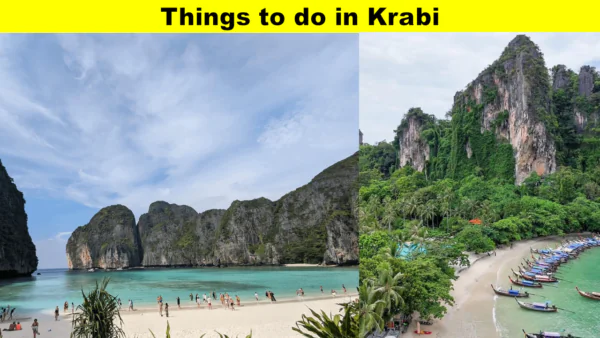
Things to do in Krabi based on NeemTime research from most popular to just popular.
Ao Nang Beach, Krabi
Overview: Ao Nang Beach is a vibrant coastal area in Krabi known for its stunning limestone cliffs, clear waters, and lively beachfront atmosphere.
History: Developed as a tourism hub due to its scenic beauty and access to nearby islands.
Since When: Became popular with tourists in the 1980s.
Review: Visitors praise the beach for its sunsets, restaurants, and easy access to island tours.
When to Go: November to April for dry, sunny weather.
How to Go: Accessible by taxi, minivan, or motorbike from Krabi Town or Krabi Airport.
What to Do: Swim, sunbathe, take boat trips to nearby islands, dine at beachside restaurants, and try water sports.
Free or Paid: Free (beach access), activities may require fees.
Emerald Pool, Krabi
Overview: Emerald Pool is a natural thermal pool in the jungle of Krabi, famous for its turquoise waters and serene surroundings.
History: Discovered by locals for bathing and relaxation before becoming a tourist attraction.
Since When: Opened to tourists in the late 20th century.
Review: Visitors enjoy the refreshing waters and scenic forest setting, though it can get crowded.
When to Go: Early morning or weekdays to avoid crowds, especially during the dry season (November-April).
How to Go: Accessible by car or tour from Krabi Town; a short walk through the jungle is required.
What to Do: Swim, relax, and take photographs in the natural pool and surrounding forest.
Free or Paid: Paid (entrance fee applies).
Wat Tham Suea (Tiger Cave Temple), Krabi
Overview: Wat Tham Suea is a Buddhist temple perched on a hilltop in Krabi, famous for its tiger paw prints, caves, and panoramic views.
History: Built as a meditation site and monastery with spiritual significance for monks and pilgrims.
Since When: Established in the 1970s.
Review: Visitors highlight the challenging climb of over 1,200 steps and rewarding views from the summit.
When to Go: Early morning to avoid heat and crowds.
How to Go: Accessible by car or tuk-tuk from Krabi Town; stairs lead to the temple complex.
What to Do: Climb to the summit, explore caves, observe monks, and enjoy scenic vistas.
Free or Paid: Free (donations encouraged).
Krabi Town Night Market, Krabi
Overview: Krabi Town Night Market is a bustling evening market offering local food, handicrafts, and souvenirs.
History: Emerged as a community marketplace for locals and tourists to experience Thai culture.
Since When: Popular with tourists since the early 2000s.
Review: Visitors enjoy the lively atmosphere, variety of street food, and local crafts.
When to Go: Friday to Sunday evenings for the full market experience.
How to Go: Located in central Krabi Town, accessible by walking, tuk-tuk, or taxi.
What to Do: Sample local cuisine, shop for souvenirs, and enjoy live entertainment.
Free or Paid: Free to enter; food and goods are paid.
Khao Sok National Park, Krabi
Overview: Khao Sok National Park is a protected rainforest area with limestone cliffs, rivers, lakes, and diverse wildlife in Krabi province.
History: Preserved to protect rare species and unique rainforest ecosystems.
Since When: Designated as a national park in 1980.
Review: Visitors rave about the natural beauty, wildlife spotting, and activities like kayaking and jungle trekking.
When to Go: November to April for dry weather and easier access to trails and lakes.
How to Go: Accessible by car or tour from Krabi Town or Ao Nang; guided tours are recommended.
What to Do: Jungle trekking, canoeing, wildlife viewing, and staying in floating bungalows on Cheow Lan Lake.
Free or Paid: Paid (entrance fee required).
Railay West Beach, Krabi
Overview: Railay West Beach is a stunning beach in Krabi known for its soft white sand, clear turquoise waters, and dramatic limestone cliffs.
History: Developed as a prime tourist destination due to its unique geography and rock climbing opportunities.
Since When: Popular with travelers since the 1980s.
Review: Visitors love the calm waters, breathtaking sunsets, and relaxed island vibe.
When to Go: November to April for sunny, dry weather.
How to Go: Accessible only by long-tail boat from Ao Nang or Krabi Town.
What to Do: Sunbathe, swim, go rock climbing, and enjoy beachfront restaurants and bars.
Free or Paid: Free (beach access), activities may have fees.
Princess Cave (Phra Nang Cave), Krabi
Overview: Princess Cave is a small sacred cave at the tip of Railay Beach, filled with offerings and phallic carvings for the local spirit, Phra Nang.
History: Revered by local fishermen who leave offerings to ensure safe voyages.
Since When: Recognized as a cultural site for centuries, popular with tourists since the 1990s.
Review: Visitors find it culturally fascinating and a must-see when visiting Railay.
When to Go: Early morning or late afternoon to avoid crowds.
How to Go: Accessible by walking along Railay Beach or by boat.
What to Do: Observe the unique offerings, take photographs, and explore nearby beaches.
Free or Paid: Free.
Railay Beach, Krabi
Overview: Railay Beach is a scenic peninsula with several beaches and dramatic cliffs, famous for rock climbing and a laid-back atmosphere.
History: Developed as a secluded getaway for tourists due to its inaccessibility by car.
Since When: Became internationally popular in the 1980s.
Review: Visitors enjoy its serene beauty, calm waters, and vibrant sunset scene.
When to Go: November to April for dry weather.
How to Go: Reachable only by boat from Ao Nang or Krabi Town.
What to Do: Swimming, rock climbing, kayaking, and relaxing at beachfront restaurants.
Free or Paid: Free (beach access), activity fees may apply.
Phi Phi Viewpoint 1, Krabi
Overview: Phi Phi Viewpoint 1 offers panoramic views over Phi Phi Don island, showcasing beaches, bays, and lush hillsides.
History: Established as a popular hiking spot for tourists to capture scenic island vistas.
Since When: Became well-known among travelers in the early 2000s.
Review: Visitors praise the breathtaking views but note the steep hike.
When to Go: Early morning for sunrise or late afternoon for sunset.
How to Go: Hike from Tonsai Village on Phi Phi Don island.
What to Do: Hike, photograph the scenery, and enjoy the vistas.
Free or Paid: Paid (small entrance fee to the trail).
Khaothong Hill, Krabi
Overview: Khaothong Hill is a scenic viewpoint offering panoramic views of Ao Nang, surrounding islands, and the Andaman Sea.
History: Historically a lookout point and now a popular spot for tourists and photographers.
Since When: Gained popularity with tourists in the 1990s.
Review: Visitors enjoy the serene atmosphere and stunning sunset views.
When to Go: Late afternoon for sunset views.
How to Go: Accessible by car or motorbike with a short hike to the top.
What to Do: Sightseeing, photography, and picnicking.
Free or Paid: Free.
KhongThomNuea Hot Stream Waterfall, Krabi
Overview: KhongThomNuea Hot Stream Waterfall is a natural geothermal waterfall where warm waters flow over rocks, creating a relaxing hot spring experience.
History: Formed naturally from underground geothermal activity in Krabi province.
Since When: Locals have visited for its therapeutic properties for decades, gaining tourist popularity in the 2000s.
Review: Visitors love the unique combination of a waterfall and natural hot spring for a soothing experience.
When to Go: November to April for pleasant weather and easier access.
How to Go: Accessible by car or motorbike from Krabi Town with a short walk to the site.
What to Do: Soak in the warm waterfall pools, relax, and take photos of the natural scenery.
Free or Paid: Free.
Phra Nang Beach, Krabi
Overview: Phra Nang Beach is a picturesque beach famous for its soft sand, clear waters, and the sacred Princess Cave.
History: Historically a site of local spiritual offerings by fishermen to ensure safe voyages.
Since When: Recognized for cultural significance for centuries, popular with tourists since the 1990s.
Review: Visitors praise its beauty, calm waters, and the fascinating cultural aspect of the cave.
When to Go: Early morning or late afternoon to avoid crowds.
How to Go: Accessible by long-tail boat from Ao Nang or a short walk from Railay Beach.
What to Do: Sunbathe, swim, explore the cave, and enjoy rock climbing nearby.
Free or Paid: Free.
Tiger Cave Temple (Wat Tham Suea), Krabi
Overview: Tiger Cave Temple is a Buddhist temple perched on a hilltop, famous for its tiger paw prints and panoramic views of Krabi.
History: Built as a meditation center and pilgrimage site by local monks.
Since When: Established in 1975 and has grown into a major tourist attraction since the 1990s.
Review: Visitors admire the breathtaking views and spiritual atmosphere but note the strenuous climb.
When to Go: Early morning to avoid heat and crowds.
How to Go: Accessible by car or taxi from Krabi Town with a climb of over 1,200 steps to the summit.
What to Do: Climb to the summit, explore the temple grounds, and enjoy photography.
Free or Paid: Free (donations welcome).
Bamboo Beach, Krabi
Overview: Bamboo Beach is a tranquil, less-crowded beach surrounded by limestone cliffs and lush greenery.
History: Traditionally a local fishing and recreation area before gaining recognition as a tourist spot.
Since When: Became popular among travelers in the 2000s seeking a peaceful beach escape.
Review: Visitors love its quiet atmosphere and natural beauty away from tourist crowds.
When to Go: November to April for dry weather and calm seas.
How to Go: Reachable by long-tail boat from Ao Nang or Railay Beach.
What to Do: Swim, sunbathe, relax, and explore the nearby cliffs.
Free or Paid: Free.
Thale Waek (Separated Sea), Krabi
Overview: Thale Waek, also known as the Separated Sea, is a natural sandbar that emerges at low tide connecting islands and revealing shallow walkable paths.
History: Formed naturally through tidal patterns and sediment deposits, long known to locals for fishing and transport.
Since When: Gained attention as a tourist attraction in the 2000s.
Review: Visitors are fascinated by the phenomenon and enjoy walking across the sandbar between islands.
When to Go: Best at low tide for safe and easy crossing.
How to Go: Accessible by boat from Ao Nang, Railay, or nearby islands.
What to Do: Walk the sandbar, take photos, and swim in the shallow waters.
Free or Paid: Free.
Monkey Trail, Ao Nang, Krabi
Overview: Monkey Trail is a scenic nature trail in Ao Nang where visitors can trek through lush jungle and encounter playful monkeys.
History: The trail developed naturally as locals used it for access between villages and beaches.
Since When: It became a popular tourist hiking spot in the early 2000s.
Review: Visitors enjoy the close encounters with monkeys and the serene forest environment but caution about keeping belongings safe.
When to Go: Early morning or late afternoon to avoid heat and active monkeys.
How to Go: Reachable on foot from Ao Nang town or by short motorbike ride to the trailhead.
What to Do: Hike through the jungle, observe wildlife, and take photos of scenic viewpoints.
Free or Paid: Free.
Chao Fah Park, Krabi
Overview: Chao Fah Park is a peaceful riverside park in Krabi offering walking paths, gardens, and shaded areas for relaxation.
History: Established as a public recreational space for locals and tourists to enjoy the riverfront.
Since When: Opened to the public in the late 20th century.
Review: Visitors appreciate the calm atmosphere, river views, and well-maintained greenery.
When to Go: Morning or late afternoon for cooler temperatures and scenic light.
How to Go: Easily accessible by taxi, tuk-tuk, or motorbike from Krabi Town.
What to Do: Walk along the river, picnic, take photos, and relax in nature.
Free or Paid: Free.
The Mud Crabs Sculpture, Krabi
Overview: The Mud Crabs Sculpture is an artistic landmark in Krabi celebrating the local mud crab industry.
History: Installed as a tribute to the region’s fishing heritage and cultural identity.
Since When: Erected in the 2010s as part of Krabi’s public art initiatives.
Review: Tourists enjoy taking photos with the sculpture and learning about the local seafood culture.
When to Go: Anytime during the day.
How to Go: Accessible by walking or short taxi ride from Krabi Town.
What to Do: Take photos, learn about local culture, and enjoy nearby markets.
Free or Paid: Free.
Shell Cemetery, Krabi
Overview: Shell Cemetery is a unique geological site featuring fossilized shell beds and natural limestone formations.
History: Formed millions of years ago from ancient marine deposits.
Since When: Known to geologists for decades and increasingly visited by tourists in recent years.
Review: Visitors find it fascinating for photography and educational exploration about natural history.
When to Go: Dry season from November to April for safe access.
How to Go: Accessible by car or guided tour from Krabi Town.
What to Do: Explore the fossil formations, take photos, and enjoy nature walks.
Free or Paid: Free.
Klong Root, Clear Water Canal, Krabi
Overview: Klong Root is a serene canal known for its crystal-clear water, mangroves, and peaceful kayaking opportunities.
History: The canal has been a natural waterway supporting local ecosystems and fishing for centuries.
Since When: Became a tourist kayaking and sightseeing destination in the 2000s.
Review: Visitors praise its calm waters, scenic mangroves, and relaxing atmosphere.
When to Go: Morning for calm water and fewer tourists.
How to Go: Accessible via guided boat or kayak tours from Ao Nang or Krabi Town.
What to Do: Kayak, take photos, explore the mangroves, and enjoy wildlife spotting.
Free or Paid: Free to explore, but guided tours are paid.
Dragon’s Crest (Ngon Nak Nature Trail), Krabi
Overview: Dragon’s Crest is a challenging hiking trail in Krabi offering panoramic views of limestone cliffs, beaches, and lush jungle.
History: The trail developed naturally as a local hiking route and gained popularity with adventure tourists.
Since When: Became widely recognized by hikers in the 2010s.
Review: Hikers praise the breathtaking vistas and rewarding summit but note the trail is steep and requires good fitness.
When to Go: Early morning to avoid heat and enjoy sunrise views.
How to Go: Accessible by car or motorbike from Ao Nang or Krabi Town, with a short hike to the trailhead.
What to Do: Hike, take panoramic photos, and enjoy nature and wildlife.
Free or Paid: Free.
Klong Muang Beach, Krabi
Overview: Klong Muang Beach is a serene, less-crowded beach in Krabi with soft sand, clear waters, and stunning sunsets.
History: Historically a local fishing area that gradually became a popular tourist destination.
Since When: Known as a tourist beach since the early 2000s.
Review: Visitors love its tranquility, scenic views, and peaceful atmosphere compared to busier beaches.
When to Go: Late afternoon for sunsets or early morning for quiet.
How to Go: Reachable by car, taxi, or motorbike from Ao Nang or Krabi Town.
What to Do: Swim, sunbathe, relax, and take photos.
Free or Paid: Free.
Maharaj Market, Krabi
Overview: Maharaj Market is a bustling local market in Krabi Town offering fresh produce, seafood, and traditional Thai goods.
History: Established as a community marketplace supporting local farmers and fishermen.
Since When: Operating for several decades as a central marketplace.
Review: Visitors enjoy the lively atmosphere, variety of local products, and authentic cultural experience.
When to Go: Early morning for fresh produce and seafood.
How to Go: Easily accessible on foot, by taxi, or tuk-tuk from Krabi Town center.
What to Do: Shop for fresh ingredients, souvenirs, and try local street food.
Free or Paid: Free to enter; shopping is paid.
Phi Phi Viewpoint 3, Krabi
Overview: Phi Phi Viewpoint 3 is a scenic lookout offering panoramic views of Phi Phi Don island, bays, and surrounding limestone cliffs.
History: The viewpoint gained fame as tourists increasingly explored the island’s hiking trails.
Since When: Popularized in the 2010s as a must-visit viewpoint for travelers.
Review: Visitors find the hike challenging but the sweeping views extremely rewarding.
When to Go: Early morning or late afternoon to avoid heat and capture golden hour photos.
How to Go: Hike from the main village of Phi Phi Don; local maps and guides available.
What to Do: Hike, photograph landscapes, and enjoy the views.
Free or Paid: Free.
Krabi Elephant Shelter, Krabi
Overview: Krabi Elephant Shelter is a conservation center dedicated to the care, rehabilitation, and ethical treatment of elephants.
History: Established to provide a sanctuary for elephants rescued from logging and tourist exploitation.
Since When: Founded in the 2010s to promote ethical wildlife tourism.
Review: Visitors appreciate the opportunity to interact with elephants responsibly and learn about conservation efforts.
When to Go: Morning or late afternoon for cooler weather and active elephants.
How to Go: Accessible by car, taxi, or organized tour from Ao Nang or Krabi Town.
What to Do: Observe, feed, and bathe elephants under supervision, and learn about conservation.
Free or Paid: Paid entry, with proceeds supporting elephant care.
Hat Noppharat Thara-Mu Ko Phi Phi National Park, Krabi
Overview: Hat Noppharat Thara-Mu Ko Phi Phi National Park is a protected area featuring pristine beaches, limestone cliffs, mangroves, and coral reefs in Krabi.
History: The park was established to conserve the natural marine and coastal ecosystems of the region.
Since When: Officially designated as a national park in 1983.
Review: Visitors praise the park for its stunning scenery, calm waters, and opportunities for snorkeling and kayaking.
When to Go: November to April for dry weather and calm seas.
How to Go: Accessible by car or taxi from Krabi Town, followed by boat transfers to islands within the park.
What to Do: Swimming, snorkeling, hiking, kayaking, and wildlife observation.
Free or Paid: Paid entry to the park.
Thara Park, Krabi
Overview: Thara Park is a scenic riverside park in Krabi featuring walking paths, playgrounds, and lush greenery for relaxation.
History: Developed as a community recreational area for locals and tourists.
Since When: Established in the 1990s to provide urban green space.
Review: Visitors enjoy its peaceful environment, walking trails, and family-friendly atmosphere.
When to Go: Early morning or late afternoon for cooler temperatures.
How to Go: Reachable by car, motorbike, or on foot from Krabi Town center.
What to Do: Walking, jogging, picnicking, and photography.
Free or Paid: Free.
Din Daeng Doi, Krabi
Overview: Din Daeng Doi is a striking cliff formation in Krabi offering adventurous hiking and dramatic panoramic views of the surrounding landscape.
History: Known locally for its natural limestone formations and scenic vantage points.
Since When: Gained popularity with hikers and photographers in the 2010s.
Review: Visitors enjoy the challenging climb and the breathtaking views from the summit.
When to Go: Early morning to avoid heat and for the best lighting for photos.
How to Go: Accessible by car or motorbike to the trailhead followed by a steep hike.
What to Do: Hiking, photography, and enjoying nature.
Free or Paid: Free.
The Elephant Sanctuary Krabi Thailand, Krabi
Overview: The Elephant Sanctuary Krabi is an ethical wildlife sanctuary focused on rescuing and caring for elephants in a natural environment.
History: Founded to provide an alternative to exploitative elephant tourism and promote conservation education.
Since When: Established in the mid-2010s as an ethical elephant sanctuary.
Review: Visitors praise the sanctuary for its responsible interactions and educational programs.
When to Go: Morning or late afternoon for cooler weather and active elephants.
How to Go: Reachable via car, taxi, or organized tour from Ao Nang or Krabi Town.
What to Do: Observe, feed, and bathe elephants responsibly, and learn about their care and conservation.
Free or Paid: Paid entry, with proceeds supporting elephant welfare.
Hong Island, Krabi
Overview: Hong Island is a picturesque island in Krabi known for its crystal-clear waters, white sandy beaches, and hidden lagoons.
History: The island is part of Hat Noppharat Thara-Mu Ko Phi Phi National Park and has long been a haven for marine life and tourists.
Since When: Became popular with tourists in the early 2000s.
Review: Visitors love its calm lagoons, snorkeling opportunities, and natural beauty.
When to Go: November to April for the best weather and calm waters.
How to Go: Accessible by boat tours or private longtail boats from Ao Nang or Krabi Town.
What to Do: Swimming, snorkeling, kayaking, and relaxing on the beach.
Free or Paid: Paid, usually as part of a boat tour.