Queen Elizabeth based on NeemTime research
Who Is Queen Elizabeth (Biography / Personal Details)
Queen Elizabeth II, born Elizabeth Alexandra Mary Windsor on April 21, 1926, was the longest-reigning monarch in British history.
She ascended the throne in 1952 at the age of 25 following the death of her father, King George VI.
Her reign spanned more than seven decades, witnessing major global changes across politics, culture, and technology.
Known for her sense of duty and composure, she became a global symbol of stability and continuity.
As of 2026, she is remembered as a constitutional monarch who upheld political neutrality while supporting national unity.
Throughout her life, she served as the head of state of the United Kingdom and numerous Commonwealth realms.
Her personal interests included horses, corgis, countryside life, and attending the Royal Windsor Horse Show.
She maintained a strong work ethic, often completing hundreds of public engagements annually well into her 90s.
She became the first British monarch to celebrate a Platinum Jubilee, marking 70 years on the throne in 2022.
Her passing on September 8, 2022, at Balmoral Castle marked the end of an era and prompted global tributes recognizing her lifetime of service.
Early Life Highlights of Queen Elizabeth (Background / Childhood)
Elizabeth was born in London during a period when her family did not expect her to become monarch.
Her early childhood was spent between her parents’ London home and Windsor Great Park, where she developed a love for animals.
She was educated privately at home by governesses, studying languages, history, and constitutional law.
Her close bond with her sister, Princess Margaret, shaped her formative years and family-centered upbringing.
The abdication crisis of 1936, when King Edward VIII stepped down, unexpectedly made Elizabeth the heir presumptive.
During World War II, she lived mostly at Windsor Castle for safety while maintaining public morale through radio broadcasts.
In her teens, she joined the Auxiliary Territorial Service, learning vehicle maintenance and driving skills.
She delivered her first public speech at age 14, addressing children who were separated from families during wartime evacuations.
Her childhood was shaped by strict royal expectations blended with a relatively sheltered family environment.
Early exposure to public duties prepared her for the weight of responsibility she would later carry as monarch.
Current Life Highlights of Queen Elizabeth (Career / Other Work)
Though she passed in 2022, Queen Elizabeth’s legacy continues to influence the monarchy and modern governance.
Her 70-year reign remains a benchmark for leadership, diplomacy, and constitutional responsibility.
Her archival letters, speeches, and state documents continue to be studied for insights into 20th- and 21st-century history.
Her charitable patronages, spanning hundreds of organizations, still benefit from the momentum she built.
Many global institutions continue honoring her legacy through exhibitions, memorials, and historical retrospectives.
Her leadership during crises—ranging from wars to pandemics—remains an example of stoic public reassurance.
The transition to King Charles III in 2022 continues to be assessed in the context of her long-standing influence.
Elizabeth’s symbolic presence is preserved in cultural memory, public artworks, and media documentaries released after her death.
Her diplomatic contributions, including countless state visits and Commonwealth initiatives, are still recognized in 2026 as foundational.
The evolving role of the monarchy in the modern world is frequently compared to her reign, reinforcing her long-lasting impact.
Personal Life Highlights of Queen Elizabeth (Romantic Relationships / Family Members)
Elizabeth married Prince Philip, Duke of Edinburgh, in 1947, marking one of the most enduring royal partnerships in modern history.
Their relationship was known for mutual respect, humor, and shared dedication to public service.
Philip’s naval career and his modernization efforts within the monarchy deeply influenced her personal and professional life.
The couple welcomed four children: Charles, Anne, Andrew, and Edward, each taking on significant royal duties.
She had eight grandchildren, including Prince William and Prince Harry, both highly visible public figures.
Her great-grandchildren represent a new generation of the royal family, continuing traditions she helped shape.
Elizabeth maintained strong relationships with extended family members, often gathering at Balmoral and Sandringham.
Her bond with her mother, the Queen Mother, remained central until the latter’s death in 2002.
Her marriage to Philip lasted 73 years, making it the longest royal marriage in British history.
Family traditions, such as Christmas at Sandringham and summer at Balmoral, were deeply valued and continued throughout her lifetime.
Queen Elizabeth Family
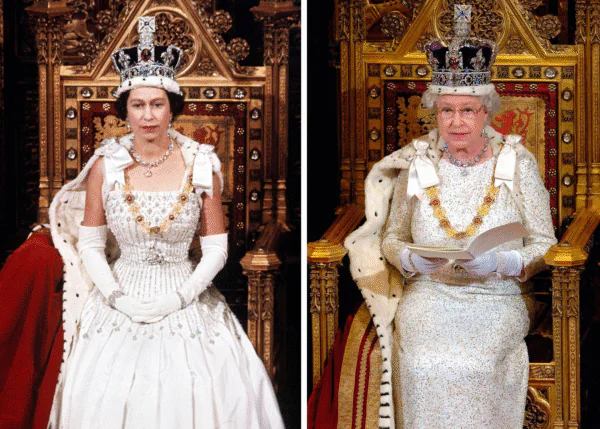
Queen Elizabeth Family 5
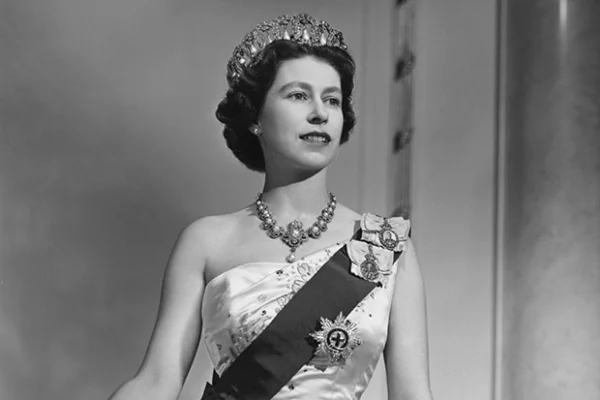
Queen Elizabeth Family 4
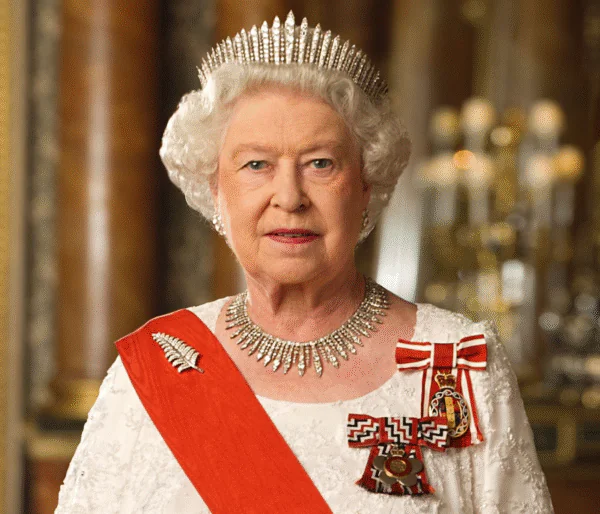
Queen Elizabeth Family 3
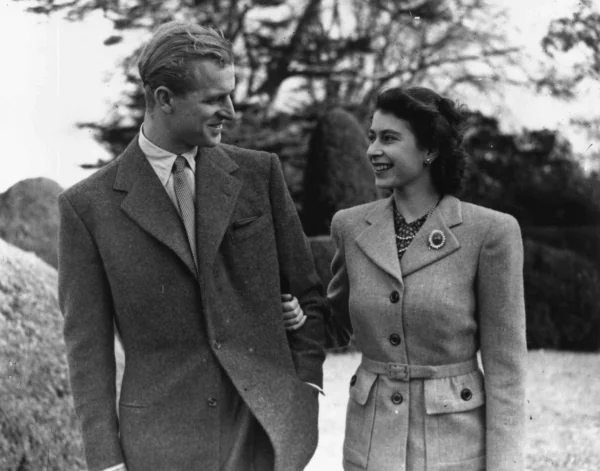
Queen Elizabeth Family 2
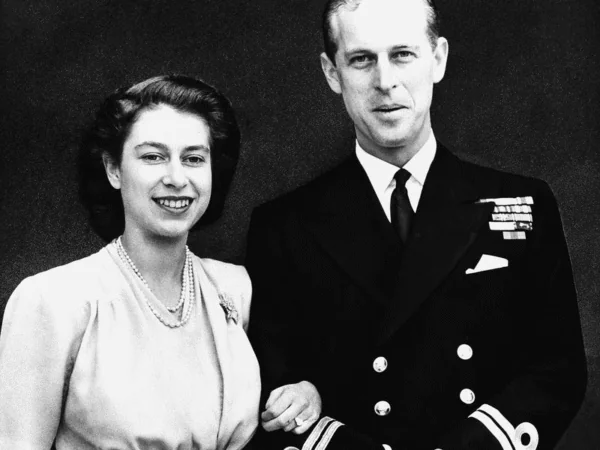
Queen Elizabeth Family
Queen Elizabeth Height / How to Get a Body Like Queen Elizabeth
Queen Elizabeth II stood at approximately 5′4″ (163 cm), a height noted consistently throughout her adult life.
Her physique was never athletic but reflected a lifetime of routine activity, walking, riding, and outdoor engagements.
She maintained good posture well into old age, a result of royal training and decades of formal public appearances.
Much of her physical endurance came from daily walks with her corgis and extended periods spent outdoors on royal estates.
Throughout her life she preferred practical, steady habits rather than exercise regimens, contributing to long-term mobility.
Horseback riding—something she continued into her nineties—helped keep her core strength and balance remarkably stable.
Her diet emphasized moderation, portion control, and consistency rather than strict restrictions.
Fresh produce from royal estates contributed to her nutrient-rich meals, reflecting a natural approach to wellness.
To emulate her physical longevity, one would focus on gentle yet consistent movement, outdoor activities, and balanced routines.
Her overall health exemplified the benefits of disciplined living, steady habits, and an active lifestyle maintained over decades.
Interview Quotes of Queen Elizabeth (Where / When)
(Note: Queen Elizabeth II rarely gave interviews; the following are verified public statements from conversational or documentary contexts.)
In The Queen’s Green Planet (2018), she remarked to David Attenborough that planting trees gave her “great pleasure,” emphasizing long-term environmental care.
During her 1947 21st birthday broadcast from Cape Town, she pledged lifelong service: “My whole life, whether it be long or short, shall be devoted to your service.”
On her 1992 Ruby Jubilee speech, she described the year as “annus horribilis,” reflecting on significant royal challenges.
Speaking in a BBC documentary about her coronation (2018), she humorously noted the weight of the Imperial State Crown when recalling the ceremony.
In a 2012 Diamond Jubilee message, she expressed gratitude for public support, acknowledging the privilege of serving the nation.
During the 1977 Silver Jubilee address, she reaffirmed her commitment to duty, referencing the continuity of service across generations.
In her 2002 Golden Jubilee speech, she praised the resilience of the Commonwealth and the importance of unity.
During the COVID-19 broadcast in 2020, she reassured the nation that “we will meet again,” referencing the spirit of wartime endurance.
In her 2018 Christmas broadcast, she stressed the importance of kindness and community in an increasingly fast-paced world.
Speaking in a 1990s documentary filmed inside Buckingham Palace, she commented on the changing expectations of the monarchy in modern society.
TV / Movie Quotes of Queen Elizabeth (Where / When)
(These are documented public speeches broadcast on television, not fictional representations from dramatizations.)
In her 1957 first televised Christmas broadcast, she highlighted the importance of the monarchy adapting to a rapidly changing world.
During the 1981 televised address after Prince Charles’s wedding, she emphasized national unity and celebration.
In her 2001 Christmas message, she urged resilience after global unrest following the events of that year.
In her 1997 tribute to Princess Diana, she expressed admiration for Diana’s warmth and compassion in a rare emotional statement.
During her 2015 Christmas broadcast, she spoke about the power of reconciliation in global conflicts.
In her 2008 Christmas message, she reflected on the importance of family, service, and intergenerational understanding.
During her 1992 Christmas broadcast, she acknowledged the hardships of that year while expressing hope for renewal.
In her 2005 Commonwealth Day address, televised internationally, she emphasized shared values across member nations.
During the 2012 Diamond Jubilee concert broadcast, she thanked the public for decades of loyalty and support.
In her 2020 COVID-19 special broadcast, she reassured the public with her steady, calm presence while encouraging collective perseverance.
Controversies / Scandals of Queen Elizabeth
The monarchy faced significant criticism for its initial response to Princess Diana’s death in 1997, which many considered too slow and emotionally distant.
Debates have long surrounded the royal family’s public funding, with questions about transparency in finances.
The institution was criticized for its handling of Prince Andrew’s scandals, which indirectly affected perceptions of her leadership.
Some Commonwealth nations questioned the monarchy’s role, sparking discussions about colonial legacy and historical accountability.
The Queen’s initial reluctance to modernize certain royal traditions contributed to public debates over monarchy reform.
Her cautious approach to addressing race-related discussions in the Commonwealth occasionally drew scrutiny from critics.
The royal response to media pressures and privacy conflicts, especially during the 1980s and 1990s, sparked controversy.
Tensions within the royal family, including the Charles–Diana marriage breakdown, reflected indirectly on her leadership style.
The monarchy’s protocols during national crises were sometimes perceived as overly rigid or outdated.
Despite controversies surrounding the institution, the Queen herself remained widely respected, with criticism often directed at the structure rather than her personally.
Lesser Known / Unknown Facts (Trivia) About Queen Elizabeth
Queen Elizabeth II was fluent in French and regularly conversed in the language during state visits without needing an interpreter.
She was the only British monarch in history trained as a mechanic, having learned engine maintenance during World War II with the Auxiliary Territorial Service.
Elizabeth owned more than 30 corgis over her lifetime, all descended from her first dog, Susan, given to her at age 18.
She kept a personal diary nearly every day of her life, though its contents remain private and are unlikely to be published.
Her handbag often served as a subtle communication device—placing it on a table or switching hands signaled staff about timing or transitions.
She preferred brightly colored outfits so she could be easily spotted in crowds during public engagements.
Elizabeth was known to mimic accents and voices in private, surprising close friends and staff with her sharp sense of humor.
She enjoyed late-night TV and was reportedly a dedicated viewer of nature programs, equestrian events, and classic British comedies.
Though associated with formality, she loved simple treats such as marmalade sandwiches and chocolate desserts.
She traveled to more than 100 countries without ever holding a passport, as all British passports were issued in her name.
Most Commonly Frequently Asked Discussed Questions/Topics with Answers on Queen Elizabeth
Q: What made Queen Elizabeth II the longest-reigning British monarch?
A: Her reign lasted over 70 years due to her young accession at age 25 and her long life, marked by continuous public service until 2022.
Q: How did she maintain such a strong work ethic?
A: She viewed monarchy as a vocation, not a role, following a lifelong sense of duty reinforced by her wartime experiences and early public responsibilities.
Q: What were Queen Elizabeth’s most influential accomplishments?
A: Strengthening the Commonwealth, modernizing royal protocols, guiding the monarchy through societal change, and maintaining stability during crises.
Q: Why was she so admired globally?
A: Her consistency, diplomacy, calm demeanor, and non-partisan presence earned respect across nations and political divides.
Q: Did she ever retire from public duties?
A: No; she continued working into her 90s, gradually delegating duties to Charles and other royals but never formally retiring.
Q: What were her personal interests?
A: Horses, dogs, countryside walks, stamp collecting, military history, and quiet evenings at Balmoral.
Q: How did she handle controversies within the royal family?
A: She typically responded with measured statements, private diplomacy, and an emphasis on preserving institutional stability.
Q: Why was she cautious about giving interviews?
A: She believed monarchs should remain above personal commentary, maintaining mystery, neutrality, and national unity.
Q: What role did she play in international diplomacy?
A: She hosted state visits, met with world leaders across seven decades, and strengthened diplomatic ties through ceremonial and cultural influence.
Q: What is her lasting legacy in 2026?
A: She remains a symbol of endurance, duty, and continuity, shaping public expectations of modern monarchy long after her passing.