Pope Francis based on NeemTime research
Who Is Pope Francis (Biography / Personal Details)
Pope Francis transformed the public image of the papacy through his simplicity, concern for marginalized people and willingness to challenge powerful institutions, while leaving a legacy that continues to inspire debate.
Born Jorge Mario Bergoglio on December 17, 1936, in Buenos Aires, Argentina, he became the first pope from Latin America.
He was also the first Jesuit pope and the first to choose the name Francis, inspired by Saint Francis of Assisi.
He was elected the 266th pope of the Catholic Church on March 13, 2013, following Pope Benedict XVI’s resignation.
Before becoming pope, he served as archbishop of Buenos Aires and led the Argentine bishops’ conference from 2005 to 2011.
His pontificate emphasized poverty, migration, environmental protection, interfaith dialogue and greater attention to people on society’s margins.
He promoted church reforms and encouraged a more pastoral approach to Catholics whose lives did not fit conventional expectations.
His positions on social issues, traditional liturgy and church governance also drew criticism from conservative Catholics and other groups.
After a 38-day hospitalization for bilateral pneumonia, Francis died in Vatican City on April 21, 2025, aged 88.
His funeral took place on April 26, 2025, and he was buried in the Basilica of Saint Mary Major in Rome, reflecting his personal devotion to the Virgin Mary.
Pope Francis Height, Appearance, Fitness & How to Get a Body Like Pope Francis
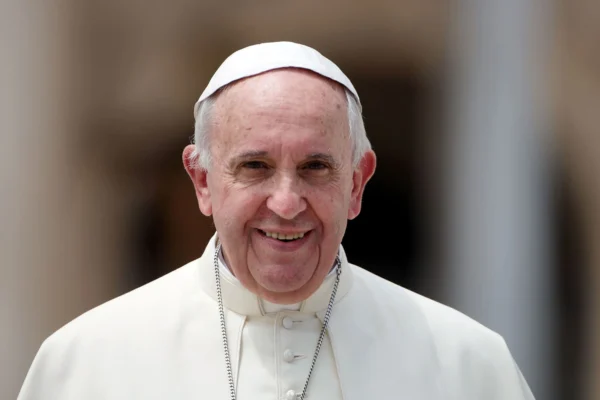
Pope Francis was widely recognized for his modest appearance, which became an important part of his public identity as pontiff.
His height is commonly estimated at approximately 5 feet 9 inches, or 175 centimetres, although a reliably documented official measurement is not readily available.
Unlike some previous popes, he generally avoided elaborate personal displays and preferred relatively simple clothing and ceremonial accessories.
After his election in 2013, he appeared on the balcony of Saint Peter’s Basilica wearing a plain white cassock rather than some of the more elaborate garments associated with papal tradition.
He continued using a simple silver pectoral cross that he had worn as a bishop, rather than adopting a more ornate gold version.
His public image also included practical footwear and a preference for direct contact with pilgrims, children and people seeking personal blessings.
During his later years, knee problems and other health concerns increasingly limited his mobility, and he sometimes used a wheelchair.
In February 2025, he was hospitalized with respiratory complications and bilateral pneumonia before returning to the Vatican in March.
There is no reliable evidence establishing a specific bodybuilding routine or diet intended to create a particular physique.
Anyone seeking better fitness should choose age-appropriate exercise, balanced nutrition and medical guidance suited to their own health rather than copying a religious leader’s appearance.
Pope Francis Family
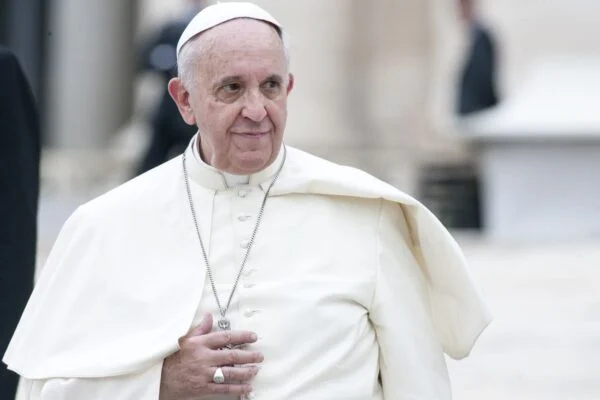
Pope Francis Family 5
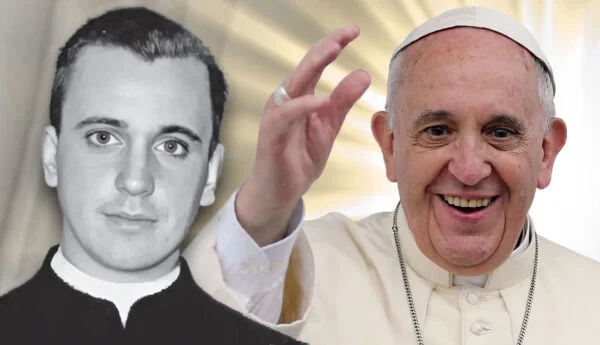
Pope Francis Family 4
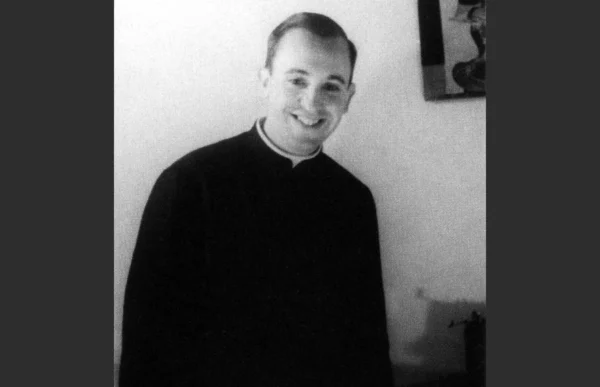
Pope Francis Family 3
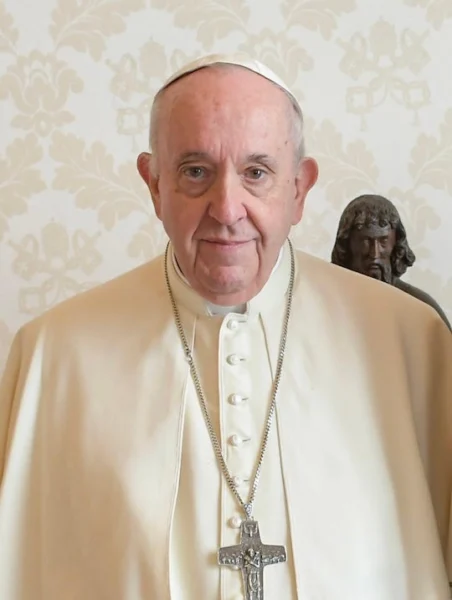
Pope Francis Family 2
Pope Francis Family
Early Life, Childhood, Education & Family Background of Pope Francis
Before Jorge Mario Bergoglio became Pope Francis, he grew up in a working-class neighborhood shaped by Argentina’s Italian immigrant community.
He was born on December 17, 1936, in the Flores district of Buenos Aires, where he spent much of his childhood.
His father, Mario José Bergoglio, worked for the railway, while his mother, Regina María Sívori, cared for their five children.
Bergoglio was the eldest of the siblings and grew up in a household influenced by Italian traditions and Argentine culture.
He attended local schools before graduating in 1955 from a technical secondary school as a chemical technician.
After graduation, he worked in a laboratory analyzing food samples, gaining practical experience outside religious life.
At the age of 21, he became seriously ill with pneumonia in 1957, and part of his right lung was surgically removed.
A spiritual experience while praying at a church in Buenos Aires helped him recognize his desire to become a priest.
On March 11, 1958, he entered the novitiate of the Society of Jesus, beginning his formation as a Jesuit.
He later studied humanities, philosophy and theology, eventually becoming a priest in 1969 and building a career that led to the highest office in the Catholic Church.
Personal Life Highlights of Pope Francis (Family Members)
Pope Francis devoted his adult life to the Catholic priesthood, but his early family experiences remained an important part of his identity.
He was born Jorge Mario Bergoglio into a family of five children in Buenos Aires, Argentina.
His father, Mario José Bergoglio, was a railway accountant whose work supported the household.
His mother, Regina María Sívori, raised the children and maintained the family’s Italian cultural traditions.
His siblings included María Elena Bergoglio, his younger sister and the only sibling known to have outlived him.
The family had Italian roots, with his parents’ families originating in the Piedmont region of northern Italy.
Although he became one of the world’s most recognizable religious leaders, Francis rarely presented his relatives as public figures in their own right.
His decision to enter the Jesuits meant that he did not marry or have children, and he described priesthood as the central commitment of his adult life.
He maintained connections with relatives and old friends, while his public work increasingly focused on pastoral responsibilities and international affairs.
After his death in April 2025, tributes recalled both his global religious leadership and his origins in a modest Buenos Aires family.
Pope Francis Partners, Relationships & Dating History
Pope Francis did not have a documented marriage or public dating history because he chose the Catholic priesthood and lived as a Jesuit religious.
Before entering the seminary, Jorge Mario Bergoglio grew up in Buenos Aires and experienced an ordinary family and social life.
Biographical accounts describe a young man who worked in a laboratory before committing himself to religious service.
He entered the Jesuit novitiate on March 11, 1958, when he was 21 years old.
As a Jesuit, he undertook vows that shaped his life around religious service, including the commitment to celibacy.
He was ordained a Catholic priest on December 13, 1969, and subsequently served in teaching, formation and leadership roles within the Jesuit order.
There is no reliable public record establishing a spouse, marriage or sustained romantic partnership in his adult life.
Some popular accounts have repeated stories about a youthful crush, but such anecdotes should not be presented as a verified relationship history without dependable evidence.
His public life instead centered on pastoral ministry, church administration and later the responsibilities of the papacy.
Francis died on April 21, 2025, after a lifetime devoted to religious service rather than marriage or family life of his own.
Pope Francis Career Journey, Breakthroughs, Achievements & Awards
Pope Francis rose through the Catholic Church’s hierarchy from Jesuit teacher and priest to one of the world’s most influential religious leaders.
After entering the Jesuits in 1958, he studied philosophy and theology and was ordained a priest in 1969.
In 1973, he became provincial superior of the Jesuits in Argentina, a leadership role he held during a turbulent period in the country’s history.
He later served as a teacher and rector at Colegio Máximo in San Miguel, helping train future priests.
Pope John Paul II appointed him auxiliary bishop of Buenos Aires in 1992, and he became archbishop in 1998.
He was elevated to cardinal in February 2001 and became a prominent voice in the Argentine Catholic Church.
Following Benedict XVI’s resignation, the conclave elected Bergoglio pope on March 13, 2013.
During his pontificate, he issued major documents including Laudato si’, on environmental responsibility, and Fratelli tutti, on human fraternity and social friendship.
He also expanded the College of Cardinals geographically and pursued reforms involving Vatican finances, church governance and safeguarding.
His achievements included canonizing hundreds of saints, while his critics continued to question aspects of his abuse-case responses and approach to church doctrine.
Current Life Highlights of Pope Francis (Career / Other Work)
Pope Francis died on April 21, 2025, so his current relevance lies in his legacy, published teachings and the continuing debate over his reforms.
His final weeks followed a 38-day hospital stay beginning on February 14, 2025, for bilateral pneumonia and related respiratory complications.
After leaving hospital on March 23, he returned to his Vatican residence and continued limited public duties during his recovery.
On Easter Sunday, April 20, he appeared in Saint Peter’s Square to deliver the traditional blessing and greet worshippers.
He died the following morning at 7:35 a.m. in the Domus Sanctae Marthae, the Vatican residence he had chosen instead of the Apostolic Palace.
The Vatican reported that the immediate cause was a stroke followed by coma and irreversible cardiovascular collapse.
His funeral was held in Saint Peter’s Square on April 26, attended by world leaders, religious representatives and thousands of mourners.
At his request, he was buried at the Basilica of Saint Mary Major, outside the Vatican, where he had regularly prayed before and after international trips.
His writings, including Laudato si’, Fratelli tutti and Evangelii gaudium, continue to inform debates on poverty, ecology and church mission.
As of October 2026, his influence remains visible in discussions about Catholic inclusion, institutional accountability, environmental responsibility and the future direction of the Church.
Pope Francis Most Popular Movies, TV Shows, Media Appearances & Other Work
Pope Francis was not an actor or television entertainer, but his public life generated documentaries, interviews, books and widely watched broadcasts.
His election on March 13, 2013, became a major international television event as crowds gathered in Saint Peter’s Square to hear his first words as pope.
His first papal trip abroad was to Brazil in July 2013 for World Youth Day, bringing him before enormous audiences and global news cameras.
The documentary Pope Francis: A Man of His Word, directed by Wim Wenders and released in 2018, explored his views on faith, peace and global responsibility.
The documentary Francesco, released in 2020, examined his approach to migration, climate change, social justice and LGBTQ+ issues.
His memoir-style book Life: My Story Through History, published in 2024 with Fabio Marchese Ragona, connected personal memories with major world events.
He also published Hope, a memoir released in 2025, offering reflections on his life, beliefs and experiences.
His televised Easter and Christmas messages became regular international broadcasts, often addressing war, poverty, migration and humanitarian crises.
Francis used social media, including the multilingual papal account @Pontifex, to reach audiences beyond traditional church communication channels.
His speeches, encyclicals, interviews and documentaries remain important sources for understanding his public image and the priorities he set during his pontificate.
Pope Francis Most Popular News, Controversies, Career Debates / Why Pope Francis Is Popular
Pope Francis became popular for his approachable manner and concern for vulnerable people, but several major controversies complicated his legacy.
His 2015 encyclical Laudato si’ called for urgent action on climate change and criticized consumerism, drawing praise from environmental advocates and resistance from some political conservatives.
In 2016, he issued guidance on family life that opened limited pastoral possibilities for divorced and remarried Catholics, prompting debate among church leaders.
In 2018, he initially defended Chilean bishop Juan Barros against allegations of mishandling abuse, then apologized after receiving further information and met survivors personally.
His response led to the resignation of Chile’s bishops and became a defining episode in debates over his handling of clerical sexual abuse.
Francis later introduced rules requiring church personnel to report abuse and established procedures for investigating bishops accused of abuse or cover-ups.
In December 2023, the Vatican permitted priests to offer non-liturgical blessings to same-sex couples, while explicitly maintaining that these blessings were not equivalent to marriage.
The decision triggered criticism from some conservative bishops and support from Catholics who favored a more welcoming pastoral approach.
His restrictions on some celebrations of the traditional Latin Mass also drew opposition from traditionalist Catholics.
His legacy remains complex: supporters emphasize humility, social concern and reform, while critics argue that he did not do enough to resolve the Church’s abuse crisis or satisfy opposing doctrinal camps.
Pope Francis Known Unknown Facts, Trivia + People Also Ask / Search & Answers
Pope Francis’s life included unexpected experiences that helped distinguish him from many of his predecessors.
Before entering the priesthood, he trained as a chemical technician and worked in a laboratory in Buenos Aires.
He taught literature and psychology at Jesuit schools before becoming a senior church leader.
At 21, he survived severe pneumonia that led to the surgical removal of part of his right lung.
He was the first pope born in the Americas, the first Jesuit pope and the first to take the name Francis.
He chose to live in the Domus Sanctae Marthae guesthouse rather than move into the traditional papal apartment in the Apostolic Palace.
His 2015 visit to the United States included an address to the US Congress, a historic moment for a pope.
He was named Time magazine’s Person of the Year in 2013, the year of his election.
He canonized 942 saints during his pontificate, including many through the recognition of sainthood by equivalence.
He requested burial at Saint Mary Major in Rome, becoming the first pope in more than a century to be buried outside the Vatican.
How old was Pope Francis when he died? He was 88 when he died on April 21, 2025.
What was Pope Francis’s real name? His birth name was Jorge Mario Bergoglio.
How tall was Pope Francis? His height is commonly estimated at about 5 feet 9 inches, but a verified official measurement is not readily available.
Was Pope Francis married? No, he lived as a Catholic priest and Jesuit, following the commitment to celibacy.
Why did Pope Francis choose the name Francis? He chose it in honor of Saint Francis of Assisi, associated with poverty, peace and care for creation.
Where is Pope Francis buried? He was buried at the Basilica of Saint Mary Major in Rome.
What illness did Pope Francis have before his death? He was hospitalized with bilateral pneumonia and had a history of respiratory illness, hypertension and type 2 diabetes.
What is Pope Francis best known for? He is remembered for emphasizing care for the poor, environmental responsibility, interfaith dialogue and reform within the Catholic Church.