Muhammad Ali based on NeemTime research
Who is Muhammad Ali (Biography/Personal Details)
Muhammad Ali was an American professional boxer, widely regarded as one of the greatest heavyweight champions in the history of the sport.
He was born Cassius Marcellus Clay Jr. on January 17, 1942 in Louisville, Kentucky, into an African‑American family during the era of racial segregation in the United States.
Ali first learned to box at the age of 12 after a police officer suggested he train following the theft of his bicycle.
He won a gold medal in the light heavyweight division at the 1960 Olympic Games in Rome, launching his rise to international fame.
Early in his professional career he was known for his speed, footwork, and charismatic personality, gaining the nickname “The Louisville Lip.”
On February 25, 1964, he won the world heavyweight title by defeating Sonny Liston in a major upset.
Shortly after this victory, he announced his conversion to Islam and adopted the name Muhammad Ali.
Ali became known not only for his boxing prowess but also for his outspoken personality and social activism during the civil rights era.
He was stripped of his boxing titles and banned from the sport for several years after refusing induction into the U.S. Army during the Vietnam War.
Ali passed away on June 3, 2016 in Scottsdale, Arizona, after a long battle with Parkinson’s syndrome.
Early Life Highlights of Muhammad Ali (Background/Childhood)
Muhammad Ali was born Cassius Marcellus Clay Jr. on January 17, 1942 in Louisville, Kentucky, the son of Cassius Clay Sr. and Odessa Grady Clay.
His father worked painting billboards and signs, while his mother supported the family as a household worker, instilling a strong work ethic in him.
Growing up in the segregated American South, Ali experienced racial discrimination from a young age, shaping his later activism.
At age 12, after reporting the theft of his bicycle, he began boxing under the guidance of Louisville police officer Joe Martin.
Ali quickly excelled in amateur boxing, winning numerous national titles before 1960.
He attended Central High School in Louisville, balancing academics with his growing dedication to boxing.
Ali’s early boxing style was marked by remarkable speed and agility, unusual for a heavyweight contender.
He made his professional debut shortly after winning his Olympic gold medal.
His upbringing in a tight‑knit family provided emotional support during his rapid rise in the boxing world.
Early success in athletics offered Ali an escape from the hardships of racial inequality and opened doors to national recognition.
Current Life Highlights of Muhammad Ali (Career/Other Work)
Note: Muhammad Ali passed away in 2016; this section covers his later career and legacy.
Muhammad Ali was the first boxer to win the world heavyweight championship on three separate occasions.
He successfully defended his heavyweight title 19 times against top opponents in his era.
Ali’s famous rivals included Joe Frazier, George Foreman, and Sonny Liston, with some bouts becoming cultural milestones.
His refusal to be drafted into the U.S. Army during the Vietnam War on religious and ethical grounds led to the loss of his boxing license.
After a forced hiatus, he made a triumphant return to the ring and regained the heavyweight title.
Ali’s boxing record ended with 56 wins, five losses, and 37 knockouts.
Outside the ring, he became a global ambassador for peace and humanitarian causes in later decades.
In 2005, he was awarded the Presidential Medal of Freedom for his contributions to sport and society.
Ali’s story has inspired numerous films, documentaries, and books that explore his life and influence.
Even after retirement, he remained a prominent public figure, advocating for charitable causes and social justice.
Personal Life Highlights of Muhammad Ali (Romantic Relationships/Family Members)
Muhammad Ali was married four times over the course of his life, reflecting a complex personal history.
His first marriage was to Sonji Roi in 1964, which ended after a short period amid personal differences.
In 1967 he married Belinda Boyd, who later became known as Khalilah Ali; they had four children together.
With Khalilah Ali, he had children including Maryum “May May,” twins Jamillah and Rasheda, and Muhammad Ali Jr.
His third marriage was to Veronica Porché in 1977, and they had two daughters together, including future boxing star Laila Ali.
Ali’s fourth and longest marriage was to Yolanda “Lonnie” Williams from 1986 until his death.
Laila Ali became a prominent undefeated professional boxer and television personality.
Ali also had other children and stepchildren who maintained varying levels of public visibility.
His brother Rahaman Ali was also a professional boxer and a close supporter throughout Muhammad’s career.
Ali’s family life was marked by both public triumphs in sports and private challenges within relationships.
Muhammad Ali Shirtless
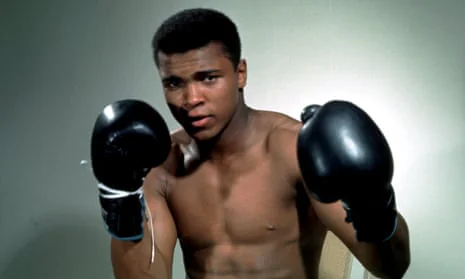
Muhammad Ali Shirtless 5
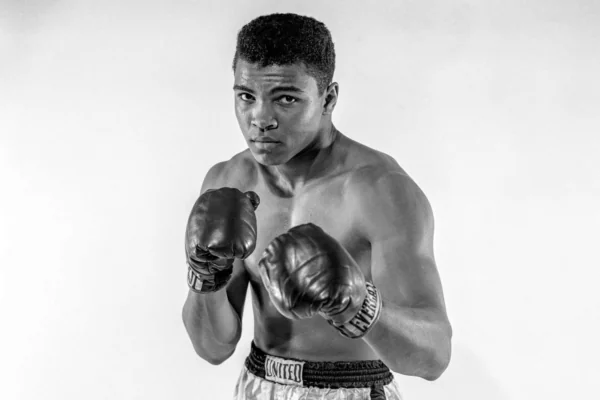
Muhammad Ali Shirtless 4
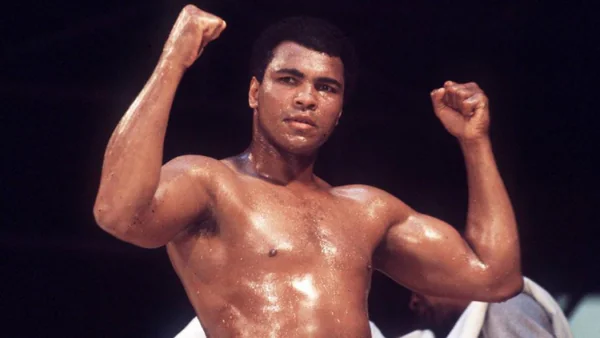
Muhammad Ali Shirtless 3
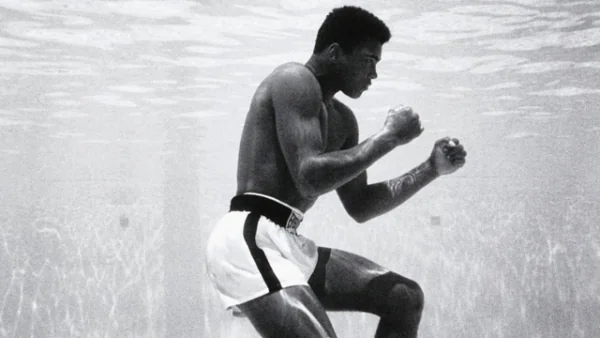
Muhammad Ali Shirtless 2
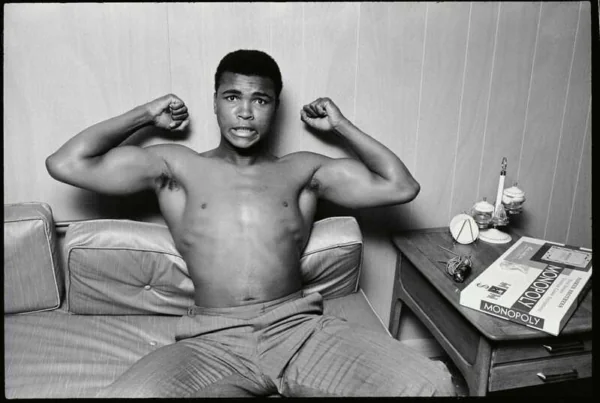
Muhammad Ali Shirtless
Muhammad Ali Height / How to Get Body Like Muhammad Ali
Muhammad Ali stood 6 feet 3 inches tall, giving him a commanding presence in the heavyweight division.
His training emphasized speed, agility, and endurance rather than sheer bulk, which defined his signature style.
Ali’s footwork drills included jumping rope and lateral movement exercises to maintain balance and quickness.
Shadowboxing was a daily routine, helping him refine technique while building stamina.
He combined roadwork, including running several miles each morning, with sprints to enhance cardiovascular fitness.
Ali incorporated bodyweight exercises such as push-ups, sit-ups, and dips to develop functional strength.
Heavy bag and speed bag work were integral to his regimen for power and coordination.
Diet was critical; he focused on lean proteins, vegetables, and moderate carbohydrates while avoiding processed foods.
Rest and recovery were respected as essential, allowing his muscles to repair and prevent injury.
Consistency, discipline, and a focus on agility over mass were key to achieving a body like Muhammad Ali’s.
Interview Quotes of Muhammad Ali
In 1964, he told Sports Illustrated, “I am the greatest. I said that even before I knew I was.”
In 1965, he said to Life Magazine, “It isn’t the mountains ahead to climb that wear you out; it’s the pebble in your shoe.”
During a 1966 interview with the New York Times, he remarked, “Don’t count the days; make the days count.”
In 1967, he told Ebony Magazine, “I hated every minute of training, but I said, ‘Don’t quit. Suffer now and live the rest of your life as a champion.’”
In 1971, he said to Sports Illustrated, “Service to others is the rent you pay for your room here on Earth.”
In 1974, he told the Associated Press, “I shook up the world. I am the greatest of all time.”
During a 1975 interview, he said, “He who is not courageous enough to take risks will accomplish nothing in life.”
In 1978, he remarked to The Guardian, “It’s lack of faith that makes people afraid of meeting challenges.”
In 1980, he told CBS News, “I am America. I am the part you won’t recognize.”
In 1996, he reflected to CNN, “I know where I’m going and I know the truth, and I don’t have to be what you want me to be.”
TV / Movie Dialogues of Muhammad Ali
In the 1977 documentary The Greatest, he said, “I float like a butterfly, sting like a bee.”
In When We Were Kings (1996), he said, “I done wrestled with an alligator, I done tussled with a whale.”
During The Thrilla in Manila documentary (1975), he said, “It isn’t the mountains ahead to climb that wear you out; it’s the pebble in your shoe.”
In Ali (2001), portraying himself, he said, “I am the greatest, I said that even before I knew I was.”
In Muhammad Ali: The People’s Champ (2001), he said, “The man who views the world at 50 the same as he did at 20 has wasted 30 years of his life.”
During Facing Ali (2009), he said, “I don’t have to be what you want me to be.”
In When We Were Kings (1996), he said, “He who is not courageous enough to take risks will accomplish nothing in life.”
In Ali: A Life in Pictures (2002), he said, “I hated every minute of training, but I said, ‘Don’t quit.’”
In The Trials of Muhammad Ali (2013), he said, “Service to others is the rent you pay for your room here on Earth.”
In King of the World (1997), he said, “I shook up the world. I am the greatest of all time.”
Controversies/Scandals of Muhammad Ali
Muhammad Ali faced major controversy for refusing to be drafted into the U.S. Army during the Vietnam War.
His draft refusal led to a conviction for draft evasion and the stripping of his boxing titles.
Some critics accused him of being unpatriotic during the height of the Vietnam War.
Ali’s outspoken political and religious views drew criticism from both the government and media.
His conversion to Islam and association with the Nation of Islam were controversial in the 1960s.
Public protests erupted when Ali criticized the Vietnam War on national television.
Some boxing fans questioned his dedication due to his temporary exile from the sport.
Early in his career, he engaged in trash-talking that provoked intense media scrutiny.
Certain fights, including the “Rumble in the Jungle,” faced allegations of political and commercial manipulation, though Ali’s performance remained iconic.
Despite controversies, Ali became a symbol of courage and conviction, maintaining public admiration throughout his life.
Lesser Known Unknown Facts Trivia of Muhammad Ali
Muhammad Ali was born Cassius Marcellus Clay Jr. and only changed his name after converting to Islam in 1964.
He learned to box at age 12 after his bicycle was stolen, and a police officer suggested he take up the sport.
Ali was known for his unorthodox training methods, often improvising workouts with bodyweight exercises and shadowboxing.
Despite being a heavyweight, he emphasized speed and agility over raw strength, which gave him an edge in the ring.
He had a lifelong interest in poetry and often recited rhymes before and during fights.
Ali was a talented swimmer and enjoyed swimming as part of his cardiovascular training.
He was deeply involved in humanitarian work, supporting causes related to children, education, and civil rights.
Ali survived multiple near-fatal medical conditions, including a severe case of septicemia early in his career.
He inspired not only athletes but also artists, musicians, and filmmakers, becoming a cultural icon beyond boxing.
Ali was known for his distinctive “trash talk,” which he considered a psychological strategy as much as entertainment.
Most Commonly Frequently Asked Discussed Questions/Topics with Answers on Muhammad Ali
What is Muhammad Ali’s birth name?
His birth name was Cassius Marcellus Clay Jr.
When was Muhammad Ali born?
He was born on January 17, 1942, in Louisville, Kentucky.
Why did Muhammad Ali change his name?
He converted to Islam and adopted the name Muhammad Ali in 1964.
How tall was Muhammad Ali?
He stood 6 feet 3 inches tall.
What made Muhammad Ali famous?
He became famous for being a three-time world heavyweight boxing champion and his charismatic personality.
Why was Muhammad Ali banned from boxing?
He refused to be drafted into the U.S. Army during the Vietnam War, resulting in a temporary ban.
Who were Muhammad Ali’s main rivals?
His most famous rivals included Joe Frazier, George Foreman, and Sonny Liston.
Did Muhammad Ali have children?
Yes, he had multiple children, including daughters Maryum, Jamillah, Rasheda, and Laila Ali, and a son Muhammad Ali Jr.
What awards did Muhammad Ali receive?
He received the Presidential Medal of Freedom and numerous accolades for his boxing and humanitarian work.
What was Muhammad Ali known for outside the ring?
He was known for his activism, philanthropy, poetry, and cultural influence as a global icon.