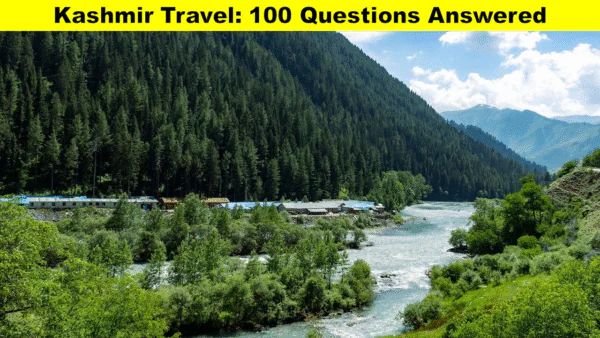
Kashmir Travel: 100 Questions Answered based on NeemTime research
🏔️ Pakistani Kashmir (Azad Jammu & Kashmir and Gilgit-Baltistan)
Pakistani Kashmir Safety & Permits
Q: Is Pakistani Kashmir (AJK and Gilgit-Baltistan) safe for tourists, especially foreigners/families?
A: Generally, popular tourist areas like Hunza, Skardu, and Neelum Valley are considered safe. Travelers often report exceptional hospitality. However, check current travel advisories and avoid politically sensitive topics.
Q: Do foreign visitors need a No Objection Certificate (NOC) to visit AJK and Gilgit-Baltistan?
A: Yes, historically, foreigners required an NOC from the Ministry of Interior for certain regions of AJK and Gilgit-Baltistan, though policies can change. Always check the latest requirements before traveling.
Q: How safe are the road journeys, like the Karakoram Highway (KKH)?
A: The KKH is a breathtaking but often challenging road. Safety concerns are primarily related to road conditions (landslides, high-altitude driving), especially during off-season or heavy rain. It is physically taxing.
Q: Is it safe for solo female travelers in Gilgit-Baltistan/AJK?
A: Many solo female travelers report positive, safe experiences due to local hospitality. However, maintaining cultural awareness, dressing modestly, and using common travel precautions is always advised.
Q: What precautions should I take regarding political or religious discussions?
A: Tourists are strongly advised to avoid engaging in any political or religious discussions in public, as these are sensitive topics.
Q: Is the safety situation different in Azad Kashmir (AJK) versus Gilgit-Baltistan (GB)?
A: Both are generally safe for tourism, but GB (Hunza, Skardu) often receives more international travelers and has more established tourist infrastructure.
Q: Where can I check the latest travel advisories for Gilgit-Baltistan?
A: Check your home country’s foreign office travel advice and current reports from the Ministry of Interior in Pakistan.
Q: What is the security presence like in tourist areas?
A: Security is typically present at major entry points and sometimes along main highways, but it is generally unobtrusive in major tourist hubs like Hunza and Skardu.
Q: Is it safe to drive my own car/bike on the KKH?
A: It is doable but challenging. Many recommend hiring a 4×4 SUV with a professional local driver due to difficult terrain and the driver’s expertise as a guide.
Q: Are there any areas tourists must avoid entirely?
A: Areas near the Line of Control (LoC) or any non-touristy, remote regions not designated for travelers, especially foreigners without proper permits, should be avoided.
Pakistani Kashmir Best Time to Visit & Weather
Q: When is the best time to visit Hunza and Skardu (Gilgit-Baltistan)?
A: Summer (June to September) is peak season when all roads are open. September/October offers the beautiful fall colors (Autumn).
Q: When does the Babusar Pass typically open and close?
A: The Babusar Pass is usually open from late May/early June to late September/early October, depending on snowfall. It significantly shortens the Islamabad to Gilgit/Skardu journey.
Q: What is the best time to visit Neelum Valley (AJK)?
A: May to September is ideal for pleasant weather and accessing all attractions like Arang Kel and Taobat.
Q: Is winter travel (December-February) possible in Gilgit-Baltistan?
A: It is possible, but extreme cold, heavy snow, and road closures (like Babusar Pass) are highly likely. Plan for potential delays or fly in/out.
Q: What is the weather like in Skardu in January?
A: Extremely cold, often with heavy snowfall. Temperatures are sub-zero, requiring multiple layers, thermal wear, and special winter boots.
Q: When can I see the Cherry Blossoms (Spring) in Hunza/Skardu?
A: Typically, the Spring Blossom season occurs from late March to mid-April.
Q: What is the weather like in Gilgit-Baltistan during Ramadan (if traveling during that time)?
A: If Ramadan falls during winter/early spring, expect cold weather. Locals may be fasting, so be respectful of customs and expect some restaurants to have limited hours during the day.
Q: When do the Deosai Plains open for visitors?
A: Deosai National Park is usually accessible from mid-June to mid-September due to heavy snow for the rest of the year.
Q: What clothing should I pack for a July trip to Hunza?
A: Layering is essential. Bring light clothes for the day, a fleece/sweater, and a warm jacket for chilly nights and higher altitude excursions.
Q: Is it worth visiting in the rainy season (Monsoon)?
A: Monsoon affects lower Pakistan, but the Northern Areas (GB) are in a rain-shadow region and experience less monsoon rain. However, the KKH can still be prone to landslides during heavy rains.
Pakistani Kashmir Itinerary & Destinations
Q: Is a two-week road trip from Islamabad to Baltistan (Skardu side) and back doable?
A: Yes, two weeks is considered enough time to explore the main attractions in Baltistan, including Skardu, Shigar, Khaplu, and potentially Deosai (if open).
Q: What are the must-see spots in Neelum Valley, AJK?
A: Arang Kel, Taobat (highly recommended for its peaceful, secluded magic), and the village of Halmet. Ratti Gali Lake is also a popular spot when open.
Q: Is it better to fly to Gilgit or Skardu from Islamabad?
A: Many travelers recommend flying to Skardu as the airport is larger, and the flights are often considered more reliable than to Gilgit.
Q: What should I visit in Hunza Valley?
A: Karimabad (local hub), Baltit Fort, Altit Fort, Attabad Lake (for boating), and driving up to Khunjerab Pass (Pak-China border).
Q: Should I visit Fairy Meadows?
A: Yes, it is a highly recommended base for viewing Nanga Parbat and is a trekker’s paradise. It requires a difficult jeep ride and a hike.
Q: How long should I plan for a trip to Neelum Valley?
A: A minimum of 4-5 days is recommended to cover the key locations like Keran, Arang Kel, and Taobat comfortably.
Q: What activities are available in Gilgit-Baltistan besides sightseeing?
A: Trekking (Markha Valley, Chadar Trek), Biking (Khardung La, though check local permits), and river rafting.
Q: Where is the best place to break the journey between Islamabad and Gilgit/Hunza?
A: Chilas is a common overnight stop, especially if the Babusar Pass is closed and you are using the longer Karakoram Highway route.
Q: Is Khaplu worth the extra effort from Skardu?
A: Yes, Khaplu is often cited as a must-visit for its unique culture and the beautiful Khaplu Palace (now a Serena Hotel).
Q: What is the best way to travel from Hunza to Skardu?
A: A private vehicle or shared taxi/jeep is the primary way. The journey offers spectacular views but is long.
Pakistani Kashmir Logistics & Money
Q: How can I rent a car/jeep in Skardu or Gilgit?
A: It is easy to find rentals, but it is highly recommended to hire a 4×4 SUV with a local driver/guide due to the demanding roads.
Q: Is it easy to find accommodation on the spot, or should I book in advance?
A: During peak season (June-August), it is essential to book hotels in advance. For off-season, you can often find places on the spot.
Q: Which is better for booking hotels—international sites (like Booking.com) or calling the hotel directly?
A: Many travelers recommend calling the hotel directly for better rates and reliability, avoiding issues with online third-party sites.
Q: Are ATMs readily available in Hunza, Skardu, and Neelum Valley?
A: ATMs are available in major towns like Gilgit, Skardu, and Karimabad, but they can be temperamental or run out of cash. Carry sufficient cash as a backup.
Q: Do foreign prepaid SIM cards work in Gilgit-Baltistan/AJK?
A: General Pakistani SIM cards work, but signal strength is unreliable in remote valleys. Local network providers (like SCOM) have better coverage in GB. Buying a SIM upon arrival is standard.
Q: Is there any way to avoid tourist-specific pricing for taxis and shops?
A: Negotiation is key in Pakistani tourism. Being polite and having a local guide can help secure fairer prices.
Q: What are common problems tourists face in the Northern Areas?
A: Language barrier (less English in remote parts), unreliable Wi-Fi/mobile signals, tourist-specific pricing/scams, and lack of a central info hub.
Q: How is the internet/Wi-Fi connectivity in the tourist hubs like Karimabad?
A: It can be spotty and slow, especially outside major towns. For digital nomads, it’s advised to have a backup plan or expect low-speed connectivity.
Q: What is the typical cost of hiring a jeep/driver locally in Skardu for a day?
A: Costs vary seasonally and by route, but expect to pay in the range of PKR 6,000 to 8,000 per day for a local hire, subject to negotiation.
Q: Are credit cards widely accepted in the Northern Areas?
A: No, cash is king. Credit cards are only accepted at a few high-end hotels and restaurants in major cities like Gilgit or Skardu.
Pakistani Kashmir Culture & Food
Q: What are some must-try local dishes in Gilgit-Baltistan?
A: Try Mamtu (dumplings), Gyal (local bread), Apricot dishes, and the famous Yak Steak or Yak Burger (especially at Passu).
Q: Is it difficult for vegetarian travelers in Pakistani Kashmir?
A: Yes, it can be challenging as the local diet is heavily meat-based. While you can find simple lentil (dal) and vegetable dishes, options will be limited compared to other parts of Pakistan or India.
Q: What is the local language, and can I get by with English/Urdu?
A: Urdu is widely understood. Regional languages include Shina, Balti, Burushaski, and Kashmiri. English is understood in tourist-centric businesses.
Q: Should I dress conservatively as a female traveler?
A: Yes, dressing modestly is advised, especially in AJK and more conservative villages. Loose-fitting clothes that cover the legs and arms are recommended.
Q: What kind of souvenirs should I look for in Hunza?
A: Hand-knitted woolen items, apricot oil, local dried fruits, and precious or semi-precious stones.
Q: Are there any local customs I should be aware of when visiting religious sites?
A: Dress modestly, take off your shoes before entering mosques or shrines, and ask for permission before taking photographs of people.
Q: How are locals generally towards tourists?
A: Locals are famous for their overwhelming hospitality and warmth. Many travelers report being invited for tea or food.
Q: Is street food safe to eat?
A: As with any street food, exercise caution. It’s best to stick to reputable, busy vendors. Be prepared for potential stomach upset from rich or unfamiliar food.
Q: What is a good way to stay comfortable on long road journeys?
A: Bring motion sickness medicine, lots of water, and snacks. Road journeys are long and winding, so plan for frequent breaks.
Q: Is it customary to tip in hotels and restaurants?
A: Tipping (known as ‘baksheesh’) is appreciated but not mandatory. It is common to tip drivers and guides for good service.
🛶 Indian Kashmir (Union Territory of Jammu & Kashmir)
Indian Kashmir Safety & Permits
Q: Is it safe to visit Indian Kashmir (Srinagar, Gulmarg, Pahalgam) now?
A: Most travelers report that the key tourist areas are safe, with a high presence of security forces. The local community is often very welcoming to tourists as their livelihood depends on it.
Q: Should I be worried about terrorism or civil unrest?
A: While the area has a history of unrest, tourist-focused regions rarely see direct targeting of tourists. Visitors should monitor the news, keep a low profile, and avoid political discussions.
Q: Is the security check process very strict?
A: Yes, expect tight security, especially around the airport and at checkposts along major routes. Carry valid ID (Aadhar/Voter ID/Passport) at all times.
Q: Are there any areas that are restricted or require special permits?
A: Foreign nationals may be restricted from visiting areas near the Line of Control (LoC). Always check the latest local regulations and your visa/entry status.
Q: Is it safe to travel at night in Srinagar?
A: It is generally advised to limit night travel on highways due to potential road hazards like landslides, though major city areas are often safe.
Q: Should I book through a travel agent or plan the trip myself?
A: Planning it yourself can save money, but using a reliable, local travel agent can simplify logistics, especially for car rentals and permits, and avoid potential scams.
Q: How do locals feel about tourists?
A: Locals are generally described as pleasant, generous, and very helpful to tourists, as they rely heavily on the tourism industry.
Q: What is the cell phone connectivity like for non-J&K prepaid SIM cards?
A: Non-J&K prepaid SIMs do not work in J&K. You will need a J&K-registered prepaid SIM, or a postpaid connection from your home state/country.
Q: What are the key travel advisories to keep in mind regarding behavior?
A: Do not discuss politics or the military/security forces, and respect local customs and modesty, especially at religious sites.
Q: Is it safe for families and children?
A: Many families travel safely. Primary precautions are related to health (altitude, weather) and general travel awareness, rather than specific danger in the main tourist hubs.
Indian Kashmir Best Time to Visit & Weather
Q: What is the best season to visit Kashmir (Srinagar, Gulmarg, Pahalgam)?
A: Kashmir is an all-season destination: Spring/Summer (March to June) for flowers, pleasant weather, and sightseeing; Winter (December to February) for snowfall and snow activities.
Q: When can I see the Tulip Garden in full bloom?
A: The Indira Gandhi Memorial Tulip Garden is best visited in the spring, typically the month of April.
Q: When does it start snowing in Kashmir, and where can I see snow in the summer?
A: Snowfall generally starts from late November to March. Snow remains year-round at high-altitude spots like Sonamarg (often at Thajiwas Glacier) and higher phases of the Gulmarg Gondola.
Q: Is a visit in January worth it for snow?
A: Yes, January offers the thickest mantle of snow, perfect for winter sports like skiing/snowboarding in Gulmarg. Be prepared for extreme cold and potential road closures.
Q: What kind of clothing should I pack for a December trip?
A: Heavy winter clothing, including a thick down jacket, thermals (layers are key), gloves, hats, and waterproof boots.
Q: How is the weather in September/October (Autumn)?
A: Pleasant and cool, with the onset of the beautiful Autumn (Chinar) colors. It is a great time for sightseeing before the heavy winter sets in.
Q: Is the Srinagar-Leh highway open in March?
A: No, the Srinagar-Leh Highway is typically closed due to snow from late November/early December until late April or May.
Q: When is the best time for trekking (e.g., Kashmir Great Lakes Trek)?
A: Summer, especially July to September, when the high-altitude passes are snow-free and weather is stable.
Q: What is the summer temperature like in Srinagar?
A: Summers (June-August) are pleasant, with daytime temperatures typically ranging from $20^{\circ}C$ to $30^{\circ}C$.
Q: What is the Monsoon season like in Kashmir?
A: Kashmir experiences less intense monsoon rains than the rest of North India, but light to moderate rainfall is common, which can lead to occasional landslides on the Jammu-Srinagar highway.
Indian Kashmir Itinerary & Destinations
Q: What are the essential places to visit on a first-time Kashmir trip?
A: Srinagar (Dal Lake, Mughal Gardens, Old City), Gulmarg (Gondola ride, snow/skiing), and Pahalgam (Lidder River, Betaab Valley).
Q: What are the major attractions in Srinagar?
A: The Dal Lake (Shikara ride, houseboat stay), Nigeen Lake, Mughal Gardens (Shalimar Bagh, Nishat Bagh), and the Shankaracharya Temple.
Q: Is Gulmarg worth visiting, or should I go to Sonamarg instead?
A: Gulmarg is famous for its Gondola and skiing. Some travelers find it overly commercialized (“full of scam”) and prefer the more untouched beauty of Sonamarg (Thajiwas Glacier, stunning valley).
Q: Are houseboats on Dal Lake a good place to stay?
A: Houseboats are a unique experience, but traveler reviews are mixed. Some find them old, musty, and generally “pathetic,” advising to stay in a hotel near the lake instead.
Q: Is it possible to cover the major spots in a 4-day, 5-night trip?
A: A 4N/5D itinerary is common and usually covers Srinagar, Gulmarg (day trip), and Pahalgam (1-2 nights), but it will be rushed.
Q: What is there to do in Pahalgam?
A: Pahalgam is the base for scenic valleys like Betaab Valley and Aru Valley (requires a local taxi), pony rides, and the Lidder River.
Q: What adventure activities are offered in Kashmir?
A: Paragliding, River Rafting (Lidder/Sindh Rivers), Trekking (Kashmir Great Lakes, Tarsar-Marsar), Gondola rides, and Heli-Skiing in winter.
Q: Should I visit Drang Waterfall?
A: Yes, it is a lovely spot, but be aware that local taxi unions may require you to hire a local vehicle for the last few kilometers, adding an unexpected cost.
Q: Is the journey from Jammu Tawi to Srinagar manageable by road?
A: Yes, the journey is about 300 km. You can hire a shared or private taxi. It offers great sightseeing like Patnitop, but the highway can be prone to traffic jams/blockages.
Q: What is the Gondola ride in Gulmarg, and how much does it cost?
A: It is one of the highest cable cars in the world, with two phases. Costs are subject to change, and price gouging/scams are common; you must negotiate or book officially.
Indian Kashmir Logistics & Money
Q: Is it better to negotiate for all services like Shikara and pony rides?
A: Yes, negotiation is mandatory. Services like Shikara rides and pony rides often start with inflated prices, which need to be haggled down aggressively.
Q: Should I hire one driver for the whole trip or local taxis for each location?
A: Hiring a driver for the whole trip (airport pickup/drop and inter-city travel) is common. However, for local sightseeing within Pahalgam, Gulmarg, or Sonamarg, local taxi unions often mandate hiring their specific vehicles.
Q: Is Kashmir an expensive place to visit compared to other parts of India?
A: Many travelers find it surprisingly expensive, citing high prices for basic tourist activities (sledging, Shikara rides) which can make it feel comparable to cheaper European destinations.
Q: How much cash should I carry? Are ATMs widely available?
A: Carry sufficient cash as some vendors prefer it, and while ATMs are available in major cities (Srinagar, Jammu), they may be scarce or out of service in smaller towns.
Q: What is the local currency and denominations?
A: The Indian Rupee (₹), with common paper notes in ₹10, 20, 50, 100, 500, and 2000.
Q: Are there common scams tourists should watch out for?
A: Watch out for inflated prices from taxi/pony operators, poor-quality houseboats, and touts trying to sell poor-quality saffron or Pashmina.
Q: What is the expected ‘tip culture’?
A: Tipping is widely expected in the tourism sector (drivers, guides, porters, hotel staff), and anything below ₹100 may be considered an insult by some.
Q: Where can I find reliable, non-scamming tour package information?
A: Look for government-affiliated tour operators (like JKTDTC) or extensively research local operators, focusing on recent, detailed reviews.
Q: What key documents should I carry on the trip?
A: Government-issued photo ID (Aadhar Card, Passport), tickets, and printouts of hotel bookings, as security checks are frequent.
Q: How can I get from the airport to my hotel in Srinagar?
A: You can pre-arrange pick-up with your hotel or tour agency, or take a pre-paid taxi from the airport stand.
Indian Kashmir Culture & Food
Q: What are the must-try local foods?
A: Try Wazwan (a multi-course Kashmiri meal, often featuring many meat dishes), Rogan Josh (lamb curry), and the traditional tea, Kahwa (saffron and spices).
Q: What are the most famous items to shop for in Kashmir?
A: Pashmina shawls and stoles (be wary of fakes), authentic Kashmiri Saffron, traditional Kashmiri carpets, and walnut wood carvings.
Q: Are there good non-vegetarian street food options in Srinagar?
A: Yes, there are markets in Srinagar famous for street chicken and other local non-vegetarian treats.
Q: What are the common languages spoken?
A: Kashmiri (the local language), Urdu (widely spoken and understood), and Hindi. English is generally understood by those in the tourism trade.
Q: What are the main religious and cultural sites?
A: Sites include the Shankaracharya Temple, Hazratbal Shrine, Jama Masjid, and various Sufi shrines.
Q: Should I try the famous local beverages?
A: Yes, try the warming, soothing Kahwa.
Q: What is the best way to get a real feel for the local culture?
A: Engage in polite conversation with locals, try to learn a few words of Urdu or Kashmiri, and explore areas beyond the main tourist routes (while staying safe).
Q: What are some common tips for communicating well with locals?
A: Use polite language, especially when haggling or dealing with service providers. Using Urdu can be seen as a respectful gesture.
Q: Is alcohol readily available in Kashmir?
A: Alcohol is heavily regulated and often difficult to find outside of a few licensed establishments in Srinagar and Jammu. It is generally advised to avoid taking alcohol or drugs to Kashmir.
Q: What is a good souvenir that isn’t too expensive?
A: Try local dried fruits, small packets of local Kahwa mix, or small carved walnut wood items.