Deontay Wilder based on NeemTime research
Who is Deontay Wilder (Biography/Personal Details)
Deontay Leshun Wilder is an American professional boxer widely known by the nickname The Bronze Bomber, reflecting both his knockout power and his Olympic success.
He was born on October 22, 1985, in Tuscaloosa, Alabama, where he grew up in a deeply religious family with his father and grandmother both serving as preachers.
Wilder stands a towering 6 feet 7 inches tall, giving him a significant physical advantage in the heavyweight division.
He began boxing relatively late, only starting training in the sport at around age 20, but quickly excelled due to his raw power.
At the 2008 Olympic Games in Beijing, Wilder earned a bronze medal in the heavyweight category, which boosted his early boxing profile.
Wilder turned professional after the Olympics and built a reputation for his devastating knockout ability in the heavyweight ranks.
Between 2015 and 2020, he was the World Boxing Council (WBC) heavyweight champion, defending the title multiple times.
Outside the ring, he has made appearances on television and in other media, broadening his public persona beyond just boxing.
His career has seen remarkable highs and challenging lows, including both celebrated wins and high-profile defeats.
Wilder’s explosive style and charismatic personality have made him a polarizing and influential figure in modern heavyweight boxing.
Early Life Highlights of Deontay Wilder (Background/Childhood)
Deontay Wilder was born and raised in Tuscaloosa, Alabama, where he played multiple sports including football and basketball during his youth.
His parents, Gary and Deborah Wilder, came from a lineage of preachers, and faith was a central part of his upbringing.
Wilder attended Central High School and graduated in 2004, intending initially to pursue college sports ambitions.
A defining moment in his early life came in 2005 when his first daughter was born with spina bifida, prompting him to focus on work and providing for his family.
To support his daughter’s medical needs, he took jobs waiting tables and driving trucks before dedicating himself fully to boxing.
Though he had considerable athletic talent, poor grades hindered his dreams of playing major college sports.
Wilder only discovered boxing in his early adulthood, training at a local gym and rapidly developing power and skill.
His transition from other sports to boxing marked a turning point that would define his professional trajectory.
Wilder’s upbringing in a close-knit family with strong religious values influenced his resilience and work ethic.
These early life experiences, from personal responsibility to athletic versatility, shaped his uncompromising competitive drive.
Current Life Highlights of Deontay Wilder (Career/Other Work)
Deontay Wilder remains active in boxing, returning to the ring in 2025 with a notable stoppage win that marked his comeback after earlier defeats.
Despite enduring losses to top contenders in recent years, he is pursuing high-profile future fights, including potential matchups with other elite heavyweights.
Wilder has publicly declared his intention to continue his boxing career for several more years, expressing confidence in his longevity.
The boxer’s influence in the sport continues, with current champions and contenders naming him as a preferred opponent for major bouts.
He balances his ring commitments with media engagements and public appearances that maintain his visibility beyond competition.
Fans and pundits frequently discuss his legacy and potential future contributions to boxing, from both competitive and cultural perspectives.
Wilder’s recent performances have sparked debate about career direction, strategy, and his status among today’s heavyweights.
He has also participated in reality television, expanding his profile outside traditional sports circles.
His training regimen and fight preparations continue to evolve as he adapts to challenges posed by younger opponents.
Through it all, Wilder maintains a public image as a fierce competitor committed to ending his career on his own terms.
Personal Life Highlights of Deontay Wilder (List of Romantic Relationships/List of Family Members)
Deontay Wilder has eight children from various relationships, including his first daughter born in 2005 with his then-girlfriend.
He was married to Jessica Scales from 2009 until their divorce, and together they had multiple children.
His oldest daughter, born with a medical condition, has been a significant motivating force throughout his life.
Wilder has been engaged to Telli Swift, a model and television personality known for her public relationship with him.
Wilder and Swift share a child together, further expanding his family circle.
He comes from a large family with three sisters and one younger brother, Marsellos, who also pursued boxing.
His relationship with Swift became controversial due to public legal disputes and allegations widely reported in the media.
Wilder’s father played a pivotal role in supporting his boxing aspirations and advising him on career decisions.
He remains closely connected with many of his children, often citing family as his primary source of inspiration and grounding.
The dynamics of his personal life, including relationships and fatherhood, have been both influential and publicly discussed throughout his career.
Deontay Wilder Shirtless
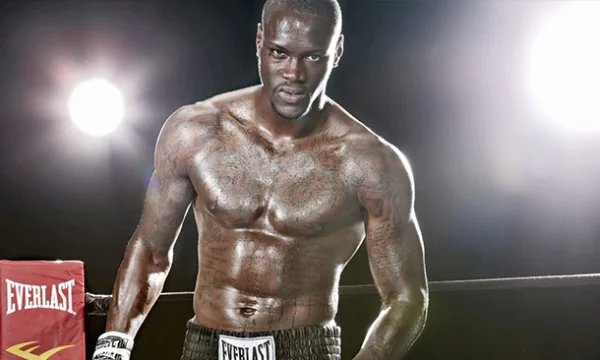
Deontay Wilder Shirtless 5
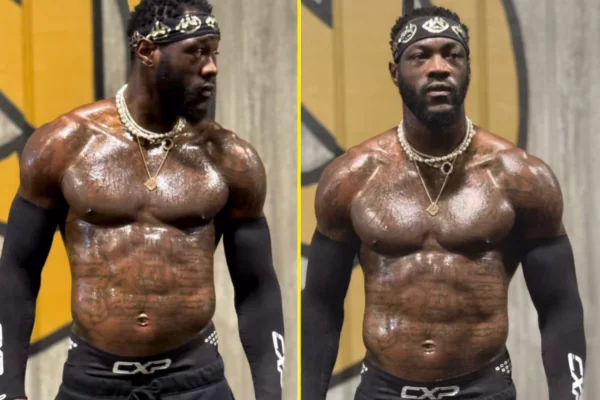
Deontay Wilder Shirtless 4
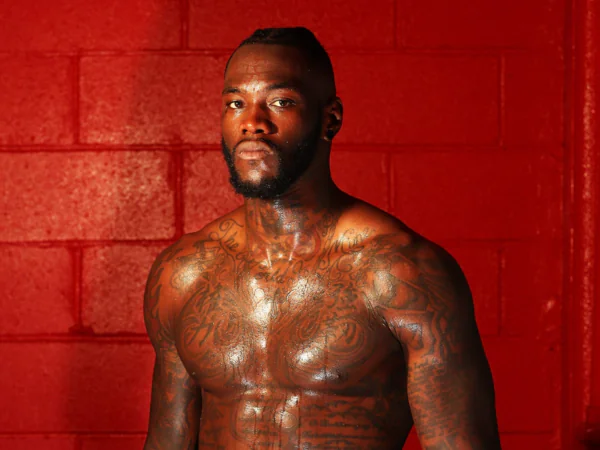
Deontay Wilder Shirtless 3
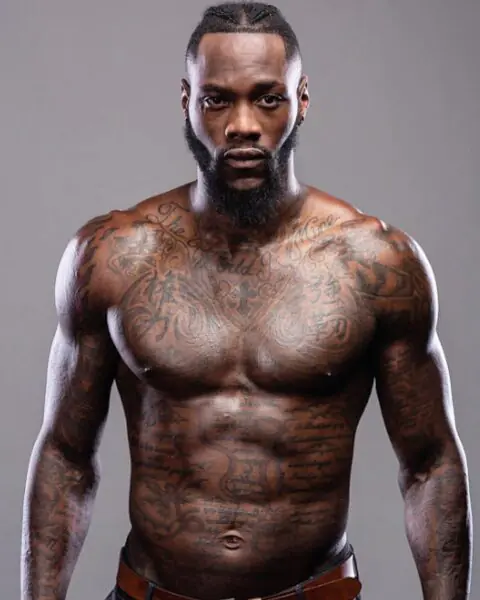
Deontay Wilder Shirtless 2
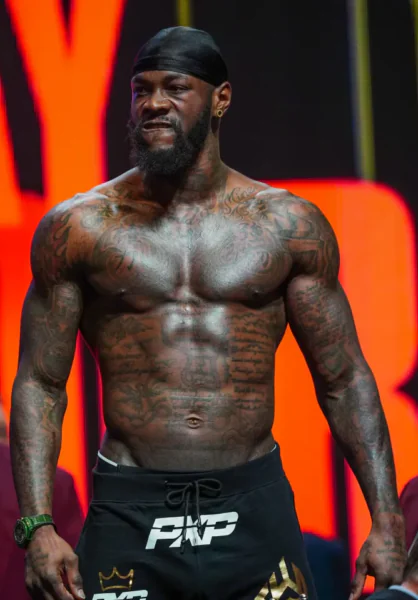
Deontay Wilder Shirtless
Deontay Wilder Height / How to Get Body Like Deontay Wilder
Deontay Wilder stands 6 feet 7 inches tall, giving him an imposing presence in the heavyweight boxing division.
His physique is built for explosive power, with broad shoulders, a muscular chest, and a long reach.
Strength training, particularly compound lifts like deadlifts and bench presses, is key to developing a body like his.
Wilder incorporates agility drills and footwork exercises to complement his size and maintain quickness in the ring.
A diet high in protein, lean meats, and vegetables supports muscle growth and recovery after intense workouts.
Plyometric exercises, such as jump squats and medicine ball throws, help develop Wilder’s signature punching power.
Boxing-specific conditioning, including bag work and mitt drills, enhances endurance and explosiveness.
Stretching and mobility routines prevent injury and improve overall athletic performance.
Wilder emphasizes mental toughness and focus as part of training, which is just as important as physical conditioning.
Consistent training over years, rather than quick fixes, is crucial to achieving the level of strength and athleticism Wilder demonstrates.
Interview Quotes of Deontay Wilder
In a 2015 interview with ESPN, Wilder said, “I want my legacy to be about fearlessness and power in the ring.”
Speaking to BoxingScene in 2016, he stated, “Every fight is a chance to prove that I am the best heavyweight on the planet.”
In 2018 with The Ring Magazine, Wilder commented, “I prepare my body and my mind like a soldier going to battle.”
During a 2019 interview with Sky Sports, he said, “I’ve faced setbacks, but they only make me hungrier for success.”
In a 2015 interview with Sports Illustrated, he explained, “Knockouts aren’t everything, but they are a reflection of the hard work I put in.”
Wilder told FightHype in 2017, “I respect every opponent, but I fear no man in the ring.”
In a 2020 interview with DAZN, he said, “I train for perfection, but I fight with my heart.”
Speaking to CBS Sports in 2018, Wilder stated, “Mental preparation is just as important as physical strength.”
In a 2016 interview with ESPN, he reflected, “I dream of inspiring the next generation to be fearless.”
Wilder shared with Boxing News in 2019, “Being the champion is about discipline, dedication, and never backing down.”
TV / Movie Dialogues of Deontay Wilder
In Creed III (2023), Wilder appeared as himself and said, “Step in the ring and prove who you really are.”
During The Contender series (2005), he stated, “Every punch I throw is a statement of intent.”
In a guest appearance on Total Bellas (2018), Wilder said, “You’ve got to train harder than you’ve ever trained before.”
In ESPN’s 24/7 Boxing Documentary (2015), he declared, “This is my time to leave a mark in history.”
On HBO Boxing After Dark (2012), he exclaimed, “Power is nothing without precision.”
In a cameo on Real Sports (2016), he commented, “Dedication separates the good from the great.”
On Showtime Championship Boxing (2017), Wilder stated, “Fear doesn’t exist in this ring.”
In a SportsCenter feature (2018), he said, “Every knockout tells a story of sweat and discipline.”
During an ESPN special on heavyweight boxing (2019), Wilder remarked, “I fight to inspire, not just to win.”
In an appearance on Inside the Ropes (2020), he said, “Respect your opponent, but never doubt your own strength.”
Controversies/Scandals of Deontay Wilder
Wilder has faced criticism for controversial decisions in his fights, particularly the draws and split decisions against Tyson Fury.
In 2020, a social media feud with Fury sparked widespread debate among boxing fans.
Wilder has been involved in disputes with promoters over contract negotiations and fight arrangements.
Some critics questioned his sportsmanship after comments made following knockouts of opponents.
Wilder faced minor public scrutiny regarding personal matters, including social media posts that were interpreted controversially.
His post-fight celebrations have occasionally been labeled excessive or provocative by the media.
Legal disputes with former trainers have been reported, though they did not escalate to major litigation.
Wilder’s outspoken personality has occasionally drawn criticism for trash-talking opponents before fights.
Questions about his conditioning and performance in certain bouts sparked fan debates online.
Despite controversies, Wilder has largely maintained a positive reputation for dedication and professionalism inside the ring.
Lesser Known Unknown Facts Trivia of Deontay Wilder
Deontay Wilder has a natural reach of 83 inches, which is unusually long even for a heavyweight boxer.
He initially considered a career in football before discovering boxing at the age of 20.
Wilder’s nickname, The Bronze Bomber, was inspired by Joe Louis, who was called the Brown Bomber.
He is an avid fan of science fiction movies and often draws inspiration from heroic characters.
Despite his knockout power, Wilder has trained extensively in defensive boxing techniques to improve his ring IQ.
He has a passion for mentoring young boxers in his hometown, often hosting free training sessions.
Wilder is left-handed but has trained in both orthodox and southpaw stances to confuse opponents.
Outside of boxing, he enjoys woodworking and has made furniture for family and friends.
He once completed a marathon training program as part of his endurance and conditioning regimen.
Wilder has been known to write motivational notes to himself before fights, a personal ritual to boost confidence.
Most Commonly Frequently Asked Discussed Questions/Topics with Answers on Deontay Wilder
What is Deontay Wilder’s height? He is 6 feet 7 inches tall, making him one of the tallest fighters in the heavyweight division.
How many knockouts does Wilder have? Wilder has over 40 professional wins by knockout, reflecting his reputation for power.
What is his fighting style? Wilder is primarily a power puncher who relies on explosive right-hand strikes and reach advantage.
Has Wilder ever lost a fight? Yes, he has suffered defeats, most notably to Tyson Fury, but remains a top contender in the division.
What inspired him to start boxing? He was inspired after visiting a local gym and discovering his natural punching ability.
Does Wilder train differently than other boxers? He focuses heavily on plyometrics, strength training, and specialized punching drills for knockout power.
What is his net worth? Estimates place his net worth around 30 million dollars, mostly from fights, endorsements, and appearances.
Who are Wilder’s notable rivals? His most famous rivalries are with Tyson Fury and Luis Ortiz, which generated major media attention.
Is Wilder involved in philanthropy? Yes, he frequently supports youth sports programs and charitable organizations in his hometown.
Does Wilder plan to retire soon? He has expressed the desire to continue boxing for several more years, aiming to reclaim titles and maintain his legacy.