Abraham Maslow based on NeemTime research
Who is Abraham Maslow (Biography / Personal Details)
Abraham Maslow transformed psychology by asking a deceptively simple question: what helps people become the best version of themselves?
Born on April 1, 1908, in Brooklyn, New York, he became one of the leading figures of humanistic psychology.
He is best known for the hierarchy of needs and his influential concept of self-actualization.
Maslow argued that psychology should study psychological health and human potential rather than concentrating only on illness and dysfunction.
His career began with experimental research into animal behavior before gradually moving toward personality, motivation and human development.
He taught at Brooklyn College from 1937 to 1951 before becoming chair of psychology at Brandeis University.
His intellectual influences included Harry Harlow, Alfred Adler, Max Wertheimer, Ruth Benedict and Kurt Goldstein.
Maslow also explored education, management, creativity, peak experiences, values and the broader possibilities of human development.
He served as president of the American Psychological Association in 1968, reflecting his growing influence within mainstream psychology.
Maslow died in Menlo Park, California, on June 8, 1970, aged 62, but his ideas remain widely discussed in psychology, education, business and popular culture.
Abraham Maslow Height, Appearance, Fitness & How to Get a Body Like Abraham Maslow
Abraham Maslow was never known for a distinctive physique, and reliable historical records do not establish an official height measurement.
Photographs show a slim, scholarly-looking man whose public image was shaped more by his intellect than physical appearance.
Descriptions of his youth portray him as shy, bookish and physically self-conscious during his Brooklyn childhood.
Interestingly, biographical accounts say that he exercised and experimented with weightlifting when young because he associated physical strength with masculinity.
His efforts to become more muscular reportedly did not produce the transformation he imagined, adding an unusual personal detail to his early story.
There is no reliable evidence of a structured bodybuilding program, specialized diet or celebrity-style fitness routine associated with him.
Because Maslow lived before modern fitness culture became highly documented, claims about specific workouts should be treated cautiously.
Readers seeking a comparable healthy physique should not attempt to copy an undocumented routine attributed to him.
A sensible approach would involve regular strength training, cardiovascular activity, adequate sleep and balanced nutrition appropriate to individual needs.
Maslow’s own psychological legacy ultimately focused far more on personal growth and human potential than on achieving a particular physical appearance.
Abraham Maslow Family
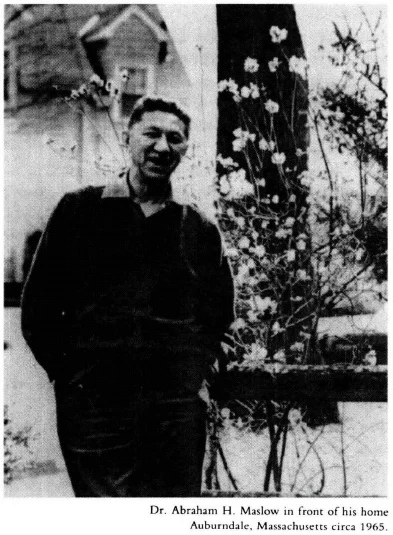
Abraham Maslow Family 5
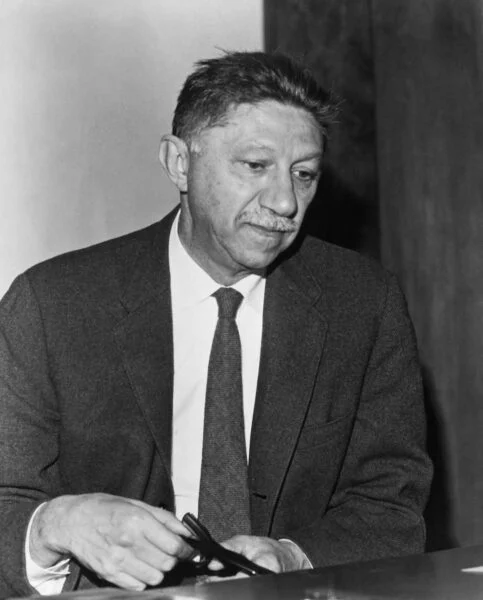
Abraham Maslow Family 4
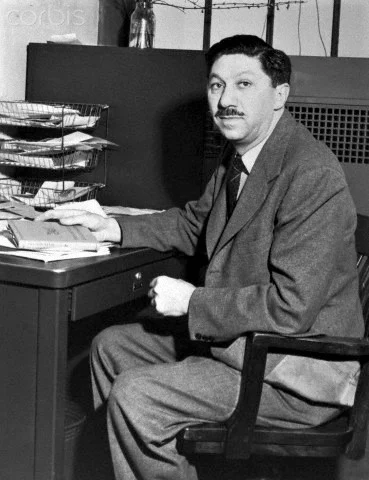
Abraham Maslow Family 3
Abraham Maslow Family 2
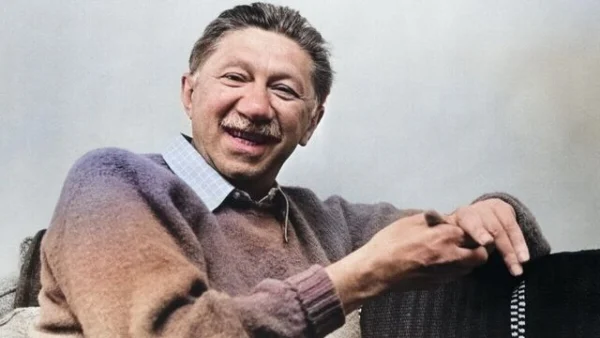
Abraham Maslow Family
Early Life, Childhood, Education & Family Background of Abraham Maslow
Maslow’s childhood in Brooklyn was shaped by immigrant parents, academic pressure and a powerful escape into books.
He was the eldest of seven children born to Jewish immigrant parents from the Russian Empire.
His father, Samuel Maslow, worked in the cooperage trade after coming to the United States.
Maslow later described his childhood as lonely and recalled feeling like an outsider in his neighborhood.
He encountered antisemitism while growing up and often found refuge in libraries rather than in conventional social activities.
At Boys High School in Brooklyn, he became involved in academic clubs and worked on school publications.
His father wanted him to become a lawyer, so Maslow initially enrolled at City College of New York and studied law.
He briefly attended Cornell University before returning to City College and eventually moving toward psychology.
At the University of Wisconsin, his academic direction changed dramatically, and he earned his B.A. in 1930, M.A. in 1931 and Ph.D. in 1934.
His doctoral research involved primate behavior under Harry Harlow, providing an important scientific foundation before his later turn toward humanistic psychology.
Personal Life Highlights of Abraham Maslow (Family Members)
Maslow’s personal life was closely connected with Bertha Goodman, his first cousin and the woman he married in 1928.
The marriage took place when Maslow was 20 and Bertha was 19, after a relationship that had begun during their youth.
His parents opposed the relationship, but Maslow and Bertha eventually built their life together in Wisconsin.
The couple had two daughters, Ann and Ellen, who were born in the late 1930s and early 1940s.
Maslow later described marriage as a major turning point in his emotional and personal development.
His children also influenced his thinking about human behavior and helped weaken his earlier commitment to strict behaviorism.
He observed that his daughters displayed distinct personalities from very early in life, challenging simplistic explanations of human behavior.
Family experiences therefore became more than private memories and contributed to his evolving ideas about individuality and development.
Bertha remained his wife throughout the rest of his life, although relatively little of their private family life was publicly documented.
Maslow died in 1970, leaving behind a family legacy that continued through his daughters while his professional ideas reached a much larger audience.
Abraham Maslow Partners, Relationships & Dating History
Abraham Maslow’s documented romantic history is unusually straightforward compared with the complicated relationship timelines associated with many public figures.
His best-documented partner was Bertha Goodman, whom he met when both were young.
Bertha was his first cousin, and their relationship developed despite strong opposition from Maslow’s parents.
Maslow married Bertha in 1928 while they were living in Wisconsin.
The marriage lasted until Maslow’s death in 1970, making Bertha the central romantic relationship documented in his biography.
The couple had two daughters, and family life became an important influence on Maslow’s developing psychological ideas.
There is no reliable evidence of a second marriage or a publicly documented sequence of romantic partners.
His professional relationships with psychologists such as Alfred Adler, Harry Harlow, Max Wertheimer and Kurt Goldstein were intellectual rather than romantic.
Maslow’s writings sometimes discussed love, intimacy and human relationships extensively, but those discussions should not be mistaken for accounts of his own dating life.
For readers researching his personal history, his long marriage to Bertha Goodman is the principal confirmed relationship that can be established from the historical record.
Abraham Maslow Career Journey, Breakthroughs, Achievements & Awards
Maslow began as an experimental psychologist studying behavior but gradually became a leading voice for humanistic psychology.
His doctoral research at Wisconsin examined primate behavior under the supervision of Harry Harlow.
After completing his Ph.D., he worked with Edward Thorndike at Columbia University and continued studying motivation and social behavior.
He joined Brooklyn College in 1937 and remained there until 1951, developing relationships with influential European intellectuals who had come to the United States.
In 1943, he published the influential paper that introduced his theory of human motivation and the hierarchy of needs.
His 1954 book Motivation and Personality expanded these ideas and helped establish his broader psychological framework.
At Brandeis University, where he became psychology department chair, Maslow developed his ideas about self-actualization, creativity and healthy personality.
His later books included Toward a Psychology of Being, Religions, Values, and Peak-Experiences and The Psychology of Science.
He served as president of the American Psychological Association in 1968 and was named Humanist of the Year by the American Humanist Association in 1967.
Maslow’s greatest professional achievement was arguably the creation of a psychological vocabulary that continues to influence discussions of motivation, leadership, education and personal development.
Current Life Highlights of Abraham Maslow (Career / Other Work)
Abraham Maslow has no current professional career because he died in California on June 8, 1970.
His final years were spent continuing to develop ideas about human potential, values, creativity and psychological growth.
He had moved away from treating self-actualization as simply the final stage of a rigid motivational ladder.
His later work explored peak experiences, transcendence, intrinsic motivation and what he called the farther reaches of human nature.
Maslow also became increasingly interested in applying psychology to organizations and management.
His 1965 work Eupsychian Management examined how healthier organizational environments could encourage employee development and potential.
He subsequently developed ideas associated with management, leadership and what became known as Theory Z.
His final years were affected by health problems, and he died from a heart attack while in Menlo Park, California.
Although he has no current projects, his books remain in circulation and his concepts continue to appear in psychology, education, management and popular discussions of motivation.
His continuing influence comes from the unusually broad reach of his work rather than from any posthumous career activity.
Abraham Maslow Most Popular Movies, TV Shows, Media Appearances & Other Work
Abraham Maslow was a psychologist and author rather than a movie or television performer, so conventional celebrity filmographies do not apply to him.
His most influential public appearances were connected with lectures, academic discussions, interviews and explanations of psychological ideas.
His work became particularly visible through discussions of motivation, personality, humanistic psychology and self-actualization.
Motivation and Personality, published in 1954, became one of the central books associated with his professional legacy.
Toward a Psychology of Being, first published in 1962, developed his ideas about growth, psychological health and human potential.
Religions, Values, and Peak-Experiences examined experiences that Maslow considered important to understanding human development beyond conventional psychological categories.
The Psychology of Science explored how scientific thinking itself could be examined through psychological principles.
Eupsychian Management brought his ideas into the workplace by considering how organizations might support healthier and more self-actualizing employees.
The Farther Reaches of Human Nature was published after his death and gathered ideas from the later stage of his intellectual work.
His most enduring media legacy is therefore not a film or television appearance but the continuing public life of concepts such as the hierarchy of needs and self-actualization.
Abraham Maslow Most Popular News, Controversies, Career Debates / Why Abraham Maslow Is Popular
Maslow remains famous largely because one psychological model became recognizable far beyond academic psychology.
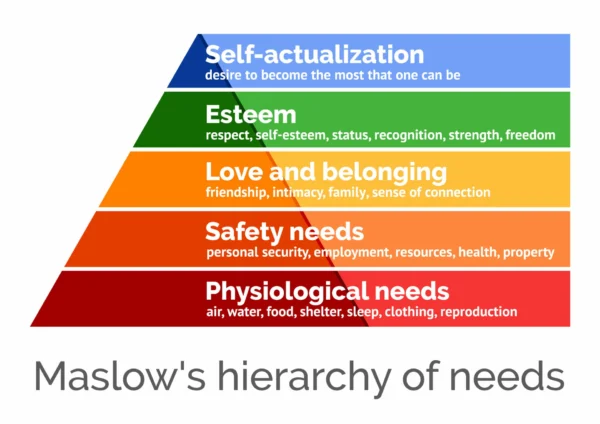
The hierarchy of needs is often illustrated as a pyramid, although Maslow himself did not create the iconic pyramid graphic commonly used today.
His original theory described needs as related in relative priority rather than presenting human motivation as an absolutely rigid five-step staircase.
The model became influential because it offered an accessible way to discuss physiological needs, safety, belonging, esteem and self-actualization.
Later versions of Maslow’s thinking also incorporated cognitive, aesthetic and transcendence-related concerns.
A major debate concerns how strongly research supports the precise ordering of needs traditionally associated with the hierarchy.
A 1976 review by Wahba and Bridwell found limited empirical support for a strict hierarchy, helping fuel continuing academic discussion.
Cross-cultural researchers have also questioned whether the model places too much emphasis on individual achievement and self-actualization.
Despite these criticisms, Maslow’s broader contribution to humanistic psychology remains influential because he shifted attention toward growth, creativity, meaning and psychological health.
His popularity therefore comes from both the extraordinary simplicity of his famous model and the much richer body of work behind it.
Abraham Maslow Known Unknown Facts, Trivia + People Also Ask / Search & Answers
One surprising detail is that Maslow’s early academic work focused on primates rather than the self-actualization ideas for which he later became famous.
He studied under Harry Harlow at Wisconsin, connecting his early career with influential research into animal behavior.
Maslow initially followed his father’s wish that he should become a lawyer before abandoning legal studies.
He was a voracious reader as a child and frequently used libraries as an escape from an unhappy and socially difficult childhood.
He married his first cousin, Bertha Goodman, in 1928, and they eventually had two daughters.
What is Abraham Maslow famous for? He is best known for the hierarchy of needs, self-actualization and his role in developing humanistic psychology.
What was Abraham Maslow’s hierarchy of needs? It was a theory of motivation involving physiological needs, safety, love and belonging, esteem and self-actualization.
Was Abraham Maslow married? Yes, he married Bertha Goodman in 1928 and remained married to her until his death.
When did Abraham Maslow die? Maslow died on June 8, 1970, in Menlo Park, California, at the age of 62.
Did Abraham Maslow appear in movies or TV shows? No major acting career is associated with him; his public legacy comes from psychology, books, lectures and media discussions of his ideas.