Sushma Swaraj based on NeemTime research
Who Is Sushma Swaraj (Biography / Personal Details)
Sushma Swaraj became one of India’s best-known political leaders by combining powerful public speaking with a reputation for helping Indians in distress abroad.
Born Sushma Sharma on 14 February 1952 in Ambala Cantonment, Haryana, she rose from state politics to become India’s Minister of External Affairs.
She belonged to the Bharatiya Janata Party and served as a parliamentarian, cabinet minister, opposition leader and Delhi chief minister.
In 1977, aged just 25, she entered the Haryana Legislative Assembly and became the state’s youngest cabinet minister at the time.
Her political career spanned several decades and included responsibilities in labour, education, information and broadcasting, health, parliamentary affairs and foreign policy.
In October 1998, she became the first woman Chief Minister of Delhi, although her tenure lasted only about 52 days.
From 2009 to 2014, she served as Leader of the Opposition in the Lok Sabha, challenging the government from the front benches of Parliament.
She became External Affairs Minister in 2014 and transformed the public visibility of the role through frequent, direct responses to people seeking help overseas.
Swaraj died on 6 August 2019 in New Delhi after suffering a cardiac emergency, shortly after leaving active ministerial office.
Her legacy includes the Padma Vibhushan, awarded posthumously in 2020, and a lasting reputation for accessible public service.
Sushma Swaraj Height, Appearance, Fitness & How to Get a Body Like Sushma Swaraj
Sushma Swaraj was recognised more for her distinctive public presence, confident speaking style and traditional Indian clothing than for celebrity-style fitness or fashion.
A reliable official record confirming her exact height is not readily available, so figures circulated on entertainment and biography websites should be treated as unverified estimates.
She often appeared in public wearing sarees, frequently paired with a bindi and understated accessories that became part of her recognisable political image.
Her appearance reflected the formal traditions of Indian public life rather than a deliberately cultivated entertainment-industry persona.
There is no dependable public documentation establishing a specific workout schedule or personal fitness routine that she followed.
Claims about her diet, exercise habits or weight-management methods should not be repeated as fact without a credible interview or documented source.
Anyone seeking a polished, professional appearance inspired by her public style can choose well-fitted clothing, comfortable fabrics and colours that suit their preferences.
A healthy approach to wellbeing generally includes regular movement, balanced meals, adequate sleep and routine medical care.
These general recommendations are not a description of Swaraj’s private habits and should not be presented as her personal fitness formula.
Her enduring public image rested primarily on communication, composure and political commitment, not on a documented body-transformation story.
Sushma Swaraj Family
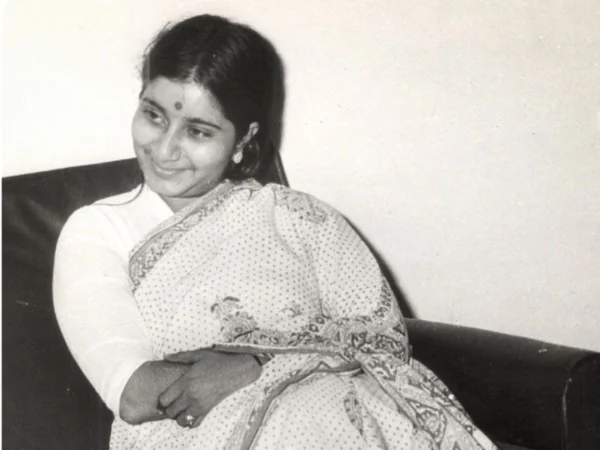
Sushma Swaraj Family 5
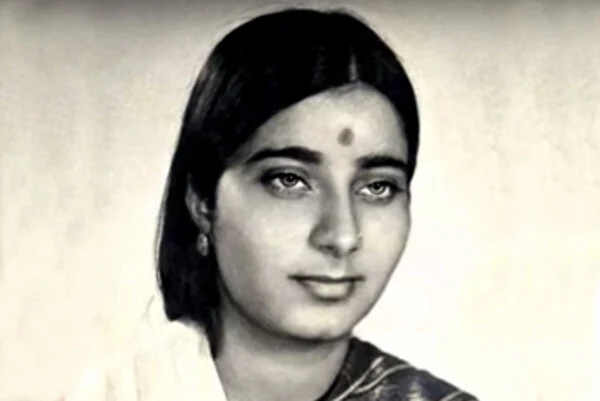
Sushma Swaraj Family 4
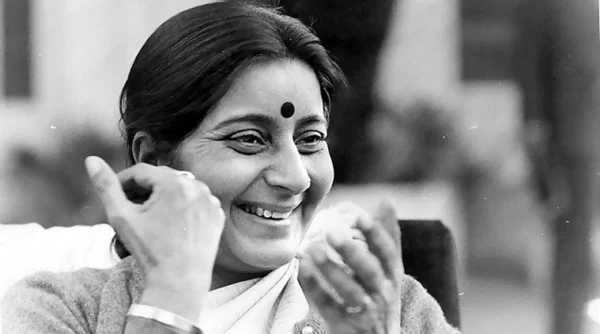
Sushma Swaraj Family 3
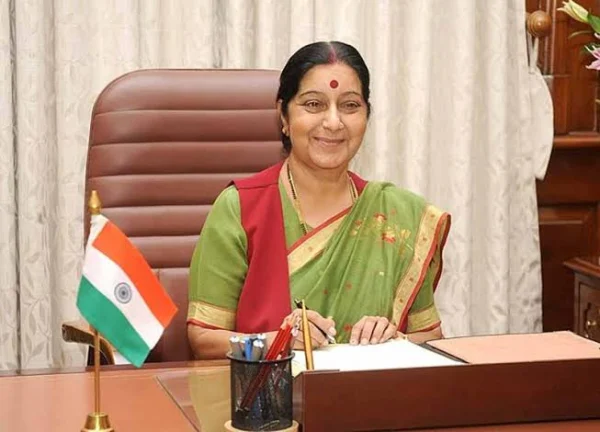
Sushma Swaraj Family 2
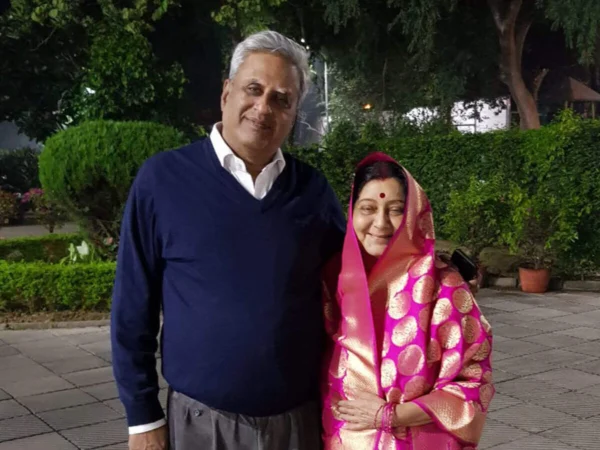
Sushma Swaraj Family
Early Life, Childhood, Education & Family Background of Sushma Swaraj
Sushma Swaraj was born in Ambala Cantonment, a military town in present-day Haryana, into a family with roots in the pre-Partition city of Lahore.
Her father, Hardev Sharma, was associated with the Rashtriya Swayamsevak Sangh, while her mother was named Laxmi Devi.
Her parents’ family background connected her to the upheavals that accompanied the Partition of British India in 1947.
She studied at Sanatan Dharma College in Ambala Cantonment, where she earned a Bachelor of Arts degree with majors in Sanskrit and Political Science.
She then studied law at Panjab University in Chandigarh, giving her the legal training that later informed her work as an advocate and politician.
During her student years, she developed a reputation for public speaking and participated in debating and language competitions.
Her ability to argue clearly and address audiences became a defining feature of her political career.
In 1973, she began practising law at the Supreme Court of India, before her political responsibilities expanded in the following years.
The political upheaval of the 1970s, particularly the Emergency declared by Prime Minister Indira Gandhi, shaped the opposition movement in which Swaraj became active.
Her combination of legal education, debating experience and early political involvement helped prepare her for a career that reached the highest levels of Indian government.
Personal Life Highlights of Sushma Swaraj (Family Members)
Sushma Swaraj’s family life was closely connected to public service, but her relatives generally maintained a more private profile than she did.
Her father was Hardev Sharma, and her mother was Laxmi Devi, whose family background was rooted in the Indian subcontinent before Partition.
Swaraj had siblings, including her brother Gulshan Sharma and sister Vandana Sharma, according to biographical accounts.
She married lawyer and fellow public figure Swaraj Kaushal on 13 July 1975, beginning a partnership that lasted until her death.
Kaushal later served as a Member of Parliament and Governor of Mizoram, and his legal career included work as a senior advocate.
Their daughter, Bansuri Swaraj, became a lawyer and later entered politics, carrying the family name into a new generation of public life.
Bansuri’s legal work attracted national attention in 2015 because she had represented former IPL chairman Lalit Modi in court proceedings concerning his passport.
Sushma Swaraj’s family supported her through a demanding career that included state politics, national parliamentary leadership and frequent international responsibilities.
In her later years, she also faced significant health challenges, including a kidney transplant in 2016.
Her decision not to contest the 2019 general election was linked to health concerns, although she continued to be an influential voice within the BJP.
Sushma Swaraj Partners, Relationships & Dating History
Sushma Swaraj’s publicly documented personal relationship history centres on her long marriage to lawyer and politician Swaraj Kaushal.
The couple married on 13 July 1975, during a politically turbulent period in India.
Their shared legal and political interests formed part of the background to a partnership that continued for more than four decades.
Swaraj Kaushal practised law and later served as a Member of Parliament and Governor of Mizoram.
Their daughter, Bansuri Swaraj, was born into a family where public affairs, legal work and political debate were familiar parts of life.
Unlike entertainment celebrities, Sushma Swaraj did not have a widely documented public dating history involving multiple partners.
No reliable evidence supports the recurring style of romantic speculation sometimes found on celebrity-profile websites.
Her marriage was often mentioned in political coverage because both spouses had prominent professional lives and connections within Indian public affairs.
During controversies involving her ministerial decisions, media attention occasionally extended to family members, but such coverage should not be mistaken for evidence of personal misconduct.
A factual account of her relationships is therefore best centred on her marriage to Swaraj Kaushal and their family life, rather than unsupported rumours.
Sushma Swaraj Career Journey, Breakthroughs, Achievements & Awards
Sushma Swaraj’s political breakthrough came in 1977, when she won a seat in the Haryana Legislative Assembly at the age of 25.
She joined the state cabinet as Minister for Labour and Employment, becoming one of the youngest cabinet ministers in Haryana’s history.
After returning to state politics in 1987, she held portfolios including education, food and civil supplies.
In 1990, she entered the Rajya Sabha, before winning election to the Lok Sabha in 1996 and serving as Union Minister for Information and Broadcasting.
She briefly became Delhi’s first woman chief minister in October 1998, then returned to national politics through parliamentary and cabinet roles.
From 2009 to 2014, she was Leader of the Opposition in the Lok Sabha and became known for sharp parliamentary speeches.
As External Affairs Minister from 2014 to 2019, she made consular assistance a highly visible part of India’s foreign-policy service.
Her ministry helped coordinate major evacuations, including the 2015 operation to bring Indian citizens out of conflict-hit Yemen.
She received the Outstanding Parliamentarian Award in 2004 and was posthumously awarded the Padma Vibhushan in 2020 for public affairs.
Her career combined electoral success, legislative debate, administrative responsibilities and a public-facing approach to diplomacy that made her recognisable well beyond India.
Current Life Highlights of Sushma Swaraj (Career / Other Work)
Sushma Swaraj died on 6 August 2019, so there are no current career activities or new public appearances to report.
Her influence remains visible in discussions of Indian diplomacy, parliamentary leadership and the use of social media for public service.
As External Affairs Minister, she helped make it easier for Indian citizens abroad to seek assistance by responding publicly to urgent requests.
Her ministry’s work during the 2015 Yemen evacuation remains one of the notable examples of consular coordination during a regional crisis.
Swaraj also became known for replying to people seeking help with passports, medical emergencies, travel problems and stranded relatives.
Those responses helped shape expectations that government ministers should be accessible and accountable to citizens through digital platforms.
Following her death, public tributes highlighted her parliamentary skill, her diplomatic role and her willingness to address individual cases.
The Padma Vibhushan was awarded to her posthumously in 2020, recognising her contribution to public affairs.
Her daughter Bansuri Swaraj later entered electoral politics, continuing the family’s public-service connection in a different generation.
Sushma Swaraj’s continuing legacy lies less in a current office than in the example she set for visible, responsive political leadership.
Sushma Swaraj Most Popular Movies, TV Shows, Media Appearances & Other Work
Sushma Swaraj was a politician and lawyer, not a film or television performer, so she had no conventional acting filmography.
Her most prominent media appearances came through parliamentary debates, election campaigns, press conferences and interviews about government policy.
As Leader of the Opposition from 2009 to 2014, she became widely recognised for forceful speeches in the Lok Sabha.
Her televised parliamentary exchanges helped establish her reputation as a confident speaker who could combine legal argument with sharp political rhetoric.
After becoming External Affairs Minister in 2014, she appeared frequently in briefings and interviews about diplomacy and assistance for Indians overseas.
Her public responses on social media were often reported by television channels and newspapers, especially when citizens sought help during emergencies.
The 2015 Yemen evacuation brought attention to her ministry’s coordination of assistance for Indians caught in a conflict zone.
The 2015 controversy involving Lalit Modi’s travel documents also generated extensive interviews, parliamentary statements and news coverage.
Her speeches and interviews remain important material for understanding her political positions, communication style and approach to public service.
For readers exploring her media legacy, parliamentary recordings, government briefings and news interviews are more relevant than movie or television listings.
Sushma Swaraj Most Popular News, Controversies, Career Debates / Why Sushma Swaraj Is Popular
Sushma Swaraj’s public reputation included both widely praised consular assistance and political controversies that drew national attention.
In 2015, she faced criticism after reports that she had helped former IPL chairman Lalit Modi with arrangements related to British travel documents.
Modi was living in the United Kingdom while facing Indian investigations, making any ministerial intervention politically sensitive.
Swaraj said she had acted on humanitarian grounds so Modi could travel to Portugal for his wife’s cancer treatment.
She denied requesting or recommending that the British government grant him travel documents, and the government defended her position.
Opposition parties demanded her resignation, while the issue disrupted parliamentary proceedings and prompted repeated public explanations.
Another major aspect of her public image was her use of social media to assist Indians seeking help abroad, which supporters viewed as responsive governance.
Her ministry’s role in evacuating Indian citizens from Yemen in 2015 further strengthened her reputation for handling urgent consular crises.
Swaraj also received criticism over policy decisions and diplomatic questions, as is common for a senior minister responsible for foreign affairs.
Her popularity endured because many people associated her with accessible communication and practical assistance, even as political opponents continued to question some of her decisions.
Sushma Swaraj Known Unknown Facts, Trivia + People Also Ask / Search & Answers
Sushma Swaraj began practising law in 1973, before becoming one of the most recognisable women in Indian politics.
She was only 25 when she entered the Haryana cabinet in 1977, a milestone that helped launch her national career.
Her brief tenure as Delhi’s first woman chief minister lasted around 52 days, but it remains an important part of the city’s political history.
She was known for her command of Hindi and her ability to deliver memorable speeches in Parliament and at public events.
Her ministerial work included several portfolios before she took charge of External Affairs in 2014.
She became particularly associated with direct online responses to Indians who needed help while travelling, working or living overseas.
The question “When was Sushma Swaraj born?” has a clear answer: she was born on 14 February 1952 in Ambala Cantonment, Haryana.
The question “Who was Sushma Swaraj’s husband?” can be answered directly: she married lawyer and politician Swaraj Kaushal in July 1975.
The question “What award did Sushma Swaraj receive after her death?” has a direct answer: she was posthumously awarded the Padma Vibhushan in 2020.
The question “Why is Sushma Swaraj remembered?” is answered by her decades in politics, her tenure as External Affairs Minister and her highly visible efforts to help Indians in distress abroad.