John Steinbeck based on NeemTime research
Who is John Steinbeck (Biography / Personal Details)
John Steinbeck was an American novelist, short-story writer, and journalist widely regarded as one of the most influential literary figures of the twentieth century.
He was born on 27 February 1902 in Salinas, California, USA, a region whose agricultural communities later became central settings in many of his novels.
Steinbeck attended Stanford University between 1919 and 1925, studying intermittently without completing a degree before pursuing a writing career.
He worked various jobs, including laboring on ranches and farms in California, experiences that helped shape his realistic portrayals of working-class life.
His breakthrough came with the 1935 novel Tortilla Flat, which achieved both critical and commercial success.
He gained international fame through works such as Of Mice and Men and The Grapes of Wrath, which examined poverty, migration, and social injustice during the Great Depression.
In 1940, he received the Pulitzer Prize for Fiction for The Grapes of Wrath, a landmark achievement in American literature.
Steinbeck also worked as a war correspondent during World War II, reporting on military operations in Europe and North Africa.
In 1962, he was awarded the Nobel Prize in Literature for his realistic and imaginative writing that explored human dignity and social responsibility.
He died on 20 December 1968 in New York City, leaving behind a literary legacy that continues to influence readers, scholars, and writers worldwide.
John Steinbeck Height / How to Get Body Like John Steinbeck
John Steinbeck was commonly reported to stand approximately 6 feet 1 inch tall.
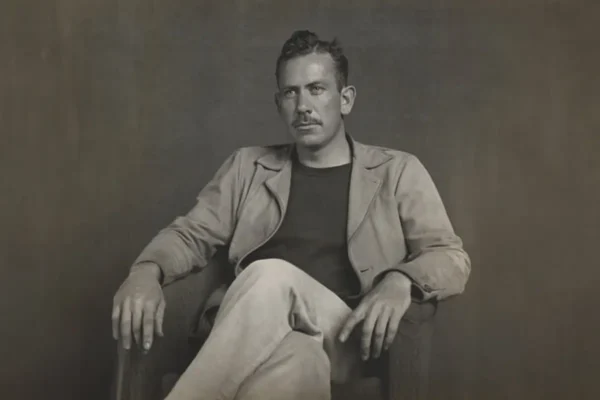
Contemporary photographs and biographical descriptions portray him as having a solid and broad-shouldered build.
Unlike athletes or entertainers, Steinbeck was not known for maintaining a specific fitness-focused physique.
His physical appearance reflected the lifestyle of a working writer who often traveled extensively and spent time in rural environments.
During his younger years in California, he performed physically demanding labor on farms and ranches.
These experiences likely contributed to his sturdy build and practical physical conditioning.
He enjoyed outdoor activities, including fishing and traveling throughout the American West.
A body similar to Steinbeck’s would generally result from a combination of natural genetics, moderate physical work, and an active lifestyle.
There is no documented exercise routine, bodybuilding program, or specialized diet associated with him.
His public reputation rested on literary achievement and intellectual influence rather than athletic appearance.
John Steinbeck: List of Partners & Dating History
John Steinbeck was married three times during his lifetime.
His first wife was Carol Henning, whom he married in 1930 while developing his early literary career in California.
Carol Henning supported Steinbeck during financially difficult years and assisted with aspects of his writing and editing work.
The marriage ended in divorce in 1943 after more than a decade together.
In 1943, Steinbeck married Gwyn Conger, a singer and entertainer.
His marriage to Gwyn Conger produced two sons but became increasingly strained due to career pressures and personal differences.
The couple divorced in 1948 after several turbulent years.
In 1950, Steinbeck married Elaine Scott Steinbeck, who remained his spouse until his death in 1968.
Elaine played an important role in managing aspects of his public life and literary affairs during his later years in New York.
No major verified long-term romantic relationships outside these marriages are prominently documented in mainstream biographies.
Personal Life Highlights of John Steinbeck (List of Family Members)
John Steinbeck was born to John Ernst Steinbeck Sr. and Olive Hamilton Steinbeck in Salinas, California.
His father worked in local government administration and community affairs in Monterey County.
His mother, Olive Hamilton Steinbeck, was a former schoolteacher who encouraged reading and education from an early age.
Steinbeck had three sisters: Mary, Elizabeth, and Esther, with whom he shared a close family upbringing.
His first marriage to Carol Henning did not produce children.
His second marriage to Gwyn Conger resulted in two sons, Thomas Steinbeck and John Steinbeck IV.
Thomas Steinbeck later became a writer and public speaker connected to his father’s literary legacy.
John Steinbeck IV worked as a journalist and author and became known for reporting on the Vietnam War era.
His third wife, Elaine Scott Steinbeck, remained an important companion throughout his Nobel Prize years and final period of life.
The Steinbeck family remains closely associated with preserving and promoting his literary contributions through museums, archives, and educational initiatives.
Early Life Highlights of John Steinbeck (Background / Childhood)
John Steinbeck was born and raised in Salinas, California, an agricultural region that strongly influenced his future writing.
He grew up surrounded by ranches, farms, migrant workers, and rural communities that later appeared throughout his novels.
His mother encouraged him to read widely, introducing him to literature from an early age.
As a child, he developed a strong interest in storytelling and frequently wrote imaginative narratives.
He attended Salinas High School, where teachers recognized his literary talent and interest in writing.
The natural landscapes of Monterey County and the Salinas Valley became lifelong sources of inspiration for his fiction.
During his youth, he worked seasonal jobs on farms and ranches, gaining firsthand knowledge of labor conditions.
These early experiences exposed him to economic inequality and social struggles that became recurring themes in his novels.
After graduating from high school, he enrolled at Stanford University but left without earning a degree to pursue writing full-time.
His childhood experiences in California laid the foundation for many of the characters, settings, and social themes that later defined his literary career.
John Steinbeck Family
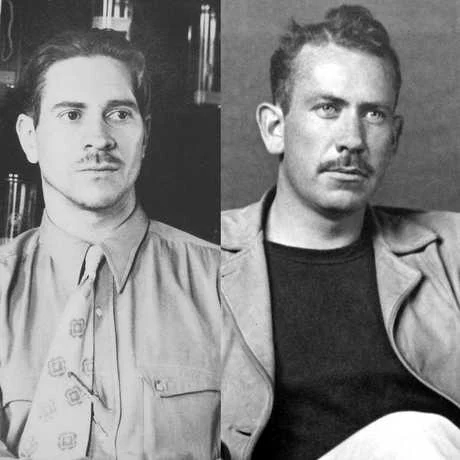
John Steinbeck Family 5
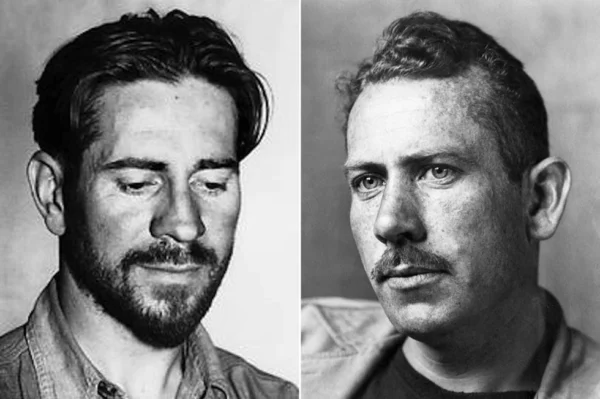
John Steinbeck Family 4
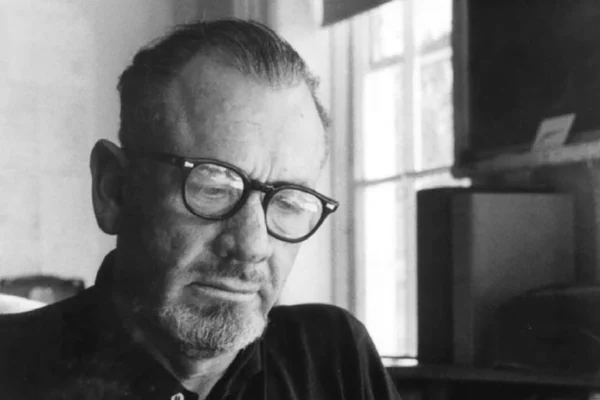
John Steinbeck Family 3
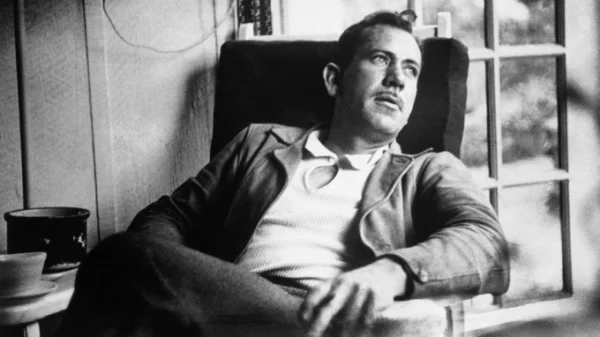
John Steinbeck Family 2
John Steinbeck Family
Current Life Highlights of John Steinbeck (Career / Other Work)
John Steinbeck passed away in 1968, but his literary influence remains exceptionally strong through continued publication, academic study, and global readership.
His novels, especially The Grapes of Wrath and Of Mice and Men, remain widely taught in schools and universities across the United States, the United Kingdom, Canada, and Australia.
The National Steinbeck Center in Salinas, California, continues to preserve and promote his literary legacy through exhibitions, educational programs, and public events.
Modern scholars frequently analyze his work for its treatment of migration, poverty, environmental challenges, and social justice.
His books continue to be translated into numerous languages, ensuring ongoing readership across Europe, Asia, Latin America, and Africa.
Literary conferences and academic symposiums regularly feature discussions about his influence on twentieth-century American literature.
Universities continue publishing research examining his portrayals of laborers, farmers, and marginalized communities during the Great Depression.
His travel writing, journalism, and wartime correspondence remain important resources for historians and literary researchers.
Film, television, and theater adaptations of his works continue introducing new generations to his storytelling.
More than five decades after his death, Steinbeck remains one of the most recognized and studied American authors worldwide.
John Steinbeck Most Popular Media Appearances, Movies, TV Shows
John Steinbeck was primarily known as a writer, but his works inspired numerous major film and television adaptations.
In 1940, Hollywood adapted The Grapes of Wrath into an acclaimed film directed by John Ford and starring Henry Fonda, filmed largely in California.
The 1939 publication of The Grapes of Wrath gained widespread media attention because of its powerful depiction of Dust Bowl migrants and economic hardship.
In 1952, East of Eden was adapted into a major motion picture directed by Elia Kazan, helping launch the film career of James Dean.
In 1992, Of Mice and Men received a notable film adaptation starring John Malkovich and Gary Sinise.
Television productions based on Steinbeck’s novels have aired in the United States and Europe over several decades.
His Nobel Prize acceptance in Stockholm, Sweden, in 1962 received extensive international media coverage because of his growing literary influence.
Documentary programs produced by PBS and other educational broadcasters frequently examine his life, works, and cultural impact.
Literary documentaries often feature locations in Salinas and Monterey County, California, because these regions inspired many of his stories.
Adaptations of his novels remain among the most influential literary-to-screen projects in American cultural history.
John Steinbeck Most Popular News Headlines, Controversies, Scandals
John Steinbeck generated significant controversy during his lifetime primarily because of the social and political themes explored in his writing.
The Grapes of Wrath faced strong opposition in parts of California and Oklahoma after its 1939 publication because some critics believed it portrayed local conditions unfairly.
Several libraries and school districts attempted to ban or restrict The Grapes of Wrath due to its depiction of poverty, labor disputes, and social inequality.
Agricultural organizations in California criticized Steinbeck’s portrayal of migrant workers and large farming operations during the Great Depression.
Some political commentators accused him of promoting socialist ideas because of his sympathy for struggling workers and disadvantaged communities.
His Nobel Prize in Literature in 1962 sparked debate among critics who argued that other writers were more deserving of the award.
During the Vietnam War era, some readers criticized his political views and public statements regarding American foreign policy.
Despite controversies, many scholars defended his work as an honest portrayal of social realities rather than political propaganda.
Most modern literary critics regard the controversies as evidence of the powerful social impact of his writing.
Today, discussions surrounding Steinbeck focus more on literary significance than on the disputes that surrounded some of his publications.
Known Unknown Facts Trivia of John Steinbeck
John Steinbeck never completed his degree at Stanford University despite attending for several years.
He worked numerous manual labor jobs before becoming famous, including farm labor and ranch work throughout California.
His close friendship with marine biologist Ed Ricketts significantly influenced his worldview and writing style.
He traveled extensively around the United States in a customized camper during the early 1960s, documenting his observations.
His nonfiction book Travels with Charley was inspired by a cross-country journey with his poodle Charley.
He served as a war correspondent during World War II and reported from active military zones.
Steinbeck was fascinated by marine life and spent considerable time studying coastal ecosystems around Monterey Bay.
He received both the Pulitzer Prize and the Nobel Prize, placing him among the most honored writers in American history.
Many of his fictional locations were inspired by real communities in California’s Salinas Valley and Monterey region.
His manuscripts, letters, and personal papers remain valuable resources for literary researchers and historians.
John Steinbeck: Questions People Also Ask / Search & Answers
Who was John Steinbeck? → He was an American novelist, journalist, and Nobel Prize-winning author known for portraying the lives of ordinary people during difficult social and economic times.
What is John Steinbeck most famous for? → He is most famous for The Grapes of Wrath, Of Mice and Men, and East of Eden.
Did John Steinbeck win a Nobel Prize? → Yes, he received the Nobel Prize in Literature in 1962 in Stockholm, Sweden.
Where was John Steinbeck born? → He was born in Salinas, California, USA, on 27 February 1902.
Why is The Grapes of Wrath important? → The novel highlighted the struggles of migrant workers during the Great Depression and became a landmark work of American literature.
What inspired Steinbeck’s writing? → His experiences in California farming communities and his observations of working-class life strongly influenced his work.
Did John Steinbeck have children? → Yes, he had two sons, Thomas Steinbeck and John Steinbeck IV.
What was Steinbeck’s relationship with Ed Ricketts? → Ricketts was a close friend and intellectual influence whose ideas shaped many of Steinbeck’s themes.
Was Of Mice and Men based on real experiences? → The novella drew inspiration from Steinbeck’s observations of migrant laborers and ranch workers in California.
Why is John Steinbeck still studied today? → His works continue to provide insight into human resilience, social justice, economic hardship, and American history.