Edgar Allan Poe based on NeemTime research
Who is Edgar Allan Poe (Biography / Personal Details)
Edgar Allan Poe was an American writer, poet, editor, and literary critic best known for shaping modern horror, detective fiction, and psychological storytelling through works like The Raven and The Tell-Tale Heart.
He was born on January 19, 1809, in Boston, Massachusetts, to traveling actors David Poe Jr. and Elizabeth Arnold Poe, both of whom died before he reached the age of three.
After becoming orphaned, he was taken in by John Allan, a wealthy merchant from Richmond, Virginia, though he was never formally adopted, which later caused personal and financial conflict.
Poe studied briefly at the University of Virginia in 1826, where he excelled academically but left due to gambling debts and lack of financial support from John Allan.
He later attended West Point Military Academy in 1830 but deliberately got expelled in 1831 after failing duties, as he wanted to pursue writing full-time.
His literary career began with poetry, but he gained recognition as an editor for magazines in Philadelphia and New York, where he refined Gothic storytelling.
Poe married his young cousin Virginia Clemm in 1836, a relationship that later influenced his writing themes of loss and mortality.
Many of his most famous works, including The Fall of the House of Usher and The Masque of the Red Death, explore death, madness, and psychological decay.
He struggled financially throughout his life, often working for low wages as a magazine editor while battling alcoholism and health issues.
Edgar Allan Poe died under mysterious circumstances on October 7, 1849, in Baltimore, Maryland, leaving behind an enduring legacy as a pioneer of dark romanticism and detective fiction.
Edgar Allan Poe Height / How to Get Body Like Edgar Allan Poe
Edgar Allan Poe’s height is generally recorded as around 5 feet 8 inches, though historical records are not perfectly consistent.
He had a lean, fragile physique, partly due to lifelong financial stress, irregular eating habits, and recurring illness.
Poe was not associated with athletic training or fitness culture, so modern “body transformation” comparisons are symbolic rather than literal.
If someone were to “get a body like Poe,” it would imply maintaining a slim build with low muscle mass rather than athletic bulk.
His lifestyle involved long periods of sedentary writing, reading, and editorial work rather than physical activity or exercise routines.
He reportedly struggled with alcohol use at various points, which negatively affected his health and physical condition over time.
A modern equivalent would focus on maintaining a light caloric intake and minimalistic routine, though this is not a healthy fitness recommendation.
Poe’s era lacked structured fitness science, so his body type was shaped more by circumstance than intentional conditioning.
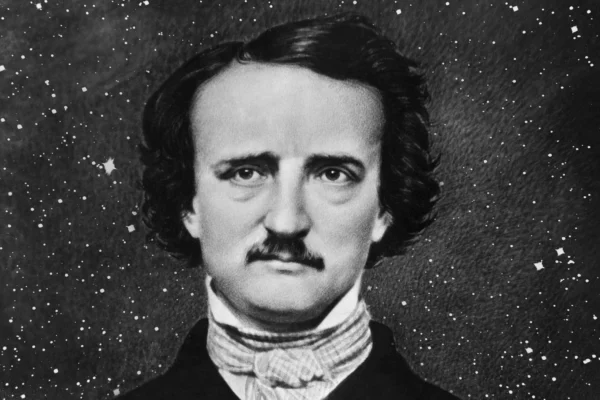
His appearance in portraits suggests a narrow frame, sharp facial features, and a generally reserved physical presence.
Any “fitness model” interpretation of Poe is symbolic, as his legacy is intellectual and literary rather than physical.
Edgar Allan Poe: List of Partners & Dating History
Edgar Allan Poe married his cousin Virginia Clemm in 1836 in Richmond, Virginia, when she was only 13 years old, which was socially accepted in some circles at the time.
Virginia Clemm remained his most significant emotional partner until her death from tuberculosis in 1847.
Before marriage, Poe is believed to have had an attachment to Sarah Elmira Royster during his youth in Richmond.
Elmira Royster later reconnected with Poe near the end of his life and was reportedly engaged to him shortly before his death.
Poe had professional relationships with several literary women, including Frances Sargent Osgood, with whom he exchanged poetic correspondence.
His interactions with Osgood in New York literary salons sparked rumors of emotional intimacy, though documentation remains partly speculative.
He was also associated with poetess Sarah Helen Whitman, whom he courted in Providence, Rhode Island, in the late 1840s.
Whitman and Poe reportedly became engaged briefly but separated due to concerns about his alcohol use and instability.
Poe’s romantic life was heavily influenced by tragedy, illness, and financial instability, which affected his relationships.
Much of his romantic history is reconstructed from letters, biographies, and literary accounts rather than fully verified documentation.
Personal Life Highlights of Edgar Allan Poe (List of Family Members)
Edgar Allan Poe’s biological parents were Elizabeth Arnold Poe and David Poe Jr., both actors in early 19th-century America.
His mother died in 1811 in Richmond, leaving him orphaned at a very young age.
His father disappeared around the same period, and little is known about his later fate.
Poe had an older brother, William Henry Leonard Poe, who also pursued poetry and died young in 1831.
His younger sister, Rosalie Mackenzie Poe, lived a difficult life and struggled with mental health challenges.
Poe was taken in by John Allan and Frances Allan, a wealthy couple in Richmond who raised him informally.
His foster relationship with John Allan was strained, particularly regarding inheritance and financial support disputes.
Poe married Virginia Clemm, his first cousin, making her both his wife and part of his extended biological family line.
Virginia’s mother, Maria Clemm, played a significant role in Poe’s household and caregiving structure.
Poe’s family life was marked by repeated loss, poverty, and emotional instability, which deeply influenced his literary themes.
Early Life Highlights of Edgar Allan Poe (Background / Childhood)
Edgar Allan Poe was born in Boston in 1809 during a period when his parents were touring actors struggling financially.
After his father abandoned the family and his mother died, he was separated from his siblings and fostered individually.
He was raised in Richmond, Virginia, under the care of John and Frances Allan, where he received a privileged early education.
Poe attended prestigious boarding schools in England during his childhood when the Allan family traveled abroad for business.
He studied at the Manor House School in Stoke Newington, which later influenced the dark settings in some of his writings.
Upon returning to the United States, he continued his education in Richmond and developed early interests in literature and poetry.
Poe showed strong academic ability, particularly in classical literature and languages, during his teenage years.
Financial disputes with John Allan began early, shaping his sense of independence and emotional distance.
He enrolled at the University of Virginia at age 17 but left due to debt and lack of financial backing.
His early life was defined by instability, displacement, and intellectual ambition, all of which became central themes in his later Gothic writing style.
Edgar Allan Poe Family
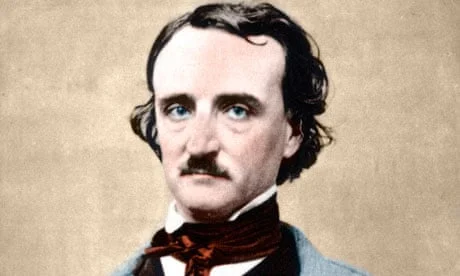
Edgar Allan Poe Family 5
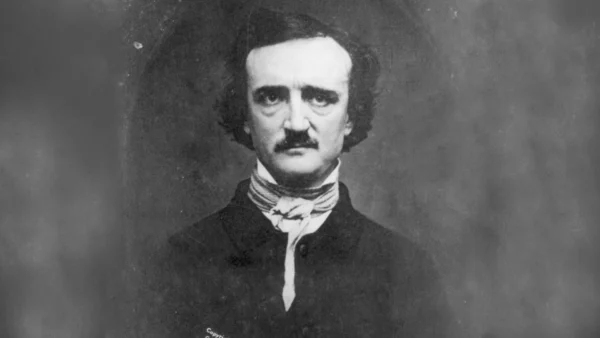
Edgar Allan Poe Family 4
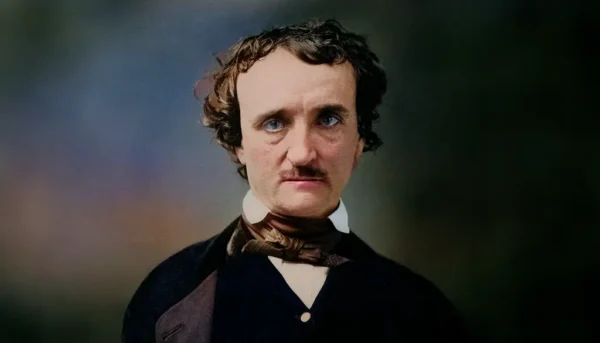
Edgar Allan Poe Family 3
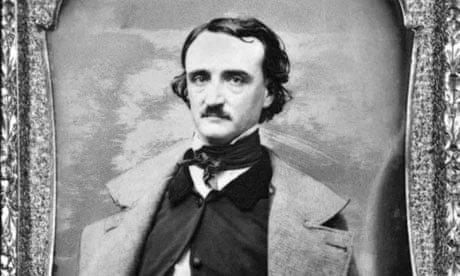
Edgar Allan Poe Family 2
Edgar Allan Poe Family
Current Life Highlights of Edgar Allan Poe (Career / Other Work)
In the late 1830s, Edgar Allan Poe worked in Philadelphia as an editor for Burton’s Gentleman’s Magazine, where he refined his reputation as a sharp literary critic and introduced early versions of Gothic storytelling.
In 1841 in Philadelphia, he published The Murders in the Rue Morgue, widely considered the first modern detective story, introducing the fictional detective C. Auguste Dupin.
In 1843, while living in Philadelphia, Poe gained national attention for The Gold-Bug, a short story that won a $100 prize and became one of his most commercially successful works during his lifetime.
In 1844, Poe moved to New York City, where he worked for the New York Evening Mirror and later the Broadway Journal, expanding his influence in American literary journalism.
In 1845, he published the poem The Raven in New York, which made him a literary celebrity overnight and was widely reprinted across newspapers in the United States and Europe.
During 1845–1846 in New York, Poe contributed literary criticism essays that shaped early American standards of poetry, especially advocating for “unity of effect” in storytelling.
In 1846, Poe relocated to Fordham (now part of the Bronx, New York City), where he lived in poverty while continuing to write for magazines such as Godey’s Lady’s Book.
In Fordham, he wrote The Cask of Amontillado (published later in 1846), reflecting darker psychological themes that defined his later career phase.
In 1847, after the death of Virginia Clemm in Fordham, Poe’s writing output became more fragmented, but he continued working on essays like Eureka, a philosophical prose poem about the universe.
In 1849, Poe traveled between Richmond, Philadelphia, and Baltimore attempting to restart editorial work and secure publishing contracts, but his career was cut short by his mysterious death in Baltimore later that year.
Edgar Allan Poe Most Popular Media Appearances, Movies, TV Shows
The 1953 film The Man with a Cloak loosely references Poe’s literary world and Gothic atmosphere, reflecting Hollywood’s early fascination with his themes.
The 1960 Roger Corman film House of Usher, starring Vincent Price, was directly inspired by Poe’s short story The Fall of the House of Usher.
The 1964 film The Masque of the Red Death also directed by Roger Corman adapted Poe’s plague-themed narrative into a stylized Gothic horror film.
In 1973, The Spectre of Edgar Allan Poe documentary explored his life and literary influence using dramatized reenactments and scholarly narration.
The 2007 film The Raven (various adaptations exist under similar titles) reflects modern reinterpretations of Poe’s mystery and psychological horror legacy.
The 2012 film The Raven, starring John Cusack as Edgar Allan Poe, fictionalizes his final days and incorporates his stories into a murder mystery plot.
The TV series The Following (2013–2015) frequently references Poe’s works as inspiration for a fictional serial killer cult led by Joe Carroll.
The animated series The Simpsons famously parodied The Raven in its “Treehouse of Horror” episode featuring Homer Simpson as the narrator.
The TV show The X-Files included multiple episodes influenced by Poe’s themes of death, paranoia, and psychological horror storytelling.
Poe’s influence extends into modern gaming and animation, including titles like The Dark Eye and narrative horror games inspired by his detective and Gothic styles.
Edgar Allan Poe Most Popular News Headlines, Controversies, Scandals
One major historical controversy involves the unclear circumstances of Poe’s death in Baltimore in 1849, which has led to theories including alcohol poisoning, rabies, and political “cooping.”
In the 19th century, Poe had public disputes with literary critics such as Rufus Wilmot Griswold, who later wrote a heavily negative obituary portraying Poe as unstable.
Griswold’s posthumous portrayal sparked controversy because it significantly shaped Poe’s early reputation, despite being considered biased by modern scholars.
During his lifetime, Poe was involved in editorial conflicts with magazine publishers in Philadelphia and New York over payment disputes and editorial independence.
His rivalry with Henry Wadsworth Longfellow included accusations of plagiarism, which Longfellow never formally addressed but became a debated literary scandal.
In 1845, Poe’s sudden fame from The Raven led to media attention that also exposed his financial instability and personal struggles.
Newspapers of the 1840s often reported on Poe’s alcoholism, sometimes exaggerating his behavior in literary circles for sensational effect.
After Virginia Clemm’s death in 1847, rumors circulated in New York literary society about Poe’s mental health and emotional collapse.
In later decades, especially the early 20th century, scholars debated whether Poe’s image as a “mad poet” was constructed by critics like Griswold rather than factual history.
Modern literary historians continue to re-evaluate Poe’s legacy, separating documented biography from mythologized controversies that developed after his death.
Known Unknown Facts Trivia of Edgar Allan Poe
Poe is often credited with inventing the modern detective genre through his character C. Auguste Dupin, which later influenced Sherlock Holmes by Arthur Conan Doyle.
He served briefly in the U.S. Army under the alias “Edgar A. Perry” before attending West Point Military Academy.
Poe’s poem The Raven earned him only about $9 during his lifetime despite its massive popularity.
He was one of the first American writers to earn a living primarily through literary criticism and editing rather than novel writing.
Poe had a strong interest in cryptography and challenged readers to solve ciphers published in magazines.
He attempted to launch his own literary magazine called The Stylus, but it never became financially successful.
Poe’s writing style emphasized “unity of effect,” meaning every element of a story should contribute to a single emotional impact.
He is buried in Westminster Hall and Burying Ground in Baltimore, but his original gravestone was replaced after being damaged.
Poe’s influence is so strong that many modern horror tropes—like unreliable narrators and psychological suspense—trace back to his works.
October 7, the anniversary of his death, is often observed by fans as “Poe Toaster Day,” a tradition where anonymous visitors once left tributes at his grave.
Edgar Allan Poe: Questions People Also Ask / Search & Answers
Why is Edgar Allan Poe important in literature?
He is important because he pioneered Gothic horror, psychological fiction, and detective storytelling, shaping genres still widely used in modern literature and film.
What is Edgar Allan Poe’s most famous work?
His most famous work is The Raven, a narrative poem published in 1845 that brought him international fame for its haunting rhythm and emotional depth.
What caused Edgar Allan Poe’s death?
The exact cause remains unknown, but theories include alcohol-related complications, rabies infection, stroke, or voter fraud-related “cooping” in Baltimore.
Did Edgar Allan Poe create detective fiction?
Yes, his story The Murders in the Rue Morgue introduced detective fiction and influenced later fictional detectives like Sherlock Holmes.
Was Edgar Allan Poe successful during his lifetime?
He achieved literary recognition but struggled financially throughout his life, earning modest income despite his widespread influence.
What themes are common in Poe’s works?
Common themes include death, madness, loss, guilt, psychological horror, and the supernatural.
Where did Edgar Allan Poe live most of his life?
He lived in several places including Boston, Richmond, Philadelphia, New York City, and Baltimore during different phases of his career.
Did Edgar Allan Poe write novels?
He did not write major novels; instead, he focused on short stories, poetry, essays, and literary criticism.
What is Edgar Allan Poe’s writing style known for?
His style is known for dark romanticism, emotional intensity, symbolic language, and tightly structured narrative effects.
Why is Edgar Allan Poe still popular today?
He remains popular because his influence extends into modern horror, mystery fiction, cinema, and psychology-based storytelling.