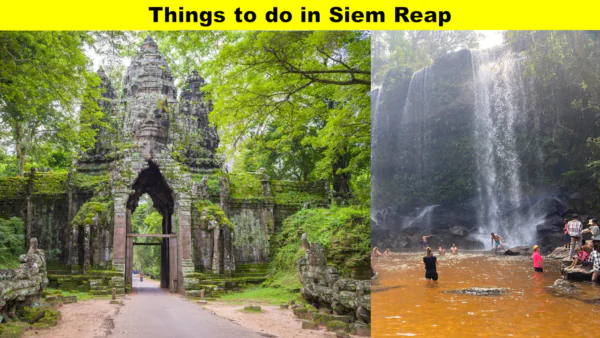
Things to do in Siem Reap based on NeemTime research from most popular to just popular.
Angkor Wat, Siem Reap
Overview: Angkor Wat is the world’s largest religious monument, renowned for its grand scale, intricate bas-reliefs, and symbolic representation of Mount Meru at the heart of the Khmer Empire.
History: Built in the early 12th century by King Suryavarman II, it was originally dedicated to the Hindu god Vishnu before later becoming a Buddhist temple.
Since When: Angkor Wat has existed since around 1150 AD.
Review: Visitors consistently rate it as breathtaking and unforgettable, especially praising its sunrise views and detailed stone carvings despite large crowds.
When to Go: Early morning at sunrise or late afternoon is best to avoid heat and enjoy dramatic lighting.
How to Go: The temple is accessible by tuk-tuk, bicycle, or car from Siem Reap town.
What to Do: Visitors can explore the galleries, admire bas-reliefs, photograph sunrise or sunset, and learn Khmer history.
Free or Paid: Entry is paid via the Angkor Pass.
Bayon Temple, Siem Reap
Overview: Bayon Temple is famous for its massive stone towers carved with serene smiling faces, located at the center of Angkor Thom.
History: It was built in the late 12th century by King Jayavarman VII as a Mahayana Buddhist state temple.
Since When: Bayon Temple has stood since approximately 1200 AD.
Review: Visitors love its mysterious atmosphere and unique facial carvings, though the layout can feel maze-like.
When to Go: Morning is ideal for softer light and fewer crowds.
How to Go: It is reachable by tuk-tuk or bicycle from Siem Reap as part of the Angkor complex.
What to Do: Visitors can walk among the towers, study bas-reliefs, and photograph the iconic stone faces.
Free or Paid: Entry is paid through the Angkor Pass.
Ta Prohm, Siem Reap
Overview: Ta Prohm is a jungle-covered temple famous for massive tree roots intertwining with ancient stone ruins, creating a dramatic and atmospheric setting.
History: Built in the late 12th century by King Jayavarman VII, it was originally a Buddhist monastery and university.
Since When: Ta Prohm has existed since around 1186 AD.
Review: Visitors highly praise its mystical, untouched appearance, though pathways can be narrow and crowded.
When to Go: Early morning is best to enjoy the temple quietly before tour groups arrive.
How to Go: The temple is accessible by tuk-tuk or bicycle from Siem Reap.
What to Do: Visitors can explore ruins, photograph tree-covered walls, and learn about temple conservation.
Free or Paid: Entry is paid via the Angkor Pass.
Ta Prohm Temple, Siem Reap
Overview: Ta Prohm Temple offers an iconic blend of nature and architecture, where towering trees grow directly over ancient Khmer stone structures.
History: Constructed under King Jayavarman VII, it was intentionally left partially unrestored to showcase nature’s reclaiming of the site.
Since When: The temple dates back to the late 12th century.
Review: Travelers admire its cinematic beauty and historical ambiance, though some areas are uneven underfoot.
When to Go: Morning visits are ideal for cooler weather and clearer photographs.
How to Go: It can be reached easily by tuk-tuk or bicycle from Siem Reap town.
What to Do: Visitors can wander through corridors, take photos, and experience the jungle-temple atmosphere.
Free or Paid: Entry is paid with the Angkor Pass.
Phare, The Cambodian Circus, Siem Reap
Overview: Phare, The Cambodian Circus is a vibrant live performance combining acrobatics, theater, music, and storytelling inspired by Cambodian culture and history.
History: Founded by Phare Ponleu Selpak, it was created to support arts education and provide livelihoods for Cambodian youth.
Since When: Performances in Siem Reap began in 2013.
Review: Audiences consistently rate it as entertaining, emotional, and culturally enriching, suitable for all ages.
When to Go: Evening shows are ideal for enjoying the full theatrical experience.
How to Go: The circus venue is accessible by tuk-tuk or taxi from central Siem Reap.
What to Do: Visitors can watch live performances, enjoy pre-show activities, and support local artists.
Free or Paid: Entry is paid, with ticket options based on seating categories.
Pub Street, Siem Reap
Overview: Pub Street is the lively nightlife hub of Siem Reap, packed with restaurants, bars, nightclubs, street food stalls, and souvenir shops.
History: The street developed organically in the early 2000s as tourism around Angkor expanded and demand for entertainment grew.
Since When: Pub Street has been a popular tourist area since the early 21st century.
Review: Visitors enjoy the energetic atmosphere and variety of dining options, though it can be noisy and crowded at night.
When to Go: Evening after 6 pm is best when the street comes alive with lights and music.
How to Go: It is centrally located and easily accessible on foot, by tuk-tuk, or bicycle from most Siem Reap hotels.
What to Do: Visitors can dine, enjoy nightlife, shop for souvenirs, and experience local street performances.
Free or Paid: Entry is free, while food, drinks, and entertainment are paid.
Journey Cambodia, Siem Reap
Overview: Journey Cambodia is a community-based tourism organization offering cultural tours, rural experiences, and ethical travel activities around Siem Reap.
History: It was established to support local communities by creating sustainable tourism opportunities and cultural exchange.
Since When: Journey Cambodia has been operating since the 2010s.
Review: Travelers highly rate the authentic experiences and knowledgeable local guides, appreciating its positive social impact.
When to Go: The dry season from November to March is ideal for outdoor community tours.
How to Go: Tours usually include hotel pickup in Siem Reap via tuk-tuk or minivan.
What to Do: Visitors can join village tours, cooking classes, countryside cycling, and cultural workshops.
Free or Paid: Activities are paid, with fees supporting community development.
Angkor Thom, Siem Reap
Overview: Angkor Thom is a vast ancient walled city featuring monumental temples, gates, and terraces that once served as the capital of the Khmer Empire.
History: Built in the late 12th century by King Jayavarman VII, it replaced earlier capitals as the empire’s political and religious center.
Since When: Angkor Thom has existed since around 1181 AD.
Review: Visitors are impressed by its scale and historical depth, though exploring the entire complex can be time-consuming.
When to Go: Early morning or late afternoon is best to avoid heat and crowds.
How to Go: The site is accessible by tuk-tuk, bicycle, or car from Siem Reap.
What to Do: Visitors can explore Bayon Temple, walk along terraces, and enter through the grand stone gates.
Free or Paid: Entry is paid via the Angkor Pass.
Banteay Srei, Siem Reap
Overview: Banteay Srei is a beautifully preserved pink sandstone temple renowned for its exceptionally detailed carvings and compact design.
History: Built in the 10th century and dedicated to the Hindu god Shiva, it differs from other Angkor temples by not being commissioned by a king.
Since When: The temple dates back to around 967 AD.
Review: Visitors consistently praise its intricate carvings and excellent preservation, though it lies farther from Siem Reap.
When to Go: Morning is ideal for softer light that highlights the carvings.
How to Go: The temple is reachable by car, tuk-tuk, or guided tour about 25 km from Siem Reap.
What to Do: Visitors can admire stone carvings, photograph architecture, and explore the surrounding rural area.
Free or Paid: Entry is paid through the Angkor Pass.
Angkor National Museum, Siem Reap
Overview: Angkor National Museum is a modern museum showcasing Khmer history, art, and religious heritage through well-curated exhibits and multimedia displays.
History: The museum was established to preserve and interpret artifacts from the Angkor period for educational purposes.
Since When: It has been open to the public since 2007.
Review: Visitors appreciate its informative exhibits and air-conditioned comfort, though some note limited artifact originals.
When to Go: Late morning or early afternoon is ideal, especially as a break from temple visits.
How to Go: The museum is accessible by tuk-tuk or taxi from central Siem Reap.
What to Do: Visitors can explore galleries, watch educational videos, and learn about Angkor civilization.
Free or Paid: Entry is paid.
Green Era Travel, Siem Reap
Overview: Green Era Travel is a local tour operator in Siem Reap specializing in eco-friendly tours, cultural excursions, and customized Angkor experiences.
History: The company was founded to promote responsible tourism while supporting local communities and sustainable travel practices.
Since When: Green Era Travel has been operating since the 2010s.
Review: Travelers appreciate the professional guides, flexible itineraries, and strong focus on ethical tourism.
When to Go: November to March is ideal for comfortable weather during outdoor tours.
How to Go: Services usually include hotel pickup in Siem Reap by tuk-tuk or air-conditioned vehicle.
What to Do: Visitors can book temple tours, countryside trips, cultural activities, and eco-tours.
Free or Paid: All tours and services are paid.
Angkor Archaeological Park, Siem Reap
Overview: Angkor Archaeological Park is a vast UNESCO World Heritage Site encompassing hundreds of ancient temples, reservoirs, and cities of the Khmer Empire.
History: Built between the 9th and 15th centuries, it served as the political, religious, and cultural heart of the Khmer civilization.
Since When: The park’s earliest structures date back to around 802 AD.
Review: Visitors consider it one of the world’s greatest archaeological sites, though exploring it fully requires multiple days.
When to Go: Early mornings and late afternoons are best to avoid heat and crowds.
How to Go: The park is accessible by tuk-tuk, bicycle, or car from Siem Reap.
What to Do: Visitors can explore temples, watch sunrise and sunset, photograph ruins, and learn Khmer history.
Free or Paid: Entry is paid via the Angkor Pass.
Asean Angkor Guide, Siem Reap
Overview: Asean Angkor Guide is a professional guiding service offering in-depth historical and cultural tours of Angkor temples and Siem Reap attractions.
History: The service was established by licensed local guides to provide accurate interpretation of Khmer heritage.
Since When: It has been operating since the early 2010s.
Review: Visitors highly value the knowledgeable guides and detailed explanations that enhance temple visits.
When to Go: The dry season from November to March is best for guided temple tours.
How to Go: Tours typically include pickup from hotels in Siem Reap using tuk-tuks or private vehicles.
What to Do: Visitors can book private or group guided tours of Angkor temples and cultural sites.
Free or Paid: Guiding services are paid.
Siem Reap Art Center Night Market, Siem Reap
Overview: Siem Reap Art Center Night Market is a vibrant evening market showcasing local art, handicrafts, souvenirs, and casual dining along the river.
History: The market developed to support local artists and provide an alternative shopping experience for tourists.
Since When: It has been operating since the late 2000s.
Review: Visitors enjoy its relaxed atmosphere, unique handmade products, and riverside setting, though it is smaller than other markets.
When to Go: Evening after 6 pm is best when stalls are fully open and lights are on.
How to Go: The market is accessible on foot or by tuk-tuk from central Siem Reap.
What to Do: Visitors can shop for art and souvenirs, enjoy street food, and relax at nearby cafés.
Free or Paid: Entry is free, while shopping and food are paid.
Phsar Leu Thom Tmey, Siem Reap
Overview: Phsar Leu Thom Tmey is the largest local market in Siem Reap, offering fresh produce, household goods, clothing, and authentic Cambodian street food.
History: It was built to serve the daily needs of local residents as the city expanded beyond the tourist center.
Since When: The market has been operating since the early 2000s.
Review: Visitors appreciate the authentic local experience and low prices, though it can be busy and less tourist-oriented.
When to Go: Morning is ideal for fresh produce and a lively market atmosphere.
How to Go: The market is accessible by tuk-tuk or taxi from central Siem Reap.
What to Do: Visitors can shop for local goods, sample street food, and observe everyday Cambodian life.
Free or Paid: Entry is free, while purchases are paid.
Phnom Bakheng Temple, Siem Reap
Overview: Phnom Bakheng Temple is a hilltop Hindu temple offering panoramic views of the Angkor complex and is one of the most popular sunset viewpoints in Siem Reap.
History: Built in the late 9th century by King Yasovarman I, it served as the state temple of the first Angkor capital, Yasodharapura.
Since When: The temple has existed since around 900 AD.
Review: Visitors enjoy its historical importance and sunset views, though access is limited and crowds are common in the evening.
When to Go: Late afternoon is ideal for sunset views, while early morning offers a quieter visit.
How to Go: The temple is reachable by tuk-tuk or car from Siem Reap, followed by a short uphill walk.
What to Do: Visitors can climb the temple, watch the sunset, and photograph the surrounding landscape.
Free or Paid: Entry is paid via the Angkor Pass.
Preah Khan Temple, Siem Reap
Overview: Preah Khan is a sprawling temple complex combining labyrinthine corridors, towering trees, and sacred shrines within the Angkor Archaeological Park.
History: Built in the late 12th century by King Jayavarman VII, it was dedicated to his father and served as a major Buddhist monastery.
Since When: Preah Khan dates back to around 1191 AD.
Review: Visitors appreciate its atmospheric ruins and relative calm compared to other major temples.
When to Go: Morning is best for cooler temperatures and fewer visitors.
How to Go: The temple is accessible by tuk-tuk or bicycle from Siem Reap.
What to Do: Visitors can explore corridors, study carvings, and photograph jungle-covered ruins.
Free or Paid: Entry is paid through the Angkor Pass.
Royal Independence Gardens, Siem Reap
Overview: Royal Independence Gardens is a peaceful public park near the Royal Residence, known for its manicured lawns, shade trees, and flying bats at dusk.
History: The gardens were developed as part of the royal and civic landscape during modern urban development in Siem Reap.
Since When: It has been open to the public since the late 20th century.
Review: Visitors enjoy its relaxing atmosphere and local feel, especially in the early evening.
When to Go: Early morning or evening is ideal for cooler weather and bat sightings.
How to Go: The gardens are centrally located and easily accessible on foot or by tuk-tuk.
What to Do: Visitors can relax, walk, people-watch, and observe fruit bats at sunset.
Free or Paid: Entry is free.
Pre Rup Temple, Siem Reap
Overview: Pre Rup is a large pyramid-style temple built of brick and laterite, famous for its warm red hues and excellent sunset views.
History: Constructed in the 10th century by King Rajendravarman II, it was dedicated to Hindu deities and royal rituals.
Since When: The temple dates back to around 961 AD.
Review: Visitors admire its solid architecture and fewer crowds compared to Angkor Wat.
When to Go: Late afternoon is ideal for sunset and photography.
How to Go: The temple is accessible by tuk-tuk or bicycle from Siem Reap.
What to Do: Visitors can climb the temple, photograph the scenery, and explore surrounding ruins.
Free or Paid: Entry is paid via the Angkor Pass.
Artisans Angkor, Siem Reap
Overview: Artisans Angkor is a social enterprise showcasing traditional Cambodian craftsmanship through workshops, galleries, and a retail store.
History: It was established to revive Khmer arts and provide vocational training to rural youth.
Since When: Artisans Angkor has been operating since 1992.
Review: Visitors praise the quality of craftsmanship and meaningful cultural experience.
When to Go: Late morning or early afternoon is ideal for guided workshop tours.
How to Go: The site is accessible on foot or by tuk-tuk from central Siem Reap.
What to Do: Visitors can watch artisans at work, learn about crafts, and purchase handmade products.
Free or Paid: Entry to workshops is free, while purchases are paid.
Cambodia Landmine Museum, Siem Reap
Overview: The Cambodia Landmine Museum is an educational museum dedicated to raising awareness about landmines and their impact on Cambodian society.
History: Founded by former child soldier Aki Ra, the museum began as a personal collection of deactivated landmines to promote peace and education.
Since When: It has been open to the public since 1997.
Review: Visitors find it deeply informative and emotional, praising its educational value and humanitarian mission.
When to Go: Late morning or early afternoon is ideal for a quieter and reflective visit.
How to Go: The museum is accessible by tuk-tuk or car about 25 km north of Siem Reap.
What to Do: Visitors can explore exhibits, learn about demining efforts, and support ongoing humanitarian work.
Free or Paid: Entry is paid, with proceeds supporting the museum’s charity programs.
Angkor Green Gardens Park by Dara, Siem Reap
Overview: Angkor Green Gardens Park by Dara is a family-friendly eco-park offering outdoor activities, green spaces, and leisure experiences near Siem Reap.
History: The park was developed as a private initiative to promote eco-tourism and recreational spaces for locals and tourists.
Since When: It has been operating since the late 2010s.
Review: Visitors enjoy its clean environment and relaxed atmosphere, though attractions are modest.
When to Go: Morning or late afternoon is best to avoid midday heat.
How to Go: The park is accessible by tuk-tuk or car from Siem Reap town.
What to Do: Visitors can walk, relax, enjoy outdoor games, and spend time with family.
Free or Paid: Entry is usually paid, with fees depending on activities.
Prasat Beng Mealea, Siem Reap
Overview: Prasat Beng Mealea is a large, atmospheric temple ruin largely unrestored, featuring collapsed galleries and jungle-covered stones.
History: Built in the early 12th century, likely during the reign of King Suryavarman II, it shares architectural similarities with Angkor Wat.
Since When: The temple dates back to around 1110 AD.
Review: Visitors love its adventurous feel and fewer crowds, though walking surfaces can be uneven.
When to Go: Morning is ideal for cooler temperatures and clearer views.
How to Go: The temple is accessible by car or guided tour about 40 km east of Siem Reap.
What to Do: Visitors can explore ruins, photograph jungle scenery, and walk along wooden pathways.
Free or Paid: Entry is paid and separate from the Angkor Pass.
Siem Reaper Travel, Siem Reap
Overview: Siem Reaper Travel is a local tour operator providing customized tours, transportation, and travel services around Siem Reap and Angkor.
History: The company was established to offer reliable and personalized travel experiences led by local professionals.
Since When: It has been operating since the 2010s.
Review: Travelers praise its friendly drivers, flexible itineraries, and good value for money.
When to Go: November to March is ideal for comfortable sightseeing conditions.
How to Go: Services include hotel pickup via tuk-tuk, car, or minivan.
What to Do: Visitors can book temple tours, countryside excursions, and airport transfers.
Free or Paid: All services are paid.
Made in Cambodia Market, Siem Reap
Overview: Made in Cambodia Market is a boutique night market showcasing high-quality, locally made crafts, fashion, and artisan products.
History: The market was created to support Cambodian designers and artisans by providing a curated retail space.
Since When: It has been operating since the early 2010s.
Review: Visitors appreciate the unique products and ethical shopping experience, though prices are higher than typical markets.
When to Go: Evening after 6 pm is best when stalls are fully open.
How to Go: The market is accessible on foot or by tuk-tuk from central Siem Reap.
What to Do: Visitors can shop for handmade goods, meet artisans, and enjoy nearby cafés.
Free or Paid: Entry is free, while purchases are paid.
Terrace of the Elephants, Siem Reap
Overview: The Terrace of the Elephants is a long ceremonial platform in Angkor Thom known for its carved elephants and historical use for royal processions.
History: Built in the late 12th century under King Jayavarman VII, it served as a grandstand for the king to view parades and public ceremonies.
Since When: The terrace has existed since around 1200 AD.
Review: Visitors enjoy its detailed carvings and historical significance, though it is often visited briefly as part of Angkor Thom.
When to Go: Morning or late afternoon is ideal for comfortable temperatures and better lighting on carvings.
How to Go: It is easily accessible by tuk-tuk or bicycle within Angkor Thom from Siem Reap.
What to Do: Visitors can walk along the terrace, examine carvings, and photograph the ancient reliefs.
Free or Paid: Entry is paid via the Angkor Pass.
Neak Poan Temple, Siem Reap
Overview: Neak Poan is a unique island temple set in the middle of a reservoir, designed as a symbolic healing sanctuary based on ancient beliefs.
History: Constructed in the late 12th century by King Jayavarman VII, it was associated with spiritual healing and balance of elements.
Since When: The temple dates back to around 1191 AD.
Review: Visitors appreciate its peaceful setting and distinctive design, though water levels vary seasonally.
When to Go: Morning is best for tranquility and photography.
How to Go: The temple is reachable by tuk-tuk or bicycle from Siem Reap, followed by a short walk across a wooden causeway.
What to Do: Visitors can explore the island temple, learn about its symbolism, and enjoy the surrounding scenery.
Free or Paid: Entry is paid through the Angkor Pass.
Eastern Mebon Temple, Siem Reap
Overview: Eastern Mebon is a 10th-century temple built on an artificial island, featuring stone elephants guarding its corners and strong architectural symmetry.
History: Built by King Rajendravarman II, it was dedicated to Hindu deities and royal ancestors.
Since When: The temple has existed since around 953 AD.
Review: Visitors enjoy its solid structure and fewer crowds compared to major temples.
When to Go: Early morning or late afternoon is ideal for comfortable exploration.
How to Go: The temple is accessible by tuk-tuk or bicycle from Siem Reap within the Angkor area.
What to Do: Visitors can walk around the temple, study carvings, and photograph the elephant statues.
Free or Paid: Entry is paid via the Angkor Pass.
Preah Khan, Siem Reap
Overview: Preah Khan is a vast temple complex blending Buddhist and Hindu elements, surrounded by trees and atmospheric corridors.
History: Built in the late 12th century by King Jayavarman VII, it functioned as a monastery, university, and administrative center.
Since When: Preah Khan has existed since around 1191 AD.
Review: Visitors value its peaceful ambiance and maze-like layout, often preferring it over busier temples.
When to Go: Morning is best for cooler weather and fewer crowds.
How to Go: The temple is accessible by tuk-tuk, bicycle, or car from Siem Reap.
What to Do: Visitors can explore corridors, admire carvings, and photograph jungle-covered ruins.
Free or Paid: Entry is paid via the Angkor Pass.
Baphuon Temple, Siem Reap
Overview: Baphuon Temple is a massive three-tiered temple mountain offering elevated views over Angkor Thom after a steep climb.
History: Built in the mid-11th century during the reign of King Udayadityavarman II, it was originally a Hindu temple later converted to Buddhism.
Since When: The temple dates back to around 1060 AD.
Review: Visitors admire its scale and panoramic views, though the climb can be physically demanding.
When to Go: Morning or late afternoon is ideal to avoid midday heat.
How to Go: It is located inside Angkor Thom and accessible by tuk-tuk or bicycle from Siem Reap.
What to Do: Visitors can climb the terraces, enjoy views, and explore surrounding ruins.
Free or Paid: Entry is paid via the Angkor Pass.