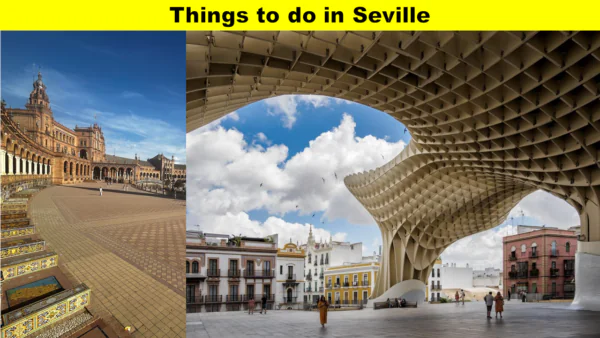
Things to do in Seville based on NeemTime research from most popular to just popular.
Plaza de España, Seville
Overview: Plaza de España is a grand semicircular plaza in Seville featuring canals, bridges, tiled alcoves, and Renaissance-style architecture.
History: It was built as the main showcase building for the Ibero-American Exposition held in Seville to symbolize Spain’s cultural and colonial connections.
Since When: Constructed in 1928.
Review: Visitors describe it as breathtaking, photogenic, and one of Spain’s most impressive public squares.
When to Go: Early morning or sunset for best lighting and fewer crowds.
How to Go: Located in Parque de María Luisa, accessible by metro, bus, or walking from city center.
What to Do: Walk along canals, take photos, and admire ceramic tiles and architecture.
Free or Paid: Free entry.
Setas de Sevilla, Seville
Overview: Setas de Sevilla is a modern wooden architectural landmark offering panoramic views, a market, and cultural spaces.
History: It was built as part of urban regeneration efforts to modernize Seville’s historic center.
Since When: Completed in 2011.
Review: Visitors enjoy its unique design, rooftop views, and sunset experiences.
When to Go: Evening for sunset views and night lighting.
How to Go: Located in Plaza de la Encarnación, accessible by walking or public transport.
What to Do: Walk on the viewing platform, visit exhibitions, and enjoy city views.
Free or Paid: Paid entry for rooftop access.
Royal Alcázar of Seville, Seville
Overview: The Royal Alcázar of Seville is a stunning royal palace complex known for its intricate Moorish architecture and lush gardens.
History: Originally built as a fortress, it was later expanded by Christian monarchs while preserving Islamic architectural elements.
Since When: Origins date back to the 10th century.
Review: Visitors praise its beauty, historical depth, and UNESCO World Heritage status.
When to Go: Early morning to avoid crowds.
How to Go: Located in central Seville near the cathedral, accessible by walking or bus.
What to Do: Explore palaces, gardens, and courtyards.
Free or Paid: Paid entry.
Catedral de Sevilla, Seville
Overview: Catedral de Sevilla is one of the largest Gothic cathedrals in the world, known for its massive structure and artistic treasures.
History: It was built on the site of a former mosque after the Christian reconquest of Seville.
Since When: Construction began in 1401.
Review: Visitors admire its grandeur, chapels, and historical significance.
When to Go: Morning or late afternoon for quieter visits.
How to Go: Located in Seville’s historic center, accessible by walking or public transport.
What to Do: Explore interiors, tombs, and religious artworks.
Free or Paid: Paid entry.
La Giralda, Seville
Overview: La Giralda is the iconic bell tower of Seville Cathedral offering panoramic views of the city.
History: It was originally built as a minaret during the Almohad dynasty and later converted into a Christian bell tower.
Since When: Built in the 12th century.
Review: Visitors enjoy its historical fusion of cultures and stunning viewpoints.
When to Go: Late afternoon for best views and lighting.
How to Go: Located within Seville Cathedral complex.
What to Do: Climb the ramped tower and enjoy city views.
Free or Paid: Paid entry (included with cathedral ticket).
Torre del Oro, Seville
Overview: Torre del Oro is a historic riverside watchtower in Seville overlooking the Guadalquivir River and serving as a maritime museum today.
History: It was built by the Almohad dynasty as part of the city’s defensive walls to control river access and protect the port.
Since When: Constructed in the early 13th century.
Review: Visitors appreciate its compact museum, river views, and historical significance.
When to Go: Late afternoon or sunset for scenic river views.
How to Go: Located along the Guadalquivir River, accessible by walking, bus, or tram.
What to Do: Visit the maritime museum and enjoy panoramic views from the top.
Free or Paid: Paid entry (low fee).
Parque de María Luisa, Seville
Overview: Parque de María Luisa is Seville’s most famous public park featuring fountains, gardens, and shaded walkways.
History: It was redesigned from the gardens of a palace and donated to the city for public use.
Since When: Opened as a public park in 1914.
Review: Visitors enjoy its peaceful atmosphere, romantic design, and scenic beauty.
When to Go: Morning or late afternoon for cooler weather.
How to Go: Located in central Seville, accessible by metro, bus, or walking.
What to Do: Walk, relax, and explore monuments and fountains.
Free or Paid: Free entry.
Real Alcázar de Sevilla, Seville
Overview: Real Alcázar de Sevilla is a royal palace complex famous for its Mudéjar architecture, courtyards, and lush gardens.
History: It was originally a Moorish fortress later expanded by Christian kings while preserving Islamic design elements.
Since When: Origins date back to the 10th century.
Review: Visitors consider it one of Spain’s most beautiful and historically rich attractions.
When to Go: Early morning to avoid long queues.
How to Go: Located in Seville’s historic center near the cathedral.
What to Do: Explore palaces, gardens, and intricate architectural details.
Free or Paid: Paid entry.
Isla Mágica, Seville
Overview: Isla Mágica is a theme park in Seville offering rides, water attractions, and entertainment shows inspired by the Age of Exploration.
History: It was developed on the site of the 1992 Expo to boost tourism and family entertainment.
Since When: Opened in 1997.
Review: Visitors enjoy its fun rides, themed zones, and water park areas.
When to Go: Summer months for full water attractions.
How to Go: Located on La Cartuja Island, accessible by bus or car.
What to Do: Enjoy rides, shows, and water attractions.
Free or Paid: Paid entry.
Plaza de Toros de la Real Maestranza de Caballería de Sevilla, Seville
Overview: Plaza de Toros de la Maestranza is one of Spain’s oldest and most famous bullrings, known for its Baroque architecture and cultural importance.
History: It was built as a center for traditional bullfighting in Andalusia and remains an iconic cultural venue.
Since When: Construction began in the 18th century.
Review: Visitors appreciate its historical value, museum, and architectural beauty.
When to Go: Spring or during cultural events and tours.
How to Go: Located near the Guadalquivir River, accessible by walking or bus.
What to Do: Visit the museum, explore the arena, and learn about bullfighting history.
Free or Paid: Paid entry (museum and tours).
Nervión Plaza, Seville
Overview: Nervión Plaza is a modern shopping and entertainment complex in Seville featuring shops, restaurants, cinemas, and leisure spaces.
History: It was developed as part of the Nervión district’s urban expansion to provide a contemporary commercial hub.
Since When: Opened in the early 2000s.
Review: Visitors appreciate its variety of stores, dining options, and convenient location near transport links.
When to Go: Afternoon or evening for shopping and cinema visits.
How to Go: Located in the Nervión district, accessible by metro, bus, or taxi.
What to Do: Shop, dine, and watch movies.
Free or Paid: Free entry; purchases and entertainment are paid.
Alameda de Hércules, Seville
Overview: Alameda de Hércules is a lively historic square and social hub in Seville known for its bars, nightlife, and cultural gatherings.
History: It is one of Europe’s oldest public gardens, originally created in Roman times and later redesigned in the Renaissance period.
Since When: Established in 1574.
Review: Visitors enjoy its vibrant atmosphere, nightlife, and local culture.
When to Go: Evening for nightlife or daytime for relaxed walks.
How to Go: Located in central Seville, accessible by bus or walking.
What to Do: Eat, drink, socialize, and enjoy street life.
Free or Paid: Free entry.
Triana Bridge, Seville
Overview: Triana Bridge is a historic iron bridge connecting Seville’s city center with the Triana neighborhood over the Guadalquivir River.
History: It was built to replace a floating bridge and improve access between key districts of the city.
Since When: Completed in 1852.
Review: Visitors appreciate its scenic river views and architectural elegance.
When to Go: Sunset or evening for illuminated views.
How to Go: Located between central Seville and Triana, accessible by walking.
What to Do: Walk across, take photos, and enjoy river views.
Free or Paid: Free entry.
Estadio Ramón Sánchez-Pizjuán, Seville
Overview: Ramón Sánchez-Pizjuán Stadium is the home of Sevilla FC and a major football venue known for its passionate atmosphere.
History: It was built to replace the club’s earlier stadium and named after a former club president.
Since When: Opened in 1958.
Review: Visitors praise its electrifying match atmosphere and football heritage.
When to Go: On match days or during stadium tours.
How to Go: Located in Nervión, accessible by metro or bus.
What to Do: Watch football matches or take guided tours.
Free or Paid: Paid entry for matches and tours.
Seville Museum of Fine Arts, Seville
Overview: The Seville Museum of Fine Arts is one of Spain’s most important art museums showcasing works from the medieval to modern periods.
History: It was established in a former convent building to preserve and display Andalusian artistic heritage.
Since When: Founded in 1835.
Review: Visitors admire its rich collection, peaceful courtyards, and artistic masterpieces.
When to Go: Weekdays or mornings for a quiet experience.
How to Go: Located in central Seville, accessible by walking or bus.
What to Do: Explore paintings, sculptures, and historical art collections.
Free or Paid: Free entry for EU citizens; paid for others.
Sevilla Aquarium, Seville
Overview: Sevilla Aquarium is a modern marine life attraction showcasing ocean ecosystems, sharks, turtles, and interactive aquatic exhibits.
History: It was created to promote marine education and conservation awareness inspired by Magellan’s historic circumnavigation route.
Since When: Opened in 2014.
Review: Visitors enjoy its well-designed tanks, educational value, and family-friendly experience.
When to Go: Weekdays or mornings to avoid crowds.
How to Go: Located near the Guadalquivir River, accessible by bus or taxi.
What to Do: Explore marine exhibits, watch feeding sessions, and learn about ocean life.
Free or Paid: Paid entry.
El Rinconcillo, Seville
Overview: El Rinconcillo is Seville’s oldest tapas bar, famous for traditional Andalusian cuisine and historic ambiance.
History: It has been continuously operating as a family-run tavern serving locals and travelers for centuries.
Since When: Established in 1670.
Review: Visitors praise its authentic atmosphere, excellent tapas, and historic charm.
When to Go: Evening for full tapas experience or early lunch to avoid crowds.
How to Go: Located in the old town, accessible by walking or bus.
What to Do: Eat traditional tapas and enjoy historic interiors.
Free or Paid: Paid dining.
Casa de Pilatos, Seville
Overview: Casa de Pilatos is a stunning Andalusian palace combining Renaissance and Mudéjar architectural styles with beautiful courtyards and gardens.
History: It was built by the Enriquez de Ribera family as a noble residence reflecting Italian Renaissance influence in Spain.
Since When: Constructed in the 16th century.
Review: Visitors admire its elegant design, detailed tiles, and peaceful courtyards.
When to Go: Morning or late afternoon for better lighting and fewer crowds.
How to Go: Located in central Seville, accessible by walking.
What to Do: Explore courtyards, gardens, and art collections.
Free or Paid: Paid entry.
Tablao Flamenco Las Setas, Seville
Overview: Tablao Flamenco Las Setas is a modern flamenco venue offering live performances of traditional Andalusian dance and music.
History: It was established to preserve and showcase authentic flamenco culture in a contemporary setting.
Since When: Opened in the 2010s.
Review: Visitors love the passionate performances, intimate atmosphere, and cultural authenticity.
When to Go: Evening shows for full performances.
How to Go: Located near Setas de Sevilla, accessible by walking or taxi.
What to Do: Watch flamenco dance and enjoy live music.
Free or Paid: Paid entry.
Iglesia Colegial del Divino Salvador, Seville
Overview: Iglesia Colegial del Divino Salvador is a grand Baroque church in Seville known for its ornate interior and religious art.
History: It was built on the site of a former mosque and later transformed into one of the city’s most important churches.
Since When: Current structure completed in the 17th century.
Review: Visitors appreciate its richly decorated interiors and peaceful spiritual atmosphere.
When to Go: Morning or during non-service hours for sightseeing.
How to Go: Located in central Seville, accessible by walking or bus.
What to Do: Admire architecture, religious art, and attend services.
Free or Paid: Paid entry for tourists (services free).
Palacio de las Dueñas, Seville
Overview: Palacio de las Dueñas is a historic aristocratic palace in Seville known for its courtyards, gardens, and art-filled rooms.
History: It was built by the House of Alba and has hosted many Spanish nobles and cultural figures over centuries.
Since When: Constructed in the 15th–16th centuries.
Review: Visitors praise its elegant architecture, peaceful gardens, and rich historical atmosphere.
When to Go: Morning or late afternoon for comfortable exploration.
How to Go: Located in central Seville, accessible by walking or bus.
What to Do: Explore courtyards, admire art collections, and walk through gardens.
Free or Paid: Paid entry.
La Giralda, Seville
Overview: La Giralda is the iconic bell tower of Seville Cathedral offering panoramic views over the historic city center.
History: It was originally built as a minaret during the Almohad Islamic period and later converted into a Christian bell tower.
Since When: Constructed in the 12th century.
Review: Visitors love its architectural fusion and stunning city views from the top.
When to Go: Late afternoon for best lighting and fewer crowds.
How to Go: Located within Seville Cathedral complex in the city center.
What to Do: Climb the ramped tower and enjoy panoramic views.
Free or Paid: Paid entry (included with cathedral ticket).
Parque del Alamillo, Seville
Overview: Alamillo Park is a large green park in Seville offering lakes, walking trails, cycling paths, and recreational spaces.
History: It was created as part of the 1992 Universal Exposition redevelopment on La Cartuja Island.
Since When: Opened in 1993.
Review: Visitors appreciate its spacious layout, nature trails, and peaceful atmosphere.
When to Go: Spring or autumn for pleasant weather.
How to Go: Located on Isla de la Cartuja, accessible by bus or car.
What to Do: Walk, cycle, picnic, and enjoy outdoor relaxation.
Free or Paid: Free entry.
Mercado de Triana, Seville
Overview: Mercado de Triana is a lively traditional market in Seville offering fresh produce, seafood, tapas, and local crafts.
History: It was built on the site of the former Castillo de San Jorge, once used by the Spanish Inquisition.
Since When: Market established in the 20th century in its current form.
Review: Visitors enjoy its authentic food stalls, vibrant atmosphere, and cultural charm.
When to Go: Morning or lunchtime for freshest food.
How to Go: Located in the Triana district, accessible by walking or bus.
What to Do: Eat tapas, shop local products, and explore history.
Free or Paid: Free entry; purchases are paid.
Barrio Santa Cruz, Seville
Overview: Barrio Santa Cruz is the historic Jewish quarter of Seville known for its narrow streets, whitewashed houses, and charming plazas.
History: It was once the city’s Jewish quarter before the expulsion of Jews in the late Middle Ages.
Since When: Medieval origins dating back to the 13th century.
Review: Visitors love its romantic atmosphere, hidden courtyards, and historic charm.
When to Go: Early morning or evening for cooler walks.
How to Go: Located in central Seville near the cathedral, accessible by walking.
What to Do: Wander streets, explore plazas, and enjoy cafes.
Free or Paid: Free entry.
CaixaForum Sevilla, Seville
Overview: CaixaForum Sevilla is a contemporary cultural center hosting art exhibitions, workshops, and multimedia installations in a modern architectural space.
History: It was created by the “la Caixa” foundation as part of its cultural network to promote arts and education in Spain.
Since When: Opened in 2017.
Review: Visitors appreciate its modern design, rotating exhibitions, and family-friendly cultural programs.
When to Go: Weekdays or afternoons for quieter visits.
How to Go: Located in Isla de la Cartuja, accessible by bus, car, or taxi.
What to Do: Explore exhibitions, attend events, and participate in workshops.
Free or Paid: Paid entry (some exhibitions may be free).
Puerta de Jerez, Seville
Overview: Puerta Jerez is a historic square and transport hub in Seville connecting major landmarks, hotels, and business areas.
History: It developed as one of the main city gates area during medieval times and later became a modern transport interchange.
Since When: Medieval origins, modern square developed in the 20th century.
Review: Visitors find it convenient, lively, and well-connected to attractions.
When to Go: Daytime for sightseeing or evening for city walks.
How to Go: Accessible via metro, tram, and buses in central Seville.
What to Do: Start city tours, explore nearby landmarks, and relax in cafes.
Free or Paid: Free entry.
Guadalpark, Seville
Overview: Guadalpark is a water park in Seville featuring slides, pools, and family-friendly aquatic attractions.
History: It was developed as a recreational water entertainment facility to serve tourists and local families.
Since When: Opened in the late 20th century.
Review: Visitors enjoy its fun slides, clean pools, and summer entertainment.
When to Go: Summer months for full water activities.
How to Go: Located in Seville, accessible by car or bus.
What to Do: Swim, enjoy water slides, and relax in pools.
Free or Paid: Paid entry.
Barceló Sevilla Renacimiento, Seville
Overview: Barceló Sevilla Renacimiento is a luxury hotel offering modern amenities, river views, and conference facilities.
History: It was built as part of Seville’s modernization efforts ahead of major international events.
Since When: Opened in the early 1990s.
Review: Guests praise its comfort, service quality, and spacious rooms.
When to Go: Year-round depending on travel plans.
How to Go: Located on Isla de la Cartuja, accessible by taxi or bus.
What to Do: Stay, dine, and enjoy hotel facilities.
Free or Paid: Paid accommodation.
Parque de María Luisa, Seville
Overview: Parque de María Luisa is Seville’s most famous urban park featuring fountains, gardens, and historic monuments.
History: It was redesigned from royal gardens and donated to the city for public use.
Since When: Opened as a public park in 1914.
Review: Visitors love its romantic scenery, shaded paths, and peaceful atmosphere.
When to Go: Morning or late afternoon for cooler weather.
How to Go: Located in central Seville, accessible by metro, bus, or walking.
What to Do: Walk, relax, and explore monuments and gardens.
Free or Paid: Free entry.