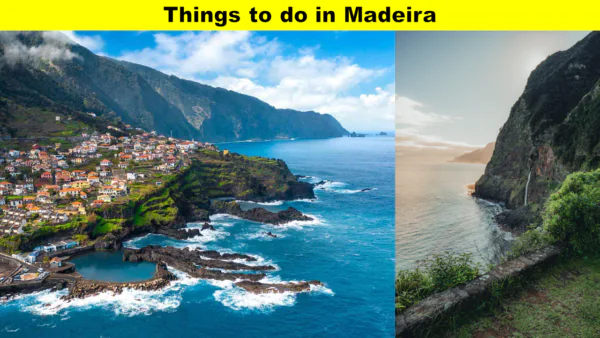
Things to do in Madeira based on NeemTime research from most popular to just popular.
Cabo Girão, Madeira
Overview: Cabo Girão is one of Europe’s highest sea cliffs, famous for its glass skywalk offering dramatic panoramic views over the Atlantic Ocean and Madeira’s coastline.
History: Historically used as a lookout and agricultural area, the cliff later gained fame with the construction of the modern skywalk.
Since When: The Cabo Girão Skywalk has been open to visitors since 2012.
Review: Visitors consistently rate it highly for thrilling views, safety, and unforgettable photo opportunities.
When to Go: The best time to visit is on clear mornings for unobstructed ocean and coastal views.
How to Go: Easily reachable by car or guided tour from Funchal, about a 20-minute drive.
What to Do: Walk on the glass platform, take photos, and enjoy scenic viewpoints.
Free or Paid: Paid entry for the skywalk.
Mercado dos Lavradores (Farmers’ Market), Madeira
Overview: Mercado dos Lavradores is a vibrant traditional market in Funchal showcasing local fruits, vegetables, flowers, fish, and Madeiran culture.
History: Built in the early 20th century, it was designed to centralize agricultural trade and support local farmers.
Since When: The market has been operating since 1940.
Review: Tourists enjoy its colorful atmosphere, exotic fruits, and authentic local experience, though some stalls are tourist-priced.
When to Go: Best visited in the morning, especially Fridays and Saturdays when the market is liveliest.
How to Go: Located in central Funchal and easily accessible on foot or by public transport.
What to Do: Shop for local produce, taste tropical fruits, and explore traditional stalls.
Free or Paid: Free entry; purchases are paid.
Jardim Monte Palace Madeira, Madeira
Overview: Jardim Monte Palace is a stunning hillside garden combining exotic plants, oriental design, art installations, and scenic views over Funchal.
History: Developed on a former hotel estate, it was transformed into a botanical and cultural garden by José Berardo.
Since When: Open to the public since 1991.
Review: Visitors praise its peaceful atmosphere, diverse plant species, and beautiful landscaping.
When to Go: Ideal to visit in the morning or late afternoon to avoid crowds and heat.
How to Go: Accessible by cable car from Funchal or by taxi to Monte.
What to Do: Stroll through themed gardens, view art exhibits, and enjoy panoramic viewpoints.
Free or Paid: Paid entry.
Casas Típicas de Santana, Madeira
Overview: Casas Típicas de Santana are iconic triangular houses with thatched roofs, representing Madeira’s traditional rural architecture.
History: These houses were historically used by farmers as homes and storage, reflecting local building traditions.
Since When: The style dates back several centuries, with preserved examples maintained for tourism.
Review: Visitors find them charming and culturally informative, though the area is small.
When to Go: Best visited during daytime for photography and clearer views.
How to Go: Reachable by car or tour from Funchal, about a 45-minute drive north.
What to Do: Take photos, visit small museums, and explore local craft shops.
Free or Paid: Free to view; small museums may charge a fee.
Madeira Botanical Garden, Madeira
Overview: Madeira Botanical Garden is a beautifully landscaped garden showcasing endemic plants, exotic species, and sweeping views of Funchal.
History: Established to preserve Madeira’s unique flora and promote botanical research and education.
Since When: Opened to the public in 1960.
Review: Visitors appreciate its well-maintained paths, diverse plant collections, and relaxing environment.
When to Go: Best visited in spring or summer when plants are in full bloom.
How to Go: Accessible by cable car, car, or public transport from Funchal.
What to Do: Walk through themed gardens, learn about plant species, and enjoy city views.
Free or Paid: Paid entry.
Cristo Rei, Madeira
Overview: Cristo Rei is an iconic hilltop monument overlooking the Atlantic Ocean, offering sweeping coastal views and a peaceful spiritual atmosphere.
History: Inspired by Rio de Janeiro’s Christ the Redeemer, the monument was built as a symbol of faith and gratitude for Madeira being spared during World War II.
Since When: The statue was inaugurated in 1927.
Review: Visitors admire the dramatic scenery, quiet surroundings, and impressive views from the clifftop platform.
When to Go: Early morning or late afternoon is ideal for pleasant weather and soft light for photography.
How to Go: Easily reachable by car or bus from Funchal, with parking available nearby.
What to Do: Enjoy panoramic views, take photos, walk the nearby paths, and visit the viewpoint above the sea.
Free or Paid: Free entry.
Teleféricos da Madeira, Madeira
Overview: Teleféricos da Madeira are scenic cable cars connecting Funchal to Monte, offering breathtaking aerial views of the city and coastline.
History: Built to improve access to Monte while becoming one of Madeira’s most popular tourist attractions.
Since When: The main Funchal–Monte cable car has been operating since 2000.
Review: Visitors highly rate the smooth ride and spectacular views over the harbor and mountains.
When to Go: Best visited on clear days, preferably in the morning to avoid queues.
How to Go: The lower station is located near Funchal Old Town and is easy to reach on foot or by bus.
What to Do: Ride the cable car, enjoy photography, and combine it with visits to Monte Palace or toboggan rides.
Free or Paid: Paid attraction.
Ponta de São Lourenço, Madeira
Overview: Ponta de São Lourenço is a rugged peninsula known for dramatic cliffs, volcanic landscapes, and stunning ocean views.
History: Preserved as a natural reserve due to its unique geology and endemic plant species.
Since When: Protected as a nature reserve since 1982.
Review: Hikers and nature lovers praise its raw beauty, well-marked trails, and panoramic viewpoints.
When to Go: Best visited in the morning or during cooler months for comfortable hiking conditions.
How to Go: Accessible by car or bus from Funchal to the Baía d’Abra starting point.
What to Do: Hike the trails, photograph landscapes, observe flora, and enjoy coastal views.
Free or Paid: Free entry.
CR7 Museum, Madeira
Overview: The CR7 Museum celebrates the life and achievements of football star Cristiano Ronaldo, Madeira’s most famous native.
History: Established to showcase Ronaldo’s trophies, awards, and personal memorabilia.
Since When: Opened to the public in 2013.
Review: Fans enjoy the impressive collection, interactive displays, and photo opportunities with statues.
When to Go: Ideal year-round, with quieter visits in the morning.
How to Go: Located in Funchal harbor area, easily accessible by foot, bus, or taxi.
What to Do: View trophies, learn about Ronaldo’s career, and take photos with exhibits.
Free or Paid: Paid entry.
Praia da Calheta Beach, Madeira
Overview: Praia da Calheta is one of Madeira’s few sandy beaches, featuring imported golden sand and calm waters.
History: Created to provide Madeira with a family-friendly artificial sandy beach.
Since When: Opened in 2004.
Review: Visitors appreciate its clean facilities, gentle waters, and relaxed seaside atmosphere.
When to Go: Best during summer months or sunny afternoons for swimming and sunbathing.
How to Go: Reachable by car or bus from Funchal, about 30 minutes away.
What to Do: Swim, sunbathe, enjoy water sports, dine at nearby cafes, and relax by the marina.
Free or Paid: Free access.
Funchal Cable Car, Madeira
Overview: Funchal Cable Car offers a scenic aerial journey from Funchal’s Old Town to Monte, providing panoramic views of the city, harbor, and Atlantic Ocean.
History: It was developed to improve access to Monte while also becoming a major tourist attraction showcasing Madeira’s dramatic landscapes.
Since When: The cable car has been operating since the year 2000 as a modern transport and sightseeing facility.
Review: Visitors highly rate the experience for its smooth ride, breathtaking views, and convenience compared to driving uphill.
When to Go: The best time to go is on clear mornings or late afternoons when visibility is excellent and crowds are lighter.
How to Go: It is easily accessed on foot from Funchal Old Town or by local bus and taxi services.
What to Do: Ride the cable car, take photos, explore Monte Palace Gardens, and continue with the famous toboggan ride downhill.
Free or Paid: This attraction is paid, with ticket options for one-way or round-trip journeys.
Monte Palace Madeira, Madeira
Overview: Monte Palace Madeira is an elegant hilltop garden complex featuring exotic plants, oriental gardens, sculptures, and stunning viewpoints.
History: The site was transformed into a palace and garden by José Berardo, blending art collections with lush botanical landscaping.
Since When: Monte Palace Gardens opened to the public in the late 20th century after extensive restoration and development.
Review: Travelers praise the gardens for their tranquility, artistic displays, and sweeping views over Funchal.
When to Go: The ideal time to visit is during spring or early summer when flowers are in full bloom.
How to Go: Visitors usually reach it via the Funchal Cable Car or by taxi from the city center.
What to Do: Walk through themed gardens, visit the museum collections, and enjoy scenic viewpoints.
Free or Paid: Entry to Monte Palace is paid, with a ticket required for garden and museum access.
PR6 25 Fontes Hike & Levada do Risco, Madeira
Overview: PR6 25 Fontes and Levada do Risco is one of Madeira’s most famous hikes, leading through lush forests to waterfalls and natural pools.
History: The trail follows historic levadas built to transport water across the island for agriculture.
Since When: The levada system dates back several centuries, while the PR6 hiking route was officially marked in modern times.
Review: Hikers consistently rate this trail as a must-do for its natural beauty and well-maintained paths.
When to Go: The best time to hike is from April to October when weather conditions are more stable.
How to Go: Access is typically by car or tour to Rabaçal, followed by a signed walking trail.
What to Do: Hike through forests, photograph waterfalls, and relax near the 25 natural springs.
Free or Paid: The hike itself is generally free, though parking or guided tours may have fees.
Miradouro do Véu da Noiva, Madeira
Overview: Miradouro do Véu da Noiva is a dramatic viewpoint overlooking a waterfall cascading into the ocean like a bridal veil.
History: The viewpoint gained popularity after the old coastal road was closed and converted into a scenic lookout.
Since When: It has been recognized as a viewpoint since the late 20th century following road realignments.
Review: Visitors admire the spot for its photogenic scenery and easy access.
When to Go: The best time to visit is after rainfall when the waterfall is at its fullest.
How to Go: It is accessible by car along the north coast roads of Madeira.
What to Do: Enjoy ocean views, take photographs, and relax at the lookout platform.
Free or Paid: This viewpoint is free to visit.
PR11 Levada dos Balcões, Madeira
Overview: PR11 Levada dos Balcões is a short and easy levada walk leading to a viewpoint overlooking deep valleys and mountain peaks.
History: Like other levadas, it follows historic irrigation channels essential to Madeira’s agricultural development.
Since When: The levada has existed for centuries, while the PR11 trail was designated for public hiking in recent decades.
Review: Visitors love this walk for its accessibility, family-friendly nature, and rewarding views.
When to Go: The trail is best visited year-round, especially on clear days for maximum visibility.
How to Go: Access is via Ribeiro Frio, reachable by car or organized tour.
What to Do: Walk along the levada, observe native flora, and enjoy the panoramic viewpoint.
Free or Paid: The trail is free to access, with no entrance fee required.
Miradouro Farol da Ponta do Pargo, Madeira
Overview: Miradouro Farol da Ponta do Pargo is a dramatic clifftop viewpoint offering sweeping Atlantic Ocean panoramas, rugged coastal scenery, and unforgettable sunset views from Madeira’s westernmost point.
History: The viewpoint developed around the historic Ponta do Pargo Lighthouse, which was built in the early 20th century to guide ships navigating Madeira’s treacherous western waters.
Since When: The lighthouse has been operating since 1922, while the miradouro gradually became a popular scenic stop for visitors in the late 20th century.
Review: Visitors consistently praise the location for its raw natural beauty, peaceful atmosphere, and spectacular photo opportunities, especially at sunset.
When to Go: The best time to visit is late afternoon to sunset on clear days, when the light dramatically enhances the cliffs and ocean views.
How to Go: You can reach the miradouro by car via well-marked roads from Funchal or Calheta, followed by a short walk from the parking area.
What to Do: Enjoy photography, walk around the lighthouse area, relax with ocean views, and experience one of Madeira’s most scenic sunsets.
Free or Paid: Entry to the viewpoint area is free.
Parque de Santa Catarina, Madeira
Overview: Parque de Santa Catarina is a tranquil urban garden in Funchal featuring manicured lawns, native plants, harbor views, and relaxing city-side greenery.
History: The park was created on former private estate grounds and later transformed into a public garden to provide green space near Funchal’s city center.
Since When: It has been open to the public since the mid-20th century as part of Funchal’s urban development initiatives.
Review: Visitors appreciate the park for its calm ambiance, scenic viewpoints over the marina, and suitability for families and casual strolls.
When to Go: Morning or late afternoon visits are ideal to avoid midday heat and enjoy softer light over the harbor.
How to Go: The park is easily accessible on foot from central Funchal or by local buses stopping nearby.
What to Do: Walk through the gardens, relax on benches, enjoy harbor views, and let children play in open green areas.
Free or Paid: Entry to the park is free.
Funchal Cathedral, Madeira
Overview: Funchal Cathedral is a historic religious landmark known for its Gothic-Manueline architecture, ornate wooden ceiling, and central role in Madeiran culture.
History: Built at the turn of the 16th century, the cathedral reflects Portugal’s Age of Discoveries and Madeira’s importance in maritime trade.
Since When: Construction was completed around 1514, and it has functioned continuously as Funchal’s main cathedral since then.
Review: Visitors admire the cathedral’s architectural details, peaceful interior, and historical significance within the old town.
When to Go: Visit during morning hours for quiet exploration or during services to experience its spiritual atmosphere.
How to Go: The cathedral is located in central Funchal and can be reached easily on foot or by public transport.
What to Do: Explore the interior, admire the wooden ceiling, attend a service, and photograph the historic façade.
Free or Paid: Entry is generally free, with donations welcomed.
Cascata dos Anjos, Madeira
Overview: Cascata dos Anjos is a unique roadside waterfall where fresh mountain water flows directly over a coastal road near Ponta do Sol.
History: The waterfall is a natural feature formed by Madeira’s steep terrain and abundant water channels descending toward the coast.
Since When: It has existed naturally for centuries but became a popular attraction in recent decades due to its unusual accessibility.
Review: Visitors find the experience fun and refreshing, though some note safety concerns due to traffic and slippery conditions.
When to Go: The best time to visit is during wetter months when water flow is strong, ideally during daylight hours.
How to Go: The waterfall is reachable by car from Funchal toward Ponta do Sol, stopping briefly along the roadside.
What to Do: Walk or drive carefully under the waterfall, take photos, and enjoy the refreshing spray.
Free or Paid: Visiting Cascata dos Anjos is free.
Pico do Arieiro, Madeira
Overview: Pico do Arieiro is one of Madeira’s highest peaks, offering breathtaking mountain views, dramatic cloudscapes, and access to iconic hiking trails.
History: The peak gained prominence as roads and observation areas were developed to showcase Madeira’s volcanic mountain landscapes.
Since When: The summit road and viewpoints have been accessible to visitors since the mid-20th century.
Review: Travelers consistently rate Pico do Arieiro as one of Madeira’s most spectacular sights, especially for sunrise and hiking experiences.
When to Go: Early morning visits are best for sunrise views and clearer skies above the clouds.
How to Go: You can reach the summit by car from Funchal via a mountain road or by guided tour.
What to Do: Enjoy panoramic views, photograph cloud formations, hike the Pico do Arieiro–Pico Ruivo trail, and experience alpine scenery.
Free or Paid: Access to Pico do Arieiro is free, though guided hikes may be paid.
Cabo Girão, Madeira
Overview: Cabo Girão is one of Europe’s highest sea cliffs, famous for its dramatic glass skywalk offering breathtaking panoramic views over the Atlantic Ocean and Madeira’s coastline.
History: Historically used as a natural lookout and farming terrace area, the cliff has long been part of local life before becoming a major tourist attraction.
Since When: Cabo Girão has been accessible to visitors for decades, with the modern glass skywalk officially opened in 2012.
Review: Visitors consistently praise the thrilling views, well-maintained facilities, and the unforgettable experience of standing on the transparent platform.
When to Go: The best time to visit is on clear mornings or late afternoons for optimal visibility and pleasant weather.
How to Go: It is easily reachable by car, taxi, or guided tour from Funchal, located about 20 minutes west of the city.
What to Do: Walk on the glass skywalk, take panoramic photos, and enjoy views of Câmara de Lobos and the terraced farmlands below.
Free or Paid: Paid, with a small entrance fee required to access the skywalk.
Fanal Forest, Madeira
Overview: Fanal Forest is a mystical laurel forest known for ancient trees, rolling mist, and a serene atmosphere that feels almost otherworldly.
History: Part of Madeira’s Laurisilva Forest, a UNESCO World Heritage Site, it dates back millions of years as a remnant of prehistoric subtropical forests.
Since When: The forest has existed naturally for centuries, gaining protected status in 1999 under UNESCO recognition.
Review: Travelers love its peaceful trails, photogenic foggy scenery, and unique ancient trees, often calling it magical and unforgettable.
When to Go: Early morning or misty days are ideal for experiencing its iconic foggy landscapes.
How to Go: Accessible by car via Paúl da Serra plateau, with parking areas near the walking paths.
What to Do: Walk scenic trails, photograph the ancient trees, picnic, and enjoy quiet nature immersion.
Free or Paid: Free, with no entrance fee.
Pico dos Barcelos Viewpoint, Madeira
Overview: Pico dos Barcelos Viewpoint offers sweeping views over Funchal city, the harbor, and surrounding mountains from an elevated vantage point.
History: Traditionally used as a scenic overlook, it later became landscaped to enhance visitor access and comfort.
Since When: It has been a recognized viewpoint for many decades, becoming more developed in the late 20th century.
Review: Visitors appreciate its easy access, panoramic city views, and peaceful garden setting.
When to Go: Sunset is the most popular time, providing beautiful golden-hour cityscapes.
How to Go: Reachable by car or bus from Funchal, located just a short drive uphill from the city center.
What to Do: Take photos, relax in the gardens, and enjoy views of Funchal and the Atlantic.
Free or Paid: Free, open to all visitors.
True Spirit, Madeira
Overview: True Spirit is a popular catamaran cruise experience offering dolphin and whale watching along Madeira’s stunning coastline.
History: Established as part of Madeira’s eco-tourism growth, it focuses on responsible marine wildlife observation.
Since When: The company has been operating since the early 2000s, gaining strong local and tourist reputation.
Review: Guests highly rate the friendly crew, high chances of marine sightings, and smooth, comfortable catamaran rides.
When to Go: Morning departures are best for calmer seas and higher chances of wildlife sightings.
How to Go: Departs from Funchal Marina, easily accessible on foot from the city center.
What to Do: Watch dolphins and whales, enjoy coastal views, swim during summer stops, and relax onboard.
Free or Paid: Paid, with ticket prices depending on tour type and duration.
Praia da Ponta do Sol, Madeira
Overview: Praia da Ponta do Sol is a charming pebble beach known for calm waters, sunny weather, and a relaxed local vibe.
History: Traditionally a fishing area, it gradually evolved into a popular seaside leisure spot for locals and visitors.
Since When: The beach has been used by the community for generations and developed for tourism in the 20th century.
Review: Visitors enjoy its peaceful atmosphere, clean waters, and proximity to cafés and the village center.
When to Go: Summer months are ideal for swimming, while spring and autumn are perfect for relaxation and walks.
How to Go: Accessible by car or bus from Funchal, located on Madeira’s sunny southwest coast.
What to Do: Swim, sunbathe, relax at nearby cafés, and enjoy seaside walks.
Free or Paid: Free, with open public access.
São Vicente Caves, Madeira
Overview: São Vicente Caves are a fascinating volcanic tunnel system formed by ancient lava flows, offering visitors an immersive underground experience that showcases Madeira’s geological origins.
History: The caves were created around 890,000 years ago by basaltic lava eruptions and were later opened to the public as one of Madeira’s first volcanic attractions.
Since When: São Vicente Caves have been open to visitors since 1996 as an educational and touristic site.
Review: Visitors often praise the caves for their informative guided tours, unique lava formations, and engaging audiovisual volcanic presentations.
When to Go: The best time to visit is year-round, especially during warmer months when indoor attractions provide a cool and comfortable escape.
How to Go: The caves are easily reached by car or bus from Funchal, located in São Vicente on Madeira’s north coast.
What to Do: Explore lava tunnels, learn about volcanic processes, and enjoy the interactive volcanic center exhibition.
Free or Paid: Entry is paid, with tickets required for guided cave tours.
PR 1.2 Vereda do Pico Ruivo, Madeira
Overview: PR 1.2 Vereda do Pico Ruivo is a scenic mountain hiking trail leading to Madeira’s highest peak, offering dramatic views above the clouds.
History: The trail was developed as part of Madeira’s official walking routes to provide safe access to Pico Ruivo’s summit.
Since When: The route has been formally maintained and signposted since the early 2000s as part of the PR walking network.
Review: Hikers consistently rate it highly for breathtaking panoramas, well-marked paths, and a rewarding summit experience.
When to Go: The ideal time is early morning on clear days, especially in spring and summer for optimal weather conditions.
How to Go: Access is usually via Achada do Teixeira, reachable by car from Santana or Funchal.
What to Do: Hike to the summit, photograph mountain landscapes, and enjoy panoramic views of Madeira’s rugged terrain.
Free or Paid: The hike is free, though parking fees may apply at access points.
Be Local Madeira – Canyoning Adventures, Madeira
Overview: Be Local Madeira offers thrilling canyoning adventures that combine waterfalls, rappelling, and river exploration in Madeira’s wild landscapes.
History: The company was founded to promote eco-adventure tourism while highlighting Madeira’s natural canyon environments.
Since When: Be Local Madeira has been operating canyoning tours since the 2010s.
Review: Guests frequently commend the professional guides, safety standards, and unforgettable adrenaline-filled experiences.
When to Go: The best season is from late spring to early autumn when water levels and weather are ideal.
How to Go: Tours typically include hotel pickup from Funchal or meeting points near canyoning locations.
What to Do: Abseil down waterfalls, jump into natural pools, and explore lush ravines under expert guidance.
Free or Paid: All canyoning activities are paid and require advance booking.
Miradouro da Eira do Serrado, Madeira
Overview: Miradouro da Eira do Serrado is a dramatic viewpoint overlooking Curral das Freiras valley, surrounded by steep mountain peaks.
History: The viewpoint was developed to provide safe access to one of Madeira’s most iconic panoramic mountain views.
Since When: It has been a popular lookout point for locals and tourists since the mid-20th century.
Review: Visitors love the jaw-dropping scenery, peaceful atmosphere, and excellent photo opportunities.
When to Go: The best time is on clear mornings or late afternoons when clouds are minimal.
How to Go: It is accessible by car or bus from Funchal, followed by a short walk to the viewpoint.
What to Do: Enjoy panoramic views, take photographs, and relax at the nearby café.
Free or Paid: Access to the viewpoint is free.
Jardim Municipal do Funchal, Madeira
Overview: Jardim Municipal do Funchal is a charming city garden filled with tropical plants, fountains, and shaded walkways in the heart of Funchal.
History: The garden was established in the late 19th century on the site of a former convent.
Since When: It has been open to the public as a municipal garden since the early 1900s.
Review: Visitors appreciate its peaceful ambiance, colorful flowers, and central location near major attractions.
When to Go: The garden is best visited during spring when flowers are in full bloom, though it is pleasant year-round.
How to Go: Located in central Funchal, it is easily reachable on foot or by public transport.
What to Do: Stroll among exotic plants, relax on benches, and enjoy city views in a tranquil setting.
Free or Paid: Entry to the garden is free.