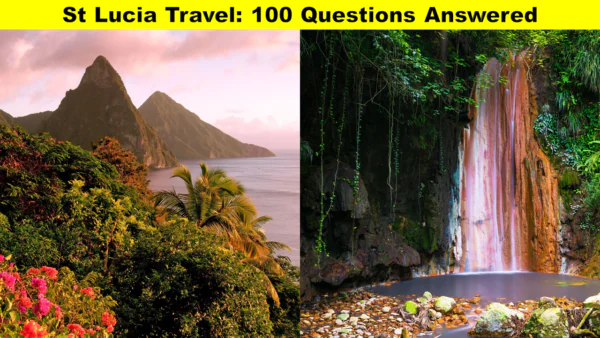
St Lucia Travel: 100 Questions Answered based on NeemTime research
Planning & Logistics
When is the best time to visit? December to May is the dry season. June to November is the rainy season, though showers are often brief.
Is St. Lucia expensive? Yes, it is one of the pricier Caribbean islands, especially for dining and private transport.
Do I need a visa? US, UK, and Canadian citizens do not need a visa for stays under 90 days.
What is the currency? The Eastern Caribbean Dollar (XCD), but USD is widely accepted everywhere.
What is the exchange rate? It is pegged at $1 USD to $2.70 XCD.
Should I bring cash? Yes. Many small vendors, local bars, and taxis do not take cards.
Do Venmo or CashApp work? No, these services do not operate in St. Lucia.
Are ATMs easy to find? In the north (Rodney Bay) and at the airport, yes. In the south (Soufrière), they are much harder to find.
Is there a departure tax? Usually included in your airfare, but double-check if flying a smaller regional airline.
Do I need to fill out a health/entry form? Yes, there is an online immigration form (stlucia.org) to complete before arrival.
What are the plugs/outlets? Most use Type G (UK style), but many resorts have US-style outlets.
Is the water safe to drink? Generally yes, but many tourists stick to bottled water to avoid minor stomach upsets.
Is the island safe? Yes, but practice standard “big city” caution. Avoid walking alone at night in secluded areas.
What is the main language? English is official, but you will hear locals speaking Saint Lucian Creole (Kweyol).
Is there a dress code? Most resorts require “resort casual” (no swimwear in restaurants).
Is St. Lucia good for honeymoons? It is consistently ranked as a top global honeymoon destination.
Can I use my cell phone? Coverage is excellent, but roaming fees apply. Consider a local SIM from Flow or Digicel.
How long should I stay? 7 to 10 days is the “sweet spot” to see both the north and south.
Is it family-friendly? Yes, but it is more geared toward couples. Look for resorts like Coconut Bay for kids.
Is there a lot of seaweed (Sargassum)? It varies by season; the Atlantic (east) side gets it more than the Caribbean (west) side.
Transportation & Driving
Should I rent a car? Only if you are a very confident driver. The roads are narrow, winding, and steep.
What side of the road do they drive on? The left side.
Are there potholes? Yes, many. Road maintenance is a frequent topic of complaint.
How much are taxis? Expensive. A trip from UVF airport to the north can cost $100–$130 USD.
Is there Uber or Lyft? No.
How do I find a taxi? Look for the “TX” on the license plate; these are authorized taxis.
Are there public buses? Yes, “mini-buses” (vans) are very cheap and frequent between major towns.
How long is the drive from the airport to the north? About 90 minutes to 2 hours of winding roads.
What is the “Helicopter Transfer”? A 15-minute flight from UVF to the north to avoid the 2-hour drive.
Is the helicopter worth it? Travelers says yes if you get motion sickness or want the view.
What is the “Water Taxi”? A boat transfer that takes you between coastal towns; often faster than driving.
Do I need a local permit to drive? Yes, your rental agency will issue a temporary St. Lucian permit for about $20 USD.
Are gas stations common? Yes, in the north and south, but rare in the middle of the island.
Can I walk from my resort to town? In Rodney Bay, yes. In Soufrière or isolated resorts, no.
Are there car rental scams? Not scams, but check the “excess” on insurance; it can be very high ($1,000+).
Where to Stay
Should I stay North or South? North (Rodney Bay) for nightlife and flat beaches; South (Soufrière) for views and nature.
What is “Split Stay”? Spending half your trip in the North and half in the South to see both.
Is Rodney Bay good? Yes, it’s the hub for dining, shopping, and the most popular beach (Reduit).
What is special about Soufrière? It’s home to the Pitons, the volcano, and lush rainforests.
Are all-inclusive resorts worth it? Yes if you want to relax; no if you want to explore local food.
Is Sandals popular? There are three Sandals resorts; the “Grande” is usually the most recommended.
What is the most famous luxury hotel? Jade Mountain, known for its three-walled rooms with no fourth wall.
Are there Airbnbs? Yes, many. They are a great way to save money if you’re willing to cook.
Are the beaches private? All beaches in St. Lucia are public, though resorts may restrict chair use.
Which beach is the best? Sugar Beach (between the Pitons) and Reduit Beach (north) are favorites.
Is it loud near the airport? Only near SLU (the small northern airport). UVF (the main airport) is more isolated.
Food & Dining
What is the national dish? Green fig (green banana) and saltfish.
Is the food spicy? Local “Creole” food has a kick, especially the Scotch Bonnet hot sauces.
What is the local beer? Piton Beer. It is a light, refreshing lager.
Is there a tipping culture? 10% is standard; many places add a 10% service charge automatically.
What is the “Gros Islet Street Party”? A famous Friday night “jump up” with street food, music, and drinks.
Is the Gros Islet party safe? Mostly, but watch your pockets and stay in the main areas.
What is “Project Chocolat”? An experience by Hotel Chocolat where you can make your own chocolate bar.
Can I find vegetarian food? Yes, but options may be limited to “ital” (Rastafarian) food or Indian-influenced dishes.
Are groceries expensive? Yes, especially imported items. Massy Stores is the main supermarket chain.
What is a “Bake”? A fried dough bread, often served with saltfish for breakfast.
Is rum cheap? Yes, local rums like Chairman’s Reserve and Admiral Rodney are affordable and high quality.
Activities & Sightseeing
What are the Pitons? Two volcanic spires (Gros Piton and Petit Piton) that are UNESCO World Heritage sites.
Can I hike the Pitons? Yes, Gros Piton is the standard hike. It is strenuous and takes 4–5 hours.
Do I need a guide for the Pitons? Yes, it is mandatory to have a guide for Gros Piton.
What is the “Drive-in Volcano”? Sulphur Springs, where you can drive into a dormant caldera.
What are the Mud Baths? Hot springs at the volcano where you can apply volcanic mud for its skin benefits.
Are the mud baths crowded? Yes, especially when cruise ships are in port. Go early (before 10 AM).
What is Pigeon Island? A national park in the north with historic ruins and great hiking views.
Are there waterfalls? Yes, Toraille and Diamond Falls are the most famous.
Can you swim at Diamond Falls? No, the water is too high in minerals, but the gardens are beautiful.
How is the snorkeling? Best at Anse Chastanet and Sugar Beach (protected reefs).
Are there sharks? Rarely seen; the reefs are mostly home to tropical fish and turtles.
Can I go whale watching? Yes, peak season is October to February.
What is the “Tet Paul Nature Trail”? An easy “stairway to heaven” hike with the best views of the Pitons.
Is there zip-lining? Yes, available in the rainforest near Dennery and Soufrière.
What is the “Sea Trek”? An underwater walk using a helmet, popular for non-divers.
Can I take a day trip to Martinique? Yes, there is a ferry (L’Express des Îles), but it can be a rough ride.
Health & Safety
Are there mosquitoes? Yes, and they are fierce. Bring DEET-based repellent.
Is there Zika or Dengue? Occasionally reported, so bug spray is essential.
Do I need vaccinations? Standard ones, but check if you need Yellow Fever if coming from certain countries.
Is sun protection necessary? Absolutely. The sun is much stronger than in North America/Europe.
What should I do if I get sick? There are medical clinics in major towns and a hospital in Vieux Fort and Castries.
Is it safe to walk in Castries? During the day, yes. At night, it’s mostly deserted and not recommended for tourists.
Are there sandflies? Yes, particularly around sunset on the beaches.
Shopping & Culture
What should I buy? Rum, chocolate, local spices (nutmeg, cinnamon), and batik clothing.
Where is the best shopping? Castries Market for souvenirs; Baywalk Mall in Rodney Bay for luxury goods.
Is haggling common? Only at local markets and with taxi drivers; not in shops or restaurants.
What is “Batik”? A traditional wax-resist dyeing technique used for colorful fabrics.
When is Carnival? Usually in July. It is a massive celebration with parades and music.
Is Sunday a “dead” day? Yes, many shops and local restaurants close on Sundays.
Miscellaneous
How is the Wi-Fi? Good at resorts, spotty in the mountains.
Do people tip the beach vendors? You don’t have to, but they can be persistent. A polite “No, thank you” works.
What is the “Fast Track” service? A paid service at the airport to skip long immigration lines.
Is the Fast Track worth it? On Saturdays and Sundays when many flights land at once, yes.
What should I pack? Light clothing, a rain jacket, hiking shoes, and dressier clothes for dinner.
Can I wear camouflage? No, it is illegal for civilians to wear camouflage patterns in St. Lucia.
Is there a lot of traffic? In the north (Castries/Rodney Bay), traffic can be very heavy during rush hour.
Are the locals friendly? Extremely. St. Lucians are known for being warm and welcoming.
What is “Island Time”? The concept that things (service, transport) move slower than you might expect.
Can I see other islands from St. Lucia? On a clear day, you can see Martinique to the north and St. Vincent to the south.
Are there many stray dogs? Yes, “pot hounds” are common but generally harmless.
Is drone flying allowed? Yes, but you need to register with the Civil Aviation Authority.
What is the best way to get to Sugar Beach? By water taxi from Soufrière to avoid the bumpy road and parking issues.
What is the one thing I shouldn’t miss? A sunset catamaran cruise.