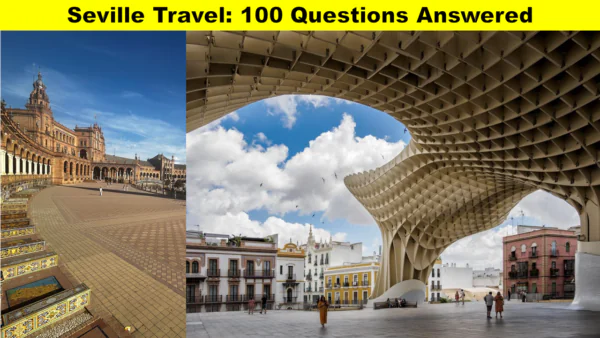
Seville Travel: 100 Questions Answered based on NeemTime research
Planning & Logistics
1. When is the absolute best time to visit?
March to May and October are ideal. The weather is warm but not lethal.
2. Is summer really that bad?
Yes. In July and August, temperatures often exceed 40°C (104°F). Locals disappear between 2 PM and 8 PM.
3. How many days do I need?
Three days is the “sweet spot” for the main sights. Four to five days allows for a slower pace and day trips.
4. Is Seville expensive?
It is one of the most affordable major cities in Western Europe. You can find excellent tapas for €3–€5 and beer for €1.50.
5. Do I need to book the Alcázar in advance?
Absolutely. During peak season, it sells out weeks in advance. Buy from the official site to avoid massive markups.
6. Should I visit during Semana Santa (Holy Week)?
Only if you love crowds and religious tradition. Prices skyrocket, and many streets are blocked by processions.
7. Is the Feria de Abril worth it for tourists?
It’s a spectacle, but most “casetas” (tents) are private. Unless you know a local, you’ll be limited to the public tents.
8. Can I walk everywhere?
Yes. The historic center is very compact. You only need a taxi or bus for the airport or train station.
9. Is there a beach in Seville?
No. The nearest beaches are in Matalascañas or Cádiz, both about 1.5 hours away.
10. Do I need to speak Spanish?
In tourist areas, English is common. However, learning “Gracias,” “Por favor,” and “La cuenta” (the bill) goes a long way.
11. What is the EA bus?
It’s the airport express bus. It costs €4 (or €6 return) and takes about 35 minutes to reach the center.
12. Is tap water safe to drink?
Yes, it is perfectly safe and actually tastes quite good.
13. What is the “siesta” schedule?
Many small shops close from 2 PM to 5 PM. Major attractions and big stores usually stay open.
14. Are there pickpockets?
Yes, especially around the Cathedral and Santa Cruz. Keep your bag in front of you and don’t leave phones on tables.
15. Is Seville safe for solo female travelers?
Very. It is a lively, well-lit city with a strong culture of being out late.
Sightseeing & Culture
16. What is “Las Setas”?
It’s the Metropol Parasol, a massive wooden structure. Go at sunset for the best 360-degree views of the city.
17. Should I climb the Giralda Tower?
Yes. It uses ramps instead of stairs (it was built so the Sultan could ride his horse to the top).
18. What’s the deal with the oranges?
They are bitter Seville oranges used for marmalade. Do not eat them off the tree; they are disgusting raw.
19. Where is the best free flamenco?
You can often see high-quality street performers at Plaza de España.
20. Is the Cathedral worth it?
Yes, it’s the largest Gothic cathedral in the world and houses the tomb of Christopher Columbus.
21. What is the Archivo de Indias?
A free museum containing the archives of the Spanish Empire in the Americas. It’s a UNESCO site.
22. Is the Bullring (Maestranza) worth visiting?
Even if you don’t support bullfighting, the tour offers great insight into Spanish history and architecture.
23. What is Triana?
The neighborhood across the river. It’s the traditional home of sailors, potters, and flamenco dancers.
24. Can I visit the “Game of Thrones” filming locations?
Yes, the Water Gardens of Dorne are actually the gardens of the Real Alcázar.
25. What is the Casa de Pilatos?
A stunning palace that many consider a “mini-Alcázar” with fewer crowds.
26. Is the Museum of Fine Arts good?
It is considered the second-best art museum in Spain after the Prado in Madrid.
27. Should I do a river cruise?
They are okay for a relaxing hour, but you see more by just walking along the riverbank.
28. What is the Plaza de España fee?
As of early 2026, there has been talk of a small entry fee for non-residents, so check local updates before going.
29. Can I row a boat at Plaza de España?
Yes, it costs about €6 for 35 minutes. It’s cheesy but very popular.
30. What is the “No8Do” symbol seen everywhere?
It’s the city’s motto, representing loyalty to King Alfonso X. It sounds like “No me ha dejado” (She has not deserted me).
Food & Drink
31. What time is dinner?
Late. Most locals don’t eat dinner until 9 PM or 10 PM. Tapas bars open around 8 PM.
32. What is a “Caña”?
A small, cold glass of beer. It’s the standard way to order so the beer stays cold in the heat.
33. What is “Vino de Naranja”?
Orange wine. It’s a local sweet fortified wine. Try it at Álvaro Peregil in the center.
34. What are the must-try tapas?
Espinacas con garbanzos (spinach and chickpeas) and Carrillada (braised pork cheek).
35. Is tipping mandatory?
No. Leaving a few small coins is fine, but 10-15% is not expected unless the service was exceptional.
36. Where are the “tourist traps”?
Avoid the restaurants directly facing the Cathedral or on Calle Mateos Gago if they have pictures of food on the menu.
37. What is “Cruzcampo”?
The local beer. Sevillanos love it; outsiders are often divided. Drink it ice-cold.
38. What is “Salmorejo”?
A thicker, creamier version of Gazpacho, usually topped with ham and boiled egg.
39. Can I get a full meal or just tapas?
Most places offer tapa (small), media ración (half plate), and ración (full plate).
40. Where should I go for breakfast?
Look for a spot serving Tostada con tomate y aceite (toast with tomato and oil).
41. What is “Montadito de Pringá”?
A small sandwich filled with slow-cooked meats (pork, chorizo, fat). It’s a Seville staple.
42. Are there vegetarian options?
It’s a meat-heavy city, but Esparragos (asparagus), Tortilla de Patatas, and fried eggplant with honey are common.
43. Is the market in Triana good for lunch?
Yes, it’s a great place to buy fresh ham and cheese or eat at the small stalls inside.
44. What is “Tinto de Verano”?
Red wine mixed with lemon soda or sweetened sparkling water. It’s what locals drink instead of Sangria.
45. Where can I find the best churros?
Bar El Comercio is a legendary spot for thick churros and chocolate.
46. Can I drink alcohol in the street?
“Botellón” (drinking in public) is technically illegal and fined, though people often sip drinks outside bars.
47. What is “Sherry”?
In Seville, ask for Fino or Manzanilla. It’s a dry, chilled fortified wine from nearby Jerez.
48. Are reservations needed for tapas?
For famous spots like Eslava or El Rinconcillo, yes, or show up exactly when they open.
49. What is “Pescaito Frito”?
Assorted fried fish. It’s a religion in Seville, especially during the Feria.
50. What is a “Abanico” in a food context?
It’s a specific, highly prized cut of Iberian pork.
Neighborhoods & Accommodation
51. Where is the best place to stay?
Santa Cruz is the most atmospheric, but Centro or Arenal are more convenient for walking everywhere.
52. Is Triana a good place to stay?
Yes, it’s more “local” and slightly cheaper, just a 10-15 minute walk across the bridge to the main sights.
53. What is the Alameda de Hércules?
The “hipster” area. Great for nightlife, outdoor terrace dining, and a younger crowd.
54. Are hotels with rooftop pools worth it?
If you visit between May and September, absolutely. It will be your only refuge in the afternoon.
55. Is it noisy to stay in the Old Town?
Yes. Seville is a loud city. If you’re a light sleeper, ask for a room facing an interior courtyard.
56. Should I stay near the Santa Justa train station?
Only if you have an early train. It’s a 20-25 minute walk to the main tourist center.
57. What is “Macarena”?
A vibrant, less-touristy neighborhood known for its massive stone walls and the Basílica de la Macarena.
58. Are Airbnb rentals legal in Seville?
Yes, but look for the official registration number. The city has recently tightened regulations to protect local housing.
59. What is “El Porvenir”?
A quiet, upscale residential neighborhood near Maria Luisa Park, great for a calmer stay.
60. Is it easy to find parking?
No. Do not rent a car if you are only staying in Seville. Parking is expensive and the streets are impossibly narrow.
Practical Tips & Secrets
61. What should I wear?
Sevillanos dress well. Even in heat, avoid looking “too” sporty. Linen is your best friend.
62. How do I pay for the bus?
You can pay with a contactless card or phone on most buses now.
63. What is the “Sevici”?
The city’s bike-share program. It’s excellent because Seville is completely flat.
64. Where can I find a “hidden gem”?
Plaza de Santa Marta. It’s a tiny, silent courtyard just steps away from the crowded Cathedral.
65. Is there a “free” day for museums?
Many museums, including the Alcázar and Cathedral, have free entry slots (usually Monday afternoons). Book these way in advance.
66. What is the best day trip from Seville?
Córdoba (45 mins by high-speed train) or Cádiz (1.5 hours by train).
67. Can I do a day trip to Granada?
It’s possible but exhausting (3 hours each way). Better to stay overnight in Granada.
68. What is “Itálica”?
Massive Roman ruins including a huge amphitheater, located just 15 minutes outside the city in Santiponce.
69. How do I get to Córdoba?
Take the AVE or Avant high-speed train. Don’t take the bus; the train is much faster.
70. Is the “Hop-on Hop-off” bus worth it?
Generally no. The city center is pedestrianized, so the bus has to stay on the perimeter.
71. Where can I see a sunset?
The bridge (Puente de Isabel II) or any rooftop bar like the one at Hotel Doña María.
72. What is “Semana Santa” etiquette?
Don’t try to cross the path of a procession. Be quiet and respectful when a “paso” (float) passes.
73. Is there a “siesta” for tourists?
It’s highly recommended. Wake up early, sightsee until 1 PM, eat lunch, nap until 5 PM, then stay out late.
74. What is the “Feria” dress code?
Women wear flamenco dresses (trajes de gitana); men wear suits. Tourists don’t have to, but dress nicely.
75. Can I use Uber in Seville?
Yes, Uber, Cabify, and Bolt all operate there and are often cheaper than standard taxis.
76. Where can I find good leather goods?
The shops around Calle Sierpes and Calle Tetuán.
77. What is a “Peña Flamenca”?
A local flamenco club. They are more authentic and less “touristy” than the big dinner shows.
78. Do I need to carry cash?
Most places take card, but small tapas bars might have a €5 or €10 minimum. Keep some coins for tips.
79. What is the “Giralda” ramps trick?
There are 34 ramps. If you have mobility issues, note that there is no elevator to the top.
80. Where is the best place to buy fans (abanicos)?
High-quality ones are sold at specialized shops in the center; cheap ones are everywhere.
81. Is the “Seville Pass” worth it?
Usually no. It’s often cheaper to buy individual tickets for the Alcázar and Cathedral.
82. Can I visit the University of Seville?
Yes, it’s housed in the Old Tobacco Factory (where Carmen from the opera worked). It’s free to walk through.
83. What is the “Golden Tower” (Torre del Oro)?
A military watchtower by the river. It houses a small maritime museum.
84. Where can I find “Cerámica de Triana”?
In the Triana neighborhood. Look for the “Cerámica Santa Ana” storefront (now a museum).
85. Is Sunday a good day for sightseeing?
Many shops close, but major monuments remain open. It’s a great day for a long lunch.
86. What is “Agua de Sevilla”?
A potent cocktail made with pineapple juice, sparkling wine, gin, and whiskey.
87. How is the WiFi?
Excellent in hotels and most cafes, though the thick stone walls of old buildings can block signals.
88. Where can I find the “Game of Thrones” dragonpit?
It’s the Roman amphitheater at Itálica.
89. What is “Sherry” called locally?
Ask for a Jerez.
90. Is there an English-language bookstore?
“Librería Rayuela” and “The Bibliophile” usually have English sections.
91. What is the “Calle Sierpes”?
The main shopping street. It has large awnings (toldos) in summer to provide shade.
92. Can I see the Royal Family?
They still use the upper floors of the Alcázar, but you’re unlikely to see them unless there’s an official visit.
93. What is the “Plaza del Cabildo”?
A beautiful semi-circular hidden plaza near the Cathedral, famous for its Sunday stamp and coin market.
94. Is there much “nightlife”?
Yes, the city stays awake very late. The Alameda is the best spot for bars.
95. How do I ask for the bill?
“La cuenta, por favor.” You can also make a writing gesture in the air.
96. What are “Mantoncillos”?
The small fringed shawls worn by women during the Feria.
97. Is it okay to wear shorts?
Yes, because of the heat, but you might feel underdressed in nice restaurants or churches.
98. What is the “Mudejar” style?
A style of architecture that blends Christian and Islamic elements—unique to Spain.
99. Can I take a train to Madrid?
Yes, the AVE takes about 2.5 hours. It’s very frequent and comfortable.
100. What is the one thing I shouldn’t miss?
Getting lost in the Barrio Santa Cruz at night when the tour groups have gone.