Diego Maradona based on NeemTime research
Who is Diego Maradona (Biography/Personal Details)
Diego Armando Maradona was an Argentine football legend widely regarded as one of the greatest soccer players of all time, celebrated for his extraordinary skill and creativity on the pitch.
He was born on October 30, 1960 in Lanús, Buenos Aires Province, Argentina, and grew up in the Villa Fiorito shantytown on the southern outskirts of the capital.
Maradona played as an attacking midfielder and forward, earning global acclaim for his dribbling, vision, and goal-scoring ability.
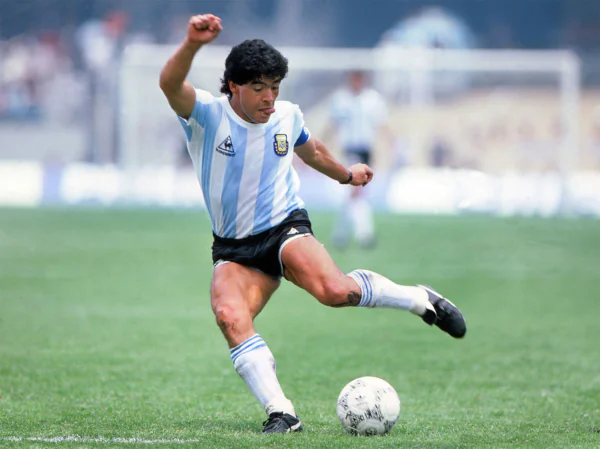
He led the Argentine national team to victory in the 1986 FIFA World Cup, including the famous “Hand of God” and “Goal of the Century” moments against England.
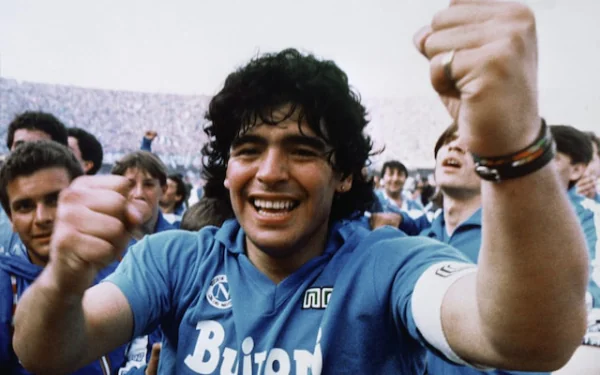
Over his 21‑year professional career, he played for top clubs such as Boca Juniors, Barcelona, and Napoli, transforming Napoli into a Serie A powerhouse.
Maradona was named FIFA Player of the 20th Century in recognition of his impact and legacy in world football.
Off the field, his life was marked by personal struggles including battles with addiction and enduring health issues later in life.
Despite immense earnings during his peak years, he faced financial difficulties later in life due to lifestyle choices and legal issues.
Maradona retired from professional play in 1997 but remained influential through coaching, media work, and football ambassadorship.
He died on November 25, 2020 at age 60, leaving a complex yet enduring legacy in the sport and popular culture.
Early Life Highlights of Diego Maradona (Background/Childhood)
Maradona was raised in Villa Fiorito, a poor shantytown outside Buenos Aires, in a large family with several siblings, where resources were scarce but football was everywhere.
He was the fifth of eight children born to his parents, Diego Senior and Dalma Salvadora Franco, and showed remarkable talent with a ball from a very young age.
Diego received his first football as a toy at around age three, quickly becoming inseparable from it, even in the harsh conditions of his neighborhood.
As a youth, he played street football and informal matches, developing exceptional ball control and confidence that would define his style later.
At age eight he joined the youth team Los Cebollitas, where his leadership helped the team achieve a remarkable unbeaten run.
Scouts quickly recognized his ability, and by age 15 he was already playing professionally for Argentinos Juniors, a club known for developing young talent.
His diminutive stature as a child—he eventually grew to around five feet five inches—made his technical brilliance and speed even more notable.
Despite limited formal education, Maradona’s passion for football shaped his early ambitions and drove him toward national prominence.
By age 16 he had debuted in Argentina’s first division and shortly after with the national team, becoming the youngest Argentine ever to achieve this at that time.
He was affectionately called “El Pibe de Oro” or “The Golden Boy” due to his natural ability and charisma even in his youth.
Current Life Highlights of Diego Maradona (Career/Other Work)
Note: Diego Maradona died in 2020, so “current life” refers to post‑career legacy, ongoing trials, and cultural impact.
Maradona’s legacy remains deeply influential in football culture, with ongoing celebrations of his contributions to the sport worldwide.
In 2025, a long‑anticipated trial of several members of his medical team began in Argentina, focusing on alleged negligence surrounding his death.
Prosecutors in the trial argue that inadequate care after brain surgery contributed to the cardiac event that led to his passing in 2020.
Family members and legal advocates have testified in court about medical decisions that may have impacted his final days.
Fans and supporters continue to speak out publicly, demanding accountability and justice in the ongoing legal proceedings.
The legacy of Maradona’s 1986 World Cup performance still inspires young players, with his iconic goals studied and remembered globally.
Homages to him are held regularly at clubs like Boca Juniors and Napoli, where his influence shaped club history and fan culture.
His image and jerseys remain popular among collectors and supporters of football memorabilia worldwide.
Multiple documentaries and biographical portrayals have continued to explore both his brilliance and personal turmoil.
Debates about Maradona’s overall standing among the greatest footballers of all time persist in sports discourse.
Personal Life Highlights of Diego Maradona (List of Romantic Relationships/List of Family Members)
Maradona married Claudia Villafañe on November 7, 1984, in Buenos Aires, and the couple had two daughters together, Dalma and Giannina.
The marriage ultimately ended in divorce in 2004, though they reportedly maintained amicable relations at times afterward.
Beyond his marriage, Maradona acknowledged fathering a son, Diego Sinagra, born from a relationship in Naples, Italy, who was legally recognized years later.
He also had other children, including Jana Maradona, recognized later in his life as part of his extended family.
Maradona’s parents, Diego Senior and Dalma Salvadora Franco, were central figures in his early life and influenced his identity and values.
He had siblings, including brothers Hugo and Raúl, who also pursued football careers to varying degrees.
Maradona became a grandfather as his daughters grew up and started families of their own.
His romantic life included high‑profile relationships and friendships within the football and entertainment world throughout his career.
Maradona’s complex family dynamics have been a subject of media attention and public discussion for decades.
His children and descendants have been involved in preserving and promoting his legacy since his passing.
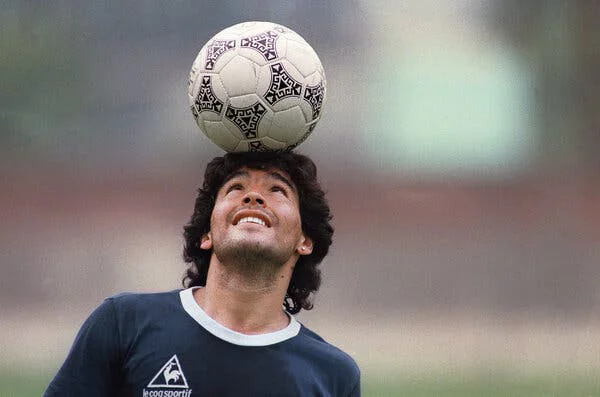
Diego Maradona Shirtless
Diego Maradona Shirtless 5
Diego Maradona Shirtless 4
Diego Maradona Shirtless 3
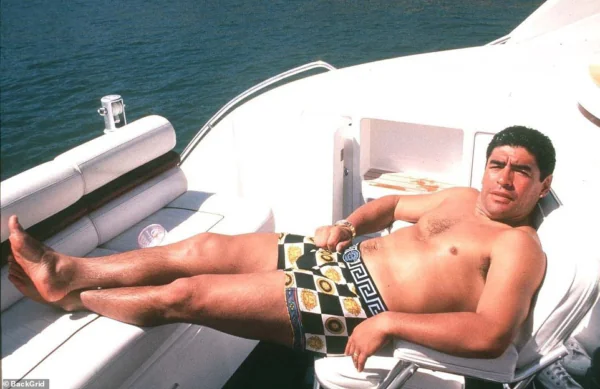
Diego Maradona Shirtless 2
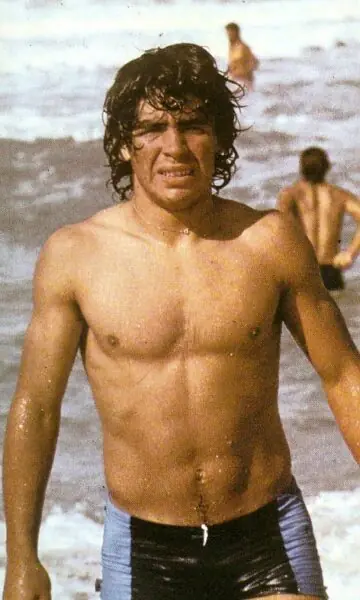
Diego Maradona Shirtless
Diego Maradona Height / How to Get Body Like Diego Maradona
Diego Maradona stood about 5 feet 5 inches tall, which made his low center of gravity an advantage on the football pitch.
His compact, muscular frame was built for agility, speed, and balance rather than raw size.
Core strength exercises, including planks and rotational movements, helped him maintain control during dribbling and quick turns.
Plyometric training, such as box jumps and lateral hops, contributed to his explosive acceleration.
Bodyweight exercises like push-ups, pull-ups, and squats supported functional strength without sacrificing mobility.
Maradona’s diet during his professional years emphasized lean protein, complex carbohydrates, and vegetables to sustain energy for matches.
Agility drills, including ladder exercises and cone sprints, enhanced his rapid changes of direction.
Endurance training, including interval runs and small-sided games, helped him maintain high performance throughout full matches.
Flexibility and stretching routines prevented injury and supported his quick-footed playing style.
Mental discipline, including visualization and focus drills, was critical to his ability to perform consistently under pressure.
Interview Quotes of Diego Maradona
In a 1986 interview with El Gráfico, Maradona said, “When I step on the pitch, I feel like I can create magic with the ball.”
Speaking to La Nación in 1990, he stated, “Football is not just a game, it is my life and my identity.”
In a 1994 interview with Clarín, Maradona commented, “Every time I touch the ball, I want to honor my people and my country.”
During a 1987 interview with BBC Sports, he said, “I do not play to be the best in the world, I play to win for Argentina.”
In a 2000 interview with ESPN, he explained, “Passion drives me more than fame; the joy of football is everything.”
Maradona told TyC Sports in 1982, “Talent alone is not enough; discipline and effort make the difference.”
In a 1993 interview with The Guardian, he reflected, “I am a man of football, sometimes flawed, but always devoted.”
Speaking to Canal 13 in 1989, he stated, “Winning is not the goal, it is the consequence of love for the game.”
In a 2005 interview with Fox Sports, he shared, “I want children to watch football and dream, just as I did as a kid.”
Maradona said in a 1996 interview with Clarín, “I carry my country in every dribble and every goal.”
TV / Movie Dialogues of Diego Maradona
In the 2008 documentary Maradona by Asif Kapadia, he says, “I want to play football as if I have wings on my feet.”
In a 2007 TV special, he remarks, “The ball is my friend and my weapon at the same time.”
During the 2014 biopic Maradona, he states, “Every dribble is a story I want to tell to the world.”
In the 1986 World Cup coverage documentary, he exclaims, “This is the moment we will never forget!”
In the 2005 interview feature on ESPN, he comments, “Football gives hope, even in the poorest neighborhoods.”
In the Netflix series Maradona in Mexico (2019), he says, “Coaching is like playing, you must feel the heartbeat of the team.”
In a 2010 TV interview special, he states, “Sometimes genius and madness are neighbors in football.”
In the 2008 documentary Maradona, he says, “I fight every match like it is my last on earth.”
In the 2016 biographical series about Argentine football, he remarks, “The ball listens to those who love it truly.”
In a 2014 TV interview, he says, “To score a goal is to write a poem without words.”
Controversies/Scandals of Diego Maradona
Maradona struggled with drug addiction, particularly cocaine, which affected both his playing career and personal life.
He faced a 15-month suspension in 1991 after testing positive for cocaine while playing in Italy.
Maradona was hospitalized several times due to obesity, liver problems, and other health complications linked to substance abuse.
His relationship with the media was often contentious, leading to publicized arguments and controversies.
Maradona had legal disputes regarding child support and paternity with children from different relationships.
In 1994, he was expelled from the FIFA World Cup in the United States after testing positive for ephedrine.
Allegations of financial mismanagement and unpaid taxes emerged throughout his career, particularly during his time in Europe.
His outspoken political views occasionally led to controversies with football authorities and governments.
Maradona’s lifestyle choices, including partying and late-night behavior, were widely criticized by the press.
Despite these scandals, he remained beloved by fans who admired his skill and devotion to football.
Lesser Known Unknown Facts Trivia of Diego Maradona
Diego Maradona was ambidextrous, able to dribble and shoot effectively with both his left and right foot.
He made his professional debut at the age of 15, making him one of the youngest footballers in Argentina’s first division.
Maradona once scored five goals in a single match for Argentinos Juniors when he was just 16.
He had a passion for music and often listened to Argentine tango to relax before matches.
Maradona was offered the chance to play for European clubs at a young age but initially chose to stay in Argentina.
He was known for his short stature, which gave him exceptional balance and agility on the field.
Maradona’s nickname, “El Pibe de Oro,” or “The Golden Boy,” was given to him by fans while he was still a teenager.
He had a strong bond with Napoli fans, and the club retired the number 10 jersey in his honor.
Despite his fame, he often returned to his childhood neighborhood, Villa Fiorito, to inspire young footballers.
Maradona once worked briefly as a coach in Mexico, bringing his unique style and personality to the team he managed.
Most Commonly Frequently Asked Discussed Questions/Topics with Answers on Diego Maradona
What was Diego Maradona’s height? He was approximately 5 feet 5 inches tall, which contributed to his low center of gravity and agility on the pitch.
How many goals did he score in his career? Maradona scored over 300 goals across club and international competitions.
What is the “Hand of God” goal? It was a controversial goal Maradona scored with his hand during the 1986 World Cup against England.
Which clubs did Maradona play for? He played for Argentinos Juniors, Boca Juniors, Barcelona, Napoli, Sevilla, and Newell’s Old Boys.
What were his biggest achievements? Winning the 1986 FIFA World Cup and leading Napoli to two Serie A titles are considered his most notable achievements.
Did Maradona struggle with health issues? Yes, he faced obesity, heart problems, and complications from past drug use.
Was Maradona involved in politics? Yes, he publicly supported several leftist political leaders, including Fidel Castro and Hugo Chávez.
How many children did he have? Maradona had at least five recognized children from different relationships.
Why is he so beloved in Naples? He transformed Napoli into a top football team and became a cultural icon in the city.
When did Diego Maradona pass away? He died on November 25, 2020, at the age of 60, leaving a lasting legacy in football history.