Didier Deschamps based on NeemTime research
Who is Didier Deschamps (Biography / Personal Details)
Didier Deschamps belongs to football’s rarest club: he won the FIFA World Cup as a player and later lifted the same trophy as a national-team coach.
Born on October 15, 1968, in Bayonne, France, he became one of the country’s most influential football figures through a career defined by discipline, leadership and major tournament success.
He first gained prominence as a defensive midfielder, a role that demanded tactical awareness, anticipation and the ability to organise teammates.
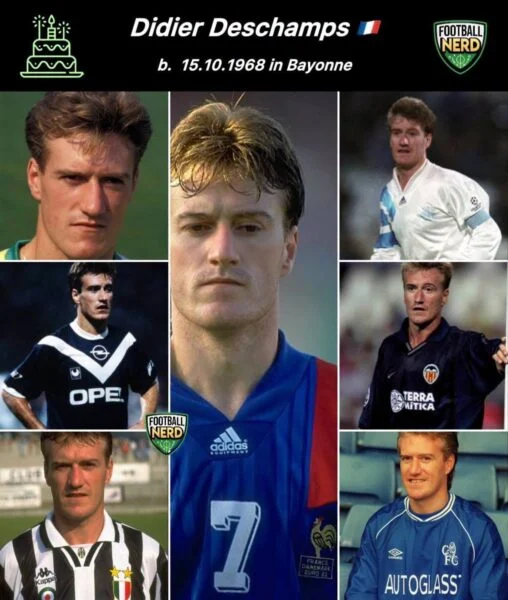
His professional playing career included Nantes, Marseille, Bordeaux, Juventus, Chelsea and Valencia.
As France captain, he led his country to its first World Cup title in 1998 and followed it with victory at UEFA Euro 2000.
He also won the UEFA Champions League with Marseille in 1993 and Juventus in 1996.
After retiring as a player in 2001, he moved into management, taking charge of Monaco, Juventus, Marseille and eventually France.
Appointed France coach in July 2012, he rebuilt the national side after years of instability and led it to the 2018 World Cup title.
France reached the 2022 World Cup final and won the UEFA Nations League in 2021 during his tenure.
His 14-year spell as France coach ended after the 2026 World Cup, leaving behind a legacy of exceptional consistency, major trophies and debate over his pragmatic playing style.
Didier Deschamps Height, Appearance, Fitness & How to Get a Body Like Didier Deschamps
Didier Deschamps built his football reputation through positioning, stamina and leadership rather than the imposing physical profile associated with some modern players.
His height is commonly reported at approximately 5 feet 8½ inches, or 1.74 metres, although a universally accessible official measurement is not consistently provided across public profiles.
As a player, he had a compact, athletic build suited to the demanding role of defensive midfielder.
That position required him to cover space, challenge opponents, recover possession and distribute the ball efficiently under pressure.
His playing style relied more on anticipation, concentration and teamwork than on spectacular dribbling or individual flair.
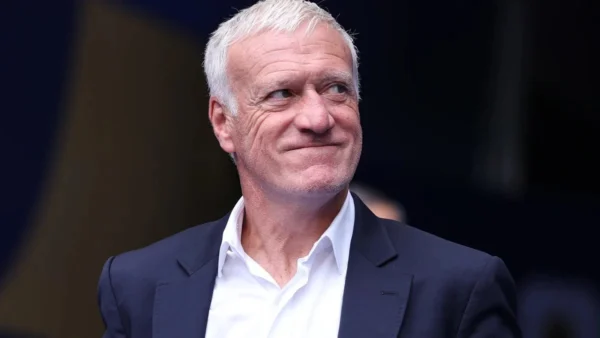
As a coach, his public appearance has become associated with a neatly groomed look and a composed touchline manner.
There is no reliable public record establishing a personal diet plan or specific workout routine that he follows today.
Anyone inspired by his former athletic condition should remember that professional footballers train under specialised coaching and medical supervision.
For general fitness, regular aerobic activity, resistance training, mobility exercises and balanced nutrition can help support strength and endurance.
The most useful lesson from Deschamps’s career is that sustained performance depends on consistency, recovery and intelligent decision-making, not on copying a celebrity’s appearance.
Didier Deschamps Shirtless
Didier Deschamps Shirtless 5
Didier Deschamps Shirtless 4
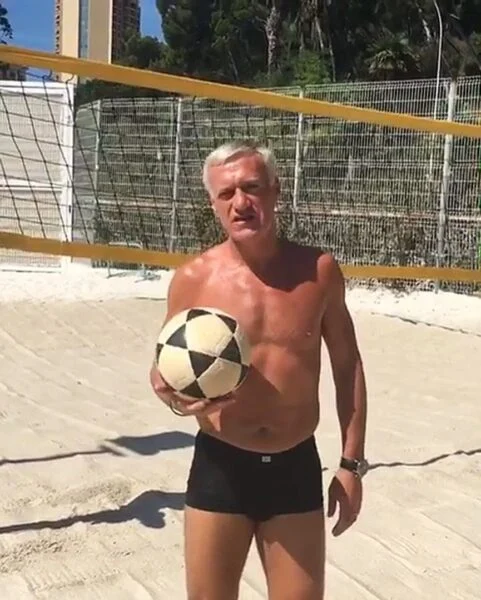
Didier Deschamps Shirtless 3
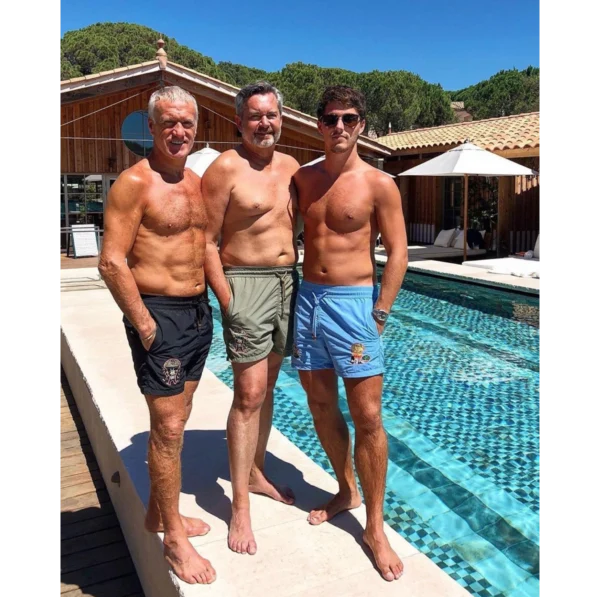
Didier Deschamps Shirtless 2
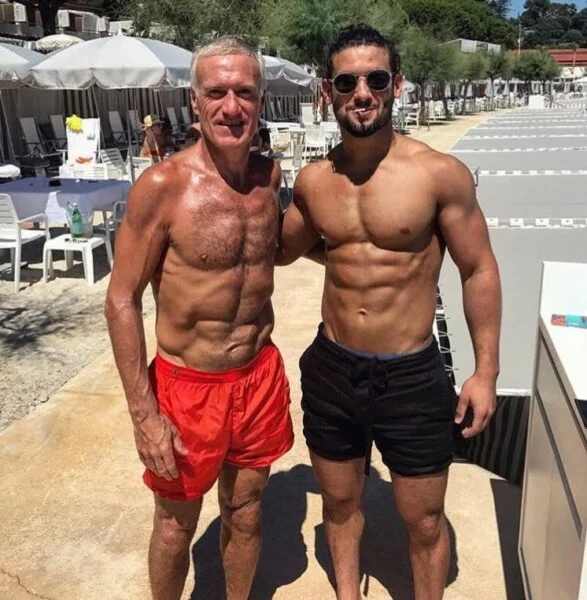
Didier Deschamps Shirtless
Early Life, Childhood, Education & Family Background of Didier Deschamps
Didier Deschamps was born in Bayonne, a city in southwestern France near the Atlantic coast and the Spanish border.
He grew up in the Basque region, where local identity and sporting culture formed part of his early environment.
As a boy, he participated in sports before football became the central focus of his ambitions.
He joined the youth system at FC Nantes, a club recognised for developing technically intelligent players.
Nantes helped him learn the tactical discipline that would later define his career as a defensive midfielder.
His professional debut came in the late 1980s, and he soon established himself as a hardworking player capable of reading the game.
Rather than relying on exceptional size or showmanship, he developed through positioning, anticipation and the ability to organise teammates.
His performances at Nantes earned him a move to Marseille, where he became part of a team that competed for major domestic and European honours.
Success at club level opened the way to the French national team, where he eventually became captain.
Public biographies provide much more detail about his football development than about his school education or private childhood, so unsupported claims about his academic history should be avoided.
Personal Life Highlights of Didier Deschamps (Family Members)
Behind Didier Deschamps’s public image as a demanding football leader is a family life he has consistently tried to protect from excessive media attention.
His wife, Claude Deschamps, has been his partner since their younger years and has accompanied him through major changes in his playing and coaching career.
The couple married on June 2, 1989, during the period when his football career was moving towards its highest level.
Claude studied speech therapy before stepping away from her professional path to support the family during Didier’s frequent transfers and demanding schedule.
Their son, Dylan Deschamps, was born in 1996 and has occasionally appeared alongside his parents at major football events.
Dylan and his wife, Mathilde, were among the family members supporting Deschamps during France’s 2026 World Cup campaign.
Deschamps has spoken publicly about how important it was to share France’s 2018 World Cup triumph with Claude and Dylan on the pitch.
His father, Pierre, has also appeared in documentaries and interviews about the coach’s personal life and values.
Deschamps’s mother, Ginette, died in 2026, a personal loss reported during the period surrounding his final World Cup as France coach.
Despite his international profile, he has generally kept family matters private, offering occasional glimpses rather than turning relatives into regular media personalities.
Didier Deschamps Partners, Relationships & Dating History
Didier Deschamps has maintained a long-standing marriage, making his relationship history notably less public than his football career.
He met Claude Deschamps in the mid-1980s while he was beginning his professional career at FC Nantes.
Claude was studying speech therapy when they met, and their relationship developed before Didier became an internationally celebrated footballer.
They married on June 2, 1989, as he was progressing towards a major role at Marseille and with the French national team.
Claude remained a consistent presence through his moves between France, Italy, England and Spain.
Deschamps has described her as someone who has supported him through both the successful and difficult periods of his career.
The couple welcomed their son, Dylan, in 1996 and have generally kept their family life away from sustained public scrutiny.
Claude rarely seeks media attention, although she has appeared at major matches and celebrations to support her husband.
There is no well-established public record of a series of previous partners or a celebrity dating history comparable to those of entertainment figures.
The most accurate account is that his publicly documented personal life centres on his marriage to Claude and their family, rather than on rumours or unverified relationship claims.
Didier Deschamps Career Journey, Breakthroughs, Achievements & Awards
Didier Deschamps’s football career is remarkable because he achieved elite success both as a player and as a manager.
He developed at Nantes before joining Marseille, where he won French league titles and captained the club to the 1993 UEFA Champions League crown.
In 1994, he moved to Juventus, winning another Champions League title in 1996 and several Italian domestic honours.
A later spell at Chelsea brought him the 2000 FA Cup, while his final playing season with Valencia ended with an appearance in the 2001 Champions League final.
For France, he earned 103 senior caps and captained the side to the 1998 World Cup and Euro 2000 titles.
He retired from playing in 2001 and began his managerial career with Monaco, leading the club to the 2004 Champions League final.
After coaching Juventus and Marseille, he took charge of France in July 2012.
His defining managerial triumph came in 2018, when France beat Croatia 4–2 in the World Cup final in Russia.
France also reached the Euro 2016 and 2022 World Cup finals, and won the UEFA Nations League in 2021.
His honours as both captain and coach place him among only three men to win the World Cup in both roles, alongside Mário Zagallo and Franz Beckenbauer.
Current Life Highlights of Didier Deschamps (Career / Other Work)
Didier Deschamps’s most significant recent career milestone was the conclusion of his long tenure as France’s national-team coach after the 2026 World Cup.
He had announced in January 2025 that he would leave the position after the tournament, describing the decision as a clear endpoint to his time in charge.
France finished fourth at the 2026 World Cup, bringing his 14-year spell as coach to a close.
His departure followed a period in which France won the 2018 World Cup, finished runner-up in 2022 and remained a regular contender in major international competitions.
The 2026 tournament also marked the end of his attempt to win a second World Cup as a coach.
Zinedine Zidane was appointed as his successor in July 2026, beginning a new chapter for the French national team.
Deschamps leaves behind a record of sustained results and a reputation for managing high-profile players through changing generations.
His coaching style, often described as pragmatic and defensively organised, produced trophies but also attracted criticism from supporters seeking more consistently adventurous football.
As of October 2026, no new club-management appointment has been firmly established in the major public announcements available.
His next professional chapter remains open, while his achievements as a player and France coach have already secured his place in the history of the sport.
Didier Deschamps Most Popular Movies, TV Shows, Media Appearances & Other Work
Didier Deschamps is primarily known for football rather than acting, but his career has generated documentaries, interviews and extensive television coverage.
The 2018 World Cup triumph provided some of the most widely watched images of his coaching career, particularly his celebrations after France defeated Croatia in Moscow.
The 1998 World Cup final, when he captained France to victory over Brazil, remains central to documentaries about his playing career.
The 2019 French television documentary Didier face à Deschamps, produced by his friend Nagui, explored the man behind the public football figure.
That programme included reflections from family members, former teammates and people who knew him outside the stadium.
His post-match interviews and tournament press conferences have frequently attracted attention because of his controlled, direct communication style.
UEFA and FIFA have also featured his career in retrospectives examining his unusual achievement of winning the World Cup as both player and coach.
His managerial work at Monaco, Juventus and Marseille has been covered in football documentaries and historical reviews of European competitions.
Coverage of France’s 2018 and 2022 World Cup campaigns further cemented his profile among audiences well beyond French-speaking countries.
For readers exploring his media appearances, documentaries and tournament retrospectives provide a fuller portrait than searching for conventional film or television acting credits.
Didier Deschamps Most Popular News, Controversies, Career Debates / Why Didier Deschamps Is Popular
Didier Deschamps’s reputation combines extraordinary results with recurring debate about his selections, tactics and public handling of difficult decisions.
In 2016, former France international Éric Cantona suggested that Deschamps had excluded Karim Benzema and Hatem Ben Arfa from the European Championship squad because of their North African backgrounds.
Benzema also accused Deschamps of yielding to racist pressure, allegations the coach rejected.
The controversy escalated when the word “racist” was painted on Deschamps’s property in Brittany, an act he publicly condemned as unacceptable.
Deschamps maintained that his selections were based on footballing considerations, while his lawyer indicated that legal action was being considered over the allegations.
Another major dispute followed Benzema’s departure from France’s 2022 World Cup camp after a thigh injury.
Benzema later challenged Deschamps’s account of events, while the coach said the matter was closed and declined to continue the public exchange.
Tactical criticism has also followed Deschamps throughout his tenure, with some supporters arguing that his cautious approach can limit France’s attacking potential.
Yet the 2018 World Cup title, the 2021 Nations League triumph and the 2022 World Cup final repeatedly strengthened his case as a results-driven manager.
His popularity ultimately rests on the contrast between an understated public personality, controversial decisions and a trophy record few international coaches can match.
Didier Deschamps Known Unknown Facts, Trivia + People Also Ask / Search & Answers
Didier Deschamps is nicknamed “DD,” a shorthand widely used by French media and football supporters.
He captained France to the 1998 World Cup title on home soil before becoming the coach who delivered the country’s second World Cup crown in 2018.
He won the Champions League with two different clubs as a player, Marseille in 1993 and Juventus in 1996.
His playing career included a season at Chelsea, where he won the FA Cup in 2000.
The 2019 documentary Didier face à Deschamps offered a rare look at his family life and relationships away from football.
How old is Didier Deschamps in 2026? Born on October 15, 1968, he turns 58 in October 2026.
How tall is Didier Deschamps? His height is commonly listed as approximately 5 feet 8½ inches, or 1.74 metres.
Is Didier Deschamps still France’s coach? No, he left the role after the 2026 World Cup, and Zinedine Zidane was appointed as his successor.
Who is Didier Deschamps’s wife? He married Claude Deschamps in 1989, and they have one son, Dylan.
Did Didier Deschamps win the World Cup as both a player and coach? Yes, he won as France’s captain in 1998 and as head coach in 2018, joining an exceptionally small group in football history.