Agnetha Faltskog based on NeemTime research
Who Is Agnetha Fältskog (Biography / Personal Details)
Agnetha Fältskog became one of pop music’s most recognisable voices as a member of ABBA, yet she had already achieved major success in Sweden before the group conquered the world.
Born Agnetha Åse Fältskog on April 5, 1950, in Jönköping, Sweden, she developed an interest in music during childhood.
She began writing songs as a young girl and learned to play the piano before pursuing professional singing.
Her first major breakthrough came in 1967 with the Swedish single “Jag var så kär,” which established her as a promising solo artist.
In 1972, she joined Björn Ulvaeus, Benny Andersson and Anni-Frid Lyngstad in the group that became ABBA.
The quartet achieved international stardom after winning the 1974 Eurovision Song Contest with “Waterloo.”
Fältskog’s clear, expressive vocals became central to songs including “Dancing Queen,” “The Winner Takes It All” and “SOS.”
Alongside her work with ABBA, she built a solo career in Swedish and English, releasing successful albums across several decades.
She has generally preferred privacy away from the spotlight, making her relatively rare interviews particularly interesting to fans.
Her story combines early songwriting talent, extraordinary international success, personal change and a musical legacy that continues to reach new generations.
Agnetha Fältskog Height, Appearance, Fitness & How to Get a Body Like Agnetha Fältskog
Agnetha Fältskog’s instantly recognisable stage image helped make her one of ABBA’s most memorable performers, alongside her distinctive voice and expressive delivery.
Her height is commonly listed as approximately 5 feet 8 inches, although this figure comes from entertainment-biography listings rather than a clearly established official measurement.
She became widely associated with blonde hair, blue eyes and the colourful costumes worn during ABBA’s 1970s performances.
The group’s sparkling outfits, fitted jumpsuits and coordinated stage styling became part of its visual identity during the disco era.
Fältskog’s appearance later evolved toward a more understated style as she reduced her public appearances and focused on family and recording projects.
There is no reliably documented personal workout schedule that would justify claims about a specific fitness routine.
Likewise, no verified evidence establishes a special diet as the secret behind her appearance or long career.
Anyone inspired by her should approach fitness through regular movement, balanced meals, sufficient sleep and advice suited to individual needs.
Her stage performances required stamina and coordination, but that does not prove she followed any particular exercise programme.
Ultimately, her lasting appeal rests on musical ability, performance presence and personal style rather than a prescribed body shape.
Agnetha Faltskog Family
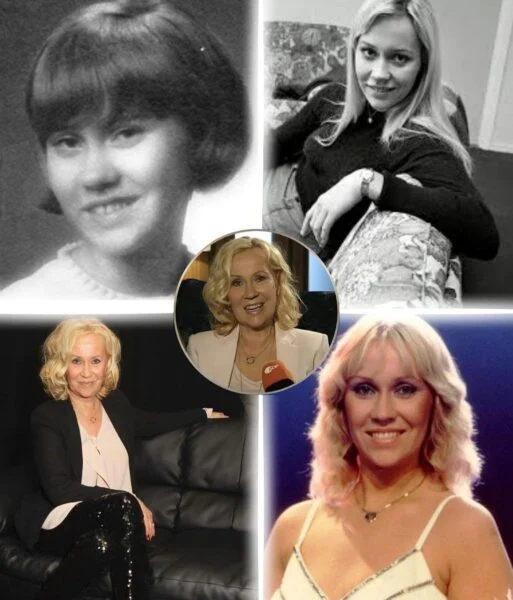
Agnetha Faltskog Family 5
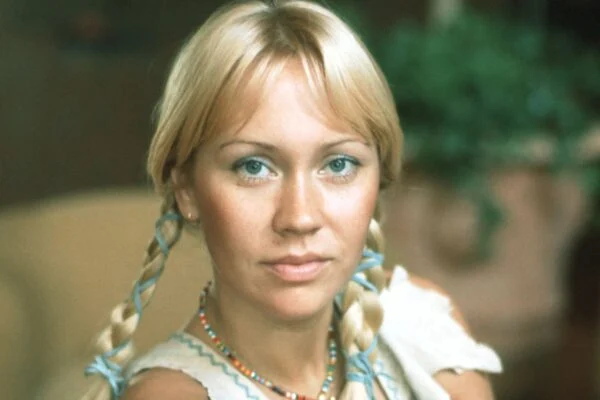
Agnetha Faltskog Family 4
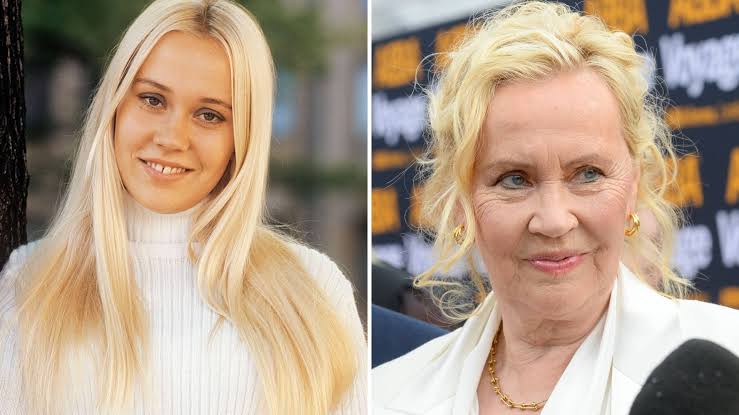
Agnetha Faltskog Family 3
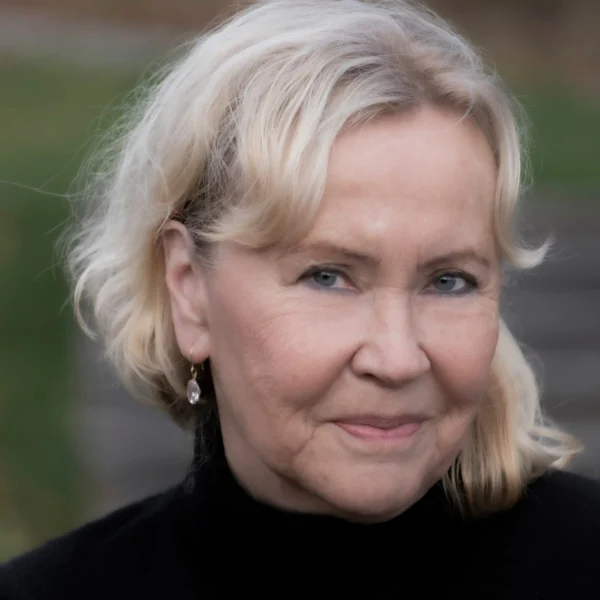
Agnetha Faltskog Family 2
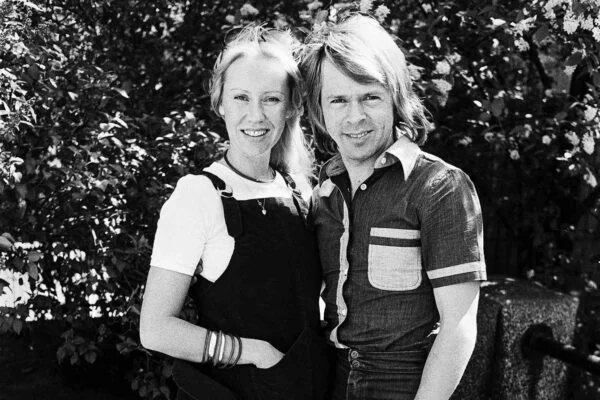
Agnetha Faltskog Family
Early Life, Childhood, Education & Family Background of Agnetha Fältskog
Agnetha Fältskog grew up in Jönköping, a Swedish town where her musical ambitions began long before international fame became imaginable.
Her father, Ingvar Fältskog, was interested in entertainment and encouraged her early exposure to performing.
Her mother, Birgit Margareta Johansson, supported the family while Agnetha developed her musical interests.
Fältskog reportedly wrote her first song, “Två små troll,” meaning “Two Little Trolls,” when she was about five or six years old.
She received piano lessons as a child and began performing publicly while still young.
As a teenager, she sang with local groups, including the Cambers, before joining Bernt Enghardt’s dance band.
She left school at around fifteen to pursue music and worked as a telephone operator while continuing to sing.
A recording demo featuring her own composition reached Swedish producer and performer Little Gerhard, who recognised her potential as a solo artist.
The resulting recording of “Jag var så kär” became a breakthrough in 1967 and helped launch her professional career.
Her early success demonstrated that she was not simply a future member of ABBA but an established singer and songwriter in her own right.
Personal Life Highlights of Agnetha Fältskog (Family Members)
Although Agnetha Fältskog has spent decades in the public eye, she has generally kept her family life more private than her musical achievements.
Her parents were Ingvar Fältskog and Birgit Margareta Johansson, and she grew up with a younger sister, Mona.
She married fellow ABBA member Björn Ulvaeus on July 6, 1971, after their relationship developed in the late 1960s.
Their daughter, Linda Ulvaeus, was born in 1973, followed by their son, Peter Christian Ulvaeus, in 1977.
The couple’s marriage ended in divorce in 1980, but both continued their work with ABBA during the group’s remaining active years.
Their separation became a source of public interest because fans were fascinated by the personal relationships behind the group’s music.
Fältskog later married Swedish surgeon Tomas Sonnenfeld in a private ceremony in December 1990.
That marriage ended in divorce in the early 1990s, and she subsequently maintained a much lower public profile.
She has become a grandmother through her children, although she generally avoids turning her descendants’ private lives into public news.
Her family relationships remain an important part of her biography, but she has consistently sought a balance between public recognition and personal privacy.
Agnetha Fältskog Partners, Relationships & Dating History
Agnetha Fältskog’s best-known relationship was with songwriter and musician Björn Ulvaeus, whom she met before ABBA became an international phenomenon.
They became romantically involved in 1969 and married on July 6, 1971, in Sweden.
Their partnership brought together two rising music careers, and their family life developed alongside ABBA’s rapid rise to global fame.
They had two children, Linda and Peter Christian, before announcing their separation in 1978.
Their divorce was finalised in 1980, but the end of their marriage did not immediately end their professional collaboration within ABBA.
The emotional complexity of their separation later attracted attention because the group recorded songs about heartbreak and relationship breakdown.
However, listeners should not assume that every ABBA lyric directly describes the couple’s private experiences.
Fältskog later married surgeon Tomas Sonnenfeld in December 1990, in a ceremony kept largely away from the media.
That marriage also ended in divorce, after which she guarded her romantic life closely.
Beyond these documented relationships, reports linking her to other people should be treated cautiously unless supported by reliable biographical evidence or direct statements.
Agnetha Fältskog Career Journey, Breakthroughs, Achievements & Awards
Agnetha Fältskog’s career began with a song she wrote herself, a sign of the musical independence that continued throughout her life.
Her 1967 Swedish single “Jag var så kär” became a major early success and established her as a recording artist before ABBA existed.
She released Swedish solo albums and also recorded songs in German, expanding her audience beyond her home country.
In 1972, she joined Björn Ulvaeus, Benny Andersson and Anni-Frid Lyngstad in the group that soon became ABBA.
The group’s victory with “Waterloo” at Eurovision in 1974 launched an international career that produced enduring hits and worldwide record sales.
Fältskog’s lead vocals helped define songs such as “SOS,” “Knowing Me, Knowing You,” “The Winner Takes It All” and “Chiquitita.”
During ABBA’s years, she also released the Swedish-language album Elva kvinnor i ett hus, writing and producing most of its material.
Her English-language solo albums Wrap Your Arms Around Me (1983), Eyes of a Woman (1985) and I Stand Alone (1987) achieved notable success, particularly in Sweden and Europe.
After returning with My Colouring Book in 2004, she released A in 2013, featuring the Gary Barlow duet “I Should’ve Followed You Home.”
ABBA’s 2021 album Voyage and her 2023 solo project A+ demonstrated that her musical influence remained relevant decades after her initial breakthrough.
Current Life Highlights of Agnetha Fältskog (Career / Other Work)
Agnetha Fältskog remains an influential figure in pop music, although she generally avoids the relentless touring and publicity schedules associated with many international stars.
Her most recent solo album project is A+, released in October 2023 as a reimagined version of her 2013 album A.
The project included “Where Do We Go from Here?”, her first new solo song in a decade.
The original A album featured songwriting and production by Jörgen Elofsson and Anton Mårtenson, along with a guest vocal from Gary Barlow.
She also returned to the international spotlight with ABBA’s 2021 album Voyage, which reunited the four members on new recordings.
The group’s virtual concert production, ABBA Voyage, has continued bringing its music to audiences through digital performances in London.
In October 2026, “The Winner Takes It All” reached one billion streams on Spotify, becoming ABBA’s third song to reach that milestone.
Fältskog described the song’s popularity as deeply moving, particularly as younger listeners helped revive interest in its emotional lyrics.
The milestone showed how ABBA’s catalogue continues to attract new audiences through streaming platforms and social-media trends.
As of October 29, 2026, no newer solo album announcement has been reliably confirmed, leaving A+ as her latest major solo release.
Agnetha Fältskog Most Popular Movies, TV Shows, Media Appearances & Other Work
Agnetha Fältskog is best known for music, but she also explored acting and theatre before returning her main attention to recording.
In 1972, she played Mary Magdalene in the Swedish stage production of Jesus Christ Superstar, an important early experience beyond pop performance.
Her best-known film role came in Raskenstam, a Swedish film released in 1983 and directed by Gunnar Hellström.
She played Lisa Mattsson in the drama, which was inspired by the real-life story of a man who deceived women through romantic relationships.
The film attracted a substantial Swedish cinema audience, making it a notable part of her brief acting career.
Fältskog did not go on to build a regular filmography, and Raskenstam remains her principal screen acting credit.
Her television appearances with ABBA, especially performances of “Waterloo,” “Dancing Queen” and “The Winner Takes It All,” are far more central to her public legacy.
The group’s Eurovision victory in 1974 and its later television specials helped introduce her voice and stage presence to audiences worldwide.
In 2023, she gave a major interview discussing fame, family, music and the reasons she had often kept away from public attention.
Her later interviews and appearances have generally focused on ABBA’s enduring music and her solo recordings rather than pursuing a new acting career.
Agnetha Fältskog Most Popular News, Controversies, Career Debates / Why Agnetha Fältskog Is Popular
Agnetha Fältskog’s fame has often been accompanied by intense curiosity about her private life, particularly during ABBA’s peak years.
Her 1978 separation from Björn Ulvaeus attracted extensive press attention because the couple were both members of the same globally successful group.
The emotional subject matter of “The Winner Takes It All,” released in 1980, later encouraged speculation about whether the song directly reflected their divorce.
Björn Ulvaeus wrote the lyrics, and although the separation influenced public interpretations, the song should not be treated as a literal documentary account of their marriage.
Fältskog also faced persistent tabloid attention during the 1980s, including inaccurate reports about her romantic relationships.
She later withdrew from much of public life, a decision that prompted sensational claims about her wellbeing that were not always supported by evidence.
A serious episode involved a former partner who reportedly became a stalker, leading to legal protection and increasing concerns about unwanted attention.
Her limited public appearances were often interpreted as mysterious, although she has spoken about valuing privacy and preferring a quieter life.
In 2026, renewed streaming success brought fresh attention to “The Winner Takes It All,” which crossed one billion Spotify streams on October 1.
Her popularity endures because of her distinctive voice, ABBA’s remarkable catalogue and the continuing interest in the human stories behind its most emotional songs.
Agnetha Fältskog Known Unknown Facts, Trivia + People Also Ask / Search & Answers
Agnetha Fältskog wrote her first song, “Två små troll,” as a young child, years before her recording career began.
Her first major solo hit, “Jag var så kär,” was released in 1967 and helped make her a recognised Swedish singer before ABBA formed.
She recorded German-language songs early in her career, reflecting efforts to reach listeners in West Germany as well as Sweden.
Fältskog wrote and produced most of her Swedish solo album Elva kvinnor i ett hus, showing a creative role beyond singing.
She played Mary Magdalene in a Swedish stage production of Jesus Christ Superstar in 1972.
Her only major film acting role was Lisa Mattsson in the 1983 Swedish film Raskenstam.
Her solo album A included “I Keep Them on the Floor Beside My Bed,” her first self-written song in nearly three decades.
The 2023 album A+ reimagined the original A recordings and added the new song “Where Do We Go from Here?”
In October 2026, “The Winner Takes It All” joined “Dancing Queen” and “Gimme! Gimme! Gimme! (A Man After Midnight)” as ABBA songs with more than one billion Spotify streams each.
How old is Agnetha Fältskog? Born on April 5, 1950, she is 76 years old as of October 2026.
Is Agnetha Fältskog still singing? Her latest major solo release is A+ from 2023, and she remains associated with ABBA’s music, although no newer solo album has been confirmed as of October 2026.