Bipin Rawat based on NeemTime research
Who is Bipin Rawat (Biography / Personal Details)
General Bipin Rawat rose to the highest level of India’s military leadership, becoming the country’s first Chief of Defence Staff before his life was cut short in a helicopter crash in 2021.
He was born on 16 March 1958 in Pauri, in the Garhwal region of what is now Uttarakhand, India.
Rawat was a four-star general who served as the 27th Chief of the Army Staff from December 2016 to December 2019.
On 1 January 2020, he became India’s first Chief of Defence Staff, a new position created to improve coordination among the Army, Navy and Air Force.
His career spanned more than four decades and included command responsibilities in counter-insurgency operations, sensitive border regions and international peacekeeping.
He served in the Gorkha Rifles, the regiment in which his father had also served.
Rawat became known for his direct communication style and strong views on military preparedness, national security and defence reform.
His tenure also generated debate over the military’s role in public affairs, particularly after comments he made about protests against India’s citizenship law in 2019.
On 8 December 2021, he died in a military helicopter crash near Coonoor in Tamil Nadu, along with his wife and 11 other people.
His legacy remains closely associated with the creation of the Chief of Defence Staff position, efforts to integrate India’s armed forces and continuing debate over his leadership decisions.
Bipin Rawat Height, Appearance, Fitness & How to Get a Body Like Bipin Rawat
Bipin Rawat’s military appearance was defined less by celebrity-style fashion than by the disciplined uniform and bearing expected of a senior Indian Army officer.
His exact height was not consistently documented in authoritative public records, although some online biographies circulate estimates of around 5 feet 8 inches.
That figure should be treated as an unverified estimate rather than an officially confirmed measurement.
In formal military settings, Rawat was frequently seen wearing his decorated service uniform, with insignia reflecting his rank, regiment and career achievements.
His public appearance also included the peaked cap and ceremonial uniform associated with senior Army leadership.
Military photographs show his professional presentation, but they cannot establish his precise body measurements or provide a reliable assessment of his physical condition.
A detailed, verified personal workout plan or diet attributed to Rawat is not readily available in reliable public records.
People interested in developing military-style general fitness can focus on gradual cardiovascular conditioning, basic strength exercises, mobility and consistent recovery.
Walking, running, cycling and body-weight exercises can help build endurance, while strength training should be adapted to a person’s age, health and experience.
Rawat’s military career required professional discipline, but it would be misleading to claim that a particular exercise or diet routine explains his appearance without documented evidence.
Bipin Rawat Family
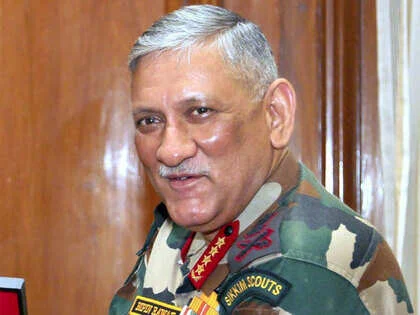
Bipin Rawat Family 5
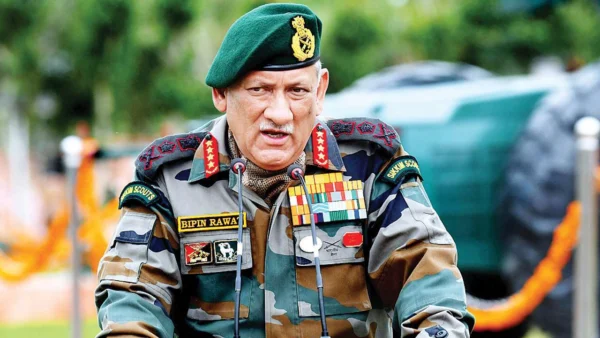
Bipin Rawat Family 4
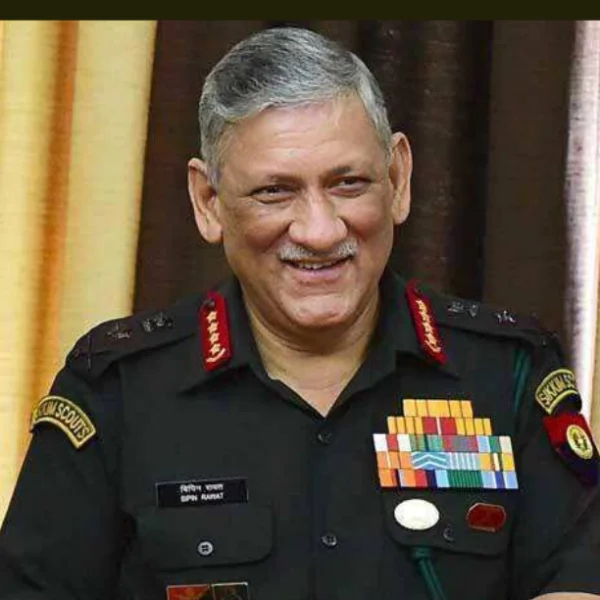
Bipin Rawat Family 3
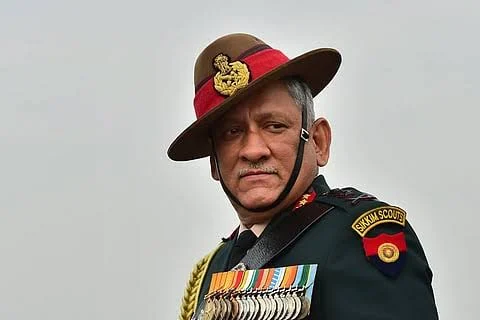
Bipin Rawat Family 2
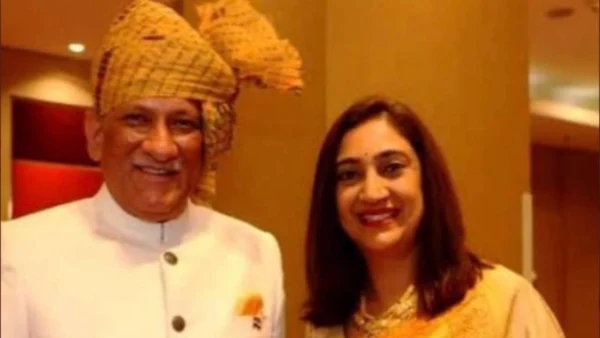
Bipin Rawat Family
Early Life, Childhood, Education & Family Background of Bipin Rawat
Bipin Rawat was born into a military family, and that background placed service life close to the centre of his upbringing.
He was born on 16 March 1958 in Pauri, in the Garhwal hills of present-day Uttarakhand.
His father, Lieutenant General Lakshman Singh Rawat, served in the Indian Army and reached senior command rank.
Growing up in a family with a military tradition gave Rawat an early connection to the armed forces, although his own career still required formal training and years of service.
He attended Cambrian Hall in Dehradun and St Edward’s School in Shimla before entering military education.
Rawat joined the National Defence Academy at Khadakwasla, a major training institution for future Indian military officers.
He subsequently attended the Indian Military Academy in Dehradun, where he received the Sword of Honour for his performance as a cadet.
His later professional education included the Defence Services Staff College in Wellington and the Higher Command Course at the United States Army Command and General Staff College at Fort Leavenworth.
He earned an MPhil in Defence Studies and also received qualifications in management and computer studies from the University of Madras.
These academic and military experiences prepared him for a career that eventually moved beyond field command into senior operational leadership and the coordination of India’s three armed services.
Personal Life Highlights of Bipin Rawat (Family Members)
Behind General Bipin Rawat’s public identity as a military commander was a family life that remained largely private until the tragedy that took his life.
He married Madhulika Raje Singh in 1985, and she accompanied him through many stages of his military career.
Madhulika was involved in welfare work for military families and served as president of the Army Wives Welfare Association during his tenure as Chief of the Army Staff.
After Rawat became India’s first Chief of Defence Staff, she took on a leadership role in the Defence Wives Welfare Association.
Her work included supporting the welfare and financial independence of military spouses, as well as initiatives involving veterans’ widows and other vulnerable groups.
The couple had two daughters, Kritika Rawat and Tarini Rawat, who largely stayed out of the public spotlight.
Their family life was shaped by the demands of military postings, official responsibilities and the security considerations surrounding a senior officer.
On 8 December 2021, Rawat and Madhulika were travelling together aboard an Indian Air Force Mi-17V5 helicopter in Tamil Nadu.
Both died in the crash near Coonoor, along with 11 other people, leaving their daughters to perform the last rites of their parents.
The family’s loss became a national moment of mourning, while the daughters have continued to maintain a comparatively private public profile.
Bipin Rawat Partners, Relationships & Dating History
Bipin Rawat’s publicly documented relationship history centres on his marriage to Madhulika Rawat, rather than a celebrity-style dating life.
He married Madhulika Raje Singh in 1985, long before he became Chief of the Army Staff or India’s first Chief of Defence Staff.
Madhulika came from a family associated with the former princely state of Rewa and was educated at Scindia Kanya Vidyalaya in Gwalior.
She graduated in psychology from the University of Delhi and later devoted considerable attention to welfare activities involving military families.
Their marriage lasted more than three decades and continued through Rawat’s postings, promotions and increasingly demanding leadership appointments.
The couple had two daughters, Kritika and Tarini, and generally kept family matters separate from his official military duties.
Madhulika occasionally appeared with him at official functions and military events, reflecting the public responsibilities that accompanied his senior rank.
There is no credible, well-documented record establishing a series of previous romantic partners or a public dating timeline for Rawat.
Claims about private relationships beyond his confirmed marriage should therefore not be repeated as facts without reliable evidence.
Their marriage ended tragically when both died in the helicopter crash near Coonoor on 8 December 2021.
Bipin Rawat Career Journey, Breakthroughs, Achievements & Awards
Bipin Rawat’s military career began in December 1978, when he was commissioned into the 5th Battalion of the 11 Gorkha Rifles.
His early service included assignments in difficult mountain and border environments, where operational experience became central to his professional development.
During the 1987 Sino-Indian military standoff in the Sumdorong Chu valley, his battalion served in a tense border area.
He later held command responsibilities in Kashmir and the northeastern region, including leadership roles connected with counter-insurgency operations.
Rawat also commanded a multinational brigade serving with the United Nations mission in the Democratic Republic of the Congo.
He became Vice Chief of the Army Staff before being appointed Chief of the Army Staff on 31 December 2016.
In January 2020, he made history as India’s first Chief of Defence Staff, a post intended to strengthen joint planning and coordination among the three services.
His honours included the Param Vishisht Seva Medal, Uttam Yudh Seva Medal, Ati Vishisht Seva Medal, Yudh Seva Medal, Sena Medal and Vishisht Seva Medal.
He was also awarded the Padma Vibhushan posthumously in 2022, recognising his service to the country.
His most enduring institutional achievement was helping establish the Chief of Defence Staff role and advance military integration, although the long-term impact of reforms remains a matter of continuing evaluation.
Current Life Highlights of Bipin Rawat (Career / Other Work)
Bipin Rawat has no current professional role because he died on 8 December 2021, but his military legacy continues to shape discussions about India’s defence structure.
His final appointment was as the country’s first Chief of Defence Staff, a position created to improve coordination among the Army, Navy and Air Force.
He assumed the role on 1 January 2020 after completing his tenure as Chief of the Army Staff.
A central part of his work involved promoting greater joint planning, coordinated procurement and closer integration between the services.
The reform agenda included the development of theatre commands, designed to bring assets from multiple services under integrated operational leadership.
These proposals remained a major institutional discussion after his death, as implementation required agreement across the armed forces and the government.
Rawat’s military service is also remembered through official commemorations, memorial events and tributes from serving and retired defence personnel.
The Indian government awarded him the Padma Vibhushan posthumously in 2022, one of the country’s highest civilian honours.
His death also renewed public attention to the safety of military helicopter operations and the risks faced by senior officials travelling in operational aircraft.
Today, his relevance lies in the debate over how far the reforms he championed have advanced and how India should organise its armed forces for future security challenges.
Bipin Rawat Most Popular Movies, TV Shows, Media Appearances & Other Work
General Bipin Rawat was known for military leadership and public affairs, not for an acting or entertainment career.
His most widely viewed appearances were news interviews, official briefings, military ceremonies and speeches on national security.
As Chief of the Army Staff, he addressed journalists on military preparedness, border tensions and the Army’s operational priorities.
His appointment as India’s first Chief of Defence Staff in January 2020 brought him frequent coverage on television news and in newspaper interviews.
Defence discussions involving China, Pakistan, counter-insurgency operations and military modernisation were recurring subjects of his public appearances.
He also participated in official events involving military training institutions, including the National Defence Academy and Indian Military Academy.
His speeches on defence reform attracted attention because the new Chief of Defence Staff position was intended to reshape coordination among the three services.
International media covered his statements during periods of heightened tension along India’s borders, particularly when military developments carried wider diplomatic implications.
His December 2019 comments about leadership and protests against the Citizenship Amendment Act generated extensive television discussion and political debate.
Unlike actors or television personalities, Rawat’s public legacy is best understood through military addresses, policy discussions, official ceremonies and news coverage rather than a filmography.
Bipin Rawat Most Popular News, Controversies, Career Debates / Why Bipin Rawat Is Popular
Bipin Rawat became a prominent national figure because he combined senior military command with a reform agenda that changed how India organised its defence leadership.
His appointment as Chief of the Army Staff in December 2016 attracted attention because he was selected over several senior officers, prompting debate about the government’s appointment decision.
In 2018, he defended an Army officer who had used a civilian as a human shield in Kashmir, a case that had already sparked widespread criticism and legal debate.
Supporters argued that the officer’s actions occurred during a difficult counter-insurgency operation, while critics questioned the treatment of civilians and the commendation subsequently awarded.
In December 2019, Rawat criticised those he said were leading students towards violence during protests against the Citizenship Amendment Act.
Opposition leaders and some retired military figures argued that a serving Army chief should avoid comments that could be interpreted as taking sides in a political dispute.
Army headquarters said his remarks were not intended as a political statement, and Rawat subsequently stressed that the armed forces stayed away from politics.
His appointment as the first Chief of Defence Staff in January 2020 was welcomed by advocates of military integration but also prompted debate over the concentration of authority and the future structure of the services.
His death in the December 2021 helicopter crash became a major national story, followed by official mourning and public discussion of the accident.
The central career debate surrounding Rawat remains how to balance decisive military leadership and institutional reform with civilian oversight, professional neutrality and accountability.
Bipin Rawat Known Unknown Facts, Trivia + People Also Ask / Search & Answers
Bipin Rawat’s career included international service, advanced military education and a landmark appointment that changed India’s defence leadership structure.
He received the Sword of Honour at the Indian Military Academy, an award associated with exceptional overall performance during officer training.
He was commissioned into the 11 Gorkha Rifles, the same regiment in which his father, Lieutenant General Lakshman Singh Rawat, had served.
His military experience included service with a United Nations mission in the Democratic Republic of the Congo, extending his career beyond India’s borders.
He studied at the United States Army Command and General Staff College at Fort Leavenworth and was later inducted into its International Hall of Fame.
Rawat’s qualifications included an MPhil in Defence Studies, alongside diplomas in management and computer studies.
He became India’s first Chief of Defence Staff on 1 January 2020, a position created to strengthen coordination between the three armed services.
When was Bipin Rawat born? He was born on 16 March 1958 in Pauri, in present-day Uttarakhand, India.
Who was Bipin Rawat’s wife? He was married to Madhulika Rawat, who also died in the helicopter crash on 8 December 2021.
How did Bipin Rawat die? He died in an Indian Air Force Mi-17V5 helicopter crash near Coonoor in Tamil Nadu.
What was Bipin Rawat’s highest military position? He was India’s first Chief of Defence Staff, after serving as Chief of the Army Staff from 2016 to 2019.