Ah Xian based on NeemTime research
Who Is Ah Xian (Biography / Personal Details)
Ah Xian is a Chinese-born Australian contemporary artist whose porcelain sculptures transform traditional Chinese craftsmanship into striking modern portraits.
Born Liu Ji Xian in Beijing in 1960, he is internationally recognised for combining realistic human forms with intricate decorative patterns.
He initially developed his artistic practice as a self-taught painter before becoming known for sculpture.
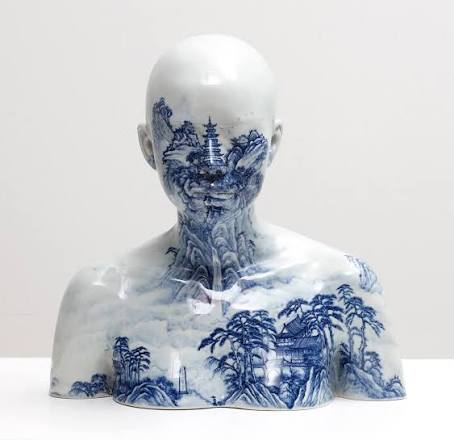
His best-known body of work, China, China, features porcelain busts decorated with traditional Chinese imagery.
The sculptures explore cultural identity, migration, heritage and the relationship between Chinese artistic traditions and Western portraiture.
In 1989, he travelled to Australia for an artistic residency at the University of Tasmania shortly before the Tiananmen Square crackdown in China.
He subsequently sought political asylum in Australia with his younger brother, fellow artist Liu Xiao Xian.
His experiences as a migrant profoundly influenced the themes of belonging and cultural displacement that appear throughout his work.
He received major recognition with the National Gallery of Australia’s inaugural National Sculpture Prize in 2001.
Today, Ah Xian is regarded as an important contemporary artist whose sculptures connect traditional Chinese decorative techniques with international conversations about identity and history.
Ah Xian Height, Appearance, Fitness & How to Get a Body Like Ah Xian
Ah Xian is best known for the human forms he creates as sculptures rather than for his personal appearance or physical fitness.
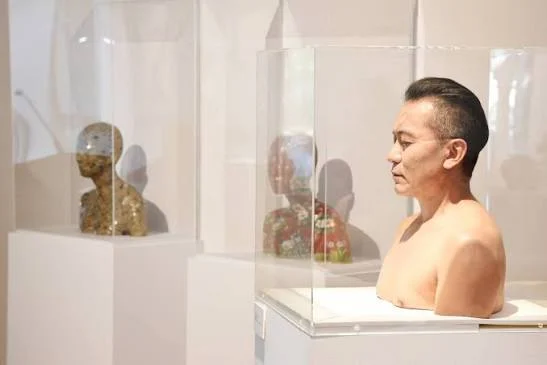
His artistic practice frequently centres on life-cast heads, busts and full-body figures that preserve distinctive details of individual sitters.
A reliably verified public measurement of his height is not available in major institutional biographies.
Consequently, online estimates should not be presented as confirmed measurements or treated as established biographical facts.
His China, China series uses realistic human busts decorated with elaborate Chinese patterns, including flowers, landscapes, birds and dragons.
Many of these sculptures feature closed eyes and calm expressions, giving the figures a contemplative quality.
His work in bronze, concrete, porcelain and cloisonné demonstrates that the physical appearance of a sculpture can change dramatically through its materials.
There is no verified public account establishing a personal workout routine, diet plan or fitness programme associated with the artist.
Anyone seeking a healthy physique should rely on appropriate exercise, balanced nutrition, recovery and professional health advice rather than assumptions about a public figure.
For readers discovering Ah Xian, the most meaningful aspect of his visual identity is his artistic treatment of the human body, not an undocumented fitness regimen.
Ah Xian Family

Ah Xian Family 5
Ah Xian Family 4
Ah Xian Family 3
Ah Xian Family 2
Ah Xian Family
Early Life, Childhood, Education & Family Background of Ah Xian
Ah Xian grew up in Beijing during the Cultural Revolution, a period that significantly shaped the artistic opportunities available to his generation.
Born Liu Ji Xian in 1960, he developed his creative interests when formal art education was difficult to access.
Both his parents held positions at universities, according to published biographical accounts of his early life.
Rather than attending a conventional art academy, he completed technical training as a mechanical fitter and subsequently worked in a factory.
He taught himself painting and drawing, gradually becoming involved in Beijing’s experimental art scene during the early 1980s.
In 1983, he adopted the artistic name Ah Xian while developing a professional identity independent of his birth name.
His early nude paintings attracted official scrutiny during China’s anti-spiritual-pollution campaign, and he was reportedly detained overnight.
He became associated with the broader experimental movement that challenged conventional artistic restrictions in China.
In early 1989, he travelled to Australia for an artistic residency at the University of Tasmania’s School of Art.
The political violence surrounding the Tiananmen Square protests later that year changed his circumstances and contributed to his decision to seek asylum in Australia.
Personal Life Highlights of Ah Xian (Family Members)
Ah Xian’s family background is connected to both academic life in Beijing and the artistic journey that eventually brought him to Australia.
His parents worked at universities, providing an educational family environment even though he pursued an unconventional path into art.
His younger brother, Liu Xiao Xian, is also an artist and shared his decision to seek political asylum in Australia.
Their experiences of migration form an important part of the historical context surrounding their careers.
After arriving in Australia, Ah Xian spent years supporting himself through practical jobs while continuing to develop his artistic practice.
His early years in Sydney included work in a T-shirt factory and employment as a house painter.
These circumstances meant that establishing an artistic career required persistence alongside the challenge of building a life in a new country.
His later collaborations with skilled Chinese craftspeople also demonstrate the importance of creative relationships in his professional development.
He has used living models, including people from his personal circle, as subjects for his distinctive sculptural portraits.
Detailed information about his spouse, children and wider private family life is not consistently documented in reliable public biographies, so further claims should be treated cautiously.
Ah Xian Partners, Relationships & Dating History
Ah Xian maintains a comparatively private public profile, and reliable biographies concentrate on his artistic practice rather than his romantic relationships.
Major museum profiles identify him as a Chinese-born Australian artist but do not provide a detailed dating history.
There is no sufficiently reliable public record establishing a sequence of romantic partners or a confirmed relationship timeline.
His younger brother, Liu Xiao Xian, is a documented family connection and fellow artist, rather than a romantic partner.
Ah Xian’s life has been shaped by migration, artistic experimentation and the challenge of developing a career across different cultural environments.
His work has involved casting portraits of living people, including friends and family members, although the identity of a model should not automatically be interpreted as evidence of a personal relationship.
His preference for a relatively low-profile public presence also means that many details of his private life remain outside established biographical accounts.
It would be misleading to fill those gaps with unverified claims repeated by entertainment-profile websites.
For readers researching his personal background, the most dependable information concerns his family origins and his relationship with his artist-brother.
His public legacy is principally defined by his sculptures and cultural themes, not by documented romantic relationships or celebrity gossip.
Ah Xian Career Journey, Breakthroughs, Achievements & Awards
Ah Xian’s career developed from self-taught painting into internationally recognised sculpture that combines Chinese decorative traditions with contemporary portraiture.
During the 1980s, he participated in experimental art activities in China and exhibited paintings before establishing himself in Australia.
After arriving in Sydney, he continued producing art while supporting himself through factory work and house painting.
His early series Heavy Wounds responded to the violence and trauma associated with the 1989 Tiananmen Square crackdown.
He began exploring sculptural casting and traditional Chinese materials more intensively during the 1990s.
His China, China series brought porcelain busts decorated with Chinese motifs to international attention around the turn of the millennium.
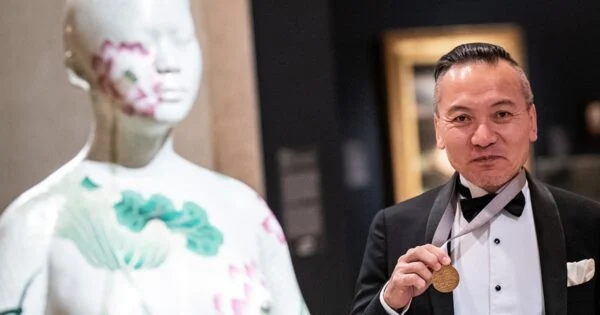
In 2001, he won the National Gallery of Australia’s inaugural National Sculpture Prize for Human Human – Lotus, Cloisonné Figure 1.
He later expanded his materials and imagery through series including Metaphysica, which features bronze busts topped with symbolic objects.
In 2009, he received the Clemenger Contemporary Art Award from the National Gallery of Victoria for Concrete Forest.
These achievements established him as an influential artist working between Chinese craft traditions, Western sculptural forms and questions of cultural identity.
Current Life Highlights of Ah Xian (Career / Other Work)
Ah Xian’s work continues to appear in major art collections and exhibitions exploring contemporary art, cultural heritage and cross-cultural exchange.
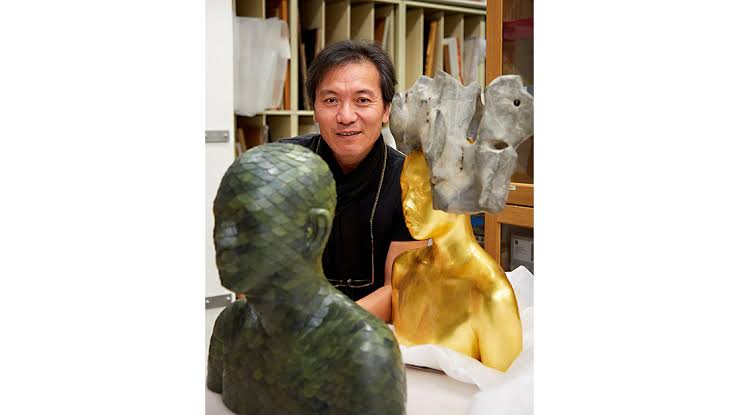
His practice has extended beyond the porcelain busts that first brought him widespread recognition, incorporating bronze, concrete, lacquer, jade and other materials.
In 2022, his exhibition Fledging presented works on paper, reflecting another dimension of his artistic interests.
His work has also featured in exhibitions examining Asian contemporary art and the historical relationship between traditional craft and modern artistic practice.
In 2024, his work was associated with exhibitions including Wabi Sabi in Sydney and In Our Time: Four Decades of Art from China and Beyond.
The Christchurch Art Gallery exhibition Dummies & Doppelgängers included his work from November 2024 to March 2025.
In 2025, exhibitions examining Chinese imagination, cultural transformation and contemporary artistic identity helped keep related artistic discussions in public view.
In 2026, his work was included in Rising Voices: Contemporary Art from Asia, Australia and the Pacific at London’s Victoria and Albert Museum.
The exhibition, which opened in May 2026, brings together artists from across the region and is scheduled to run until January 10, 2027.
These presentations demonstrate Ah Xian’s continuing relevance to discussions about migration, heritage, material experimentation and contemporary Asian art.
Ah Xian Most Popular Movies, TV Shows, Media Appearances & Other Work
Ah Xian is a visual artist rather than a film or television performer, so his best-known public appearances concern exhibitions, interviews and art documentaries.
His internationally recognised China, China series consists of realistic porcelain busts decorated with intricate traditional Chinese motifs.
The series became a defining part of his career because it combined the Western tradition of sculpted portraiture with Chinese decorative craftsmanship.
His sculpture Human Human – Lotus, Cloisonné Figure 1 brought him the National Gallery of Australia’s inaugural National Sculpture Prize in 2001.
The Metaphysica series developed his sculptural language through bronze busts featuring objects inspired by Chinese mythology, history and spiritual symbolism.
His Concrete Forest series explored a different material, incorporating plant impressions into concrete busts.
In 2004, his portrait sculpture of paediatrician John Yu entered the National Portrait Gallery’s collection, connecting his work with Australia’s national portrait tradition.
His work has been presented at institutions including the Queensland Art Gallery, the National Gallery of Australia and the Asia Society Museum in New York.
The 2022 exhibition Fledging demonstrated his continuing interest in works on paper and approaches beyond his most famous sculptural series.
His inclusion in London’s Rising Voices exhibition in 2026 introduced his work to visitors exploring contemporary art from Asia, Australia and the Pacific.
Ah Xian Most Popular News, Controversies, Career Debates / Why Ah Xian Is Popular
Ah Xian’s story attracts attention because his artistic development is inseparable from migration, political upheaval and the preservation of cultural heritage.
His decision to seek asylum in Australia followed the 1989 Tiananmen Square crackdown, a turning point in his personal life.
His early paintings, including the Heavy Wounds series, addressed the trauma associated with those events.
His later sculptures took a different direction, using traditional Chinese materials and decorative motifs to explore cultural belonging.
The China, China series became particularly influential because it joined realistic portrait busts with patterns associated with Chinese porcelain and decorative arts.
His 2001 National Sculpture Prize victory established his reputation in Australia and increased institutional interest in his work.
In 2009, the Clemenger Contemporary Art Award recognised his experimentation with concrete and the series Concrete Forest.
A continuing discussion around his art concerns how artists can preserve cultural traditions while creating work that speaks to contemporary international audiences.
Ah Xian has also been described as relatively little known among mainstream audiences in China despite his strong institutional reputation in Australia and internationally.
His popularity is therefore rooted less in personal controversy than in the distinctive artistic language through which he explores migration, identity and the meeting of cultures.
Ah Xian Known Unknown Facts, Trivia + People Also Ask / Search & Answers
Ah Xian was born Liu Ji Xian and adopted his artistic name in 1983 while developing his identity as a professional artist.
He is largely self-taught because the political and educational circumstances of his youth limited access to conventional art training.
His early professional experience included technical training as a mechanical fitter and work in a factory.
He travelled to Australia in 1989 for an artistic residency at the University of Tasmania before seeking asylum the following year.
His brother, Liu Xiao Xian, is also an artist and shared his move to Australia.
The title China, China refers both to the country and to porcelain, making the series’ name a concise expression of its cultural focus.
His sculptures are made using techniques that can involve moulding from life, glazing, decoration and firing with specialist craftspeople.
Who is Ah Xian? He is a Chinese-born Australian contemporary artist known for sculptures combining realistic human forms with traditional Chinese decorative techniques.
How old is Ah Xian? He was born in 1960 and is 66 years old in 2026.
Where does Ah Xian live? He has been based in Sydney, Australia, and has also worked in Beijing.
What is Ah Xian famous for? He is best known for the China, China porcelain bust series.
Has Ah Xian won major awards? Yes, he won the National Sculpture Prize in 2001 and the Clemenger Contemporary Art Award in 2009.
Is Ah Xian an actor? No, his established career is in visual art, particularly painting and sculpture.
Where can people see Ah Xian’s work in 2026? Selected works are included in Rising Voices at London’s Victoria and Albert Museum through January 10, 2027.