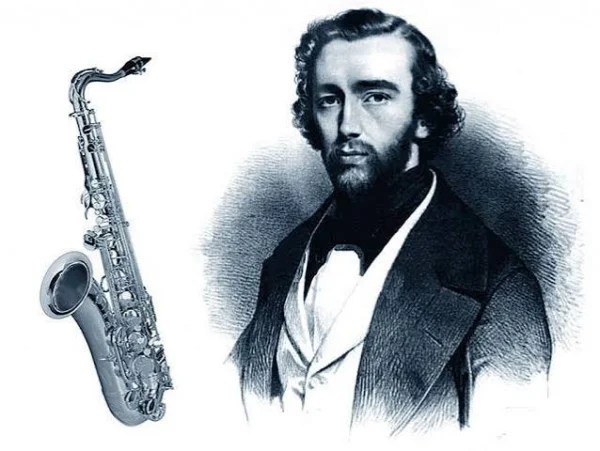
Adolphe Sax based on NeemTime research
Who is Adolphe Sax (Biography / Personal Details)
Adolphe Sax was the Belgian inventor whose name became permanently attached to one of the world’s most recognizable musical instruments.
Born Antoine-Joseph Sax on November 6, 1814, in Dinant, Belgium, he became known from childhood as Adolphe.
He was a musical-instrument maker, inventor and musician who worked primarily with woodwind and brass instruments.
His most famous creation, the saxophone, was developed during the early 1840s and patented in 1846.
Sax also invented or developed the saxhorn, saxotromba and saxtuba, while making important improvements to the bass clarinet.
He moved to Paris in 1842, where his innovations brought him into contact with influential musicians including Hector Berlioz.
His Paris workshop became an important center for experimental wind-instrument design and supplied instruments to military and musical organizations.
Although the saxophone later became closely associated with jazz and popular music, those genres had not yet emerged when Sax created it.
Sax died in Paris on February 7, 1894, aged 79, after a career marked by extraordinary invention, legal battles and repeated financial difficulties.
His lasting importance comes from transforming the design of wind instruments and creating an instrument family that eventually became central to classical, military, jazz and popular music.
Adolphe Sax Height, Appearance, Fitness & How to Get a Body Like Adolphe Sax
There is no reliable historical record giving Adolphe Sax’s exact height, so modern claims about his height should be treated as estimates rather than facts.
Surviving portraits and sculptures show Sax as a mature man with a prominent moustache, facial hair and the formal appearance typical of nineteenth-century European society.
A detailed 1845 portrait sculpture by Jean-Pierre Dantan provides one of the clearest surviving visual representations of Sax during his working years.
The sculpture shows his facial features and beard but cannot establish his actual height, weight or body measurements.
No trustworthy evidence documents a structured exercise program, special diet or deliberate bodybuilding routine followed by Sax.
His work required prolonged concentration, craftsmanship and physical interaction with musical instruments, but those activities should not be mistaken for a documented fitness program.
Because Sax lived in the nineteenth century, modern measurements sometimes published online are generally unsupported unless they are explicitly identified as estimates.
Anyone seeking a healthy physique inspired by historical figures should instead focus on regular physical activity, balanced nutrition, sufficient sleep and sustainable habits.
Strength training, cardiovascular exercise and mobility work can provide a practical modern fitness foundation without falsely attributing a routine to Sax.
The most accurate description is therefore that Sax’s appearance is historically documented through portraits, while his height, weight and personal fitness regimen remain unknown.
Adolphe Sax Family
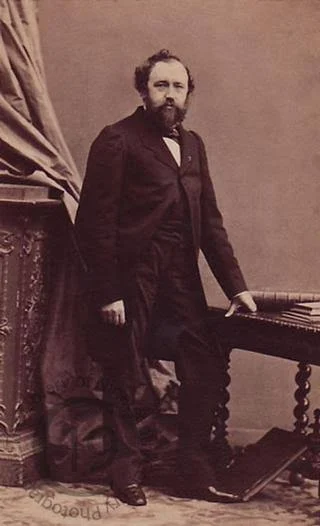
Adolphe Sax Family 5
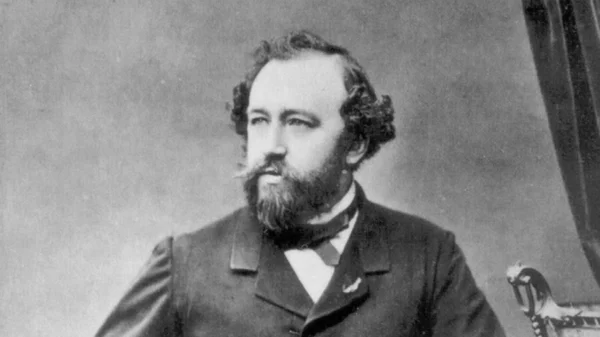
Adolphe Sax Family 4
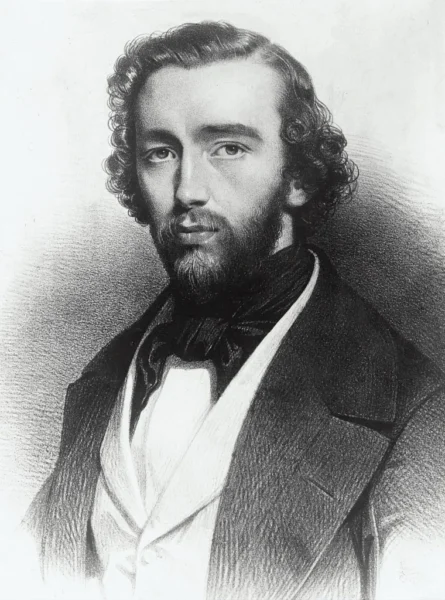
Adolphe Sax Family 3
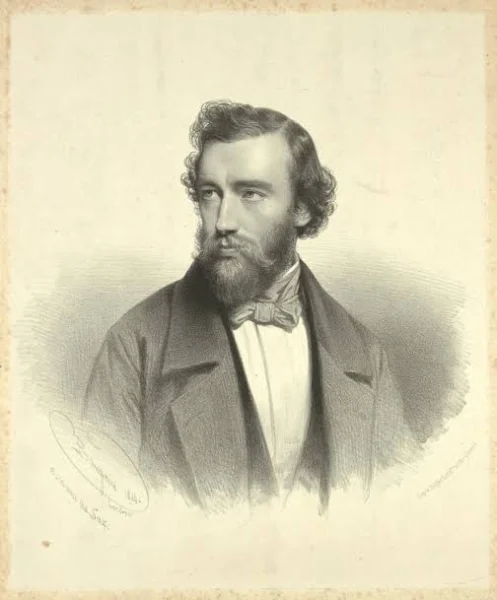
Adolphe Sax Family 2
Adolphe Sax Family
Early Life, Childhood, Education & Family Background of Adolphe Sax
Adolphe Sax was born into an unusually inventive family, making musical instruments almost a family tradition before he created the saxophone.
His father, Charles-Joseph Sax, was a respected Belgian instrument maker who operated a major wind-instrument workshop in Brussels.
Charles-Joseph had originally trained as a cabinetmaker and later became known for designing and improving musical instruments.
Adolphe grew up around workshops, tools, materials and discussions about acoustics, giving him practical experience that ordinary music students rarely received.
He began his formal musical education in Brussels in 1828 and studied the clarinet in addition to broader musical subjects.
At about fifteen, he entered a competition with two flutes and a clarinet that he had made himself, revealing his early combination of musicianship and craftsmanship.
His early experiments increasingly focused on improving the bass clarinet and making wind instruments easier to play and more consistent in sound.
In 1835, he demonstrated a new bass-clarinet design with a 24-key system at the Brussels Industrial Exhibition.
By the early 1840s, his ambitions had expanded beyond improving existing instruments toward creating entirely new families of instruments.
His upbringing under Charles-Joseph ultimately gave Sax the technical foundation and experimental mindset that prepared him for his breakthrough in Paris.
Personal Life Highlights of Adolphe Sax (Family Members)
Adolphe Sax’s private life was considerably less documented than his professional achievements, but surviving records reveal a complicated family story.
His parents were Charles-Joseph Sax and Marie-Joseph Masson, and his father became one of the strongest early influences on his career.
Adolphe was the eldest son in a large Sax family whose members were involved in musical-instrument making across several generations.
His brother Alphonse Sax also became an instrument maker, although the brothers later experienced professional disagreements.
Sax never married, according to the strongest biographical and genealogical evidence currently available.
He had five children with Louise-Adèle Maor, a French woman of Spanish family background whom he did not marry.
Their children included Anna-Émilie, Adèle-Marie-Amélie, Adolphe-Charles-Antoine, Adèle-Marie and Adolphe-Édouard.
Two of the children died in infancy, while Adèle-Marie and Adolphe-Édouard survived into adulthood.
Adolphe-Édouard later followed his father into the musical-instrument business and became an important continuation of the Sax workshop tradition.
Sax’s family history therefore connects his personal life directly to the multigenerational instrument-making dynasty that helped preserve his technical legacy.
Adolphe Sax Partners, Relationships & Dating History
Adolphe Sax’s documented relationship history is much narrower than the romantic biographies commonly written about modern celebrities.
The strongest historical evidence indicates that he never entered a formal marriage.
His long-term companion was Louise-Adèle Maor, who was born in France in 1830 and had a Spanish father.
Maor and Sax had five children together between 1853 and 1859.
Historical records indicate that Sax’s relationship with Maor was complicated by social differences and that he did not publicly treat her as a conventional wife.
Their daughter Anna-Émilie was born in 1853, followed by children who included Adèle-Marie-Amélie, Adolphe-Charles-Antoine, Adèle-Marie and Adolphe-Édouard.
Several of the children’s historical records provide evidence of the complicated way Sax’s paternity and the family relationship were documented during the period.
Louise-Adèle Maor died in September 1860, leaving Sax with surviving children while his professional career was still developing.
There is no reliable evidence establishing a separate series of romantic partners after Maor, so claims about additional relationships should not be presented as fact.
The surviving record makes Maor the central documented relationship in Sax’s personal life rather than a long list of speculative romances.
Adolphe Sax Career Journey, Breakthroughs, Achievements & Awards
Sax’s career changed musical history because he approached instrument making as both an artistic craft and an acoustic engineering problem.
His first major innovations involved improving the clarinet and developing more practical systems for controlling wind instruments.
He presented the first version of his new saxophone publicly in Brussels in 1841 before moving permanently to Paris the following year.
In Paris, Hector Berlioz became an important early supporter and praised the new instrument’s distinctive sound and expressive possibilities.
Sax patented the saxophone family in 1846, initially conceiving instruments across multiple ranges rather than creating only one model.
His workshop subsequently produced large numbers of instruments, with approximately 20,000 instruments reportedly sold between 1843 and 1860.
He also developed the saxhorn family, which became particularly influential in military bands and later brass-band traditions.
Sax received the rank of Chevalier of the Legion of Honour in 1849 and won major recognition at international industrial exhibitions.
He taught at the Paris Conservatory from 1858 until the disruption of his teaching work around the Franco-Prussian War period.
Despite commercial success and international recognition, repeated bankruptcies and patent disputes made his career financially unstable until his death.
Current Life Highlights of Adolphe Sax (Career / Other Work)
Adolphe Sax has no current personal career because he died in Paris on February 7, 1894.
His professional legacy, however, remains active through the worldwide use of the saxophone and preservation of his surviving instruments.
The saxophone is now prominent in jazz, classical music, military bands, pop, rock, soul and numerous regional musical traditions.
Museums continue to preserve original Sax instruments, including examples held by major collections in Belgium, France and the United States.
The Musical Instruments Museum in Brussels preserves instruments connected with Sax’s private collection and workshop history.
The Metropolitan Museum of Art also holds surviving instruments made by Sax, allowing modern audiences to study his original designs.
His birthplace, Dinant, maintains cultural attractions dedicated to Sax, including a museum and public references celebrating his contribution.
The name Sax has also survived through the asteroid 3534 Sax, which was named in his honor.
His likeness appeared on the former Belgian 200-franc banknote, demonstrating the importance attached to his legacy in Belgium.
More than 130 years after his death, Sax remains relevant because the instrument bearing his name continues to evolve rather than survive merely as a historical curiosity.
Adolphe Sax Most Popular Movies, TV Shows, Media Appearances & Other Work
Adolphe Sax was not a movie or television personality because he lived more than half a century before cinema and television became mass entertainment.
His public profile during his lifetime instead came from exhibitions, concerts, newspapers, demonstrations and the musical institutions that adopted his instruments.
Hector Berlioz’s early public support helped introduce Sax and his new invention to influential Parisian musical audiences.
Sax’s instruments were demonstrated in competitive settings, including the famous comparison between his military-band concepts and established instrumentation.
His participation in international industrial exhibitions became another important way the public encountered his inventions.
Modern documentaries, museum exhibitions and historical programs frequently feature Sax when explaining the origins and development of the saxophone.
The Metropolitan Museum of Art mounted the exhibition Celebrating Sax: Instruments and Innovation to mark the bicentenary of his birth.
A 2015 Google Doodle commemorated Sax’s 201st birthday, bringing his story to a worldwide online audience.
He has also been referenced in popular culture, including an appearance as a subject of discussion in The Simpsons.
These appearances are best understood as tributes to an inventor whose cultural influence grew dramatically after his death rather than as a conventional entertainment career.
Adolphe Sax Most Popular News, Controversies, Career Debates / Why Adolphe Sax Is Popular
Sax’s career became controversial partly because his inventions threatened established instrument makers and challenged conventional ideas about musical design.
After patenting the saxophone and other instruments, he faced repeated legal disputes involving competing manufacturers and alleged copying.
His financial problems became severe despite strong demand, and his workshop went through bankruptcies in 1852, 1873 and 1877.
Napoleon III, who admired Sax’s work, intervened during one of his financial crises and helped prevent an even more damaging collapse.
Sax also faced resistance from some classical composers and institutions that were uncertain about the saxophone’s role in orchestral music.
The instrument nevertheless gained strong acceptance in military bands, where its power, range and family-based design offered practical advantages.
One of the strangest episodes in his life was his 1858 diagnosis with lip cancer, which he survived despite the limited medical options of the era.
Sax’s later financial difficulties contrasted sharply with the enormous cultural value eventually attached to his invention.
His final years were marked by concern that the saxophone had not achieved the classical prominence he had originally hoped for.
History ultimately reversed that judgment, because the saxophone became one of the defining instruments of twentieth-century jazz and later global popular music.
Adolphe Sax Known Unknown Facts, Trivia + People Also Ask / Search & Answers
One surprising fact is that Adolphe Sax’s birth name was Antoine-Joseph Sax, while Adolphe became the name by which he was widely known.
Sax did not invent only the saxophone, because the saxhorn, saxotromba and saxtuba were also among his important instrument developments.
His original 1846 saxophone patent described a family of instruments rather than a single modern-style saxophone.
Sax’s workshop reportedly sold about 20,000 instruments between 1843 and 1860, showing that his business achieved substantial production before his financial problems.
His private instrument collection originally contained hundreds of instruments and was dispersed after his company went bankrupt in 1877.
His son Adolphe-Édouard continued the family instrument-making tradition and maintained the workshop after his father’s death.
What did Adolphe Sax invent? He invented the saxophone and developed several other wind instruments, including the saxhorn, saxotromba and saxtuba.
When did Adolphe Sax invent the saxophone? He developed the instrument in the early 1840s and patented the saxophone family in 1846.
Why is Adolphe Sax famous today? He is famous because the saxophone became a major instrument in jazz, classical music, military bands and popular music worldwide.
How old was Adolphe Sax when he died? He was 79 when he died in Paris in 1894.
Did Adolphe Sax have a wife? No reliable historical record establishes a marriage, although he had five children with Louise-Adèle Maor.
What was Adolphe Sax’s height? No dependable historical source establishes his exact height, so modern numerical claims should be treated as unverified estimates.
Why did Adolphe Sax become so important? His importance comes from combining acoustic experimentation, practical instrument design and manufacturing into innovations that permanently changed wind music.