Adam Smith based on NeemTime research
Who is Adam Smith (Biography / Personal Details)
Adam Smith was a Scottish moral philosopher and political economist whose 1776 book helped establish economics as a distinct field of study.
He was born in Kirkcaldy, Fife, in 1723, although his exact birth date is uncertain and June 5 is traditionally observed because he was baptized that day.
Smith became famous for The Wealth of Nations, but his earlier book The Theory of Moral Sentiments reveals that his interests extended deeply into ethics and human behavior.
He studied at the University of Glasgow from age 14 before winning the Snell Scholarship to study at Balliol College, Oxford.
After returning to Scotland, he became Professor of Logic at Glasgow in 1751 and Professor of Moral Philosophy the following year.
His Glasgow lectures developed ideas that later appeared in both The Theory of Moral Sentiments and The Wealth of Nations.
Smith left university teaching in 1764 to become tutor and travelling companion to the young Duke of Buccleuch.
The resulting European journey introduced him to influential thinkers including François Quesnay, Anne Robert Jacques Turgot and other French intellectuals.
He returned to Scotland and spent years developing The Wealth of Nations, which was published on March 9, 1776.
Smith died in Edinburgh in 1790, but his writings remain central to debates about markets, morality, trade, government and economic development.
Adam Smith Height, Appearance, Fitness & How to Get a Body Like Adam Smith
Adam Smith’s exact height was never reliably recorded, so modern websites giving a precise measurement should be treated cautiously.
Historical descriptions instead provide occasional clues about his physical appearance and manner, although they are subjective rather than standardized measurements.
French writer Marie-Jeanne Riccoboni reportedly described Smith as physically unattractive but also portrayed him as an unusually engaging and lovable intellectual.
Accounts from his contemporaries also frequently mention his absent-minded manner and tendency to become deeply absorbed in thought.
Smith was known primarily for intellectual work rather than physical pursuits, and there is no reliable record of a structured exercise program.
His surviving biographies provide no evidence for a specific diet, bodybuilding routine or fitness system that readers could accurately reproduce.
The famous economist therefore cannot responsibly be presented as having a particular body type or fitness regimen.
Anyone looking to adopt a historical-intellectual lifestyle associated with Smith would be better served by cultivating reading, walking and regular daily activity rather than copying an invented workout.
His surviving life story suggests an intensely sedentary scholarly existence balanced by travel, social visits and the practical demands of academic and government work.
The most accurate answer is that Smith’s height, weight and personal fitness routine remain undocumented, making precise online claims unreliable.
Adam Smith Family
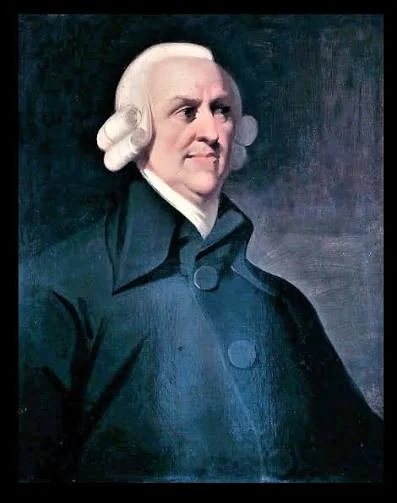
Adam Smith Family 5

Adam Smith Family 4
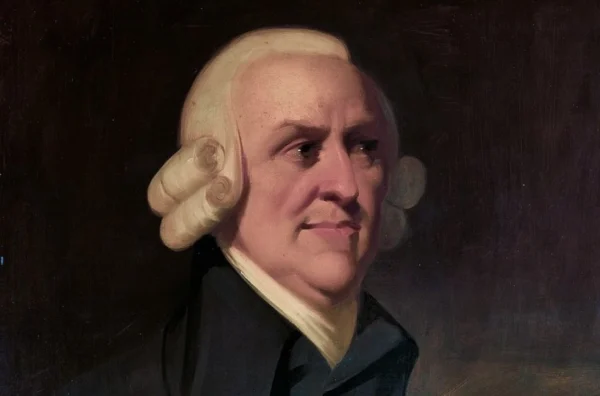
Adam Smith Family 3

Adam Smith Family 2
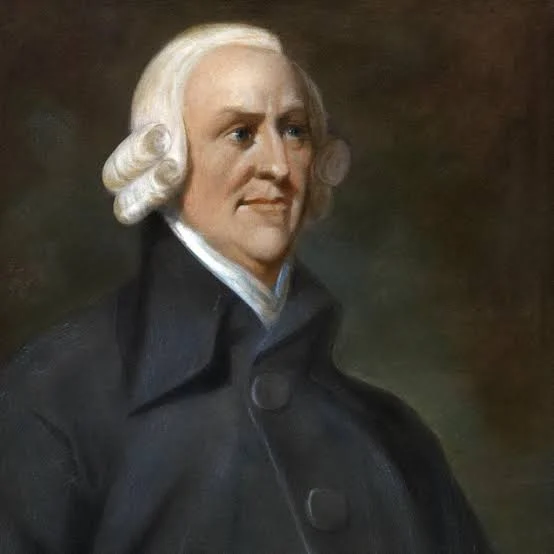
Adam Smith Family
Early Life, Childhood, Education & Family Background of Adam Smith
Adam Smith’s early life began in a small Scottish port whose commercial activity exposed him from childhood to trade, manufacturing and maritime commerce.
His father, also named Adam Smith, was a customs official who died before his son’s birth.
His mother, Margaret Douglas, raised him alone and remained one of the most important people in his life until her death in 1784.
Smith attended Kirkcaldy Burgh School from 1729 to 1737, where he studied subjects including Latin, writing, mathematics and history.
At only 14, he entered the University of Glasgow and was admitted directly into the second year because of his strong Latin skills.
He studied logic, metaphysics, mathematics, Newtonian physics and moral philosophy, with Francis Hutcheson becoming a particularly important intellectual influence.
In 1740, Smith received the Snell Scholarship and moved to Balliol College, Oxford, where he spent approximately six years.
He later criticized aspects of Oxford’s teaching system, contrasting it unfavorably with the more demanding intellectual environment he had experienced at Glasgow.
After returning to Scotland, Smith gave public lectures in Edinburgh that helped establish his reputation before his academic appointment at Glasgow.
His unusual educational path transformed a gifted student from Kirkcaldy into one of the leading thinkers of the Scottish Enlightenment.
Personal Life Highlights of Adam Smith (Family Members)
Adam Smith’s private life was unusually quiet for a major intellectual figure, with his relationship with his mother standing at its center.
His mother, Margaret Douglas, was the daughter of Robert Douglas of Strathendry, a landowning family in Fife.
Because Smith’s father died before he was born, Margaret raised him alone and remained closely connected with him throughout his adult life.
Smith lived with his mother for long periods, including during his later years in Kirkcaldy and Edinburgh.
She died in 1784, six years before Smith, and accounts of his life emphasize the depth of their long-standing relationship.
Smith never married and left no children, making his immediate family story very different from that of many famous eighteenth-century figures.
His wider family included his half-brother Hugh Smith, born from his father’s earlier marriage.
Smith also maintained a large intellectual and social circle that included David Hume, Joseph Black, James Hutton, Edmund Burke and James Watt.
He belonged to several Edinburgh intellectual societies, including the Select Society, Poker Club and Oyster Club.
Rather than a conventional family life, Smith’s closest personal world revolved around his mother, friends, students, books and the intellectual communities of the Scottish Enlightenment.
Adam Smith Partners, Relationships & Dating History
Adam Smith never married, and historians have found very little reliable evidence about his romantic life.
His first biographer, Dugald Stewart, recorded that Smith had been attached for several years to a young woman described as beautiful and accomplished.
Stewart did not identify her by name or explain why the relationship failed, leaving one of the most intriguing gaps in Smith’s personal biography.
He stated that the woman also never married and suggested that Smith subsequently abandoned thoughts of marriage.
Later biographical research has identified other possible romantic episodes, but the surviving evidence is fragmentary and does not establish a conventional dating history.
Smith also spent significant time in France during his European travels and formed friendships within French intellectual circles.
His close friendship with David Hume became one of the most important relationships in his adult intellectual life.
Smith’s decision to remain unmarried meant that his mother and later his circle of friends occupied much of the personal space normally associated with family life.
There is no reliable evidence supporting modern celebrity-style lists of partners or numerous romantic relationships.
For readers researching Adam Smith’s relationships, the documented story is therefore one of lifelong bachelorhood, one mysterious early attachment and exceptionally strong intellectual friendships.
Adam Smith Career Journey, Breakthroughs, Achievements & Awards
Adam Smith’s professional breakthrough began not with economics but with philosophy, teaching and a series of public lectures delivered in Edinburgh during the late 1740s.
In 1751, he became Professor of Logic at the University of Glasgow and transferred to the Chair of Moral Philosophy in 1752.
His Glasgow teaching established the intellectual foundations for his first major book, The Theory of Moral Sentiments, published in 1759.
The book examined sympathy, moral judgment and the way people assess their own conduct through the perspective of an imagined impartial spectator.
In 1762, the University of Glasgow awarded Smith the honorary degree of Doctor of Laws.
He left his professorship in 1764 to accompany the young Duke of Buccleuch on a European tour, meeting leading French thinkers during the journey.
After returning to Scotland, Smith spent years developing his analysis of commerce, labor, productivity, taxation and political economy.
The Wealth of Nations appeared in 1776 and quickly established him as a major European writer on economic society.
In 1778, he became a Commissioner of Customs in Edinburgh, combining public service with continued intellectual work.
Smith was also a founding member of the Royal Society of Edinburgh and served as Lord Rector of the University of Glasgow from 1787 to 1789.
Current Life Highlights of Adam Smith (Career / Other Work)
Adam Smith died on July 17, 1790, so his current significance comes through the continuing study and application of his writings rather than contemporary professional activity.
In 2026, his intellectual legacy is receiving renewed attention because The Wealth of Nations reaches its 250th anniversary.
The University of Glasgow is marking the anniversary with academic conferences, public tours, exhibitions and discussions examining Smith’s ideas and their modern relevance.
September 2026 events in Glasgow have specifically explored Smith’s connections with empire, trade and the city’s commercial history.
The anniversary program also examines how his ideas relate to contemporary questions about prosperity, development, markets and poverty.
Smith’s original works remain widely studied in economics, philosophy, political theory, history and business education.
The University of Glasgow continues to maintain extensive archival and scholarly resources connected with Smith and the Scottish Enlightenment.
His name also lives on through the Adam Smith Business School at Glasgow, which carries his intellectual legacy into modern business and management education.
A 2026 documentary, Adam Smith: The Currency of Thought, has introduced his ideas to new audiences through film screenings and public discussions.
Smith’s continuing influence is therefore not simply historical, because scholars and institutions are still debating how accurately his ideas apply to modern economic and social problems.
Adam Smith Most Popular Movies, TV Shows, Media Appearances & Other Work
Adam Smith was an eighteenth-century scholar rather than a movie or television personality, so his media legacy is built around documentaries, educational programs and adaptations of his ideas.
The most important screen project in 2026 is Adam Smith: The Currency of Thought, a documentary examining his intellectual legacy and challenging simplified interpretations of his work.
The film has been presented through academic and public screenings, including events associated with Georgetown University’s Denny Center.
Smith himself obviously made no recorded television appearances, but his life and writings have been the subject of numerous modern documentaries and educational productions.
The Wealth of Nations and The Theory of Moral Sentiments have also inspired countless lectures, podcasts, university programs and televised discussions about economics and society.
His famous name frequently appears in documentaries examining capitalism, markets, globalization and the history of economic thought.
Smith’s intellectual image is also preserved through portraits, statues, museum collections, university exhibitions and historical recreations.
The University of Glasgow has created digital exhibitions and educational resources exploring his life, teaching career and connection with the Scottish Enlightenment.
His writings have additionally become source material for films and public discussions that examine whether modern political debates accurately represent his original ideas.
For a biography website, his books, documentaries and educational appearances are therefore far more relevant than searching for conventional acting credits.
Adam Smith Most Popular News, Controversies, Career Debates / Why Adam Smith Is Popular
Adam Smith remains famous partly because his name is often invoked in economic arguments that are much simpler than his actual writings.
The Wealth of Nations is frequently associated with free markets, but Smith’s analysis also addressed poverty, education, taxation, public institutions, monopoly and the social consequences of commercial society.
One enduring debate concerns whether Smith should primarily be described as the father of modern economics or understood more broadly as a moral philosopher and social thinker.
His first major book, The Theory of Moral Sentiments, complicates the popular image of Smith as a thinker concerned only with self-interest and markets.
Smith also criticized merchants and established interests when he believed they sought policies that restricted competition or benefited themselves at the expense of the public.
His writings discussed the damaging effects of extreme divisions of labor and argued that public education could help address some consequences for workers.
Smith’s treatment of colonialism and slavery has become another major area of modern scholarship and debate.
In 2026, the 250th anniversary of The Wealth of Nations has generated renewed discussion about how his ideas should be interpreted in relation to modern capitalism, inequality, trade and globalization.
The University of Glasgow’s anniversary program explicitly examines empire, trade and the historical context surrounding the book rather than presenting Smith through a single ideological label.
His popularity ultimately survives because the questions he examined—wealth, poverty, markets, morality, government and human behavior—remain central to modern society.
Adam Smith Known Unknown Facts, Trivia + People Also Ask / Search & Answers
Did Adam Smith really invent economics? He is widely regarded as a founder of modern economics, although economic ideas existed long before his work.
When was Adam Smith born? He was born in Kirkcaldy, Fife, in 1723, but his exact birth date is uncertain and June 5 is traditionally used because he was baptized that day.
When did Adam Smith die? He died in Edinburgh on July 17, 1790, aged 67.
Was Adam Smith married? No, Smith never married and had no children.
Who was Adam Smith’s closest family member? His mother, Margaret Douglas, was the central family figure in his life and remained closely connected with him until her death.
What is Adam Smith’s most famous book? The Wealth of Nations, published in 1776, is his most famous work and one of the foundational texts of modern economics.
What did Adam Smith write before The Wealth of Nations? He published The Theory of Moral Sentiments in 1759, a major work on ethics, sympathy and moral judgment.
Did Adam Smith study at Oxford? Yes, he attended Balliol College after winning the Snell Scholarship, although he had already studied at the University of Glasgow.
Who was Adam Smith’s famous friend? Scottish philosopher and historian David Hume was one of his closest and most influential intellectual friends.
Why is Adam Smith important in 2026? The 250th anniversary of The Wealth of Nations is generating new academic and public discussion about his ideas and their relevance to economics and society.