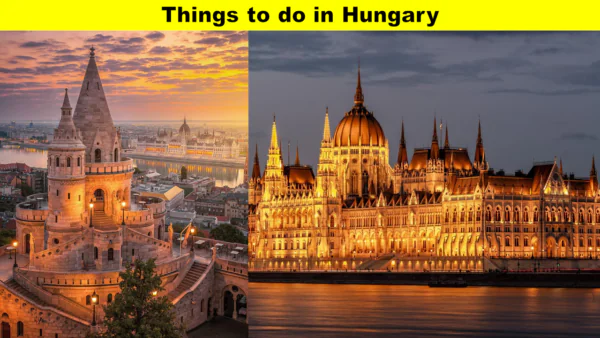
Things to do in Hungary

by NeemTime.com Editors
0 comments 27 minutes read
Things to do in Hungary


Things to do in Hungary based on NeemTime research from most popular to just popular.

Contents hide

Central Market Hall, Hungary

Overview: Central Market Hall in Budapest is the city’s largest and most famous indoor market, offering traditional Hungarian food, souvenirs, and local produce in a historic setting.

History: Built in the late 19th century, the market was designed to modernize food trade and support Budapest’s growing population.

Since When: It has been operating since 1897 as a central hub for commerce.

Review: Visitors praise its lively atmosphere, authentic products, and architectural beauty, though it can be crowded.

When to Go: Early mornings on weekdays are best for fresh produce and fewer tourists.

How to Go: Easily reachable by metro, tram, bus, or on foot in central Budapest.

What to Do: Shop for paprika, taste Hungarian dishes, and explore local crafts.

Free or Paid: Free entry; purchases are paid.

Castle District, Hungary

Overview: The Castle District is a historic area of Budapest featuring medieval streets, royal buildings, and panoramic views of the Danube.

History: It developed around Buda Castle and served as the political and royal center of Hungary for centuries.

Since When: The district dates back to the 13th century.

Review: Visitors love its romantic atmosphere, historic charm, and scenic viewpoints.


When to Go: Spring and autumn afternoons are ideal for walking and sightseeing.

How to Go: Accessible by bus, funicular, taxi, or walking uphill from the riverbank.

What to Do: Explore historic streets, visit museums, and enjoy city views.

Free or Paid: Free to explore; museums and attractions may be paid.

Fisherman’s Bastion, Hungary

Overview: Fisherman’s Bastion is a decorative terrace in Budapest offering fairy-tale architecture and breathtaking views of the Parliament and Danube.

History: Built in the late 19th century, it commemorates medieval fishermen who defended this part of the city walls.

Since When: Open to the public since 1905.

Review: Visitors consistently rate it highly for photography and scenic beauty.

When to Go: Early morning or sunset for the best views and fewer crowds.

How to Go: Reachable by bus, taxi, or walking within the Castle District.

What to Do: Take photos, admire architecture, and enjoy panoramic views.

Free or Paid: Lower terraces are free; upper towers require a paid ticket.

Heroes’ Square, Hungary

Overview: Heroes’ Square is a grand public square in Budapest showcasing statues of Hungarian leaders and national monuments.

History: Created to commemorate Hungary’s 1,000th anniversary and honor its founding figures.

Since When: Completed in 1896.

Review: Visitors appreciate its monumental scale, historical importance, and open space.


When to Go: Daytime for monument viewing or evening for illuminated views.

How to Go: Easily accessible by metro, bus, or tram.

What to Do: Learn about Hungarian history, take photos, and relax nearby.

Free or Paid: Free entry.

City Park, Hungary

Overview: City Park is a large urban green space in Budapest offering lakes, museums, baths, and recreational areas.

History: Established as one of Europe’s first public parks to serve city residents.

Since When: Opened to the public in the early 19th century.

Review: Visitors enjoy its variety of attractions, peaceful environment, and family-friendly vibe.

When to Go: Spring and summer are best for outdoor activities and picnics.

How to Go: Located behind Heroes’ Square and accessible by metro or bus.

What to Do: Walk, picnic, visit attractions, or relax by the lake.

Free or Paid: Park entry is free; attractions inside may be paid.

St. Stephen’s Basilica, Hungary

Overview: St. Stephen’s Basilica is Budapest’s largest church, renowned for its grand dome, neoclassical architecture, and panoramic city views from the cupola.

History: Construction began in the mid-19th century and the basilica was dedicated to Hungary’s first king, Saint Stephen.

Since When: Officially completed and opened in 1905.

Review: Visitors highly praise its majestic interior, acoustics, and breathtaking views from the dome.


When to Go: Late morning or early afternoon on weekdays to avoid crowds and services.

How to Go: Easily accessible by metro, bus, tram, or walking in central Budapest.

What to Do: Admire the interior, climb or take the lift to the dome, and attend concerts.

Free or Paid: Entry to the church is free with a donation; dome access is paid.

Szimpla Kert, Hungary

Overview: Szimpla Kert is Budapest’s most famous ruin bar, known for its eclectic décor, lively atmosphere, and cultural events.

History: Opened in a repurposed abandoned building, it pioneered the ruin bar concept in Budapest.

Since When: Operating since 2002.

Review: Visitors enjoy its unique vibe, live music, and creative interior, though it can be busy at night.

When to Go: Evenings or weekends for nightlife, mornings for the Sunday farmers’ market.

How to Go: Reachable by metro, tram, bus, or walking in the Jewish Quarter.

What to Do: Enjoy drinks, attend events, explore décor, and socialize.

Free or Paid: Free entry; food and drinks are paid.

Buda Castle, Hungary

Overview: Buda Castle is a historic royal palace complex offering museums, courtyards, and sweeping views over Budapest.

History: Originally built in the 13th century, it has been rebuilt multiple times due to wars and reconstructions.


Since When: Serving as a royal residence since the medieval period.

Review: Visitors admire its historical importance, architecture, and scenic viewpoints.

When to Go: Late afternoon for sightseeing and sunset views.

How to Go: Accessible by bus, funicular, taxi, or walking from the Danube.

What to Do: Explore courtyards, visit museums, and enjoy panoramic views.

Free or Paid: Grounds are free; museums and exhibitions are paid.

Széchenyi Thermal Bath, Hungary

Overview: Széchenyi Thermal Bath is one of Europe’s largest spa complexes, famous for its outdoor thermal pools and Neo-Baroque architecture.

History: Built as part of Budapest’s spa culture using natural thermal waters.

Since When: Open to the public since 1913.

Review: Visitors love the relaxing experience, warm pools, and social atmosphere.

When to Go: Early morning or late evening to avoid peak crowds.

How to Go: Easily accessible by metro, bus, or tram near City Park.

What to Do: Soak in thermal pools, enjoy saunas, and relax in spa facilities.

Free or Paid: Paid entry.

Széchenyi Chain Bridge, Hungary

Overview: Széchenyi Chain Bridge is Budapest’s iconic suspension bridge connecting Buda and Pest across the Danube.

History: Built as the first permanent bridge between the two sides of the city.

Since When: Opened in 1849.

Review: Visitors appreciate its historic significance, architecture, and stunning views day and night.


When to Go: Evening or nighttime for illuminated city views.

How to Go: Accessible on foot, by tram, bus, or taxi.

What to Do: Walk across, take photos, and enjoy river views.

Free or Paid: Free to cross.

Budapest Zoo & Botanical Garden, Hungary

Overview: Budapest Zoo & Botanical Garden is one of the world’s oldest zoos, combining wildlife exhibits with landscaped botanical areas in City Park.

History: Founded to promote zoological science and public education, it has evolved through major renovations over time.

Since When: Opened to the public in 1866.

Review: Visitors appreciate its historic buildings, diverse animal collection, and family-friendly layout.

When to Go: Spring and early autumn are ideal for pleasant weather and active animals.

How to Go: Easily accessible by metro, tram, or bus near Heroes’ Square.

What to Do: Observe animals, explore botanical sections, and visit themed exhibits.

Free or Paid: Paid entry.

Hungarian Parliament Building, Hungary

Overview: The Hungarian Parliament Building is an iconic Neo-Gothic landmark on the Danube, symbolizing Hungary’s national identity.

History: Built to celebrate Hungary’s millennium and serve as the seat of government.

Since When: Completed and inaugurated in 1904.

Review: Visitors praise its stunning architecture, grand interiors, and informative guided tours.

When to Go: Morning visits are best for guided tours and photography.


How to Go: Accessible by metro, tram, bus, or walking along the Danube promenade.

What to Do: Join guided tours, view the Crown Jewels, and photograph the exterior.

Free or Paid: Exterior viewing is free; interior tours are paid.

Gellért-hegy, Hungary

Overview: Gellért Hill is a scenic viewpoint offering panoramic views of Budapest, the Danube, and surrounding landmarks.

History: Named after Saint Gellért, the hill has long held religious and strategic significance.

Since When: Recognized as a landmark since medieval times.

Review: Visitors love the sweeping views, peaceful paths, and photo opportunities.

When to Go: Sunset or early morning for cooler temperatures and fewer crowds.

How to Go: Reachable by bus, taxi, or hiking trails from the city.

What to Do: Hike, take photos, and visit nearby monuments.

Free or Paid: Free access.

Széchenyi Baths and Pool, Hungary

Overview: Széchenyi Baths and Pool is a renowned thermal spa complex featuring indoor and outdoor pools fed by natural hot springs.

History: Developed as part of Budapest’s long-standing spa and wellness tradition.

Since When: Opened in 1913.

Review: Visitors consistently rate it highly for relaxation, atmosphere, and unique outdoor bathing experience.

When to Go: Early mornings or late evenings to avoid peak crowds.

How to Go: Accessible by metro and public transport near City Park.


What to Do: Soak in thermal waters, relax in saunas, and enjoy wellness treatments.

Free or Paid: Paid entry.

Tropicarium-Oceanarium Kft., Hungary

Overview: Tropicarium-Oceanarium is an indoor tropical aquarium featuring sharks, exotic fish, reptiles, and rainforest environments.

History: Created to provide an immersive educational experience about tropical ecosystems.

Since When: Opened in 2000.

Review: Visitors enjoy its shark tunnel, interactive exhibits, and family-friendly attractions.

When to Go: Weekdays or mornings for a quieter visit.

How to Go: Accessible by car or bus, located near Campona Shopping Center.

What to Do: Walk through the aquarium tunnel, observe wildlife, and learn about ecosystems.

Free or Paid: Paid entry.

Dohány Street Synagogue, Hungary

Overview: Dohány Street Synagogue is the largest synagogue in Europe, renowned for its Moorish Revival architecture and deep historical significance in Budapest.

History: Built in the 19th century, it became a central place of worship for Hungary’s Jewish community and a symbol of Jewish heritage.

Since When: Opened in 1859.

Review: Visitors admire its architectural beauty, moving memorials, and well-curated museum spaces.

When to Go: Weekday mornings are best to avoid crowds and scheduled services.

How to Go: Easily accessible by metro, tram, bus, or walking in central Budapest.

What to Do: Explore the synagogue, visit the Jewish Museum, and see the Holocaust memorial garden.


Free or Paid: Paid entry.

Ferris Wheel of Budapest, Hungary

Overview: The Ferris Wheel of Budapest offers panoramic views of the city skyline from Erzsébet Square in the heart of the city.

History: Installed as a modern attraction to enhance Budapest’s city-center entertainment offerings.

Since When: Operating since 2017.

Review: Visitors enjoy the smooth ride and excellent city views, especially at night.

When to Go: Evening or nighttime for illuminated city scenery.

How to Go: Accessible by metro, tram, bus, or walking from Deák Ferenc Square.

What to Do: Ride the wheel, take photos, and enjoy views over central Budapest.

Free or Paid: Paid entry.

Castle of Eger, Hungary

Overview: The Castle of Eger is a historic fortress overlooking the town of Eger, famous for its role in Hungarian history.

History: It gained prominence during the 1552 siege when Hungarian defenders repelled Ottoman forces.

Since When: Originally built in the 13th century.

Review: Visitors appreciate its museums, views, and engaging historical exhibits.

When to Go: Spring and summer are ideal for outdoor exploration and events.

How to Go: Reachable by train or car from Budapest, then a short walk uphill.

What to Do: Explore fortress walls, visit museums, and enjoy panoramic views.

Free or Paid: Paid entry.

Shoes on the Danube Bank, Hungary

Overview: Shoes on the Danube Bank is a poignant memorial honoring Jewish victims executed during World War II in Budapest.


History: Created by artists Gyula Pauer and Can Togay to commemorate lives lost during the Holocaust.

Since When: Unveiled in 2005.

Review: Visitors find it deeply moving, reflective, and historically powerful.

When to Go: Early morning or sunset for a quiet, respectful visit.

How to Go: Accessible by tram, bus, or walking along the Danube promenade.

What to Do: Reflect, photograph respectfully, and learn about the memorial’s history.

Free or Paid: Free access.

The Church of Our Lady of Buda Castle, Hungary

Overview: Also known as Matthias Church, this iconic Gothic church stands in the Castle District and is known for its colorful roof and ornate interior.

History: Originally founded in the 13th century, it has been rebuilt and restored several times across different eras.

Since When: Serving as a church since 1255.

Review: Visitors praise its intricate design, historical significance, and peaceful atmosphere.

When to Go: Morning hours are best to avoid crowds and services.

How to Go: Accessible by bus, taxi, or walking within the Castle District.

What to Do: Tour the interior, attend concerts, and admire architectural details.

Free or Paid: Paid entry for sightseeing; worship services are free.

Vajdahunyad Castle, Hungary

Overview: Vajdahunyad Castle is a picturesque architectural complex in Budapest’s City Park showcasing replicas of Hungary’s most famous historic buildings.


History: Built for the 1896 Millennium Exhibition, it was designed to celebrate a thousand years of Hungarian history.

Since When: Permanently reconstructed in stone and opened in 1908.

Review: Visitors enjoy its fairytale appearance, scenic surroundings, and museum interiors.

When to Go: Spring and autumn are ideal for walking and photography.

How to Go: Easily reachable by metro, tram, or bus via Heroes’ Square.

What to Do: Walk around the castle, visit the Agricultural Museum, and take photos.

Free or Paid: Grounds are free; museums inside are paid.

House of Terror Museum, Hungary

Overview: The House of Terror Museum is a powerful historical museum documenting Hungary’s fascist and communist regimes.

History: The building once housed secret police headquarters during oppressive political eras.

Since When: Opened as a museum in 2002.

Review: Visitors describe it as emotional, informative, and deeply impactful.

When to Go: Weekday mornings for a quieter, more reflective experience.

How to Go: Accessible by metro, tram, or bus along Andrássy Avenue.

What to Do: Explore exhibitions, watch documentaries, and learn about 20th-century history.

Free or Paid: Paid entry.

St. Stephen’s Basilica (Szent István Bazilika), Hungary

Overview: St. Stephen’s Basilica is a monumental Catholic church in Budapest, famed for its grand dome and sacred relics.

History: Built to honor Hungary’s first king and Christian founder, Saint Stephen.


Since When: Completed and opened in 1905 after decades of construction.

Review: Visitors admire its majestic interior, acoustics, and panoramic views from the dome.

When to Go: Late morning or early afternoon on weekdays to avoid services.

How to Go: Easily accessible by metro, bus, tram, or walking in central Budapest.

What to Do: Tour the basilica, visit the dome, and attend organ concerts.

Free or Paid: Church entry is free with donation; dome access is paid.

Hungarian State Opera, Hungary

Overview: The Hungarian State Opera is a world-renowned Neo-Renaissance opera house celebrated for its acoustics and ornate design.

History: Built during the Austro-Hungarian Empire to showcase Hungary’s cultural prestige.

Since When: Opened to the public in 1884.

Review: Visitors highly praise performances, guided tours, and the lavish interior.

When to Go: Evenings for performances or daytime for guided tours.

How to Go: Accessible by metro, tram, or bus on Andrássy Avenue.

What to Do: Attend an opera or ballet, take a guided tour, and admire architecture.

Free or Paid: Paid entry for performances and tours.

Basilica of Esztergom, Hungary

Overview: The Basilica of Esztergom is Hungary’s largest church, dominating the skyline with its massive dome and riverside setting.

History: Built as the seat of the Hungarian Catholic Church on a historically sacred site.


Since When: Completed and consecrated in 1856.

Review: Visitors are impressed by its monumental scale, interior art, and panoramic views.

When to Go: Late morning or early afternoon for clear views and comfortable touring.

How to Go: Reachable by train or car from Budapest, then walking to the hilltop.

What to Do: Explore the basilica, climb to the dome, and visit the treasury.

Free or Paid: Entry to the church is free; dome and treasury access are paid.

Liberty Square, Hungary

Overview: Liberty Square is a central public square in Budapest known for its monuments, green spaces, and surrounding historic buildings.

History: The square was developed in the late 19th century and later became a symbolic site reflecting Hungary’s complex political history.

Since When: Established in 1897.

Review: Visitors enjoy its peaceful atmosphere, memorials, and proximity to major landmarks.

When to Go: Daytime for sightseeing or early evening for a relaxed stroll.

How to Go: Easily accessible by metro, tram, bus, or walking in central Budapest.

What to Do: Walk around, view monuments, relax on benches, and take photos.

Free or Paid: Free entry.

Visegrád Castle – Citadel, Hungary

Overview: Visegrád Castle Citadel is a medieval fortress overlooking the Danube Bend, offering stunning panoramic views.

History: Built in the 13th century, it served as a royal stronghold and defensive fortress.


Since When: Constructed after the Mongol invasion of 1241.

Review: Visitors praise its dramatic views, historical exhibits, and scenic hiking routes.

When to Go: Spring and autumn for pleasant weather and clear views.

How to Go: Reachable by car, boat, or bus from Budapest, followed by a short hike.

What to Do: Explore ruins, visit exhibitions, and enjoy Danube views.

Free or Paid: Paid entry.

Vörösmarty Square, Hungary

Overview: Vörösmarty Square is a lively urban plaza in Budapest, famous for cafés, shopping, and cultural events.

History: Named after Hungarian poet Mihály Vörösmarty, it has long been a social gathering place.

Since When: Established in the 19th century.

Review: Visitors appreciate its vibrant atmosphere, street performances, and central location.

When to Go: Afternoon or evening, especially during festivals or Christmas markets.

How to Go: Easily accessible by metro, tram, bus, or walking.

What to Do: Relax at cafés, shop, and enjoy events or markets.

Free or Paid: Free entry.

Széchenyi Lánchíd, Hungary

Overview: Széchenyi Lánchíd, or Chain Bridge, is Budapest’s first permanent bridge connecting Buda and Pest.

History: Built as a symbol of modernization and national unity in Hungary.

Since When: Opened in 1849.

Review: Visitors admire its historic design, statues, and scenic river views.

When to Go: Evening or night for illuminated cityscapes.


How to Go: Accessible by foot, tram, bus, or taxi.

What to Do: Walk across, take photos, and enjoy Danube views.

Free or Paid: Free to cross.

Erzsébet Bridge, Hungary

Overview: Erzsébet Bridge is a modern cable bridge spanning the Danube and linking central Buda and Pest.

History: Originally built in the early 20th century and rebuilt after World War II.

Since When: Current bridge opened in 1964.

Review: Visitors appreciate its sleek design and excellent city and river views.

When to Go: Daytime for sightseeing or evening for city lights.

How to Go: Accessible by tram, bus, taxi, or on foot.

What to Do: Cross the bridge, photograph the skyline, and access nearby attractions.

Free or Paid: Free to cross.

Kopaszi-gát, Hungary

Overview: Kopaszi-gát is a scenic riverside park on the Danube in Budapest, popular for walking, dining, and relaxing by the water.

History: Originally an industrial riverbank, it was redeveloped into a modern recreational area in the 21st century.

Since When: Opened to the public as a leisure park in 2007.

Review: Visitors enjoy its calm atmosphere, green spaces, cafés, and river views.

When to Go: Spring and summer afternoons or evenings for outdoor relaxation.

How to Go: Accessible by bus, tram, or car from central Budapest.


What to Do: Walk along the river, dine at waterfront restaurants, and relax on lawns.

Free or Paid: Free entry.

Museum of Fine Arts, Hungary

Overview: The Museum of Fine Arts in Budapest houses one of Central Europe’s most important collections of international art.

History: Established to display Hungary’s growing collection of European masterpieces.

Since When: Opened to the public in 1906.

Review: Visitors praise its extensive collections, elegant halls, and well-curated exhibitions.

When to Go: Weekday mornings for a quieter museum experience.

How to Go: Easily accessible by metro or bus near Heroes’ Square.

What to Do: Explore permanent collections, attend temporary exhibitions, and admire architecture.

Free or Paid: Paid entry.

Hungarian National Museum, Hungary

Overview: The Hungarian National Museum presents the history, culture, and heritage of Hungary from prehistoric times to the modern era.

History: Founded to preserve national identity and historical artifacts.

Since When: Established in 1802 and opened in its current building in 1847.

Review: Visitors value its informative exhibits, national significance, and classical architecture.

When to Go: Late morning on weekdays for an unhurried visit.

How to Go: Accessible by metro, tram, or walking in central Budapest.

What to Do: View historical artifacts, learn about Hungarian history, and explore exhibitions.

Free or Paid: Paid entry, with free days on national holidays.


Royal Palace of Gödöllő, Hungary

Overview: The Royal Palace of Gödöllő is Hungary’s largest Baroque palace, famous as the favored residence of Queen Elisabeth (Sisi).

History: Built in the 18th century, it later became a royal residence during the Austro-Hungarian Empire.

Since When: Constructed between 1733 and 1746.

Review: Visitors admire its elegant interiors, gardens, and royal history.

When to Go: Spring and summer for garden visits and pleasant weather.

How to Go: Reachable by train or car from Budapest, about 30 minutes away.

What to Do: Tour palace rooms, stroll gardens, and visit exhibitions.

Free or Paid: Paid entry.

Bikás Park, Hungary

Overview: Bikás Park is a spacious urban park in Budapest known for open lawns, playgrounds, and leisure facilities.

History: Developed as part of residential expansion to provide green space for local communities.

Since When: Opened in the late 20th century.

Review: Visitors enjoy its relaxed atmosphere, family-friendly spaces, and accessibility.

When to Go: Morning or late afternoon for walks and outdoor activities.

How to Go: Easily accessible by metro, bus, or tram.

What to Do: Walk, picnic, exercise, and relax outdoors.

Free or Paid: Free entry.

Danube River, Hungary

Overview: The Danube River is Hungary’s most iconic natural landmark, flowing through Budapest and offering scenic views, cruises, and cultural significance.


History: The river has been a vital trade route and settlement lifeline since ancient Roman times.

Since When: Recognized as a central feature of Hungarian geography for over two millennia.

Review: Visitors love its romantic views, river cruises, and photographic opportunities, especially at night.

When to Go: Spring to autumn for cruises and pleasant riverside walks.

How to Go: Easily accessible on foot, by tram, or via river cruise docks throughout Budapest.

What to Do: Take a river cruise, walk along the banks, and enjoy city views.

Free or Paid: Free to access riverbanks; cruises are paid.

Elizabeth Square, Hungary

Overview: Elizabeth Square is a central urban plaza in Budapest known for green lawns, fountains, and nearby cultural attractions.

History: Named after Empress Elisabeth (Sisi), the square evolved into a modern public space.

Since When: Established in the early 20th century.

Review: Visitors appreciate its relaxed vibe, central location, and social atmosphere.

When to Go: Afternoon or evening for leisure and people-watching.

How to Go: Easily reachable by metro, tram, or walking from Deák Ferenc Square.

What to Do: Relax on lawns, enjoy cafés, and attend seasonal events.

Free or Paid: Free entry.

Tata Castle, Hungary

Overview: Tata Castle is a medieval lakeside fortress offering historical exhibits and scenic views over Old Lake.


History: Built in the 14th century, it served as a royal residence and defensive structure.

Since When: Constructed during the reign of King Sigismund of Luxembourg.

Review: Visitors enjoy its peaceful setting, museum displays, and lakeside walks.

When to Go: Spring and summer for outdoor exploration and lake scenery.

How to Go: Reachable by train or car from Budapest, then walking to the castle.

What to Do: Explore museum exhibits, walk around the lake, and take photos.

Free or Paid: Paid entry.

Müpa Budapest, Hungary

Overview: Müpa Budapest is a modern cultural center hosting concerts, opera, theater, and art events.

History: Built to strengthen Budapest’s contemporary cultural and performing arts scene.

Since When: Opened in 2005.

Review: Visitors praise its world-class acoustics, modern design, and high-quality performances.

When to Go: Evenings for performances or afternoons for exhibitions.

How to Go: Accessible by tram, bus, or car along the Danube.

What to Do: Attend concerts, performances, and cultural exhibitions.

Free or Paid: Paid entry for events.

IKONO Budapest, Hungary

Overview: IKONO Budapest is an interactive art and immersive experience space designed for photography and creative exploration.

History: Developed as part of a new wave of experiential and digital art attractions.

Since When: Opened in the early 2020s.


Review: Visitors enjoy its playful installations, visual creativity, and social-media-friendly spaces.

When to Go: Weekdays for fewer crowds and better photo opportunities.

How to Go: Easily accessible by metro, tram, or walking in central Budapest.

What to Do: Explore installations, take creative photos, and interact with exhibits.

Free or Paid: Paid entry.

Kossuth Lajos Square, Hungary

Overview: Kossuth Lajos Square is a grand historic square in Budapest located in front of the Hungarian Parliament, symbolizing national identity and political life.

History: The square developed in the late 19th century alongside the construction of the Parliament building.

Since When: It has existed in its modern form since the early 1900s.

Review: Visitors admire its monumental architecture, open space, and ceremonial atmosphere.

When to Go: Morning or evening for photography and fewer crowds.

How to Go: Easily accessible by metro line M2, tram, or on foot in central Budapest.

What to Do: Walk around the Parliament, relax on benches, and view memorials.

Free or Paid: Free to visit.

Hungarian Railway Museum, Hungary

Overview: The Hungarian Railway Museum is an outdoor and indoor museum showcasing historic locomotives, railcars, and railway technology.

History: It was established to preserve Hungary’s rich railway heritage.

Since When: Opened to the public in 2000.

Review: Visitors enjoy the interactive exhibits, vintage trains, and family-friendly atmosphere.


When to Go: Spring to autumn for full access to outdoor exhibits.

How to Go: Reachable by suburban train or bus from central Budapest.

What to Do: Explore historic trains, ride miniature railways, and visit exhibitions.

Free or Paid: Paid entry.

Lukács Baths, Hungary

Overview: Lukács Baths is a historic thermal bath complex known for its medicinal waters and local atmosphere.

History: The baths originated during Ottoman times and expanded significantly in the 19th century.

Since When: Operating in its current spa form since the late 1800s.

Review: Visitors appreciate its authentic feel, healing waters, and less touristy vibe.

When to Go: Early morning or weekdays for a quieter experience.

How to Go: Accessible by tram or bus on the Buda side of Budapest.

What to Do: Relax in thermal pools, enjoy saunas, and experience wellness treatments.

Free or Paid: Paid entry.

Bella Zoo Park, Siófok, Hungary

Overview: Bella Zoo Park is a family-friendly animal park offering close encounters with domestic and exotic animals near Lake Balaton.

History: The park was created to promote animal education and interactive experiences.

Since When: Opened in the 2010s.

Review: Visitors enjoy the hands-on activities, especially for children, and the relaxed setting.

When to Go: Spring and summer during warmer weather.

How to Go: Reachable by car or local transport from Siófok town center.


What to Do: Feed animals, attend demonstrations, and explore the park trails.

Free or Paid: Paid entry.

St. Gellért Thermal Bath and Swimming Pool, Hungary

Overview: St. Gellért Thermal Bath is a luxurious Art Nouveau spa famous for its ornate architecture and thermal pools.

History: Built as part of the Gellért Hotel complex during the early 20th century.

Since When: Opened in 1918.

Review: Visitors praise its stunning design, relaxing atmosphere, and high-quality spa experience.

When to Go: Morning or late evening to avoid peak crowds.

How to Go: Easily accessible by tram, bus, or metro near Gellért Hill.

What to Do: Bathe in thermal pools, swim, and enjoy spa treatments.

Free or Paid: Paid entry.

Rudas Thermal Bath, Hungary

Overview: Rudas Thermal Bath is a historic Ottoman-era spa in Budapest renowned for its domed architecture, mineral-rich thermal pools, and panoramic rooftop hot tub overlooking the Danube.

History: The bath was originally built during the Ottoman occupation of Hungary in the 16th century and later renovated with modern spa facilities.

Since When: It has been operating as a thermal bath since around 1566.

Review: Visitors highly rate Rudas for its unique historic atmosphere, therapeutic waters, and stunning city views.

When to Go: Evening hours or weekdays are ideal for a quieter and more atmospheric experience.


How to Go: Easily accessible by tram or bus along the Danube on the Buda side of Budapest.

What to Do: Enjoy thermal pools, steam rooms, wellness treatments, and the rooftop thermal bath.

Free or Paid: Paid entry.

Mystique Room, Hungary

Overview: Mystique Room is a popular live escape room experience in Budapest offering immersive puzzle-solving adventures in themed rooms.

History: It was created as part of Hungary’s growing escape room culture that gained international popularity.

Since When: Opened in the early 2010s.

Review: Visitors praise the creative storytelling, challenging puzzles, and engaging team-based gameplay.

When to Go: Afternoons and evenings are best, especially with friends or groups.

How to Go: Located in central Budapest and easily reachable by metro or bus.

What to Do: Solve riddles, uncover clues, and escape the room within the time limit.

Free or Paid: Paid entry.

Várhegy (Castle Hill), Hungary

Overview: Várhegy, or Castle Hill, is a UNESCO-listed historic hill in Budapest featuring castles, museums, and panoramic city views.

History: The area has been a fortified settlement since the 13th century and played a key role in Hungary’s royal history.

Since When: Castle Hill has existed as a defensive and royal center since the 1200s.

Review: Visitors love its cobblestone streets, historic landmarks, and breathtaking viewpoints.


When to Go: Late afternoon or sunset for the best views and atmosphere.

How to Go: Accessible by funicular, bus, or walking from the Danube embankment.

What to Do: Explore Buda Castle, museums, viewpoints, and historic streets.

Free or Paid: Free to explore; attractions inside may be paid.

Matthias Church, Hungary

Overview: Matthias Church is a richly decorated Roman Catholic church in Budapest famous for its colorful roof tiles and Gothic architecture.

History: Originally built in the 13th century, it was rebuilt and restored several times, most notably in the 19th century.

Since When: It has served as a place of worship since around 1255.

Review: Visitors admire its ornate interior, historical significance, and prime location near Fisherman’s Bastion.

When to Go: Morning hours for fewer crowds and better interior viewing.

How to Go: Located on Castle Hill and reachable by bus or funicular.

What to Do: Tour the interior, attend concerts, and enjoy nearby viewpoints.

Free or Paid: Paid entry for interior visits.

Hungarian National Gallery, Hungary

Overview: The Hungarian National Gallery houses the country’s most important collection of Hungarian fine art from medieval times to the modern era.

History: The gallery was established to preserve and showcase Hungary’s artistic heritage.

Since When: It has operated in Buda Castle since 1975.


Review: Visitors appreciate its comprehensive exhibitions, well-curated displays, and castle setting.

When to Go: Weekdays or early hours to explore exhibits comfortably.

How to Go: Located within Buda Castle, accessible by bus, funicular, or on foot.

What to Do: View paintings, sculptures, temporary exhibitions, and enjoy city views from the terraces.

Free or Paid: Paid entry.

Xantus János Állatkert, Hungary

Overview: Xantus János Állatkert is a historic zoo in Budapest showcasing a wide variety of native and exotic animals in well-maintained habitats.

History: The zoo was named after Hungarian zoologist János Xántus and developed to promote wildlife education and conservation.

Since When: It has been operating since 1866.

Review: Visitors enjoy its diverse animal collection, educational programs, and family-friendly atmosphere.

When to Go: Spring and summer mornings are ideal to see active animals and enjoy outdoor exhibits.

How to Go: Accessible via tram or bus from central Budapest.

What to Do: Explore enclosures, attend feeding sessions, and participate in educational activities.

Free or Paid: Paid entry.

Budakeszi Wildlife Park, Hungary

Overview: Budakeszi Wildlife Park is a large wildlife reserve near Budapest focused on native Hungarian species in naturalistic settings.

History: Established to rehabilitate wildlife and educate the public about Hungary’s fauna.

Since When: Opened in 1998.

Review: Visitors appreciate its spacious enclosures, walking trails, and opportunities to see deer, boars, and birds up close.


When to Go: Spring through autumn for the best weather and animal activity.

How to Go: Reachable by bus or car from Budapest’s western outskirts.

What to Do: Walk nature trails, observe wildlife, and enjoy picnic areas.

Free or Paid: Paid entry.


Subscribe
Notify of
guest
0 Comments
Newest
Oldest Most Voted
Inline Feedbacks
View all comments

This website uses cookies to improve your experience. We'll assume you're ok with this, but you can opt-out if you wish. Accept Read More

Adblock Detected

Please support us by disabling your AdBlocker extension from your browsers for our website.