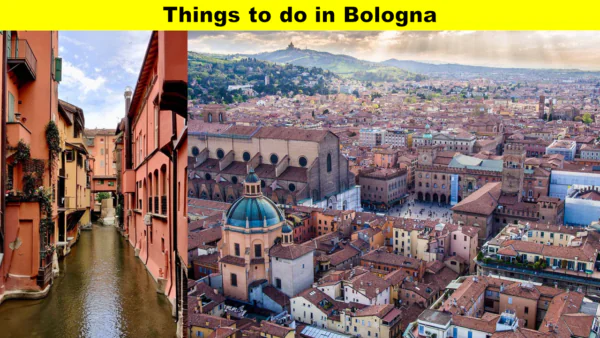
Things to do in Bologna based on NeemTime research from most popular to just popular.
Piazza Maggiore, Bologna
Overview: Piazza Maggiore is Bologna’s central square, surrounded by historic palaces, fountains, and vibrant social spaces.
History: The square has been the heart of Bologna’s civic and social life since the medieval period.
Since When: Established in the 13th century.
Review: Visitors admire its architectural grandeur, lively atmosphere, and the sense of history permeating the area.
When to Go: Year-round, with evenings ideal for enjoying cafes and street performances.
How to Go: Easily accessible on foot from Bologna’s city center or by public transport.
What to Do: Explore historic buildings, enjoy cafes, attend events, and take photos.
Free or Paid: Free.
Two Towers, Bologna
Overview: The Two Towers are iconic leaning medieval towers and symbols of Bologna’s historic skyline.
History: Built by noble families as symbols of power and defense during the 12th century.
Since When: Since the 12th century.
Review: Visitors are impressed by the unique leaning architecture and panoramic city views from the taller tower.
When to Go: Morning or late afternoon to avoid crowds and enjoy the best light for photos.
How to Go: Located in central Bologna; accessible on foot from Piazza Maggiore.
What to Do: Climb the taller tower for city views, take photos, and learn about medieval architecture.
Free or Paid: Paid for climbing the tower; exterior viewing is free.
Giardini Margherita, Bologna
Overview: Giardini Margherita is Bologna’s largest public park, offering green spaces, walking paths, and recreational facilities.
History: Developed in the late 19th century as a public park for leisure and social gatherings.
Since When: Opened in 1879.
Review: Visitors enjoy its serene atmosphere, playgrounds, and beautiful gardens.
When to Go: Spring and summer for picnics and outdoor activities.
How to Go: Accessible by bus or on foot from central Bologna.
What to Do: Walk, picnic, cycle, play sports, and enjoy outdoor events.
Free or Paid: Free.
Mercato delle Erbe, Bologna
Overview: Mercato delle Erbe is a historic indoor food market offering fresh produce, meats, cheeses, and local delicacies.
History: Established as a central marketplace for Bologna residents to trade and shop for fresh ingredients.
Since When: Since 1887.
Review: Visitors love its authentic food experience, vibrant atmosphere, and traditional Bolognese specialties.
When to Go: Morning for the freshest produce and lunch for prepared foods.
How to Go: Easily accessible on foot from central Bologna or by bus.
What to Do: Shop for local produce, taste Bolognese foods, and explore artisanal stalls.
Free or Paid: Free to enter; food and products are paid.
Santuario Madonna di San Luca, Bologna
Overview: Santuario Madonna di San Luca is a hilltop basilica famous for its panoramic views and historic covered portico.
History: Built to house a revered icon of the Virgin Mary and became a pilgrimage site over centuries.
Since When: Originally built in the 12th century, rebuilt in the 18th century.
Review: Visitors praise its scenic location, spiritual ambiance, and the unique 666-arch portico leading up the hill.
When to Go: Spring and summer for hiking and panoramic views.
How to Go: Accessible by car, taxi, or walking along the portico from Bologna.
What to Do: Hike or drive to the basilica, enjoy city views, and explore the historic interior.
Free or Paid: Free.
Piazza Santo Stefano, Bologna
Overview: Piazza Santo Stefano is a historic square known for its medieval architecture and the Seven Churches complex.
History: The square developed around the Basilica di Santo Stefano, which dates back to the early Middle Ages and has served as a religious and social hub.
Since When: Established in the 12th century.
Review: Visitors appreciate its serene atmosphere, historic charm, and the unique architectural ensemble of the seven interconnected churches.
When to Go: Year-round, especially in the morning or late afternoon for a peaceful experience.
How to Go: Easily accessible on foot from central Bologna or via public transport.
What to Do: Explore the churches, enjoy cafes, take photographs, and attend local events.
Free or Paid: Free entry; some churches may have a small fee.
Galleria Cavour, Bologna
Overview: Galleria Cavour is a luxurious shopping arcade featuring high-end fashion boutiques, cafes, and elegant architecture.
History: Built to host prestigious shops and create a sophisticated shopping experience for Bologna residents and visitors.
Since When: Opened in the early 20th century.
Review: Visitors admire its elegant design, luxury brands, and the charming atmosphere of indoor shopping.
When to Go: Year-round; weekdays are less crowded than weekends.
How to Go: Located in central Bologna, easily reachable on foot or by public transport.
What to Do: Shop, dine in cafes, and admire the architectural details.
Free or Paid: Free to enter; purchases are paid.
Sfoglia Rina, Bologna
Overview: Sfoglia Rina is a renowned traditional pasta shop specializing in fresh handmade pasta and Bolognese specialties.
History: Established to preserve and promote traditional Bolognese pasta-making techniques.
Since When: Operating since the late 20th century.
Review: Visitors praise the authenticity, quality, and flavor of the pasta and local dishes.
When to Go: Year-round; mornings are ideal for fresh pasta.
How to Go: Accessible on foot from Bologna’s historic center.
What to Do: Buy fresh pasta, watch preparation, and taste local specialties.
Free or Paid: Paid.
Mercato di Mezzo, Bologna
Overview: Mercato di Mezzo is a historic food market offering a mix of fresh produce, street food, and traditional Bolognese cuisine.
History: The market evolved from a medieval trading area into a modern food destination.
Since When: Since the 15th century in various forms.
Review: Visitors enjoy the lively atmosphere, variety of food options, and cultural authenticity.
When to Go: Morning for fresh produce and lunch for prepared dishes.
How to Go: Located in central Bologna, within walking distance from Piazza Maggiore.
What to Do: Sample local foods, shop for specialties, and enjoy the vibrant market ambiance.
Free or Paid: Free to enter; food and drinks are paid.
Le Due Torri Torre degli Asinelli, Bologna
Overview: Torre degli Asinelli is the taller of Bologna’s iconic leaning towers offering panoramic views of the city.
History: Built by the Asinelli family as a symbol of power and prestige during the 12th century.
Since When: Since 1109.
Review: Visitors praise the challenging climb and spectacular city views from the top.
When to Go: Morning or late afternoon to avoid crowds and enjoy good lighting for photography.
How to Go: Located in central Bologna; reachable on foot from Piazza Maggiore.
What to Do: Climb the tower, take photos, and admire medieval architecture.
Free or Paid: Paid for climbing; viewing from outside is free.
La Prosciutteria Bologna
Overview: La Prosciutteria Bologna is a popular eatery offering artisanal cured meats, cheeses, and traditional Italian sandwiches.
History: Founded to celebrate local charcuterie traditions and provide an authentic Bolognese culinary experience.
Since When: Operating since the early 21st century.
Review: Visitors praise the high-quality meats, friendly service, and rustic, cozy atmosphere.
When to Go: Best visited at lunchtime or early evening for a fresh selection of meats and boards.
How to Go: Located in central Bologna, accessible on foot or via public transport.
What to Do: Sample cured meats, enjoy sandwiches, and pair with local wines.
Free or Paid: Paid.
The Space Cinema, Bologna
Overview: The Space Cinema is a modern multiplex offering a wide selection of international and Italian films in a comfortable environment.
History: Established as part of a national chain to provide a high-quality cinema experience.
Since When: Opened in the early 2000s.
Review: Visitors enjoy the advanced audiovisual technology, comfortable seating, and variety of film choices.
When to Go: Evenings and weekends are busiest, weekdays are quieter.
How to Go: Accessible by public transport or car; located near Bologna city center.
What to Do: Watch films, buy snacks, and enjoy entertainment with friends or family.
Free or Paid: Paid.
Museo Ducati, Bologna
Overview: Museo Ducati showcases the history, technology, and iconic motorcycles of the Ducati brand.
History: Created to celebrate Ducati’s heritage and its contributions to motorcycle engineering.
Since When: Opened in 1998.
Review: Visitors love the interactive exhibits, vintage motorcycles, and engineering insights.
When to Go: Year-round; weekdays are less crowded.
How to Go: Accessible by car or taxi from central Bologna; some public transport options available.
What to Do: Explore exhibits, take photographs, and learn about Ducati’s history.
Free or Paid: Paid.
Neptune’s Fountain, Bologna
Overview: Neptune’s Fountain is a Renaissance masterpiece and one of Bologna’s most iconic city landmarks.
History: Designed by Giambologna in the 16th century to symbolize papal power and artistic achievement.
Since When: Completed in 1566.
Review: Visitors admire its intricate sculptures, historical significance, and central location.
When to Go: Early morning or evening to avoid crowds and capture good photos.
How to Go: Located in Piazza del Nettuno, reachable on foot from central Bologna.
What to Do: Take photographs, admire the sculpture, and learn about its history.
Free or Paid: Free.
Basilica di San Petronio, Bologna
Overview: Basilica di San Petronio is a monumental Gothic church dominating Bologna’s Piazza Maggiore with stunning architecture and interior art.
History: Constructed to honor Bologna’s patron saint, Saint Petronius, as a civic and religious landmark.
Since When: Construction began in 1390.
Review: Visitors are impressed by its size, intricate facade, and interior frescoes.
When to Go: Year-round; early morning is ideal for quiet visits.
How to Go: Located in Piazza Maggiore, accessible on foot from most central Bologna locations.
What to Do: Explore the interior, climb the terrace for city views, and attend religious or cultural events.
Free or Paid: Free to enter; terrace access is paid.
Parco di Via dei Giardini, Bologna
Overview: Parco di Via dei Giardini is a serene urban park in Bologna offering green spaces, walking paths, and recreational areas for families and visitors.
History: Established to provide a natural retreat within the bustling city environment.
Since When: Opened in the mid-20th century.
Review: Visitors appreciate its tranquility, well-maintained gardens, and suitability for picnics and outdoor activities.
When to Go: Best visited in spring and summer for pleasant weather and blooming gardens.
How to Go: Accessible by walking, bicycle, or public transport from central Bologna.
What to Do: Walk, relax, enjoy outdoor games, and take photographs of the greenery.
Free or Paid: Free.
Basilica – Santuario di Santo Stefano, Bologna
Overview: The Basilica of Santo Stefano is a historic religious complex consisting of multiple churches and courtyards, known for its unique architectural style.
History: Constructed over several centuries to house sacred relics and serve as a spiritual center.
Since When: Originated in the 5th century, with expansions in the 12th and 13th centuries.
Review: Visitors admire its serene courtyards, artistic frescoes, and historical significance.
When to Go: Early morning or late afternoon to avoid crowds.
How to Go: Located near Piazza Santo Stefano, accessible on foot or by bus from central Bologna.
What to Do: Explore the churches, admire religious art, and enjoy the peaceful courtyards.
Free or Paid: Free.
Arco del Meloncello, Bologna
Overview: Arco del Meloncello is a famous Baroque arch bridge that forms part of Bologna’s historic portico network.
History: Designed by architect Carlo Francesco Dotti to facilitate safe pedestrian access along the pilgrimage route.
Since When: Completed in 1732.
Review: Visitors praise its elegant design, historical value, and scenic surroundings.
When to Go: Morning or evening for photography and a leisurely walk.
How to Go: Accessible by walking or cycling from central Bologna along the portico pathways.
What to Do: Walk across the arch, photograph the architecture, and enjoy a stroll along the portico.
Free or Paid: Free.
Metropolitan Cathedral of Saint Peter, Bologna
Overview: The Metropolitan Cathedral of Saint Peter, also known as Bologna Cathedral, is the city’s main Roman Catholic cathedral featuring Renaissance and Gothic elements.
History: Built to serve as the seat of the archbishop and a key religious center for Bologna.
Since When: Original structure dates to the 5th century, with major renovations in the 12th century.
Review: Visitors admire the cathedral’s art, architecture, and spiritual ambiance.
When to Go: Year-round; mornings are ideal for quieter visits.
How to Go: Located near the city center, reachable by foot or public transport.
What to Do: Explore the interior, attend services, and admire the frescoes and sculptures.
Free or Paid: Free.
MAMbo – Museo d’Arte Moderna di Bologna, Bologna
Overview: MAMbo is Bologna’s contemporary art museum, showcasing modern and contemporary Italian and international artworks.
History: Established to promote contemporary art and cultural events in Bologna.
Since When: Opened in 2007.
Review: Visitors enjoy its dynamic exhibitions, interactive installations, and engaging cultural programs.
When to Go: Weekdays are less crowded; special exhibitions are best visited on scheduled dates.
How to Go: Accessible by bus or walking from central Bologna.
What to Do: View contemporary art, participate in workshops, and attend special exhibitions.
Free or Paid: Paid.
Basilica of San Domenico, Bologna
Overview: The Basilica of San Domenico is a historic church in Bologna renowned for its Romanesque-Gothic architecture and sacred art collections.
History: Built to honor Saint Dominic, founder of the Dominican Order, and house his relics.
Since When: Construction began in 1221 and continued through the 18th century.
Review: Visitors admire its elaborate chapels, sculptural masterpieces, and serene spiritual atmosphere.
When to Go: Morning or early afternoon to fully appreciate the architecture and avoid crowds.
How to Go: Located near the city center, reachable by walking or bus.
What to Do: Explore the chapels, view the tomb of Saint Dominic, and admire Renaissance and Baroque artworks.
Free or Paid: Free entry, donations accepted.
Santuario di Madonna di San Luca, Bologna
Overview: The Santuario di Madonna di San Luca is a hilltop sanctuary offering panoramic views of Bologna and a historic pilgrimage site.
History: Built to house a revered icon of the Virgin Mary and connect the city to the surrounding hills.
Since When: Constructed between 1723 and 1757.
Review: Visitors praise its breathtaking views, impressive porticoed walkway, and spiritual significance.
When to Go: Early morning or late afternoon for cooler weather and stunning vistas.
How to Go: Reachable via a 3.5 km walk along the Portico di San Luca or by car/tour bus.
What to Do: Walk the portico, attend mass, and enjoy panoramic photography.
Free or Paid: Free.
Pinacoteca Nazionale di Bologna, Bologna
Overview: The Pinacoteca Nazionale di Bologna is the city’s premier art gallery, showcasing medieval, Renaissance, and Baroque Italian masterpieces.
History: Established to preserve and exhibit Bologna’s rich artistic heritage and ecclesiastical collections.
Since When: Founded in 1809.
Review: Visitors value its comprehensive collection, informative displays, and beautiful historic setting.
When to Go: Weekdays are best for avoiding crowds; special exhibitions may have seasonal schedules.
How to Go: Centrally located, accessible on foot or by bus from major city points.
What to Do: View iconic paintings, study art history, and enjoy guided tours.
Free or Paid: Paid.
Giardino Lunetta Gamberini, Bologna
Overview: Giardino Lunetta Gamberini is a small, charming city park ideal for relaxation, picnics, and leisurely walks.
History: Developed as a community green space to provide locals and tourists with a peaceful retreat.
Since When: Established in the mid-20th century.
Review: Visitors appreciate its tranquility, floral landscaping, and kid-friendly areas.
When to Go: Spring and summer are best to enjoy the gardens in full bloom.
How to Go: Accessible by walking, bicycle, or public transport from central Bologna.
What to Do: Stroll, relax, picnic, and photograph the gardens.
Free or Paid: Free.
Porta Saragozza, Bologna
Overview: Porta Saragozza is one of Bologna’s historic city gates, marking the entrance to the medieval walls and the starting point of the San Luca pilgrimage.
History: Constructed as part of the defensive walls and to facilitate the procession route to the Santuario di Madonna di San Luca.
Since When: Built in the 12th century, reconstructed in the 17th century.
Review: Visitors admire its historical significance, architectural charm, and connection to Bologna’s cultural heritage.
When to Go: Best visited in the morning or late afternoon to enjoy pleasant light for photography.
How to Go: Located on the western edge of the historic center, accessible by walking or bus.
What to Do: Explore the gate, photograph the historic structure, and begin the portico walk to San Luca.
Free or Paid: Free.
Palazzo Albergati, Bologna
Overview: Palazzo Albergati is a stunning historic palace in Bologna showcasing Baroque architecture and hosting art exhibitions and cultural events.
History: Built for the noble Albergati family, the palace has been a symbol of Bologna’s aristocratic heritage.
Since When: Constructed in the early 18th century.
Review: Visitors praise its grandiose interiors, elegant frescoes, and cultural programming.
When to Go: Weekdays are ideal to avoid crowds, especially during exhibition periods.
How to Go: Easily reachable by taxi, bus, or a 15-minute walk from central Bologna.
What to Do: Explore the palace interiors, attend exhibitions, and photograph the architectural details.
Free or Paid: Paid.
Parco Nord Bologna, Bologna
Overview: Parco Nord Bologna is a large urban park offering recreational activities, walking trails, and green open spaces.
History: Developed to provide residents with a natural retreat and outdoor leisure facilities.
Since When: Established in the late 20th century.
Review: Visitors enjoy its spacious greenery, jogging paths, and family-friendly environment.
When to Go: Spring and summer for outdoor activities and pleasant weather.
How to Go: Accessible by car, bike, or public transport from the city center.
What to Do: Walk, cycle, picnic, and participate in sports or community events.
Free or Paid: Free.
Museo Civico Archeologico Bologna, Bologna
Overview: The Museo Civico Archeologico Bologna is a museum dedicated to archaeology and ancient civilizations, highlighting Etruscan, Roman, and Egyptian artifacts.
History: Founded to preserve and exhibit Bologna’s rich archaeological collections.
Since When: Established in 1881.
Review: Visitors appreciate the extensive collections, detailed explanations, and interactive displays.
When to Go: Weekdays in the morning for a quieter experience.
How to Go: Located near Piazza Maggiore, accessible on foot or by bus.
What to Do: Explore ancient artifacts, learn about historical civilizations, and participate in guided tours.
Free or Paid: Paid.
Fondazione Lucio Dalla / Casa Lucio Dalla, Bologna
Overview: Fondazione Lucio Dalla celebrates the life and work of Bologna’s iconic musician, Lucio Dalla, through exhibits and cultural programs.
History: Established to honor Lucio Dalla and preserve his artistic legacy.
Since When: Founded in 2012, after Dalla’s death in 2012.
Review: Visitors enjoy the memorabilia, interactive exhibits, and insight into Dalla’s musical career.
When to Go: Morning or early afternoon for guided tours and events.
How to Go: Centrally located, accessible by walking or public transport.
What to Do: Explore exhibitions, listen to music recordings, and attend special events.
Free or Paid: Paid.
Palazzo Pallavicini, Bologna
Overview: Palazzo Pallavicini is a historic palace known for its exquisite architecture, art collections, and cultural events.
History: Built for the Pallavicini family, it has hosted nobility and influential cultural gatherings over centuries.
Since When: Constructed in the 16th century.
Review: Visitors admire its frescoed rooms, grand halls, and art exhibitions.
When to Go: Morning visits are best for quiet exploration and photography.
How to Go: Accessible by bus or a short walk from central Bologna.
What to Do: Tour the palace, view art collections, and enjoy temporary exhibitions.
Free or Paid: Paid.