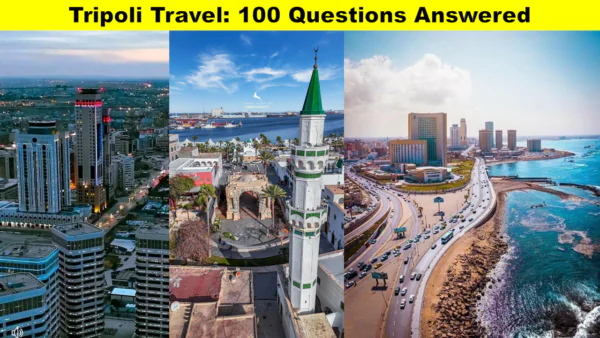
Tripoli Travel: 100 Questions Answered based on NeemTime research
🏛️ Essential Logistics & Visas
Is Libya open to tourists? Yes, but strictly through authorized tour agencies.
Can I travel independently? No. Most travelers report that independent travel is effectively impossible due to visa requirements and checkpoints.
What is the e-visa situation? An e-visa system exists, but users suggest it still requires a local “sponsor” (tour company) to be approved.
How long does the visa take? Plan for 4–8 weeks; it can be a slow, bureaucratic process.
Do I need a tour guide? Yes, a licensed guide is mandatory to enter the country.
Do I need a police escort? Currently, yes. Most Western tourists are required to have a tourist police officer accompany their group.
Is the police escort expensive? Yes, you typically pay for their daily rate, food, and lodging.
What happens at the airport? Your guide must meet you before you even clear immigration in many cases.
Can Americans visit? Yes, though the process may be more scrutinized.
Which airport should I fly into? Mitiga International (MJI) is the primary hub for Tripoli.
Are there direct flights from Europe? Limited. Most travelers fly via Tunis (Tunisair/Libyan Wings) or Istanbul.
Is there a “business visa” workaround? Some used to do this, but the tourist e-visa is now the standard recommendation.
Do I need a yellow fever vaccine? Check current health requirements; it is often requested for those arriving from certain regions.
Is a passport with an Israeli stamp allowed? Traditionally no; ensure your passport is “clean” of Israeli entry/exit stamps.
Can I use ATMs? No. International cards rarely work.
How should I bring money? Bring crisp, new USD or EUR bills in cash.
Where do I exchange money? The “black market” (parallel market) offers much better rates than banks. Ask your guide.
Is the currency stable? It fluctuates; check the parallel market rate before you arrive.
What is the local currency? Libyan Dinar (LYD).
Is there a limit on cash? Declare large amounts, but generally, you need enough to cover your entire trip in cash.
🛡️ Safety & Security
Is Tripoli safe right now? It is “stable but unpredictable.” Clashes between militias can happen, though they rarely target tourists.
What are the main risks? Political instability, arbitrary detention, and petty crime in crowded areas.
Is there a kidnapping risk? Western governments warn of it, though tourists with guides are generally seen as protected.
Are there landmines? Not in central Tripoli, but they are a massive hazard in former conflict zones on the outskirts.
Can I walk around at night? Only in specific, well-lit areas and usually with your guide’s approval.
What are checkpoints like? Frequent. Your guide will handle the paperwork (permits).
Should I register with my embassy? Yes, highly recommended (e.g., STEP for Americans).
Is the drinking water safe? No, always stick to bottled water.
What is the driving like? Chaotic and dangerous. It is widely considered the biggest daily risk to travelers.
Is there a “green zone”? Not exactly, but certain neighborhoods like Hay al-Andalus are considered safer/more affluent.
Can I visit Benghazi from Tripoli? Yes, but it usually requires a domestic flight and a separate set of permits.
Is it safe for solo women? It is possible with a reputable agency, but you will likely be the only woman in your group.
Are locals friendly? Extremely. Most visitors report incredible hospitality and curiosity from locals.
Should I avoid politics? Yes. Avoid discussing local political figures or militias in public.
Are there sirens/alarms? Occasionally, but usually, the city is just noisy with traffic.
Is it okay to take photos of people? Always ask first; many are happy to pose, others are cautious.
Can I photograph government buildings? Strictly no. This can lead to detention.
Are there many police? There is a heavy presence of various “security forces” and militias.
Is internet monitored? Assume a level of surveillance; use a VPN.
What if there is a protest? Stay away. Demonstrations can escalate quickly.
🏛️ Sightseeing & Culture
What is the #1 site in Tripoli? The Red Castle (Assaraya al-Hamra).
Is the National Museum open? It has been undergoing renovations; check with your guide for the current status.
What is Martyr’s Square? The central heart of the city, great for people-watching.
Is the Arch of Marcus Aurelius worth it? Yes, it’s a stunning remnant of Roman Oea.
What is the “Old City” like? The Medina is a labyrinth of markets and historic mosques.
Can I visit Leptis Magna? Yes, it’s about 2 hours from Tripoli and is one of the world’s best Roman sites.
Is Sabratha accessible? Usually yes, located west of Tripoli, known for its incredible seaside theater.
Are there beaches? Yes, but they are mostly for walking or private resorts; conservative dress is required.
What is the Ghadames trip like? It’s a long drive into the desert (the “Pearl of the Sahara”), highly recommended.
Can I see the Tripoli International Fair? Yes, the architecture (Oscar Niemeyer) is a must for design fans.
Are mosques open to non-Muslims? Some are, but always check and dress appropriately.
What is the best view of the city? From the waterfront (Corniche) at sunset.
Are there any “hidden gems”? The Gurgi Mosque and the British/French consulate buildings in the Medina.
Is English widely spoken? Among the youth and in hospitality, yes, but Arabic is dominant.
What is the local dress code? Conservative. Men should wear long pants; women should wear loose-fitting clothing.
Do women need to wear a headscarf? Not legally required for foreigners, but it helps to have one for mosques or conservative areas.
Is alcohol legal? No. Libya is strictly dry. Do not attempt to bring any in.
Can I buy souvenirs? Look for silver jewelry, leather goods, and traditional Berber rugs in the Medina.
Are shops closed on Fridays? Yes, Friday is the holy day; most things close until the evening.
Is there a “tourist trap” to avoid? Overpriced “traditional” dinners arranged by low-quality guides.
🍽️ Food & Dining
What is the must-try dish? Bazeen (barley dough with meat/tomato sauce) or Couscous.
What is Libyan coffee like? Strong, similar to Turkish coffee, often flavored with cardamom.
Is the food spicy? Yes, Libyans love Harissa (chili paste).
What is “Asida”? A sweet/savory dough dish often eaten for breakfast.
Are there international restaurants? Yes, Tripoli has many Turkish, Lebanese, and Italian options.
Is Italian influence still visible? Yes, pasta and espresso are staples of the Libyan diet.
Where is a good place to eat? The Medina has small gems, while Hay al-Andalus has modern cafes.
What are “Shwarma” prices? Very cheap; a great street food option.
Is tea popular? Extremely. Green tea with mint and peanuts is a ritual.
Are there bars? No, but “Mocktail” bars and high-end coffee shops are the social hubs.
Is tipping expected? It is appreciated but not mandatory. 10% is generous.
What are the grocery stores like? Well-stocked with imported European and Turkish goods.
Can I find vegetarian food? Yes (falafel, hummus, salads), but the culture is very meat-heavy.
Is the seafood good? Yes, Tripoli is a coastal city; try the fresh grilled fish near the port.
What is the “Macarona Imbakbaka”? A famous one-pot spicy Libyan pasta dish.
How is the bread? Excellent; fresh “Khubz” is baked daily everywhere.
Is milk pasteurized? Usually, but stick to boxed (UHT) milk if unsure.
Can I drink the juice? Fresh orange and pomegranate juice from street stalls are usually safe and delicious.
What time do people eat dinner? Late, often after 8:00 PM or 9:00 PM.
Are there fast food chains? No major US chains (McDonald’s, etc.), but many local clones.
📱 Connectivity & Comfort
Can I get a SIM card? Yes, Libyana and Al-Madar are the main providers.
Is the internet fast? It’s decent in Tripoli but can be spotty during power cuts.
Are there power outages? Yes, “load shedding” is common. Most good hotels have generators.
What plug type is used? Types C, D, and L (mostly European style).
Are hotels expensive? Mid-range to high; there isn’t much of a “backpacker” infrastructure.
What is the best hotel? The Radisson Blu Al Mahary is a popular high-end choice.
Is there public transport? Mostly shared “black and white” vans/taxis. Not recommended for tourists alone.
Are there ride-sharing apps? Yes, apps like “Rakib” or “Al-Saree” work in Tripoli.
What is the weather like? Mediterranean. Hot summers, mild and rainy winters.
When is the best time to visit? March–May or October–November.
Is the city walkable? Only in small sections like the Medina or Corniche.
Are there pharmacies? Yes, widely available and well-stocked.
Can I use my phone’s GPS? Yes, but download offline maps (Google Maps/Maps.me).
Is there a lot of trash? Unfortunately, yes; waste management is a major local complaint.
Are there public toilets? Rare. Use cafes or hotels.
Is the city noisy? Yes, traffic and construction are constant.
Do I need an international driving permit? You shouldn’t be driving yourself anyway.
Is there a postal service? It’s unreliable; don’t count on sending postcards.
Is there a lot of “catcalling”? Less than in some neighboring countries, but solo women will still draw attention.
Is it worth the hassle? For history buffs and “off-the-beaten-path” travelers, the consensus is a resounding yes.