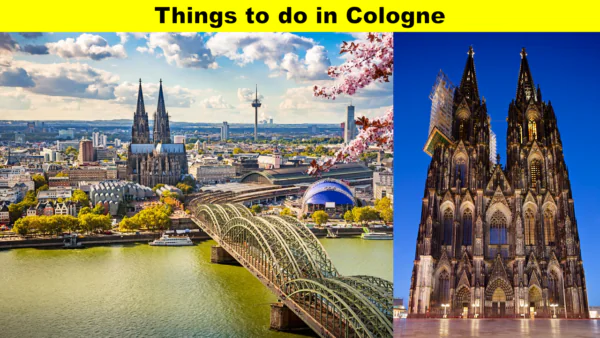
Things to do in Cologne based on NeemTime research from most popular to just popular.
Cologne Cathedral, Cologne
Overview: Cologne Cathedral is a UNESCO-listed Gothic masterpiece and iconic landmark of Cologne, renowned for its twin spires, vast interior, and sacred relics.
History: Construction began in the Middle Ages to house the Shrine of the Three Kings and symbolize the city’s religious importance.
Since When: Building started in 1248 and was completed in 1880 after several centuries of interruption.
Review: Visitors consistently praise its breathtaking architecture, spiritual atmosphere, and panoramic city views from the tower.
When to Go: Early morning or late afternoon is best to avoid crowds and enjoy softer light inside the cathedral.
How to Go: Easily reachable by foot from Cologne Central Station or via city trams and buses.
What to Do: Admire the stained glass, visit the treasury, attend a service, or climb the tower.
Free or Paid: Free entry to the cathedral; tower and treasury require a ticket.
Schokoladenmuseum Köln, Cologne
Overview: Schokoladenmuseum Köln is an interactive museum dedicated to the history, production, and cultural impact of chocolate.
History: The museum was founded by Hans Imhoff, a German chocolatier, to celebrate chocolate heritage.
Since When: Opened in 1993.
Review: Visitors love the engaging exhibits, chocolate tastings, and the working chocolate fountain.
When to Go: Late morning or early afternoon is ideal for a relaxed visit.
How to Go: Accessible by tram, bus, or a scenic walk along the Rhine River.
What to Do: Explore exhibits, watch chocolate-making, and sample fresh chocolate.
Free or Paid: Paid entry.
Cologne Zoo, Cologne
Overview: Cologne Zoo is one of the oldest and most diverse zoos in Germany, featuring animals from around the world.
History: Established as a scientific and recreational zoo to educate the public about wildlife.
Since When: Opened in 1860.
Review: Visitors appreciate the spacious enclosures, variety of species, and family-friendly facilities.
When to Go: Spring and summer are best for seeing animals active outdoors.
How to Go: Reachable by tram or bus from central Cologne.
What to Do: Observe animals, visit themed habitats, and enjoy educational programs.
Free or Paid: Paid entry.
NEUMARKT Galerie Köln, Cologne
Overview: NEUMARKT Galerie Köln is a modern shopping mall offering international brands, dining, and entertainment in the city center.
History: Developed to enhance Cologne’s retail infrastructure and urban shopping experience.
Since When: Opened in 1999.
Review: Shoppers enjoy its central location, wide brand selection, and convenient layout.
When to Go: Weekday mornings or early afternoons are less crowded.
How to Go: Located at Neumarkt square, easily accessible by multiple tram lines.
What to Do: Shop, dine, relax at cafés, and explore nearby city attractions.
Free or Paid: Free entry; shopping is paid.
Old Market, Cologne
Overview: Old Market is a historic square in Cologne known for its traditional buildings, restaurants, and lively atmosphere.
History: It has served as a central trading and social hub since medieval times.
Since When: Active as a marketplace since the Middle Ages.
Review: Visitors enjoy its charming ambiance, local food, and festive events.
When to Go: Evenings and festival seasons offer the most vibrant experience.
How to Go: Easily reachable on foot from Cologne Cathedral or by public transport.
What to Do: Dine at traditional breweries, explore nearby streets, and enjoy local culture.
Free or Paid: Free to visit; food and activities are paid.
Hohenzollern Bridge, Cologne
Overview: Hohenzollern Bridge is an iconic Rhine river crossing in Cologne, famous for its railway traffic, pedestrian walkway, and thousands of love locks attached to its railings.
History: The bridge was originally constructed as a rail and road bridge and rebuilt after World War II destruction.
Since When: First opened in 1911 and reopened in its current form in 1959.
Review: Visitors admire the scenic river views and romantic atmosphere, especially at sunset.
When to Go: Evening hours are ideal for views of the illuminated Cologne Cathedral.
How to Go: Easily reachable on foot from Cologne Cathedral or via nearby tram and train stations.
What to Do: Walk across the bridge, take photos, and view the love locks and Rhine panorama.
Free or Paid: Free.
Erlebnisbauernhof Gertrudenhof, Cologne
Overview: Erlebnisbauernhof Gertrudenhof is a family-friendly adventure farm offering seasonal events, farm animals, and interactive rural experiences.
History: Originated as a traditional farm and gradually evolved into an educational and recreational attraction.
Since When: Operating as a public experience farm since the late 20th century.
Review: Families appreciate its engaging activities, fresh produce, and child-friendly environment.
When to Go: Best visited during seasonal festivals such as pumpkin or strawberry season.
How to Go: Accessible by car or public transport from Cologne city center.
What to Do: Interact with animals, explore themed areas, and enjoy farm-fresh food.
Free or Paid: Paid entry for certain attractions; general access may be free.
Flora und Botanischer Garten Köln, Cologne
Overview: Flora und Botanischer Garten Köln is a beautifully landscaped botanical garden showcasing diverse plant species in themed gardens and greenhouses.
History: Established as part of Cologne’s horticultural development and scientific study of plants.
Since When: Founded in 1864.
Review: Visitors praise its tranquility, floral variety, and well-maintained pathways.
When to Go: Spring and summer offer the best blooms and pleasant weather.
How to Go: Reachable by tram, bus, or car from central Cologne.
What to Do: Stroll through gardens, relax on lawns, and explore exotic plant collections.
Free or Paid: Free.
Motorworld, Cologne
Overview: Motorworld Cologne is an automotive-themed complex featuring classic cars, showrooms, restaurants, and event spaces.
History: Developed in a converted industrial site to celebrate automotive culture and heritage.
Since When: Opened to the public in 2018.
Review: Car enthusiasts enjoy the impressive vehicle displays and vibrant atmosphere.
When to Go: Weekdays are ideal to explore comfortably without crowds.
How to Go: Accessible by car or public transport from Cologne city center.
What to Do: View luxury and classic cars, dine, and attend auto-related events.
Free or Paid: Free entry; dining and events are paid.
Museum Ludwig, Cologne
Overview: Museum Ludwig is a world-renowned art museum specializing in modern and contemporary art, including one of Europe’s largest Picasso collections.
History: Established through the donation of art collections by Peter and Irene Ludwig.
Since When: Opened in 1986.
Review: Visitors commend its outstanding exhibitions and central location near the cathedral.
When to Go: Weekdays or early hours for a quieter museum experience.
How to Go: Located near Cologne Cathedral and easily accessible by public transport.
What to Do: Explore modern art exhibitions, attend guided tours, and enjoy cultural programs.
Free or Paid: Paid entry.
Rheingarten, Cologne
Overview: Rheingarten is a scenic riverside promenade along the Rhine offering panoramic views of Cologne Cathedral, river cruises, and relaxed urban green space.
History: The promenade was developed in stages in the 20th century as part of Cologne’s post-war riverbank redevelopment to reconnect the city with the Rhine.
Since When: Rheingarten has existed in its modern landscaped form since the mid-1900s, evolving with continuous urban improvements.
Review: Visitors praise Rheingarten for its peaceful atmosphere, excellent photo spots, and lively vibe during sunny days and events.
When to Go: The best time to visit is from spring to early autumn, especially during evenings for sunset views over the Rhine.
How to Go: Rheingarten is easily accessible by tram or bus to Heumarkt or Dom/Hbf, followed by a short walk toward the river.
What to Do: You can stroll along the river, relax on benches, watch boats pass, enjoy street performances, or join river cruises.
Free or Paid: Entry to Rheingarten is completely free.
Rheinpark, Cologne
Overview: Rheinpark is a large landscaped park on the eastern bank of the Rhine featuring lawns, gardens, playgrounds, and city skyline views.
History: The park was created for the 1957 Federal Garden Show, transforming former industrial land into a major public green space.
Since When: Rheinpark has been open to the public since 1957 as one of Cologne’s most important recreational parks.
Review: Visitors highly rate Rheinpark for its cleanliness, family-friendly facilities, and spectacular views of Cologne Cathedral.
When to Go: Late spring through summer is ideal, particularly on clear days when the gardens are in full bloom.
How to Go: You can reach Rheinpark via tram to Kölnmesse or Deutz stations, then walk a few minutes toward the river.
What to Do: Popular activities include picnicking, cycling, enjoying playgrounds, taking photos, and riding the Cologne Cable Car nearby.
Free or Paid: Entry to Rheinpark is free, though some nearby attractions may charge separately.
Heumarkt, Cologne
Overview: Heumarkt is one of Cologne’s largest and most vibrant squares, serving as a hub for shopping, dining, and city events.
History: Dating back to medieval times, Heumarkt historically functioned as a trading and market square central to Cologne’s commerce.
Since When: Heumarkt has existed since the Middle Ages and continues to be a focal point of city life today.
Review: Visitors enjoy the lively atmosphere, historic surroundings, and excellent access to restaurants and public transport.
When to Go: The square is best visited year-round, especially during Christmas markets or major festivals like Cologne Carnival.
How to Go: Heumarkt is directly accessible via multiple tram and bus lines, making it one of the easiest places to reach in Cologne.
What to Do: You can shop, dine, attend festivals, explore nearby old town streets, or simply relax and people-watch.
Free or Paid: Visiting Heumarkt is free, though shopping, dining, and events may involve costs.
Cologne Central Station (Köln Hauptbahnhof), Cologne
Overview: Cologne Central Station is the city’s main railway hub, located directly next to Cologne Cathedral and serving millions of travelers annually.
History: The station was originally opened in 1859 and has been rebuilt several times due to war damage and modernization needs.
Since When: Köln Hauptbahnhof has operated in its current central role since the mid-19th century.
Review: Travelers appreciate its unbeatable location but often note that it can be crowded during peak hours.
When to Go: Early mornings or late evenings are preferable to avoid heavy crowds and busy travel times.
How to Go: The station is accessible by regional, national, and international trains, as well as U-Bahn and bus services.
What to Do: You can catch trains, shop inside the station, grab food, or step outside to visit Cologne Cathedral immediately.
Free or Paid: Entry to the station is free, while travel services and shops are paid.
Chocolate Museum (Schokoladenmuseum Köln), Cologne
Overview: The Chocolate Museum showcases the history, production, and global culture of chocolate in an interactive riverside setting.
History: The museum was founded by chocolatier Hans Imhoff and opened to the public to celebrate chocolate heritage.
Since When: The Chocolate Museum has been welcoming visitors since 1993.
Review: Visitors consistently rate the museum highly for its engaging exhibits, chocolate fountain, and family-friendly experience.
When to Go: Weekday mornings are ideal to avoid crowds, while winter visits pair well with Cologne’s festive atmosphere.
How to Go: The museum can be reached by tram or bus to Heumarkt, followed by a scenic walk along the Rhine.
What to Do: You can explore exhibits, watch chocolate-making demonstrations, taste samples, and shop for souvenirs.
Free or Paid: The Chocolate Museum requires a paid admission ticket.
Lindenthaler Tierpark, Cologne
Overview: Lindenthaler Tierpark is a small, family-friendly urban animal park in Cologne offering free access to local and farm animals in a relaxed green setting.
History: The park was established as a community-oriented nature space to bring wildlife awareness closer to city residents.
Since When: Lindenthaler Tierpark has been open to the public since the mid-20th century.
Review: Visitors generally appreciate its peaceful atmosphere, accessibility for children, and well-maintained walking paths.
When to Go: The best time to visit is during spring and summer mornings when animals are active and the weather is pleasant.
How to Go: It is easily reachable by tram or bus from Cologne city center, followed by a short walk.
What to Do: Visitors can stroll through the park, observe animals, enjoy picnics, and let children play in open areas.
Free or Paid: Entry to Lindenthaler Tierpark is completely free.
Cologne Triangle, Cologne
Overview: Cologne Triangle is a modern high-rise building featuring a panoramic observation deck with stunning views of the Rhine and Cologne Cathedral.
History: The building was constructed as part of Cologne’s modern urban redevelopment in the early 2000s.
Since When: The observation deck has been open to visitors since 2005.
Review: Tourists praise the breathtaking city views and clear sightlines, especially at sunset.
When to Go: Late afternoon or early evening is ideal for enjoying daylight and sunset views together.
How to Go: It is accessible by tram or train to Köln Messe/Deutz station, followed by a short walk.
What to Do: Visitors can go up to the observation deck, take photos, and enjoy skyline views.
Free or Paid: Entry to the observation deck requires a paid ticket.
Media Park Köln mbH, Cologne
Overview: Media Park Köln is a contemporary business and leisure complex known for its modern architecture, offices, cafes, and central lake.
History: The park was developed on a former industrial site as part of Cologne’s media and technology expansion.
Since When: Media Park has been operational since the late 1990s.
Review: Visitors like its clean design, relaxed atmosphere, and dining options.
When to Go: Weekday afternoons or evenings are best for enjoying cafes without heavy crowds.
How to Go: It is easily reachable by tram or S-Bahn to Hansaring station.
What to Do: Visitors can walk around the lake, dine at restaurants, and enjoy the modern city vibe.
Free or Paid: Entry to Media Park is free.
Hiroshima-Nagasaki-Park, Cologne
Overview: Hiroshima-Nagasaki-Park is a peaceful memorial park dedicated to promoting peace and remembrance in central Cologne.
History: The park was created to commemorate the victims of the atomic bombings and to symbolize global peace.
Since When: The park has existed since the late 20th century as a public memorial space.
Review: Visitors describe it as calm, reflective, and suitable for quiet walks.
When to Go: Early mornings or evenings are ideal for a serene experience.
How to Go: It can be reached easily by tram or bus from Cologne city center.
What to Do: Visitors can relax, reflect, walk through greenery, and enjoy a break from busy streets.
Free or Paid: The park is free to enter.
JUMP House Cologne, Cologne
Overview: JUMP House Cologne is an indoor trampoline park offering energetic fun, fitness, and entertainment for all age groups.
History: It was opened as part of a growing trend of active indoor entertainment venues in Germany.
Since When: JUMP House Cologne has been operating since the late 2010s.
Review: Visitors rate it highly for safety standards, variety of activities, and friendly staff.
When to Go: Weekdays or early hours are best to avoid crowds.
How to Go: It is accessible by public transport or car from central Cologne.
What to Do: Visitors can enjoy trampoline jumping, fitness challenges, and group games.
Free or Paid: Entry requires purchasing a ticket.
Cologne Philharmonie, Cologne
Overview: Cologne Philharmonie is a world-class concert hall beneath Heinrich-Böll-Platz, renowned for exceptional acoustics and a diverse classical and contemporary music program.
History: It was built as part of Cologne’s cultural quarter and opened to strengthen the city’s post-war reputation as a major European music center.
Since When: The concert hall has been operating since 1986 as one of Germany’s leading venues for orchestral and chamber music.
Review: Visitors praise its outstanding sound quality, modern design, and high-caliber performances by international artists.
When to Go: The best time to visit is during the concert season from autumn to spring, especially on evenings with major orchestra performances.
How to Go: It is easily accessible by foot from Cologne Cathedral or via tram and U-Bahn to Dom/Hbf or Heumarkt stations.
What to Do: Attend classical concerts, contemporary performances, jazz events, or guided tours of the concert hall.
Free or Paid: Entry is paid, with ticket prices varying depending on the performance.
Volksgarten Köln, Cologne
Overview: Volksgarten Köln is a spacious urban park offering lakes, walking paths, and relaxation areas popular with locals and families.
History: The park was established in the late 19th century as part of Cologne’s effort to create green recreational spaces for residents.
Since When: Volksgarten has been open to the public since 1890 as one of the city’s oldest public parks.
Review: Visitors enjoy its calm atmosphere, scenic lake, and suitability for picnics and casual walks.
When to Go: Spring and summer are ideal for enjoying greenery, boating, and outdoor leisure activities.
How to Go: The park is reachable by tram lines stopping at Eifelplatz or Barbarossaplatz, followed by a short walk.
What to Do: Walk around the lake, relax on the grass, go boating, or enjoy nearby cafés and playgrounds.
Free or Paid: Entry is free for all visitors.
Stadtwald, Cologne
Overview: Stadtwald is a large forested park area offering natural landscapes, ponds, and trails within Cologne’s city limits.
History: It was developed in the early 20th century as part of Cologne’s green belt urban planning initiative.
Since When: Stadtwald has served as a public recreational forest since around 1907.
Review: Visitors appreciate its peaceful environment, well-maintained paths, and escape from urban noise.
When to Go: It is best visited year-round, with spring and autumn especially scenic for walks.
How to Go: The area is accessible by tram or bus to stops near Aachener Weiher or Lindenthal, then walking inside.
What to Do: Go jogging, cycling, walking, or relax near ponds and open clearings.
Free or Paid: Entry is completely free.
Japanese Garden Leverkusen, Cologne
Overview: The Japanese Garden in Leverkusen is a serene landscaped garden showcasing traditional Japanese design and plant aesthetics.
History: It was created in 1912 by Carl Duisberg as part of his villa estate, inspired by Japanese garden traditions.
Since When: The garden has been open to the public since the mid-20th century after becoming municipal property.
Review: Visitors highly rate its tranquility, carefully designed scenery, and seasonal beauty.
When to Go: Spring and autumn are the best times to see cherry blossoms or colorful foliage.
How to Go: It can be reached by S-Bahn or regional train to Leverkusen Mitte, followed by a bus or short walk.
What to Do: Stroll through themed garden sections, enjoy photography, and experience a peaceful atmosphere.
Free or Paid: Entry is free of charge.
Innerer Grüngürtel, Cologne
Overview: Innerer Grüngürtel is a continuous green belt park encircling central Cologne, ideal for recreation and city views.
History: It was developed after World War I on former fortification grounds as part of modern urban planning.
Since When: The green belt has existed since the 1920s as a public recreational zone.
Review: Locals and visitors value its accessibility, open lawns, and panoramic views of the city skyline.
When to Go: Late spring to early autumn is perfect for outdoor activities and relaxation.
How to Go: The Grüngürtel is easily accessible from multiple tram and bus stops throughout central Cologne.
What to Do: Walk, cycle, picnic, exercise, or relax while enjoying city and nature views.
Free or Paid: Entry is free for everyone.
Flora Cologne – Palais im Park, Cologne
Overview: Flora Cologne – Palais im Park is a historic event palace set within Cologne’s botanical garden, offering elegant architecture, landscaped greenery, and a refined venue for cultural events and exhibitions.
History: The palace was originally built in the 19th century as part of Cologne’s horticultural development and later restored to serve as a prestigious cultural and event space.
Since When: Flora Cologne has existed since 1864, making it one of the city’s oldest botanical and cultural landmarks.
Review: Visitors praise the palace for its serene atmosphere, beautiful gardens, and its blend of historical charm with modern event facilities.
When to Go: The best time to visit is spring or summer when flowers are in full bloom and outdoor areas are most vibrant.
How to Go: It is easily accessible by tram or bus to the Flora/Botanischer Garten stop, followed by a short walk.
What to Do: You can stroll through the botanical gardens, attend exhibitions or events, and enjoy photography of the palace and floral landscapes.
Free or Paid: Entry to the gardens is generally free, while special events or private functions inside the palace may require a paid ticket.
National Socialism Documentation Center of the City of Cologne, Cologne
Overview: This documentation center is a powerful museum and memorial dedicated to educating visitors about Cologne’s history under Nazi rule through exhibitions and preserved sites.
History: The center is housed in the former Gestapo headquarters, where many victims were imprisoned and interrogated during World War II.
Since When: It has operated as a documentation and memorial center since 1979.
Review: Visitors often describe the museum as deeply moving, informative, and essential for understanding Germany’s historical responsibility.
When to Go: Weekdays are ideal for a quieter, more reflective visit, especially outside peak tourist seasons.
How to Go: The center is located near Appellhofplatz and is easily reached by U-Bahn or on foot from Cologne city center.
What to Do: Explore permanent and temporary exhibitions, view preserved prison cells, and learn through guided tours and archival materials.
Free or Paid: Entry is generally paid, with discounted rates for students and free admission on certain days.
Wildlife Park Dünnwald, Cologne
Overview: Wildlife Park Dünnwald is a peaceful natural park featuring native European animals in a forest-like setting ideal for families and nature lovers.
History: The park was established to promote environmental education and conservation of local wildlife species.
Since When: It has been open to the public since the late 20th century as a community-focused nature reserve.
Review: Visitors appreciate the park’s calm atmosphere, free access, and suitability for children and leisurely walks.
When to Go: The best time to visit is during daylight hours in spring and autumn when animals are more active.
How to Go: You can reach the park by bus or tram toward Dünnwald, followed by a short walk into the forest area.
What to Do: Walk along nature trails, observe animals such as deer and wild boar, and enjoy picnics in designated areas.
Free or Paid: Entry to Wildlife Park Dünnwald is completely free.
Wallraf-Richartz-Museum & Fondation Corboud, Cologne
Overview: This renowned art museum showcases masterpieces from medieval times to the 19th century, featuring works by artists like Rubens, Rembrandt, and Monet.
History: Founded in 1824 through a donation by Ferdinand Franz Wallraf, the museum has grown into one of Germany’s most important art institutions.
Since When: The museum has been open to the public since 1827, with its current building inaugurated in 2001.
Review: Art lovers highly rate the museum for its impressive collection, clear layout, and high-quality exhibitions.
When to Go: Visiting on weekday mornings allows for a quieter experience, especially during special exhibitions.
How to Go: The museum is centrally located near Cologne Cathedral and is easily accessible by public transport or walking.
What to Do: Admire classic paintings, explore thematic exhibitions, and join guided tours or educational programs.
Free or Paid: Entry is paid, though discounts and free admission days are occasionally available.
Time Ride, Cologne
Overview: Time Ride Cologne is an immersive virtual reality attraction that transports visitors back to historical Cologne using VR technology and storytelling.
History: The attraction was developed as part of a modern trend to combine digital innovation with historical education.
Since When: Time Ride Cologne has been operating since 2019.
Review: Visitors enjoy the interactive experience, often describing it as fun, educational, and suitable for all ages.
When to Go: Booking in advance and visiting during off-peak hours ensures a smoother and less crowded experience.
How to Go: It is located near Alter Markt and can be easily reached by tram or on foot from the old town.
What to Do: Participate in the VR journey, learn about Cologne’s past, and experience historical scenes in an engaging way.
Free or Paid: Time Ride is a paid attraction, with ticket prices varying by age and group size.