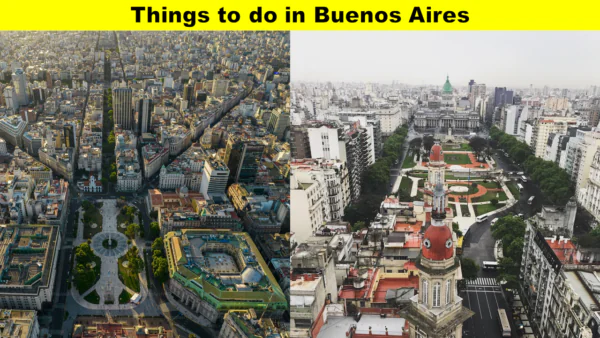
Things to do in Buenos Aires based on NeemTime research from most popular to just popular.
Obelisk of Buenos Aires, Buenos Aires
Overview: The Obelisk of Buenos Aires is an iconic 67-meter monument located on Avenida 9 de Julio and serves as one of the most recognizable landmarks of the city.
History: It was constructed to commemorate the 400th anniversary of the founding of Buenos Aires and quickly became a symbol of the city’s cultural and historical identity.
Since When: The monument was inaugurated on May 23, 1936.
Review: Visitors admire its towering presence, central location, and the vibrant city atmosphere surrounding the landmark.
When to Go: Evening is ideal when the monument and surrounding avenues are beautifully illuminated.
How to Go: Easily reachable by subway lines B, C, and D, public buses, taxis, or by walking from central Buenos Aires.
What to Do: Take photos, explore nearby theaters and shops, and experience the bustling city life around Avenida Corrientes.
Free or Paid: Free to visit and photograph from the outside.
Plaza de Mayo, Buenos Aires
Overview: Plaza de Mayo is the historic central square of Buenos Aires surrounded by important political and historical buildings.
History: The square has been the stage for major political events, protests, and celebrations since Argentina’s colonial period.
Since When: Established in 1580 when the city of Buenos Aires was founded.
Review: Visitors appreciate its historical significance, monuments, and the surrounding landmarks such as the Casa Rosada.
When to Go: Morning or late afternoon for comfortable sightseeing and photography.
How to Go: Accessible by subway lines A, D, and E or by bus from anywhere in Buenos Aires.
What to Do: Walk through the square, see historic monuments, and explore nearby government buildings and museums.
Free or Paid: Free entry.
Jardín Japonés, Buenos Aires
Overview: Jardín Japonés is a beautifully landscaped Japanese-style garden featuring ponds, bridges, and traditional cultural elements.
History: The garden was built by the Japanese community in Argentina to commemorate the visit of Japanese Emperor Akihito and Empress Michiko.
Since When: Opened in 1967.
Review: Visitors praise its tranquil atmosphere, scenic landscaping, and cultural exhibitions.
When to Go: Spring and early summer when flowers and trees are in full bloom.
How to Go: Located in Palermo and accessible by bus, taxi, or subway line D.
What to Do: Walk through gardens, feed koi fish, visit the cultural center, and enjoy Japanese cuisine in the garden restaurant.
Free or Paid: Paid entry.
Iguazu Falls, Buenos Aires
Overview: Iguazu Falls is one of the world’s largest and most spectacular waterfall systems located within Iguazú National Park.
History: Formed millions of years ago through volcanic activity and erosion, the falls became an internationally protected natural site.
Since When: Recognized as a national park in 1934 and later designated a UNESCO World Heritage Site in 1984.
Review: Visitors describe it as breathtaking due to its immense scale, powerful cascades, and surrounding rainforest wildlife.
When to Go: March to May or August to October for comfortable weather and fewer crowds.
How to Go: Reachable by flight from Buenos Aires to Puerto Iguazú followed by a short drive to the national park.
What to Do: Walk along viewing platforms, take boat rides near the falls, and explore rainforest trails.
Free or Paid: Paid entry to the national park.
Parque Centenario, Buenos Aires
Overview: Parque Centenario is a large urban park in Buenos Aires known for its lake, walking paths, and cultural spaces.
History: Designed by renowned landscape architect Carlos Thays to celebrate the centennial of Argentina’s May Revolution.
Since When: Opened to the public in 1910.
Review: Visitors enjoy its peaceful green spaces, weekend markets, and family-friendly environment.
When to Go: Morning or late afternoon for relaxing walks and outdoor activities.
How to Go: Accessible by subway line B or various city buses.
What to Do: Walk or jog around the lake, attend cultural events, and explore the nearby Natural Sciences Museum.
Free or Paid: Free entry.