Napoleon Bonaparte: Based on NeemTime research
Who is Napoleon Bonaparte (Biography/Personal Details)
Napoleon Bonaparte, born in 1769 in Corsica, rose from modest beginnings to become one of Europe’s most influential military leaders.
He crowned himself Emperor of the French in 1804, symbolizing his authority independent of the Catholic Church’s influence.
Known for his brilliant battlefield strategies, Napoleon redefined European warfare, leaving a legacy studied in military academies worldwide.
He established the Napoleonic Code, a legal system that continues to influence modern civil law in numerous countries today.
Napoleon expanded French territory through military campaigns, creating one of the largest empires in European history.
Despite being feared as a conqueror, he was admired for promoting meritocracy, education, and infrastructure within France.
His reign was marked by both grand victories and devastating defeats, such as the Russian campaign of 1812.
Napoleon was exiled twice, first to Elba and later to Saint Helena, where he spent his final years.
His personality combined ambition, intelligence, and relentless energy, qualities that both inspired loyalty and provoked opposition.
He died in 1821, but his political, legal, and cultural impact still echoes across modern Europe and beyond.
Early Life Highlights of Napoleon Bonaparte (Background/Childhood)
Napoleon was born on August 15, 1769, shortly after France acquired Corsica from the Republic of Genoa.
His family, though minor nobility, struggled financially, which shaped his hunger for recognition and success.
He was fluent in Corsican and Italian before learning French, which he spoke with a distinct accent throughout his life.
At the age of nine, he was sent to mainland France to receive a military education at prestigious academies.
Napoleon excelled in mathematics and military theory, displaying early talents that foreshadowed his strategic brilliance.
He endured ridicule from classmates for his Corsican origins, strengthening his determination to prove himself superior.
His father’s death in 1785 left the family in hardship, forcing young Napoleon to assume responsibilities early.
At 16, he graduated as a second lieutenant, one of the youngest officers in the French army.
He admired and identified with Corsican nationalism, though his loyalties later shifted toward building a French empire.
His upbringing instilled discipline, resilience, and a relentless desire to overcome obstacles imposed by class and circumstance.
Current Life Highlights of Napoleon Bonaparte (Career/Other Work)
Napoleon’s military campaigns, collectively known as the Napoleonic Wars, reshaped European politics in the early 19th century.
His victory at the Battle of Austerlitz in 1805 remains one of the most celebrated military triumphs in history.
He reformed the French education system, establishing lycées and promoting secular schooling accessible to more citizens.
Napoleon modernized France’s economy by reforming taxation, creating the Bank of France, and stabilizing national finances.
His Napoleonic Code standardized laws, advancing principles of equality before law, property rights, and secular governance.
Despite his successes, the disastrous invasion of Russia in 1812 weakened his army and reputation significantly.
He was defeated at the Battle of Leipzig in 1813, a turning point that led to his abdication.
Napoleon briefly regained power in 1815 during the Hundred Days before being defeated at Waterloo by allied forces.
Exiled to Saint Helena, he dictated memoirs that painted him as both a misunderstood hero and visionary reformer.
His influence extended beyond France, shaping nationalism, legal systems, and governance in Europe, Latin America, and beyond.
Personal Life Highlights of Napoleon Bonaparte (Dating History/Family Members)
Napoleon married Joséphine de Beauharnais in 1796, though their marriage was strained due to her inability to produce an heir.
He divorced Joséphine in 1810 but maintained affection for her, often writing letters expressing his continued care.
Napoleon later married Archduchess Marie Louise of Austria, securing political ties and producing a son, Napoleon II.
His son, often called the “King of Rome,” was seen as his intended successor but died young in 1832.
Despite his marriages, Napoleon was rumored to have had multiple affairs with women across Europe during his campaigns.
He was deeply attached to his siblings, granting them titles and kingdoms across Europe during his reign.
His family, known as the Bonapartes, often struggled with loyalty, ambition, and their own political missteps.
Joséphine’s children from her first marriage, Eugène and Hortense, maintained close ties with Napoleon even after the divorce.
Napoleon’s mother, Letizia Ramolino, was a strong influence, known for her pragmatism and resilience during turbulent times.
His family’s legacy lived on through nephews and relatives, some of whom ruled European states long after his downfall.
Napoleon Bonaparte Family

Napoleon Bonaparte Family 3

Napoleon Bonaparte Family 2
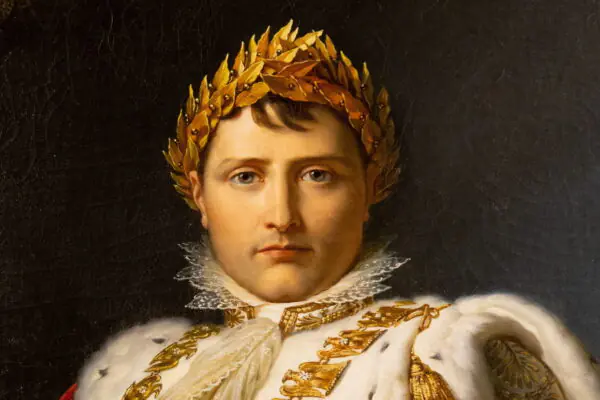
Napoleon Bonaparte Family

Napoleon Bonaparte Family 4

Napoleon Bonaparte Family 5
Napoleon Bonaparte Height / How to Get Body Like Napoleon Bonaparte
Napoleon Bonaparte’s recorded height was approximately 5 feet 6 to 5 feet 7 inches, average for Frenchmen of his era.
Contrary to myths portraying him as extremely short, his stature was comparable to many of his soldiers and contemporaries.
His posture, military uniform, and commanding presence made him appear physically larger than his actual height suggested.
Napoleon maintained a lean, wiry frame that was suited for the rigors of long military campaigns and battlefield mobility.
His active lifestyle, which included constant horseback riding and leading troops, helped him build endurance and core strength.
Unlike modern training methods, his physical conditioning came from daily marching, rigorous campaigns, and practical military activity.
To achieve a body like Napoleon’s today, one would focus on stamina, agility, and functional strength rather than bulk.
Endurance exercises, outdoor cardio, and calisthenics best replicate the kind of conditioning Napoleon naturally developed in campaigns.
His diet was modest, often consisting of simple meats, bread, and wine, which reflected practicality over indulgence.
Napoleon’s physical example shows that mental resilience and relentless discipline can sometimes outweigh sheer physical size in leadership.
Interview Quotes of Napoleon Bonaparte (where/when)
In exile on Saint Helena, Napoleon remarked to physician Barry O’Meara, “History is a set of lies agreed upon.”
During conversations recorded in 1816, he reflected that “A soldier will fight long and hard for a bit of colored ribbon.”
He once declared to a journalist in 1803, “Ability is nothing without opportunity,” emphasizing his philosophy of seizing the moment.
In discussions on governance, he told Count Las Cases, “Impossible is a word to be found only in the dictionary of fools.”
While reflecting on politics in 1817, he said, “Courage isn’t having the strength to go on—it is going on when you don’t have strength.”
Napoleon observed to his confidants on Elba, “Men are moved by two levers only: fear and self-interest.”
During exile, he often told visitors that his greatest legacy was not battles but the Napoleonic Code.
He admitted regret about the Russian campaign, stating in 1816, “Moscow was the beginning of the end for me.”
When discussing ambition, he once said, “If you want a thing done well, do it yourself.”
In private writings, Napoleon referred to himself as “a man of destiny,” convinced his role in history was preordained.
TV / Movie Quotes of Napoleon Bonaparte (where/when)
In Stanley Kubrick’s unmade Napoleon project, drafts featured the line, “I found the crown of France lying in the gutter.”
In the 1955 film Desirée, Napoleon declares, “I may lose a battle, but I shall never lose a minute.”
In Waterloo (1970), actor Rod Steiger’s Napoleon famously states, “The battle is won by the man who is sure of winning.”
The animated series Clone High humorously portrayed Napoleon as saying, “Power comes in small packages,” poking fun at his stature.
In the 2002 miniseries Napoléon, Christian Clavier as Napoleon utters, “A true man hates no one,” echoing the leader’s philosophical side.
Ridley Scott’s 2023 film Napoleon included the line, “Destiny has brought me here,” capturing his belief in fate and greatness.
The movie War and Peace (1956) dramatized Napoleon with the phrase, “I am the revolution,” highlighting his role as its heir.
In Bill & Ted’s Excellent Adventure (1989), Napoleon humorously exclaims about “water slides,” showing pop culture’s comedic use of his legacy.
In The Emperor’s New Clothes (2001), Ian Holm as Napoleon reflects, “I was once the master of Europe, now just a man.”
Numerous documentaries feature his most repeated line: “Impossible is nothing,” attributed to his defiance against limitations.
Controversies/Scandals of Napoleon Bonaparte
Napoleon’s coronation in 1804 sparked controversy when he placed the crown on his own head, undermining papal authority.
His divorce from Joséphine was scandalous in French society, highlighting his political ambition over romantic loyalty.
The execution of the Duke of Enghien in 1804 was condemned as a ruthless power move to secure his rule.
Napoleon’s censorship of press and political opposition contradicted his image as a revolutionary liberator.
His harsh treatment of conquered nations, including heavy taxation, created resentment that fueled nationalist uprisings.
The disastrous 1812 invasion of Russia resulted in massive French casualties, tarnishing his reputation as an invincible strategist.
He was accused of hypocrisy for preaching liberty while imposing French dominance across Europe.
Napoleon’s exile to Elba was viewed as humiliating, but his return during the Hundred Days shocked and scandalized monarchies.
His relationship with women, including mistresses, fueled gossip and questions about his personal morality.
The mystery of his death in 1821, possibly from arsenic poisoning, sparked conspiracy theories and historical debates for centuries.
Lesser Known Unknown Facts Trivia of Napoleon Bonaparte
Napoleon Bonaparte was not actually born French; he was born in Corsica in 1769, shortly after France annexed the island.
Despite being remembered for his military genius, Napoleon was a passionate writer and even penned romantic novellas in his youth.
He suffered from chronic stomach issues, likely ulcers, which plagued him throughout his military campaigns and final years in exile.
Napoleon had a deep interest in science and mathematics, founding institutions in Egypt to study history, astronomy, and archaeology.
He was not particularly fond of elaborate meals and often ate quickly, preferring simple dishes over lavish French banquets.
Napoleon’s personal library contained over 3,000 volumes, reflecting his insatiable curiosity about philosophy, history, and governance.
He was known for working extremely long hours with little sleep, sometimes going several days with only a few hours of rest.
Napoleon introduced the metric system across much of Europe, leaving a lasting scientific and cultural legacy beyond military conquests.
He once ordered soldiers to test early submarine technology, showcasing his forward-thinking approach to unconventional warfare innovations.
Napoleon was deeply superstitious, often consulting omens and believing in destiny, which shaped his confidence in his imperial role.
Most Commonly Frequently Asked Discussed Questions/Topics with Answers on Napoleon Bonaparte
Was Napoleon actually short?
No, he was about 5’6”–5’7”, average for his time, but British propaganda exaggerated his height.
Did Napoleon crown himself Emperor?
Yes, in 1804 he famously took the crown from the Pope and crowned himself in Notre Dame Cathedral.
Why did Napoleon invade Russia?
He sought to enforce the Continental System against Britain, but the campaign ended in disaster with catastrophic losses.
Was Napoleon poisoned on Saint Helena?
Some theories suggest arsenic poisoning, but modern evidence leans toward stomach cancer as the most likely cause.
What was the Napoleonic Code?
It was a legal framework introduced in 1804, shaping civil law systems worldwide and still influential today.
Why did Napoleon divorce Joséphine?
He loved her deeply but divorced her in 1810 because she could not provide him with an heir.
How did Napoleon escape Elba?
In 1815, he slipped past British guards, returned to France, and regained power for the Hundred Days before Waterloo.
Why was Napoleon exiled to Saint Helena?
After Waterloo, the Allies wanted to ensure he could not return, so they sent him to a remote island.
Did Napoleon really say “Impossible is nothing”?
A variation of the phrase is attributed to him, though some debate whether it was later paraphrased into the modern slogan.
How is Napoleon remembered today?
He is seen as both a brilliant strategist and a controversial ruler, admired for reforms but criticized for authoritarian ambition.