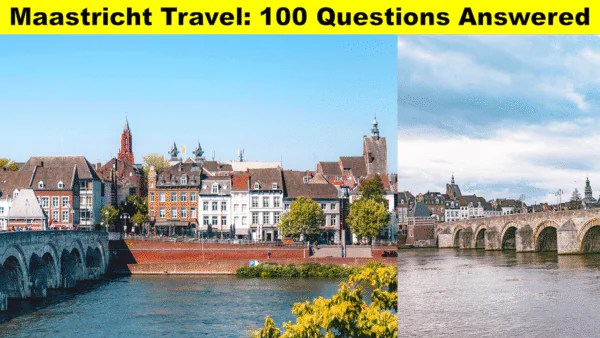
Maastricht Travel: 100 Questions Answered based on NeemTime research
🧭 General Travel & Planning
Q: Is Maastricht worth visiting?
A: Yes, definitely! It’s one of the top cities in the Netherlands to visit, praised for its unique history, culture, and ambiance, feeling less “Dutch” and more Belgian/French.
Q: How long should I stay in Maastricht?
A: Most forum users suggest 2-3 days is sufficient to see the main sights and soak in the atmosphere. A single day trip is possible but rushed.
Q: What is the best time of year to visit Maastricht?
A: Spring (April-June) and Fall (September-October) offer mild weather perfect for exploring. Summer (July-August) is popular but can be crowded due to events like the André Rieu concerts.
Q: Should I avoid visiting in February?
A: Yes, unless you specifically want to experience the local Carnaval celebrations, which make the area very busy and lively.
Q: Is Maastricht very walkable?
A: Extremely walkable. The main city center and all major sights are within easy walking distance of each other and the train station.
Q: What is the best way to get around the city?
A: Walking or cycling is the best way to explore the compact city center.
Q: How is the public transport (bus/train) for short trips?
A: For short journeys, use an OV-chipkaart or simply check-in/out with your bank debit card, as this is usually cheaper than buying a ticket from the driver.
Q: How far is Maastricht from Amsterdam by train?
A: It is about a two-hour direct train ride from Amsterdam Centraal or Schiphol Airport.
Q: How do I travel to nearby cities like Aachen or Liège?
A: Aachen (Germany) is easily reached by bus (e.g., bus line 350, about 50 minutes). Liège (Belgium) is accessible by train.
Q: Is there a special ticket for regional travel to Germany/Belgium?
A: Yes, the Euregioticket (around €22) allows travel for two across the region on weekends/holidays, covering most buses and trains.
Q: How easy is it to speak English in Maastricht?
A: Very easy. English is widely spoken, especially since it’s an international student city.
Q: Do I need cash (Euros)?
A: Rarely. Visa Debit and Google Pay/contactless payments are widely accepted; you may not need physical Euros at all.
Q: Is Maastricht safe, even at night?
A: The Netherlands has low crime rates. Maastricht is generally considered very safe for walking at night, including for women, though typical city awareness is advised.
Q: Where is the main tourist information point?
A: The Maastricht Store (VVV) is located in the Dinghuis (Kleine Staat 1).
Q: Is it a good base for exploring the region (Limburg/Euregio)?
A: Yes, its location makes it an excellent base for day trips to the unique Limburg countryside, and to cities in Belgium and Germany.
⛪ Must-See Landmarks & Attractions
Q: What is the number one must-see landmark?
A: The Dominicanen Bookstore (Boekhandel Dominicanen), a stunning bookstore housed inside a 13th-century Gothic church.
Q: What is the main square in the city center?
A: Vrijthof Square, which is surrounded by beautiful historic buildings and churches.
Q: What are the two most famous basilicas on the Vrijthof?
A: The Basilica of Saint Servatius (Sint Servaas Basiliek) and the adjacent Saint John’s Church (Sint Janskerk) with its striking red spire.
Q: Which church has a more mystical/atmospheric interior?
A: The Basilica of Our Lady (Onze Lieve Vrouwebasiliek) in the Onze Lieve Vrouweplein is known for its candlelit Star of the Sea chapel.
Q: Can I climb a tower for a view of the city?
A: Yes, you can climb the tower of the Saint John’s Church (Sint Janskerk) for an excellent panoramic view.
Q: What are the famous caves/tunnels near the city?
A: The Maastricht Underground tours, specifically the North Caves (Grotten Noord) under the St. Pietersberg hill.
Q: What is the history of the caves?
A: They are former marl quarries, an extensive network of tunnels used historically as shelters, storage, and even a hiding place for famous art during WWII.
Q: Is Fort Sint Pieter worth visiting?
A: Yes, the 18th-century fort on the St. Pietersberg hill offers great views and is part of the cave tour area.
Q: What is the oldest city gate in the Netherlands?
A: The Helpoort (Hell Gate), dating back to the 13th century. You can walk along the adjacent old city walls.
Q: What is the oldest bridge in the Netherlands?
A: The stone-arched Sint Servatius Bridge (Sint Servaasbrug), which connects the center with the Wyck district.
Q: Where can I see Roman ruins in Maastricht?
A: The cellar of the Derlon Hotel on Onze Lieve Vrouweplein contains genuine Roman excavations.
Q: What is the main modern art museum?
A: The Bonnefanten Museum, recognizable by its striking rocket-like architecture, featuring both contemporary and early European art.
Q: What is the name of the main city park?
A: Stadspark (City Park), which is bordered by the medieval city walls.
Q: Where is a good place to find vintage boutiques and independent shops?
A: The Wyck district, across the Sint Servatius Bridge.
Q: Where are the luxury/fancy shops?
A: The Stokstraat Quarter is known for its upmarket and luxurious fashion and design stores.
Q: What is the name of the old watermill?
A: Bisschopsmolen (Bishop’s Mill), where you can buy fresh, locally milled products and the best vlaai.
Q: Can I visit the Maastricht University campus?
A: Yes, the buildings are spread throughout the city, but walking around and visiting the Student Service Center is recommended for prospective students.
Q: Are there any unique cinemas in Maastricht?
A: Lumière Cinema is a special film house located in a magnificent national monument in the Sphinx quarter, with an excellent restaurant.
Q: Is there a significant WWII site nearby?
A: The Netherlands American Cemetery and Memorial in Margraten, about six miles east of the city.
Q: Are there any local breweries to visit?
A: Brewery Bosch (Brouwerij Bosch) is an industrial monument where you can take tours and sample beers.
🍽️ Food & Drink
Q: What is the quintessential local food I must try?
A: Limburgse Vlaai, a traditional sweet pie, often fruit-filled.
Q: Where is the best place to get Vlaai?
A: Bisschopsmolen is frequently recommended as one of the best bakeries for authentic vlaai.
Q: What is Zuurvlees (or Zoervleesj)?
A: A traditional sour stew, a local Limburg specialty with French and Belgian influences, despite its name, it’s very tasty.
Q: Should I eat at Vrijthof Square?
A: Forum advice is often to avoid eating on Vrijthof Square due to higher prices and more tourist-oriented food; seek restaurants on side streets or other squares.
Q: What are some classic Dutch snacks to try?
A: Kroketten, Bitterballen, Kaassoufflé, Patatje Oorlog (fries with toppings).
Q: Where should I go for coffee and tea?
A: Koffiebranderij Blanche Dael (operating since 1878) for their specialty coffee and “Dael’s Droum” tea blend.
Q: Are there good options for international cuisine, like Indian?
A: Yes, there are a few Indian places; Spice of India and India House are mentioned, though reviewers note they may not be up to the standard of cities with a larger Indian population.
Q: Where is a nice place for a special dinner/hotel experience?
A: The Kruisherenhotel, set in a stunning 15th-century church and cloister, is highly recommended even for just a visit to its restaurant/bar.
Q: Where can I find a good selection of beer?
A: De Gouverneur is noted for having over 200 kinds of beer.
Q: Are there any nice rooftop bars?
A: Bold Rooftop Bar (at The Student Hotel) is mentioned for its views, though cocktails are noted to be expensive.
🌳 Nature, Day Trips & Activities
Q: Where is the best place for a nature walk or pictures near Maastricht?
A: St. Pietersberg hill and its nature reserve is the go-to recommendation for walks, views, and historic sites.
Q: Where is the closest castle ruin?
A: The Lichtenberg Castle ruins are located on the St. Pietersberg hill.
Q: Can I go wine tasting near Maastricht?
A: Yes, the Apostelhoeve vineyard just outside the city offers wine tasting. Limburg is one of the few wine-producing areas in the Netherlands.
Q: What is the most recommended day trip from Maastricht?
A: Valkenburg (10 minutes by train) is the top suggestion, known for its castles and unique underground Christmas markets in December.
Q: What can I do in Valkenburg?
A: Explore the castle ruins, and take a guided tour of the Municipal Cave or even a cave biking tour.
Q: Where can I visit three countries at once?
A: The Three-Country Point (Drielandenpunt) in Vaals (a longer day trip) is the highest point in the Netherlands, where the borders of the Netherlands, Belgium, and Germany meet.
Q: What kind of scenery can I expect in South Limburg?
A: Unlike most of the Netherlands, South Limburg features rolling hills and a beautiful, unique landscape.
Q: Where can I find more medieval castle history?
A: Hoensbroek Castle, a well-preserved medieval castle dating back to the 14th century, is a recommended day trip.
Q: Are there any Roman/prehistoric museums nearby?
A: Tongeren (Belgium) is recommended for its top-notch Gallo-Roman Museum.
Q: Are there boat tours on the river?
A: Yes, boat cruises on the River Meuse (Maas) are popular, sometimes combining with a visit to the St. Pietersberg Caves.
Q: What is the unique cinema/restaurant complex near the center?
A: Lumière Cinema, located in the Sphinx Quarter.
Q: Where is a good place for a picnic?
A: Stadspark, Céramique, Griendpark, or even the grounds of the abandoned fort in Frontenpark.
Q: What is the area just outside the city walls called?
A: Frontenpark, an adventurous city park with rugged, untouched nature.
Q: What is the Jezuïetenberg?
A: Wonderfully carved quarries near the city where Jesuit fathers created reliefs and statues in the 18th and 19th centuries; guided tours are available.
Q: Is there a place to hike that feels less manicured?
A: Frontenpark is described as a “rugged” and “adventurous” park unlike a standard landscaped park.
🛍️ Shopping & Culture
Q: What is the shopping scene like in Maastricht?
A: It is considered a haven for shopping, with high-end stores in the Stokstraat Quarter and independent boutiques in Wyck.
Q: Are shops open on Sundays?
A: Yes, many shops in the city center are open on Sunday afternoons.
Q: What is the most famous/unique shop to visit?
A: The Dominicanen Bookstore.
Q: Which district is trendy and good for independent/boutique shopping?
A: Wyck.
Q: What days are the local markets?
A: A local farmer’s market is held on the Markt (Market Square) on Wednesdays and Fridays.
Q: What kind of art can I expect at the Bonnefanten Museum?
A: A mix of modern, contemporary, conceptual, and medieval art.
Q: What is Centre Céramique?
A: A multicultural hub in the Céramique neighborhood, housing the large city library, café, and exhibition space.
Q: Does Maastricht have an active street art scene?
A: Yes, there is a Street Art Route that combines historical architecture with modern, creative wall art.
Q: What is the local dialect called?
A: Maastrichtian (Mestreechs), which is a Limburgish dialect.
Q: What is a local product that makes a great gift?
A: Locally produced Vlaai (though perishable) or coffee/tea from Blanche Dael.
🏘️ Districts & Neighborhoods
Q: What is the main tourist district?
A: The Inner City (Binnenstad), centered around Vrijthof and Markt.
Q: What is the Jeker Quarter known for?
A: Its quieter, more local feel, with the Jeker River running through it, old city walls, and the Bishop’s Mill.
Q: What is the atmosphere of the Wyck district?
A: Trendy, modern, and lively, known for independent shops, artisanal bakeries, and boutique hotels.
Q: What is the Céramique district known for?
A: Modern architecture (like the Bonnefanten Museum and Centre Céramique) built on the grounds of the former Sphinx ceramics factory.
Q: Where is the most historic and exclusive area for shops?
A: The Stokstraat Quarter, with its historic appearance and luxurious stores.
🚌 Transport & Logistics (Detail)
Q: Can I use my bank card to pay for the train/bus?
A: Yes, you can generally use a Visa Debit or contactless payment (like Google Pay) to check in and out for public transport.
Q: Is the train station far from the center?
A: No, it’s an easy walk of less than 15 minutes to the main center.
Q: What is the easiest way to get to Aachen, Germany?
A: The Bus 350 from the Maastricht train station takes you directly to downtown Aachen.
Q: Where is the best place to park a car?
A: A P&R (Park and Ride) facility is recommended for car visitors to keep the city center free of traffic.
Q: Are taxis or ride-share services like Uber/Lyft common for long-distance travel (e.g., to Aachen)?
A: Buses and trains are the more commonly recommended and cost-effective options; Uber/Lyft availability or cost for cross-border trips can be less reliable.
🥂 Nightlife & Socializing
Q: What is the main area for nightlife and bars?
A: Platielstraat (earlier in the evening) and the Market Square (later at night) are mentioned as hotspots.
Q: Is there a pub crawl?
A: Yes, a Maastricht Nightlife Experience: The Pub Crawl is a listed activity.
Q: Are there many “traditional” Dutch coffee shops (cannabis)?
A: Maastricht has a “weed pass” system. To visit a coffee shop, you must generally be a Maastricht citizen due to local policies, so tourists usually cannot.
Q: Is it safe to buy drugs on the street?
A: No, it is strongly advised against, as street drugs are unregulated and can be harmful.
Q: Where can students or internationals meet people?
A: Join a student association, participate in sports at UM Sports, or use the student-created app Weeples.
🧐 Niche & Insider Tips
Q: What is a local dish I might not find elsewhere in the Netherlands?
A: White Asparagus (wit goud / “white gold”), a Limburg favorite, especially during the spring season.
Q: What is a “hidden gem” café?
A: Kafe Théa (known for vegan pastries and its “bookworm bar”) and Teazone (for its vast tea selection and rooftop terrace) are mentioned as hidden gems.
Q: Where is a nice square for people-watching and a beer?
A: Onze Lieve Vrouweplein (Square of Our Lady) is a favorite, known for its cozy, atmospheric feel.
Q: What are the catacombs of the Sint Servatius Church?
A: The church’s treasury/catacomb museum is noted for having unusual and historically significant items on display.
Q: Should I worry about tourists flocking to Maastricht like Amsterdam?
A: No, Maastricht is often praised for delivering authentic Dutch culture without Amsterdam’s crowds.
Q: What’s a unique historic piece I can see?
A: Parts of the original Roman bridge foundations beneath the Derlon Hotel.
Q: What is the significance of d’Artagnan in Maastricht?
A: The famous musketeer (Charles de Batz-Castelmore d’Artagnan) was killed in Maastricht during the Franco-Dutch War.
🎓 Student & Residential Life (Related)
Q: How is the housing situation for international students/new residents?
A: Terrible. It is notoriously difficult, overpriced, and poor quality; securing housing should be the absolute priority, starting 3-6 months in advance.
Q: Is Maastricht truly international?
A: While it has a large international student community, some residents feel it still has a “large town” mentality and that social life can be difficult if not integrated into the Dutch/German student crowds.
Q: Is Maastricht University a good school?
A: It uses the Problem-Based Learning (PBL) method, which students either love or dislike. Prospective students are advised to visit the Student Service Center.
❓ Miscellaneous
Q: Is it true that Maastricht is the oldest city in the Netherlands?
A: This is disputed with Nijmegen, but Maastricht certainly has a very deep and rich history, including Roman origins.
Q: What is the most scenic drive from Maastricht?
A: Driving into the rolling hills of the South Limburg countryside is considered a uniquely scenic experience for the Netherlands.
Q: Are there any must-see castles for history buffs near Maastricht?
A: Alden Biesen (in Belgium) and Hoensbroek Castle are recommended.
Q: Is there a Natural History Museum?
A: Yes, the Natural History Museum Maastricht is a local attraction, noted for its focus on local geology and cave discoveries (including dinosaur relics).
Q: What’s one piece of advice for first-time visitors?
A: Wander and get lost! The city is compact, and its charm is best discovered by exploring the winding, cobbled streets of the old town and Jeker Quarter.