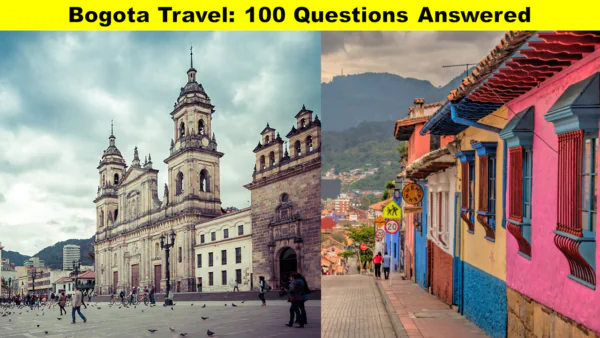
Bogota Travel: 100 Questions Answered based on NeemTime research
Safety & Local Etiquette
1. Is Bogotá safe for solo travelers? Yes, as long as you stay in well-populated areas and exercise “common sense” (no expensive jewelry, stay alert).
2. What does “No dar papaya” mean? It’s the golden rule: “Don’t give papaya.” Essentially, don’t put yourself in a position to be taken advantage of or flashed valuables.
3. Is it safe to walk at night? In neighborhoods like Chapinero Alto or Usaquén, it’s generally fine, but most travelers recommend taking an Uber after dark regardless of the distance.
4. Can I use my phone on the street? Avoid it. Step into a shop or cafe if you need to check your GPS. Phone snatching is the most common crime.
5. Should I take street taxis? Travelers consensus is a firm “no.” Use apps like Uber, Cabify, or DiDi to ensure the ride is tracked and the price is set.
6. Are the “Millionaire’s Rides” real? While rare now, express kidnappings (forcing you to withdraw from ATMs) happened more with street taxis, which is why apps are preferred.
7. Is Scopolamine (Burundanga) a real threat? Yes. Never leave your drink unattended and be wary of strangers offering “samples” or blowing powder in your face.
8. What should I do if I am robbed? Do not resist. Hand over what they ask for. Most thieves just want the phone and cash.
9. Is La Candelaria safe at night? It becomes very quiet and sketchy after dark. Stick to the main hostel/hotel strips or take a taxi.
10. Do I need to carry my passport? Carry a color photocopy and a photo on your phone. Leave the physical passport in your hotel safe.
11. Is there a lot of police presence? Yes, you will see many police and military personnel. They are generally helpful but may perform random ID checks.
12. Can I trust the police? Mostly, but be aware of “fake police” scams. Real police will usually be in full uniform with visible badges.
13. How do I avoid “Gringo pricing”? Ask for the price before you buy or consume anything, especially with street vendors.
14. Is tipping expected? At restaurants, a 10% servicio is usually added to the bill. You don’t need to tip more unless service was exceptional.
15. How do I tip taxi/Uber drivers? It’s not expected, but rounding up the fare is a nice gesture.
16. Are people friendly? “Rola” (Bogotá) culture can feel a bit more formal or reserved than the coast, but people are generally very polite.
17. Do I need to speak Spanish? In tourist areas, English is okay. In local shops or buses, you will definitely need basic Spanish.
18. What is the dress code? Bogotanos dress smartly. Avoid shorts and flip-flops if you don’t want to stand out; jeans, boots, and a jacket are the standard “uniform.”
19. Is it okay to talk about the “Narcos” era? Locals generally find it tiring or offensive. It’s better to focus on the country’s current culture and progress.
20. Can I drink alcohol on the street? Technically illegal and can result in a fine, though you’ll see people doing it in specific nightlife zones.
Logistics & Health
21. Can I drink the tap water? Yes! Unlike much of Latin America, Bogotá’s tap water is safe to drink.
22. How is the altitude? At 2,640 meters (8,660 ft), you might feel short of breath or get headaches. Drink plenty of water and avoid heavy meals on day one.
23. What’s the best way to prevent altitude sickness? Coca tea (available in most cafes) or “Alka-Seltzer Boost” are local favorites.
24. What is the weather like? Spring-like but unpredictable. It can be sunny at noon and pouring rain at 2:00 PM. Always carry a light jacket and umbrella.
25. When is the best time to visit? December to March is the “dry” season, though “dry” in Bogotá just means it rains less frequently.
26. Do I need a visa? Citizens of the US, Canada, UK, and EU generally don’t need a visa for stays up to 90 days.
27. What is the Check-Mig form? You must complete this online form before entering and leaving Colombia. It’s free on the official government site.
28. What currency is used? The Colombian Peso (COP).
29. Can I use my credit card? Yes, most shops and restaurants in major areas accept cards. Some might ask for your ID.
30. Should I bring USD cash? It’s not widely accepted for daily purchases. Use ATMs to get Pesos.
31. Which ATM is best? Davivienda and BBVA are popular. “Banco de Bogotá” often has lower fees for international cards.
32. What is the “IVA” tax? It’s a 19% sales tax. Tourists can sometimes claim a refund at the airport for large purchases.
33. Do I need a local SIM card? Highly recommended for using Uber. Claro and Movistar have the best coverage.
34. Is there public Wi-Fi? Available in malls and some parks, but it’s often slow or unreliable.
35. What voltage are the outlets? 110V, Type A and B (same as the US/Canada).
36. Is Bogotá expensive? It is very affordable compared to the US or Europe, but one of the more expensive cities within Colombia.
37. How many days should I stay? 3 to 5 days is usually enough to see the main highlights.
38. What vaccinations do I need? None are strictly required for the city, but Yellow Fever is recommended if you’re heading to the jungle afterward.
39. Are there mosquitoes? No, the altitude is too high for mosquitoes (and thus no Zika or Malaria in the city).
40. How is the traffic? Terrible. It’s famously some of the worst in the world. Plan for double the time during rush hour.
Neighborhoods & Accommodation
41. Where is the best place to stay? Chapinero (specifically Chapinero Alto or Quinta Camacho) for foodies; Usaquén for a quiet, village feel; or Parque 93 for luxury.
42. Should I stay in La Candelaria? It’s great for sightseeing and hostels, but it’s hilly and can feel “dodgy” at night.
43. Is Zona Rosa safe? Yes, it’s the main party district. It’s very safe but can be extremely loud.
44. What is Teusaquillo like? A beautiful, residential historic neighborhood. Good for a more “local” vibe.
45. Are Airbnbs legal? Yes, and very common. Just ensure the building has 24-hour security.
46. Can I stay near the airport? Only if you have a very early flight. There isn’t much to do in the Salitre/Fontibón area.
47. Is Bogotá a walkable city? Within neighborhoods (like La Candelaria or Usaquén), yes. Between neighborhoods, no—it’s too big.
48. Are there many “digital nomad” hubs? Chapinero is the main hub, with plenty of co-working spaces like Selina or WeWork.
49. What are “Estratos”? Neighborhoods are ranked 1–6 based on wealth. Tourists typically stay in Estratos 4, 5, or 6.
50. Is it noisy at night? Yes, Bogotá is a loud city. Bring earplugs if you’re a sensitive sleeper.
Sightseeing & Activities
51. How do I get to Monserrate? Cable car or funicular. You can hike, but it’s physically demanding and usually only recommended on weekend mornings for safety.
52. When should I visit Monserrate? Go for sunset. You get the daytime view, the sunset, and the city lights at night.
53. Is the Gold Museum (Museo del Oro) worth it? Absolutely. It’s world-class and very affordable.
54. Is the Botero Museum free? Yes! It’s one of the best free activities in the city.
55. What is the Salt Cathedral? An underground church built in a salt mine. It’s in Zipaquirá, about 1–2 hours from Bogotá.
56. Is the Salt Cathedral worth a day trip? Most tourists say yes, though it is very “touristy.”
57. What is the Graffiti Tour? A famous walking tour in La Candelaria that explains the city’s social and political history through street art.
58. What is Ciclovía? Every Sunday, many main roads are closed to cars so people can bike, run, and skate. It’s a “must-do.”
59. Where is the best flea market? The Usaquén Flea Market on Sundays is excellent for high-quality crafts.
60. Can I visit a coffee farm near Bogotá? Yes, Hacienda Coloma in Fusagasugá is a popular day trip.
61. What is Laguna de Guatavita? The sacred lake where the legend of El Dorado began. It’s a beautiful hike.
62. What is Andres Carne de Res? A legendary, massive restaurant/party venue in Chía. It’s an “experience” more than just a meal.
63. Should I go to the Andres Carne de Res in the city (DC) or Chía? The one in Chía is the original and more “wild,” but DC is easier to get to.
64. What is the “Septimazo”? On Friday nights and weekends, Carrera 7 becomes a pedestrian-only zone full of street performers.
65. Are there good parks? Simón Bolívar Park is massive and great for a stroll.
66. What is the Botanical Garden like? Beautiful and well-maintained. The “Tropicario” greenhouse is a highlight.
67. Can I see the Presidential Palace? You can see the outside of Casa de Nariño, but tours must be booked weeks in advance.
68. What is Plaza de Bolívar? The main square surrounded by the Cathedral, Justice Palace, and Capitol. Great for photos (and pigeons).
69. Where can I find the best view of the city? Monserrate is #1, but the Colpatria Tower (open weekends) is also great.
70. Are there free walking tours? Yes, several companies (like BeyondColombia) offer them for a tip.
Food & Nightlife
71. What is Ajiaco? The signature soup of Bogotá: chicken, three types of potatoes, corn, and guascas (an herb).
72. What is “Chocolate Completo”? Hot chocolate served with cheese (which you dip in the chocolate), bread, and a tamal.
73. Where should I eat Ajiaco? La Puerta Falsa is the most famous spot in La Candelaria.
74. What is Chicha? A fermented corn drink. Try it at “Calle del Embudo” in La Candelaria.
75. Is the street food safe? Generally yes, especially if you see a line of locals. Try arepas de queso or obelas.
76. What is a “Corrientazo”? A set lunch (soup, main, juice) that is very cheap ($3–$5) and filling.
77. Is Colombian coffee really the best? Yes, but most of the “good” stuff is exported. Look for specialty shops like Azahar, Libertario, or Varietale.
78. What is Aguardiente? The national anise-flavored spirit. Drink it as a shot (“un trago”).
79. Where are the best bars? Zona T and Parque 93 have the most upscale bars.
80. What is Tejo? The national sport involving throwing metal discs at gunpowder targets. It’s a loud, fun, beer-fueled activity.
81. Where can I play Tejo? Club de Tejo La 76 or Tejo de la Embajada are popular with tourists.
82. What is the nightlife like? Extremely vibrant. Music ranges from Reggaeton and Salsa to Techno.
83. Do I need to dress up for clubs? In Zona T, yes. Nicer shoes and a button-down shirt are often required for men.
84. What is a “Fonda”? A traditional-style bar, often decorated with rural Colombian artifacts.
85. Is Salsa big in Bogotá? Yes, though Cali is the capital. Check out Galeria Café Libro for a great salsa vibe.
86. Can I find international food? Bogotá has an incredible international scene, especially in the “G Zone” (G for Gastronomy).
87. What is “Limonada de Coco”? A creamy, delicious coconut limeade. It’s a Colombian staple.
88. Are there many vegetarian options? Surprisingly yes, especially in Chapinero.
89. What is “Postre de Natas”? A traditional milk-based dessert popular in the region.
90. Is the service slow? It’s “relaxed.” Don’t expect the bill to come unless you ask for it (“La cuenta, por favor”).
Transportation & Misc
91. How do I get from the airport? Authorized airport taxis have a flat-rate ticket system, or use Uber/Cabify.
92. What is the TransMilenio? The bus rapid transit system. It’s fast but can be extremely crowded and a hotspot for pickpockets.
93. Do I need a card for the bus? Yes, the “TuLlave” card. You can buy and top it up at most stations.
94. Is there a Metro? Currently under construction (and a long-running local joke). For now, it’s just buses.
95. Can I rent a car? Not recommended. Traffic is confusing and parking is difficult.
96. What are “Pico y Placa” rules? A system that restricts cars from driving on certain days based on their license plate number to reduce traffic.
97. Is it easy to get to other cities? Yes, the bus terminal (Terminal de Salitre) connects to everywhere, but flights are often similar in price and much faster.
98. How do I get to Medellín from Bogotá? A 45-minute flight or a 9–12 hour bus ride through winding mountains.
99. Is Bogotá good for kids? Yes, places like the Maloka Science Museum and Salitre Mágico (amusement park) are great for families.
100. Will I want to come back? Most travelers find Bogotá’s “grit and grace” addictive. Once you look past the gray skies and traffic, the culture usually wins you over.