Bill Clinton based on NeemTime research
Who is Bill Clinton (Biography/Personal Details)
William Jefferson Clinton, born August 19, 1946 in Hope, Arkansas, served as the 42nd president of the United States from 1993 to 2001, leading the country through its longest period of peacetime economic expansion.
He was the second president in U.S. history to be impeached, in 1998, though he was later acquitted by the Senate and completed his term in office.
Clinton’s father died in an automobile accident before he was born, and he was raised by his mother and later his stepfather, from whom he took the surname Clinton.
He earned a degree in international affairs from Georgetown University, studied as a Rhodes Scholar at Oxford, and received a law degree from Yale in 1973.
Before becoming president, Clinton was a longtime public servant in Arkansas, serving as state attorney general and governor across multiple terms.
Bill Clinton’s political style was marked by a centrist or “Third Way” approach, combining fiscal conservatism with progressive social policies.
His presidency saw significant legislative achievements, such as the Family and Medical Leave Act, which ensured job protection for workers who needed family or medical leave.
Clinton has also been a prominent global figure, advocating for human rights and playing a role in international peace negotiations, such as the 1998 Good Friday Agreement in Northern Ireland.
After leaving the White House, he founded the William J. Clinton Foundation, focusing on global issues including health, climate, and economic empowerment.
Clinton remains an influential speaker, author, and activist, writing memoirs and participating in global philanthropic efforts decades after his presidency.
Early Life Highlights of Bill Clinton (Background/Childhood)
Bill Clinton was born William Jefferson Blythe III on August 19, 1946, in the small town of Hope, Arkansas, three months after his father’s death in a road accident.
His mother, Virginia Dell Blythe, later married Roger Clinton, and Bill eventually adopted his stepfather’s surname as his own.
Clinton was largely raised by his maternal grandmother during his early years when his mother pursued education and work opportunities.
As a teenager, he attended Boys Nation in Washington, D.C., where meeting President John F. Kennedy in 1963 inspired his lifelong interest in public service.
Clinton excelled academically, earning an appointment to Georgetown University where he studied international affairs and graduated in 1968.
After Georgetown, he was awarded a Rhodes Scholarship to study at Oxford University, further broadening his global perspective.
Returning to the United States, he attended Yale Law School where he met his future wife, Hillary Rodham, in a law class.
His early life was marked by frequent moves and family changes, which he later described as shaping his resilience and empathy.
Clinton’s childhood friendships included future political allies, such as Mack McLarty, who would later become his White House Chief of Staff.
By his mid-twenties, Clinton had already begun teaching law at the University of Arkansas and gearing up for a career in political leadership.
Current Life Highlights of Bill Clinton (Career/Other Work)
After his presidency, Bill Clinton founded the William J. Clinton Foundation in 2001 to address global issues like health care access, economic development, and climate change.
As a nonresident global statesman, he often participates in international diplomacy, humanitarian missions, and disaster relief coordination with United Nations and other agencies.
Clinton has become a prolific memoirist, with works including his post-presidency memoir published in 2024 reflecting on his life after the White House.
His foundation’s initiatives include the Clinton HIV/AIDS Initiative, which helped lower treatment costs and improve access for millions worldwide.
Clinton frequently speaks at global summits, university events, and philanthropic gatherings, drawing on his political experience and advocacy work.
He remains involved with the Clinton Global Initiative, which convenes leaders from various sectors to address pressing global problems.
Clinton’s public appearances often emphasize bipartisanship and cooperative solutions to international challenges.
He has occasionally been involved in contemporary political discourse, offering endorsements and commentary on national and international affairs.
His health and lifestyle choices, including managing heart health through diet and exercise, have been publicly discussed in recent years.
Clinton also engages with media, promoting his books and humanitarian projects while reflecting on lessons from his political career.
Personal Life Highlights of Bill Clinton (List of Romantic Relationships/List of Family Members)
Bill Clinton married Hillary Rodham in 1975 after meeting her while both were law students at Yale University in the early 1970s.
The Clintons have one daughter, Chelsea Victoria Clinton, born in 1980, who has pursued a career in public health, philanthropy, and advocacy.
Chelsea Clinton and her husband, Marc Mezvinsky, have three children, making Bill Clinton a grandfather to Charlotte, Aidan, and Jasper.
The Clinton marriage has survived periods of intense public scrutiny, notably during the Monica Lewinsky scandal of the late 1990s.
Beyond his marriage, Bill Clinton’s personal life was the subject of political controversy, including allegations detailed in scandals from the 1990s.
His relationship with friends and longtime associates, such as Vince Foster in his youth, played roles in his personal development and early leadership networks.
Clinton’s extended family includes his mother, stepfather, and relatives through marriage, who have appeared in various public and historical records.
He is known to enjoy music, particularly saxophone playing, as a personal hobby dating back to his youth.
Bill and Hillary Clinton have been public about their commitment to family traditions, community service, and shared values throughout their decades together.
His personal relationships—both familial and political—continue to influence his public work and legacy as a global figure.
Bill Clinton Shirtless
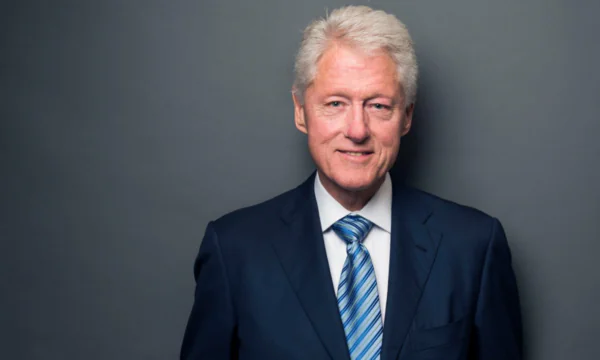
Bill Clinton Shirtless 5
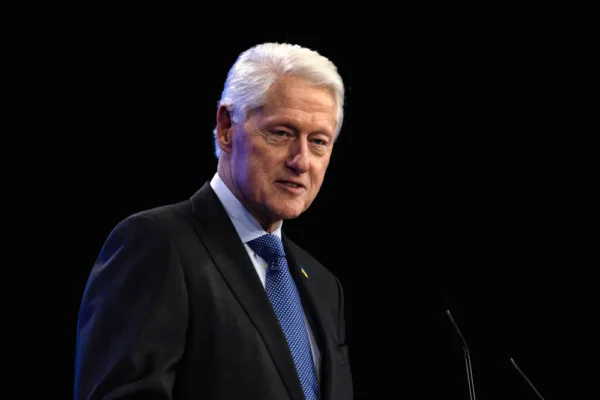
Bill Clinton Shirtless 4
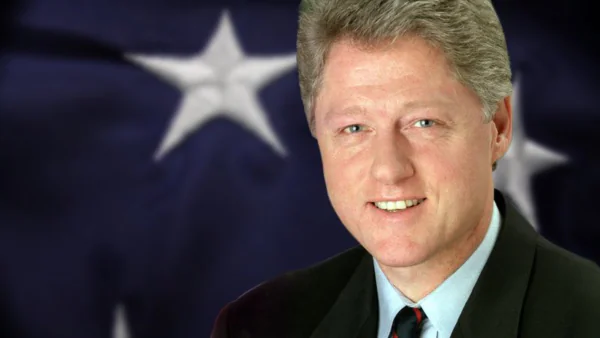
Bill Clinton Shirtless 3
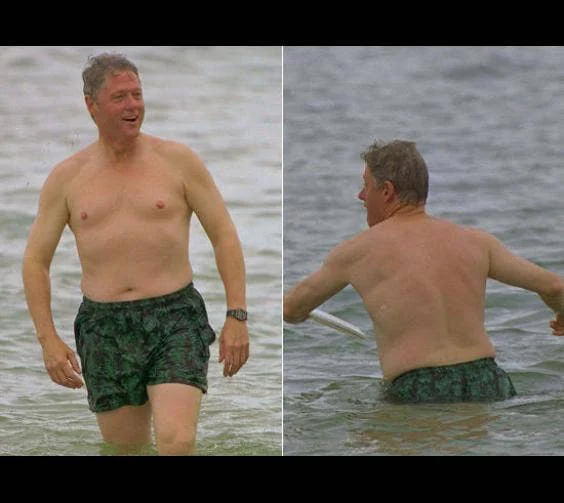
Bill Clinton Shirtless 2
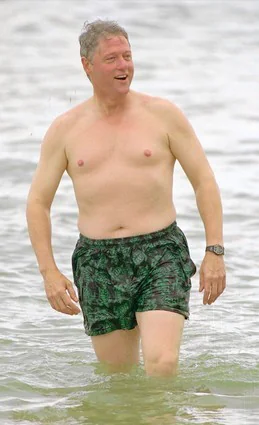
Bill Clinton Shirtless
Bill Clinton Height / How to Get Body Like Bill Clinton
Bill Clinton is approximately 6 feet 2 inches tall, giving him a commanding presence in public appearances.
He has historically maintained a moderately active lifestyle, including walking regularly and occasional cycling to stay fit.
Clinton reportedly emphasizes a balanced diet but had struggled with weight and heart issues in his later years.
After his quadruple bypass surgery in 2004, he adopted a plant-based diet for several years to improve cardiovascular health.
Regular exercise, including daily walks and light cardio, contributed to maintaining his overall health and stamina.
Stress management, particularly through meditation and public speaking preparation, has been an essential part of his routine.
Clinton’s public appearances often involved extensive travel and long schedules, which naturally kept him active.
He has mentioned enjoying sports like tennis and golf, which provide both social and physical benefits.
Proper sleep and pacing his engagements have been part of his approach to maintaining energy despite a demanding schedule.
Combining a disciplined diet, cardiovascular exercise, and stress management appears central to emulating his body health approach.
Interview Quotes of Bill Clinton
In a 1993 interview with Barbara Walters, Clinton said, “I want to be a president who listens first and acts second,” emphasizing his pragmatic approach to leadership.
During a 1996 CNN interview, he stated, “The era of big government is over, but the era of smart government is just beginning.”
In a 2000 interview with Charlie Rose, he reflected, “I hope history will judge me by the difference we made in the lives of ordinary Americans.”
Speaking to Larry King in 1998, he acknowledged, “Mistakes are part of human nature, but accountability is essential for leadership.”
During a 2002 interview on NPR, he remarked, “The world is smaller than ever, and we must think globally while acting locally.”
In a 1995 interview with Time magazine, Clinton said, “Economic growth must be shared to ensure the stability of our democracy.”
On a 1997 appearance with David Letterman, he joked, “I may not have all the answers, but I’m always willing to ask the right questions.”
In a 2005 interview with PBS, he emphasized, “Charity and service define a life well-lived, not just personal success.”
Speaking to Jon Stewart in 2006, he stated, “Humor and humility are essential tools for surviving public life.”
In a 2010 interview with Oprah Winfrey, he reflected, “Leadership is about listening, learning, and leaving a legacy worth remembering.”
TV / Movie Dialogues of Bill Clinton
In the 1998 film “Primary Colors,” a character modeled on Clinton says, “Politics is the art of the possible, not the perfect.”
On “Saturday Night Live” in 1992, Clinton was parodied saying, “I feel your pain,” a line he actually used during his campaign.
In the documentary “The War Room” (1993), Clinton is heard saying, “The people don’t care what we know until they know that we care.”
In the film “Dick” (1999), a young Clinton says, “Sometimes you have to play the game to change the rules.”
During a 2009 cameo on “The Colbert Report,” he joked, “Even ex-presidents deserve a second term in comedy.”
In the movie “Primary Colors,” the Clinton-like character advises, “You can win elections without losing your soul.”
In “The Simpsons” episode featuring Clinton (1993), he quips, “I may be president, but I’m still a saxophone player at heart.”
In the HBO film “Path to War” (2002), a Clinton portrayal states, “Leadership requires tough decisions, even when unpopular.”
In “Saturday Night Live,” during a skit, he humorously remarks, “I don’t always agree with my advisors, but I always listen.”
In the movie “W.” (2008), a Clinton cameo scene shows him saying, “History judges us not by what we attempt, but by what we achieve.”
Controversies/Scandals of Bill Clinton
Bill Clinton was impeached in 1998 by the House of Representatives on charges of perjury and obstruction of justice related to the Monica Lewinsky scandal.
Allegations of sexual misconduct and harassment surfaced during his presidency, involving multiple women, though some were settled out of court.
The Whitewater real estate controversy investigated Clinton’s involvement in the Arkansas-based investment, though no charges were filed against him.
Clinton’s administration faced criticism for pardoning political allies and donors during the final hours of his presidency.
He was scrutinized for the handling of the 1994 genocide in Rwanda, with critics citing a delayed U.S. response.
The 1996 campaign finance scandal involved accusations of illegal contributions, which prompted investigations but no criminal convictions for Clinton.
Controversy arose over Clinton’s affair with Monica Lewinsky, creating a national debate about personal conduct and presidential accountability.
Critics questioned Clinton’s ties to lobbyists and corporate donors, alleging undue influence on policy decisions.
His role in the 1993 Waco siege and subsequent handling of the Branch Davidian standoff drew widespread public scrutiny.
Clinton’s foreign policy decisions, including military interventions in Somalia and the Balkans, were controversial and sparked congressional criticism.
Lesser Known Unknown Facts Trivia of Bill Clinton
Bill Clinton is an accomplished saxophone player and once performed on national television during his presidential campaign.
He was a Boy Scout as a child and earned the rank of Life Scout, just one step below Eagle Scout.
Clinton was the first U.S. president born in the post-World War II baby boom generation.
He briefly taught law at the University of Arkansas before entering full-time politics.
Clinton’s middle name, Jefferson, was given in honor of President Thomas Jefferson.
He is left-handed, though he often wrote with his right hand for public appearances.
Clinton met Nelson Mandela in the 1990s and formed a close personal friendship with him.
He worked as an Arkansas attorney general at the age of 30, making him one of the youngest to hold that office in the state.
Clinton survived a car accident at age 17, which he later cited as a formative life experience.
He has a long-standing interest in global health initiatives, starting work on HIV/AIDS programs before leaving the presidency.
Most Commonly Frequently Asked Discussed Questions/Topics with Answers on Bill Clinton
What is Bill Clinton’s net worth?
Bill Clinton’s net worth is estimated to be around 120 million dollars, largely from speaking engagements, book deals, and the Clinton Foundation.
What was Clinton impeached for?
He was impeached in 1998 on charges of perjury and obstruction of justice related to his affair with Monica Lewinsky but was acquitted by the Senate.
Who is Bill Clinton married to?
He is married to Hillary Rodham Clinton, former U.S. Secretary of State and 2016 presidential candidate.
Does Bill Clinton play any musical instruments?
Yes, he plays the saxophone and has performed publicly during campaigns and TV appearances.
How tall is Bill Clinton?
He is approximately 6 feet 2 inches tall.
Does Bill Clinton have children?
He has one daughter, Chelsea Clinton, who is involved in public health and philanthropy.
What are some of Clinton’s post-presidency activities?
He is heavily involved in the Clinton Foundation, public speaking, global health initiatives, and writing memoirs.
What was Bill Clinton’s political philosophy?
He is often associated with the “Third Way,” a centrist approach blending fiscal conservatism with progressive social policies.
Did Bill Clinton serve in the military?
No, he did not serve in the military, though he received a draft deferment during the Vietnam War while attending college.
Has Bill Clinton faced any health issues?
Yes, he has had heart problems and underwent quadruple bypass surgery in 2004, after which he adopted a plant-based diet for a period of time.