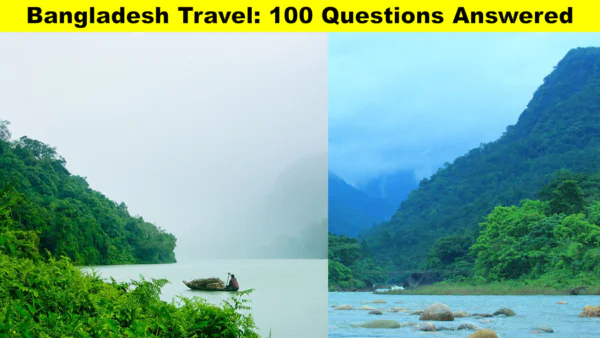
Bangladesh Travel: 100 Questions Answered based on NeemTime research
Planning Your Trip
1. Q: When is the best time to visit Bangladesh? A: The best time is the dry, cool winter season, from October to March. Temperatures are most comfortable then.
2. Q: Do I need a visa to travel to Bangladesh? A: Most visitors do need a visa. You can obtain one beforehand from a Bangladeshi embassy, or, for many nationalities, a Visa on Arrival (VOA) is available at Dhaka’s airport (Shahjalal International Airport, DAC). Always check current requirements for your nationality.
3. Q: Is Bangladesh a safe country for tourists? A: Generally, yes, but caution is needed. Tourists are rarely targets of violent crime, but petty crime (like pickpocketing) is common, especially in crowded areas. Political unrest/demonstrations can occur and should be avoided. Government travel advisories often suggest reconsidering travel due to civil unrest/terrorism risk, so stay informed.
4. Q: Is it safe for a solo female traveler? A: It’s more challenging than in many other countries. Solo female travelers should dress modestly, avoid walking alone at night, and be prepared for a lot of staring and unwanted attention. Staying in diplomatic areas (like Gulshan in Dhaka) is sometimes recommended.
5. Q: What is the local currency? A: The currency is the Bangladeshi Taka (BDT or Tk).
6. Q: Are credit cards widely accepted? A: Credit cards are accepted in major hotels and large upscale stores/restaurants in cities like Dhaka and Chittagong. For smaller towns, local transport, street food, and markets, you will need cash.
7. Q: Is haggling common in Bangladesh? A: Yes, haggling is expected in markets and for non-metered transport like rickshaws and CNGs (auto-rickshaws). Negotiate the fare before you start the journey.
8. Q: How is the language barrier? A: The official language is Bengali (Bangla). English is widely understood and spoken in major cities among the educated population, hotels, and tourist spots. However, outside of these areas, communication can be difficult.
9. Q: What vaccinations are recommended? A: Travelers should consult a doctor, but common recommendations include Hepatitis A, Typhoid, Tetanus/Diphtheria, and sometimes Cholera, Hepatitis B, and Malaria/Japanese Encephalitis prophylaxis depending on the itinerary.
10. Q: Should I travel to the Chittagong Hill Tracts? A: Many foreign governments advise against all but essential travel to the Chittagong Hill Tracts (Bandarban, Rangamati, Khagrachari) due to security risks. If you must go, prior government approval is required.
Getting Around
11. Q: How bad is the traffic in Dhaka? A: It is notoriously bad. Dhaka’s traffic is often described as one of the world’s most congested. Short distances can take hours. Plan your internal travel with extreme time buffers.
12. Q: What are the main modes of transport in the cities? A: Rickshaws (cycle and auto-rickshaws/CNGs), taxis, and ride-hailing apps (Uber and Pathao are common in Dhaka/Chittagong).
13. Q: Are ride-hailing apps available? A: Yes, Uber and local apps like Pathao are widely available in Dhaka and Chittagong and are often a preferred, more reliable option for tourists.
14. Q: What is the best way to travel long distances? A: Buses (AC buses are more comfortable) and trains are common. Domestic flights are the fastest but most expensive option. Trains are generally considered safer than road travel but tickets book out fast.
15. Q: How do I book train tickets? A: Train tickets, especially for first-class, should be booked well in advance (sometimes weeks) as they are limited and popular. You can book at stations or through authorized agents.
16. Q: Should I try the famous rickshaws? A: Definitely, they are an authentic experience and a moving piece of art, but be mindful of the traffic and hold onto your belongings. Negotiate the price first.
17. Q: Is it safe to drive myself? A: It is not recommended. Driving is chaotic, and traffic laws are often ignored. Hire a car and driver if needed, especially for intercity travel.
Health, Food & Water
18. Q: Is the tap water safe to drink? A: No. Never drink tap water. Only drink sealed bottled water.
19. Q: Should I be wary of ice? A: Yes, avoid ice unless you are in a high-end hotel or restaurant that explicitly confirms it is made with filtered/bottled water.
20. Q: Is street food safe to eat? A: Street food is delicious but carries a high risk of “Dhaka Belly” (traveler’s diarrhea). To minimize risk, choose stalls that are busy (meaning the food is fresh) and where you can see the food being cooked fresh and thoroughly.
21. Q: What is the most famous dish I must try? A: Biriyani (especially Kacchi Biriyani or Hajir Biriyani) is a must-try. Other popular dishes include Bhorta (mashes) and various fish curries.
22. Q: What should I do for a stomach issue? A: Bring a supply of Oral Rehydration Salts (ORS) and a reliable antibiotic for traveler’s diarrhea (e.g., Ciprofloxacin, as advised by your doctor). Local pharmacies are widely available.
23. Q: How is the climate? A: Bangladesh has a tropical climate. It is hot and humid most of the year. The cool season is Oct-Mar; the monsoon season is June-September with heavy rain and potential flooding.
24. Q: How bad are mosquitoes/malaria? A: Mosquitoes are a nuisance and carry diseases like Dengue. Use strong repellent and sleep under mosquito nets if necessary. Malaria risk is present in some areas (especially the Hill Tracts), and prophylaxis may be needed.
Culture & Etiquette
25. Q: How should I dress? A: Dress modestly and conservatively, especially outside of diplomatic areas in Dhaka. Women should wear clothing that covers the shoulders and knees, and avoid low necklines. Men should wear shirts in public.
26. Q: What is the proper way to interact with locals? A: Bangladeshis are known for their warm hospitality and friendliness. Be prepared for a lot of interest, questions (sometimes personal), and people wanting to take photos with you. Be patient and polite.
27. Q: Which hand should I use for greetings and eating? A: Always use your right hand for giving, receiving, eating, and shaking hands. The left hand is traditionally considered unclean.
28. Q: What are common social faux pas to avoid? A: Never point the sole of your foot at someone. Avoid public displays of affection. Remove your shoes before entering a home or a mosque.
29. Q: Is it customary to tip? A: Tipping is not strictly mandatory but is appreciated, especially in upscale restaurants and by service workers (drivers, hotel staff). Rounding up fares is common for smaller transport like rickshaws.
30. Q: Should I bring a gift if invited to a home? A: Yes, it is highly appreciated. Small gifts like good quality foreign sweets, chocolates, or a souvenir from your home country are excellent choices.
Tourist Attractions & Activities
31. Q: What is the one must-see natural wonder? A: The Sundarbans Mangrove Forest, a UNESCO World Heritage site and home to the Royal Bengal Tiger. You must take an organized boat tour.
32. Q: Where is the longest sea beach in the world? A: Cox’s Bazar Beach, stretching over 120km.
33. Q: What should I see in Dhaka? A: Explore Old Dhaka (Lalbagh Fort, Ahsan Manzil, Sadarghat River Port) for the “fascinating chaos,” and visit the Liberation War Museum.
34. Q: Where are the tea gardens? A: The beautiful, rolling tea gardens are primarily located around Srimangal in the Sylhet division.
35. Q: Are there any UNESCO World Heritage Sites? A: Yes, the Sundarbans and the Historic Mosque City of Bagerhat (e.g., the Sixty Dome Mosque) are two famous ones.
36. Q: What is an authentic river experience? A: Taking a river cruise or a traditional rocket steamer from Dhaka to Khulna or other southern destinations offers a unique perspective on the country’s waterways.
37. Q: Where can I find ancient ruins? A: Visit sites like Paharpur (Somapura Mahavihara, a UNESCO Buddhist monastery ruin) or Mahasthangarh (one of the earliest urban archaeological sites).
Money, Technology & Misc.
38. Q: Is Wi-Fi readily available? A: Yes, Wi-Fi is standard in hotels, cafes, and restaurants in major cities, but the speed and consistency can be unpredictable in rural areas.
39. Q: Should I get a local SIM card? A: Highly recommended. Local SIM cards are very cheap, and cellular data (3G/4G) is affordable and widely available in cities, which is essential for maps and communication.
40. Q: What is the electricity voltage and plug type? A: The voltage is 220V. The most common plugs are Type C, D, and G. Bring a universal adapter.
41. Q: What should I do at the airport (Dhaka – DAC)? A: Be prepared for crowds and potential chaos. If arriving, ignore unsolicited help from porters and be firm about your needs. Have your visa/VOA paperwork ready.
42. Q: Should I carry my original passport? A: It’s safer to carry a photocopy of your passport and visa/entry stamp for identity checks and leave the original locked securely in your hotel.
43. Q: Is it easy to find vegetarian or vegan food? A: Vegetarian options are readily available due to Hindu and Buddhist influences. Bhortas (vegetable mashes) and dal (lentils) are common staples. Veganism is less understood but can be managed by asking for dishes without ghee or dairy (like Shobji, simple vegetable curry).
44. Q: Will I be stared at as a foreigner? A: Almost certainly, yes. Bangladesh sees very few international tourists, and you will likely be gawked at. This is usually out of curiosity and interest, not malice. Be prepared for this lack of personal space.
45. Q: What is one unique experience not to miss? A: Taking a full-day tour of Old Dhaka by foot and rickshaw to experience the intense, vibrant chaos of the capital’s historic heart.
46. Q: What are the main social issues I should be aware of? A: Be mindful of the stark poverty contrast between wealthy and poor areas, the lack of infrastructure, and the challenges of the sheer population density.
47. Q: What is the cost of travel in Bangladesh? A: Bangladesh is considered a very cheap destination for travelers, especially for food, transport, and budget accommodation.
48. Q: Are there any local customs around photography? A: Be mindful when taking pictures of people—it is polite to ask permission first. Photography of government offices, airports, or military establishments is strictly prohibited.
49. Q: Is it true people are obsessed with cricket? A: Yes! Cricket is the national obsession. Discussing the Bangladesh cricket team is a great way to bond with locals.
50. Q: What’s the best advice for a first-time visitor? A: Embrace the chaos—go with the flow, be patient, and be open to the incredible hospitality. Bangladesh is challenging, but ultimately highly rewarding for the adventurous traveler.